
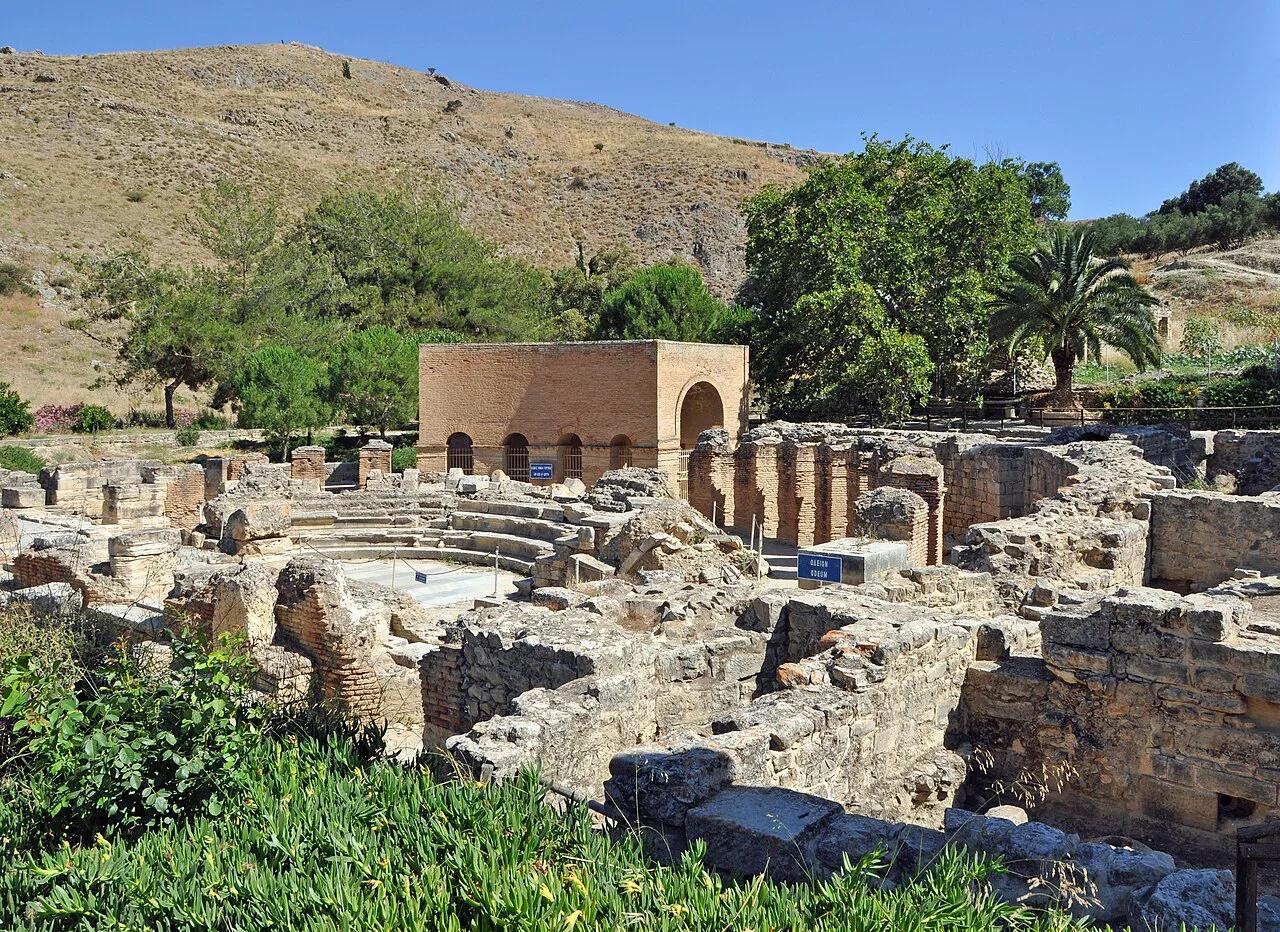
Last updated November 2026. Gortyna was the Roman capital of Crete, and it sits on the Messara plain about 45 km from Heraklion. You come for the Law Code inscription, the Basilica of Saint Titus and a Roman theatre, not for Minoan palace walls. This guide covers what to see, current hours and prices, and how to pair Gortyna with Phaistos.
Featured image: Marc Ryckaert (MJJR), CC BY 3.0, via Wikimedia Commons.
Is Gortyna worth visiting?
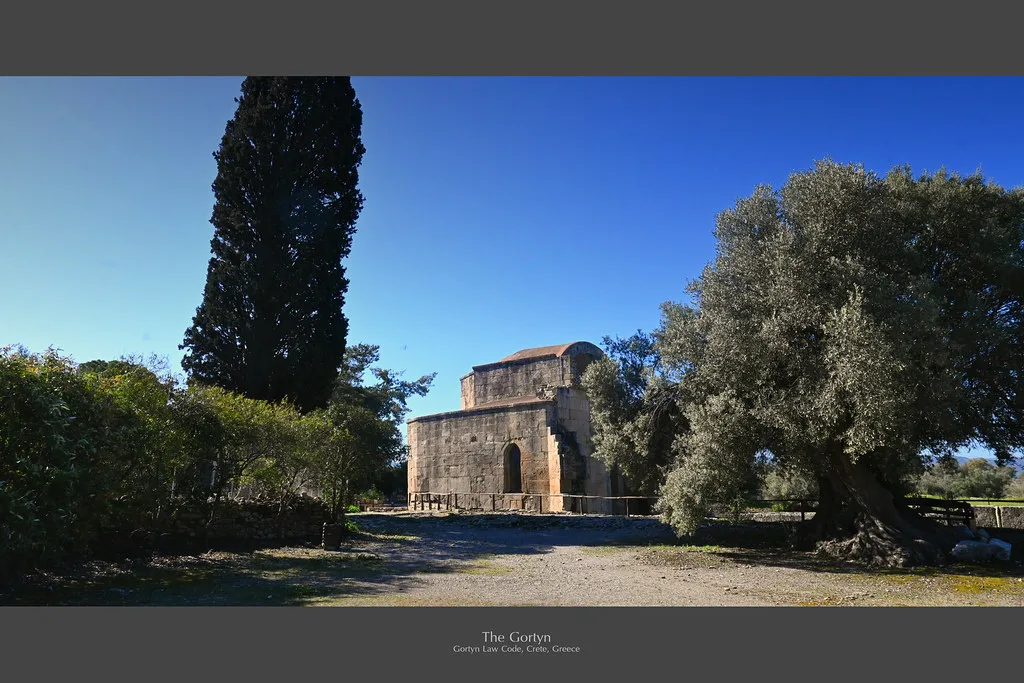
Gortyna suits travelers who want the Greek, Roman and early Christian layers of Crete. It is a scattered ruin field, not a reconstructed palace. If Bronze Age architecture is your goal, the Bronze Age palaces are a better match. Minoan-era traces exist here, but they are not what the site is known for. Archaeology-minded visitors get the best-known ancient Greek law code, cut into stone, plus the remains of a Christian cathedral. Families with young children and anyone short on time may find the open ground tiring, especially in summer.
Gortyna, Gortyn and Gortys: which place is which
All three names point to the same ancient city, and the modern municipality uses them too. Its seat is the village of Agioi Deka. The municipality was formed in 2011 by merging four former municipalities: Agia Varvara, Gortyna, Kofinas and Rouvas. A different Gortyna, also spelled Gortys, lies in Arcadia on the mainland. Search results sometimes mix the two, so check that your map pin is in the Heraklion regional unit of Crete.
What to see at Gortyna
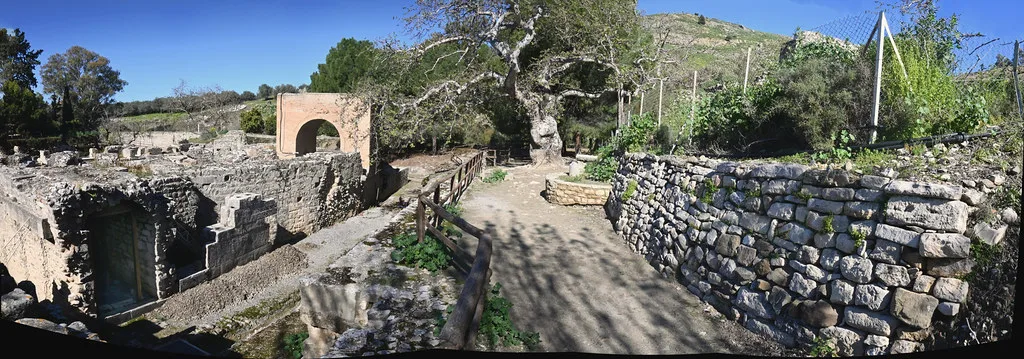
The ruins are spread out, so decide your priorities before you start walking. Most visitors head first for the Odeon and the sheltered Law Code. Anything beyond the core area costs extra time in the sun. The Pythian Apollo temple, for example, lies about 600 m from the agora.
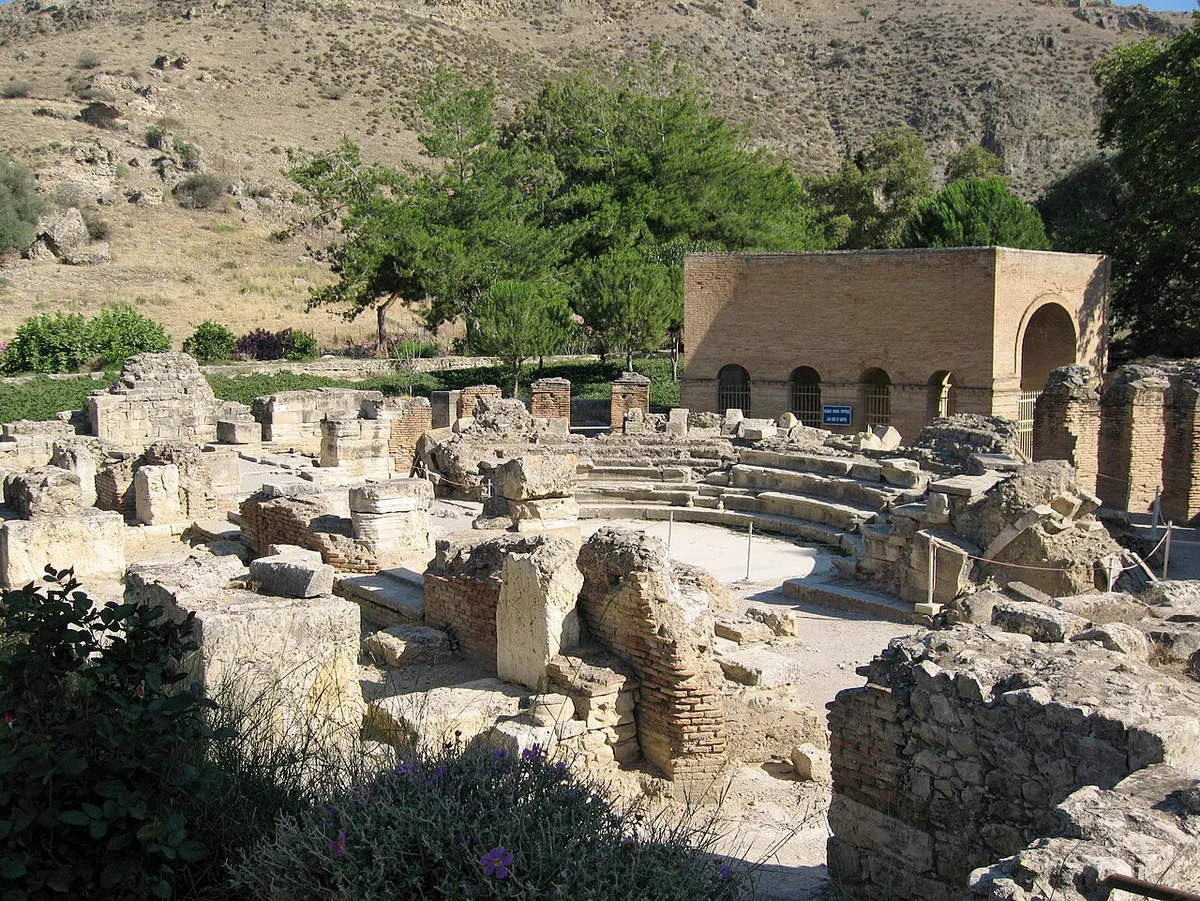
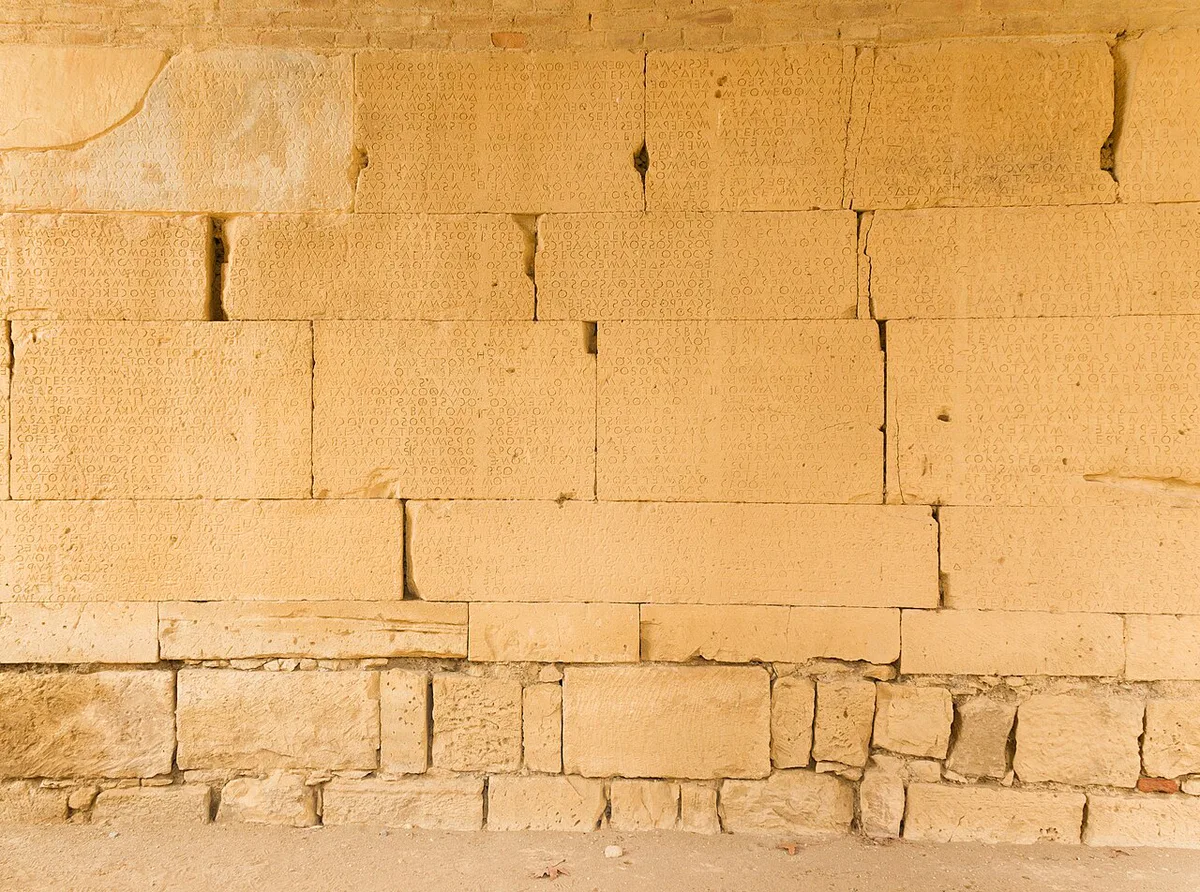
- Odeon and Law Code: the main draw, with the inscribed stones housed in a small modern building.
- Praetorium: the seat of the Roman governor, built in the 1st century AD and altered over the next eight centuries.
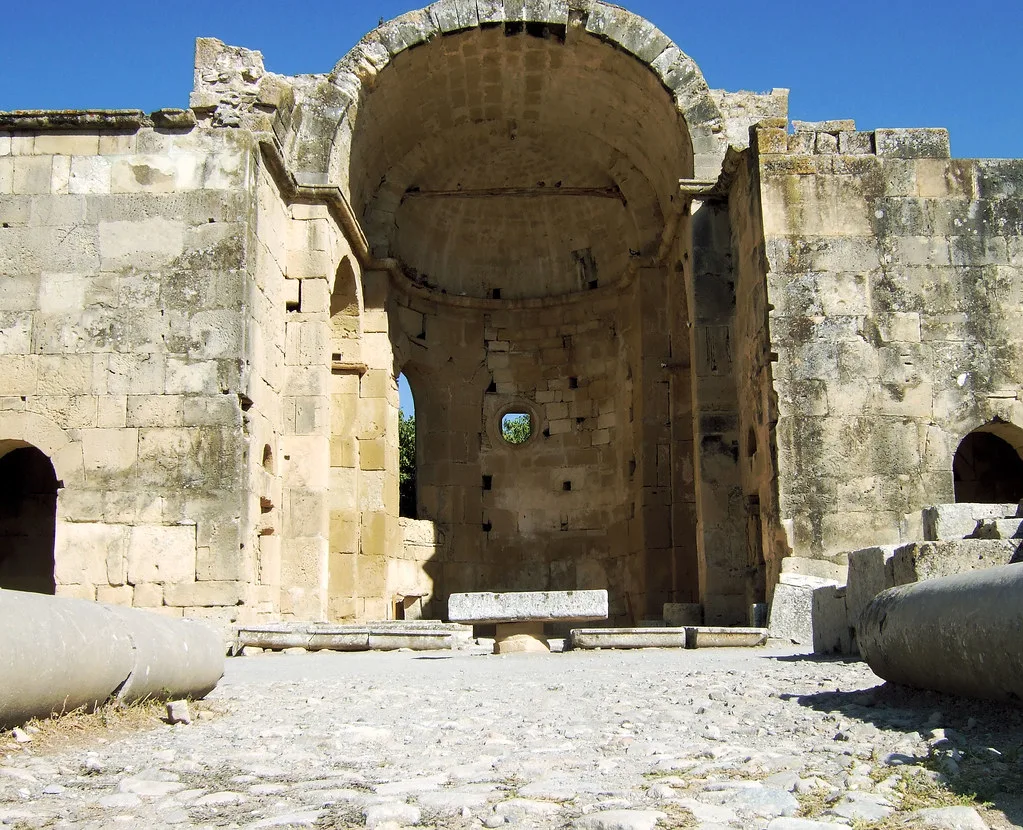
- Basilica of Saint Titus: a cruciform, domed cathedral from the 6th century AD, where the sanctuary area still stands tallest.
- Roman theatre: dated to the 2nd century AD, with two entrances and a half-circular orchestra whose outline you can still trace.
- Temple of Pythian Apollo: about 600 m from the agora, near Roman baths and a temple of the Egyptian deities.
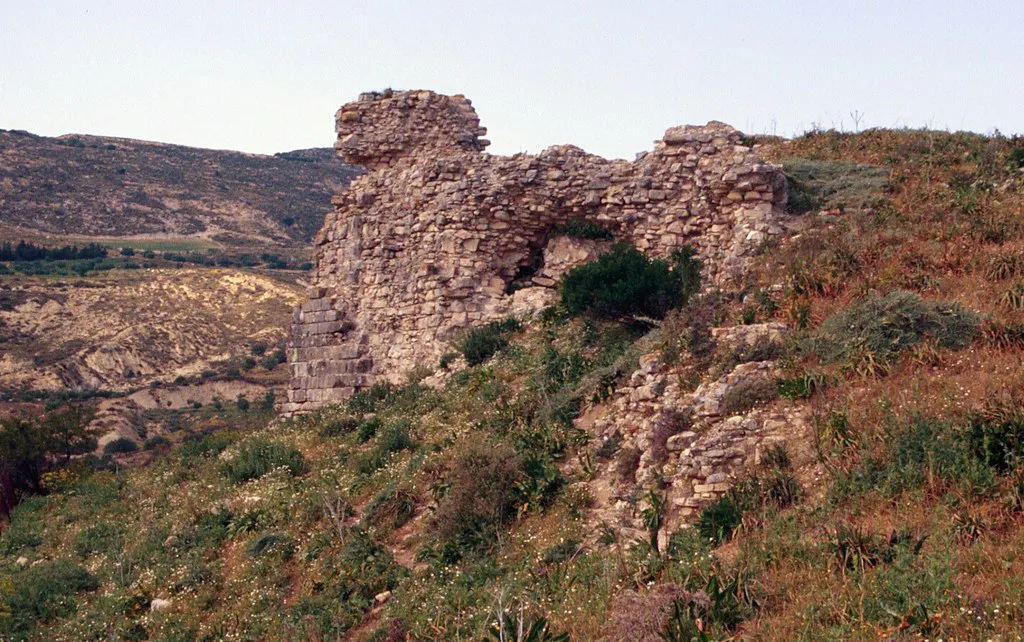
- Acropolis hill: a 7th century BC temple stood on top, and graves from the Geometric age lie on the south side.
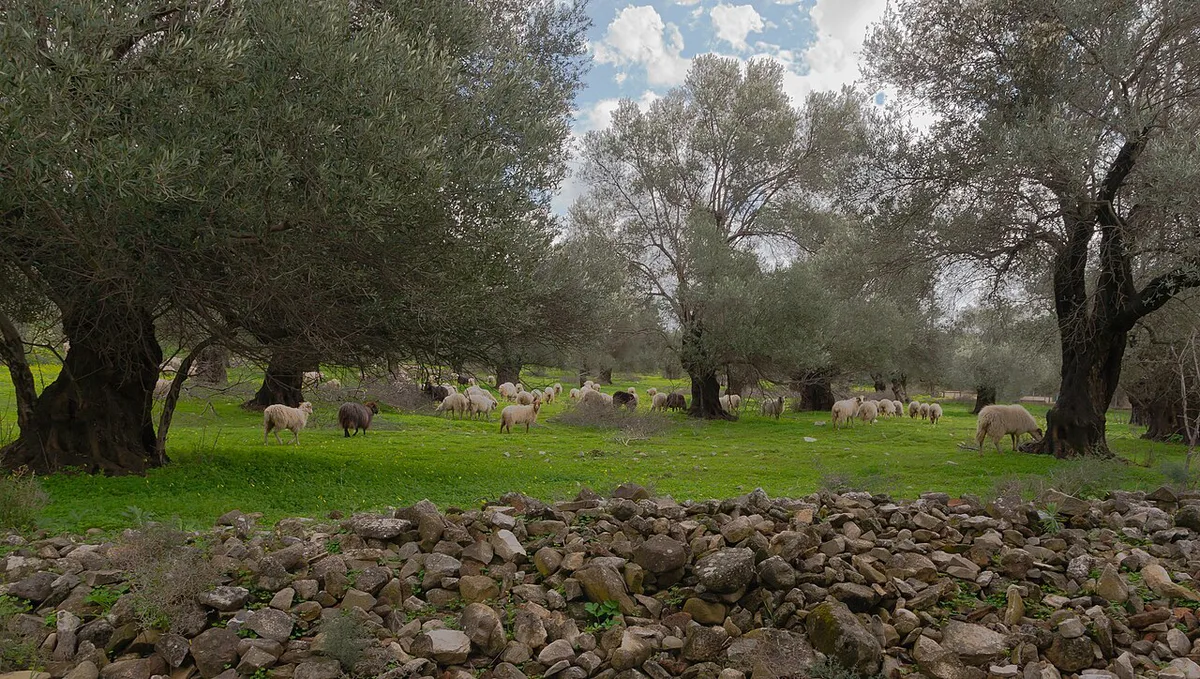
The Law Code of Gortyn: why it matters
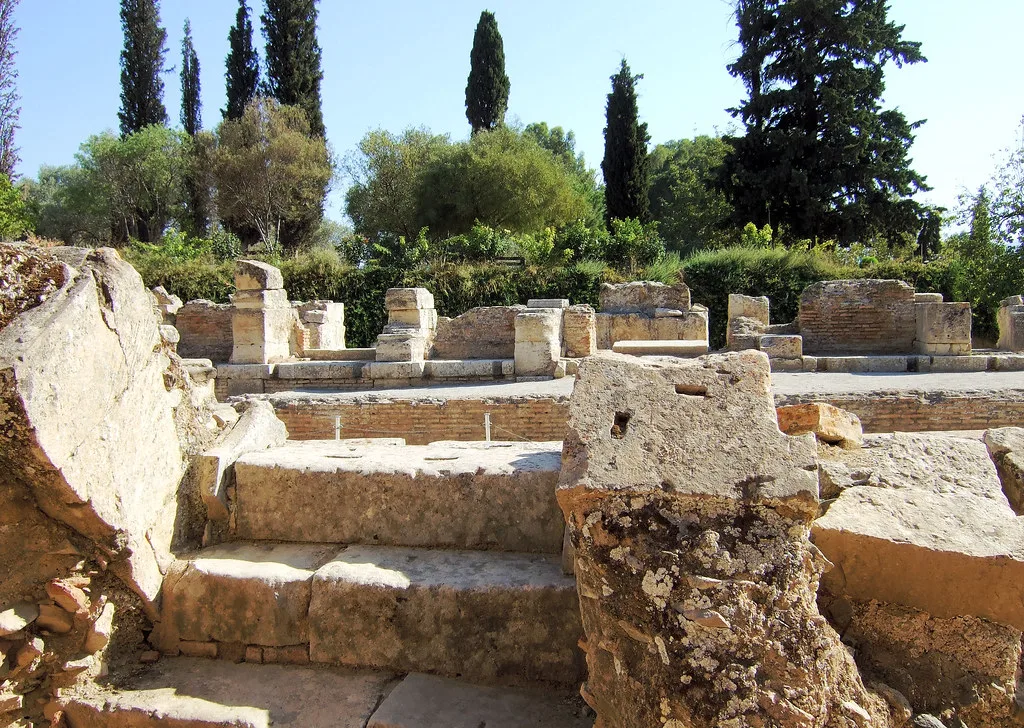
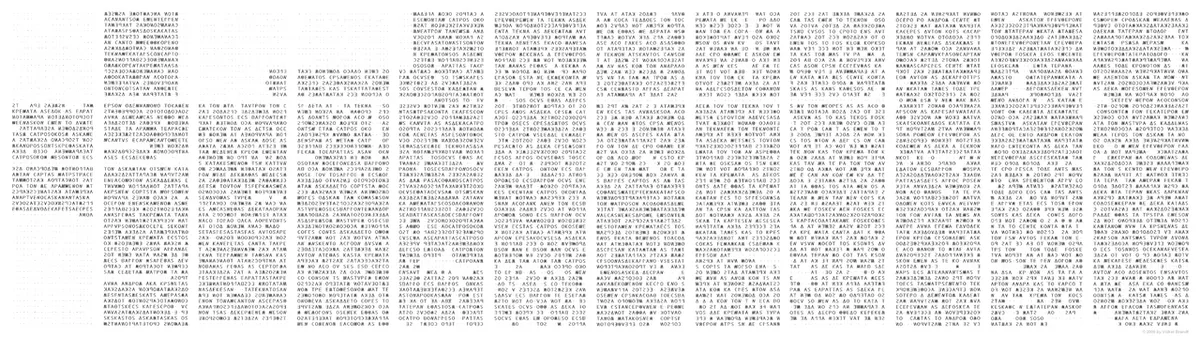
Excavators found the Law Code in 1884 at the Odeon, a structure built under the Roman emperor Trajan. The laws are carved in the Dorian dialect in boustrophedon style, with lines alternating direction like an ox plowing a field. ToposText dates the inscription to the 5th century BC. Only the Code itself was sheltered inside a small building in the north circular wall of the Odeion. Some fragments are in the Louvre, and a copy stands in the Greek Parliament in Athens. Ask at the entrance whether the sheltered building is open on your visit, because it is easy to walk past.
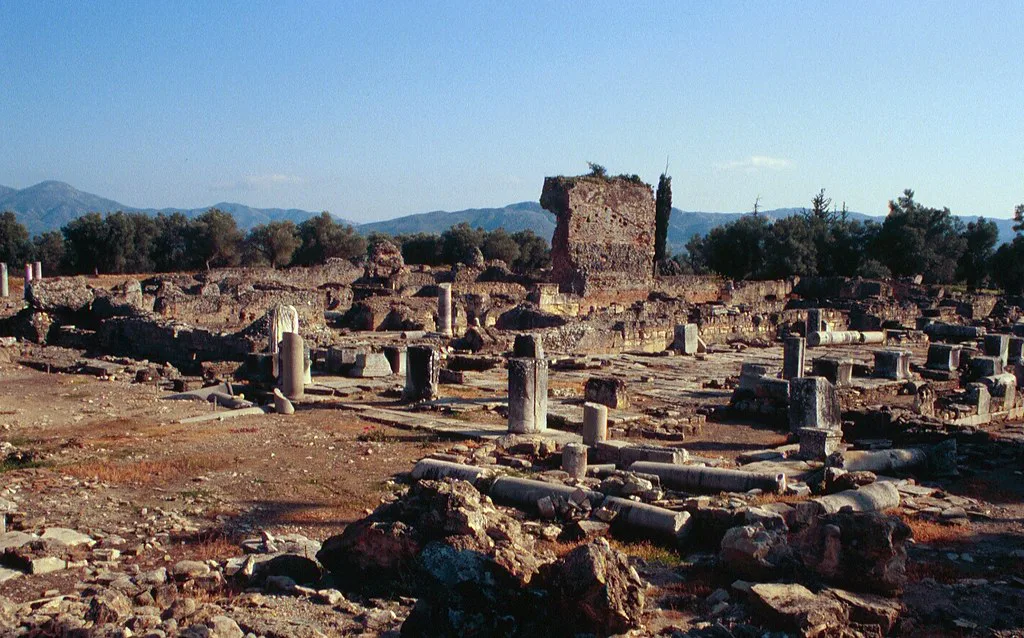
A short history, from Neolithic to the Arab destruction
People lived at Gortyna as early as the Neolithic period, around 7000 BC. Finds from the Minoan period span roughly 2600–1100 BC. The city peaked in the Hellenistic era, when it dominated the Messara valley. By allying with Rome, it avoided the invasion of Quintus Caecilius Metellus Creticus in 68 BC. Gortyna then became the capital of the joint province of Creta et Cyrenaica. Saint Titus preached here, and the Ten Saints were martyred in AD 250. Arab invaders destroyed the city in the early 9th century, which the Ministry of Culture dates to AD 824. The Italian Archaeological School began digging in 1884 and still shapes what you see.
Europa, Zeus and the plane tree
Local lore says Zeus, disguised as a bull, carried Europa to Gortyna and met her under a plane tree. Their sons Minos, Rhadamanthys and Sarpedon became the kings of Crete's palace centers. A statue of Europa on a bull, found here in the 19th century, is now in the British Museum. Treat the tree as a story and not a signposted stop. For the wider Bronze Age context, read about the wider Minoan world.
Gortyna tickets, opening hours and closures
Prices and hours were checked in November 2026 against the Ministry of Culture listing. A full ticket costs €10 and a reduced ticket €5. The special ticket package is listed at the same €10 and €5, so check what it covers before choosing it. Winter hours started on 1 November: 08:30–15:30 daily, with last admission at 15:15. Summer hours run later and step down through autumn, as the table shows. Admission is free on 6 March, 18 April, 18 May, the last weekend of September and 28 October. Heat can close the site as well. On 22 July 2026 the Ephorate of Antiquities of Heraklion shut it from 12:00 to 17:00 because of high temperatures.
| Period | Opening hours | Last admission |
|---|---|---|
| 1 April to 31 August | 08:00–20:00 | 19:45 |
| 1 September to 15 September | 08:00–19:30 | 19:15 |
| 16 September to 30 September | 08:00–19:00 | 18:45 |
| 1 October to 15 October | 08:00–18:30 | 18:15 |
| 16 October to 31 October | 08:00–18:00 | 17:45 |
| From 1 November | 08:30–15:30 | 15:15 |
- Closed: 1 January, 25 March, Easter Sunday, Labour Day, 25 December and 26 December.
- Short days: 08:30–15:00 on 6 January, Shrove Monday, 15 August and 28 October.
- Good Friday: open 12:00–17:00. Holy Saturday: open 08:30–16:00.
Getting to Gortyna from Heraklion
Gortyna lies about 45 km from Heraklion, and a car is the simplest way to reach it. With your own vehicle you can stop at other Messara sites on the same day. Without a car, start with the KTEL Heraklion-Lassithi site and ask at the Heraklion bus station about Messara services. Timetables change by season, so plan your return before you head out. The Heraklion-to-Phaistos route plan covers the same corridor in more detail. Your final stop should be somewhere you can reach without a late bus.
Free-entry days fall on 6 March and 18 April, so a Messara day trip from Heraklion can be timed around them.
Combining Gortyna with Phaistos and Agia Triada
Gortyna pairs naturally with Phaistos palace and the Agia Triada villa site on one Messara day. Visit Gortyna first, because it has little shade and opens at 08:00 in summer. Then move on to the Minoan sites once the midday heat peaks. In winter, Gortyna's last admission at 15:15 is the tightest limit, so start there before anything else. Check the closing times of the other two sites before you fix your route. Stretches between sites are not timed here, so ask your driver or rental map for current journey times. The table compares the four sites you are most likely to weigh up.
| Site | Main era | What you see | Best for |
|---|---|---|---|
| Gortyna | Greek, Roman, early Christian | Odeon with Law Code, basilica, theatre, scattered ruin field | Archaeology and Roman history |
| Phaistos | Minoan | Palace remains in the Messara | Minoan palace architecture |
| Agia Triada | Minoan | Minoan site near Phaistos | A short add-on after Phaistos |
| Knossos | Minoan | Palace site near Heraklion | First-time Crete visitors |
How long to spend at Gortyna and who should skip it
These durations are our estimates, not official figures. A quick stop of about 60 minutes covers the Odeon, the Law Code and the basilica. A thorough visit of two to three hours adds the theatre, the Praetorium and the outlying temples. Skip Gortyna if Knossos is your only Crete ruin and you dislike open, shadeless ground. Choose it if you want the story of Crete after the Minoans. Further Minoan stops such as Malia Palace, Crete: Visitor Guide and Tips work better for palace fans.
Plan midsummer around heat: the site shut from 12:00 to 17:00 on 22 July 2026, so a 60-minute stop could fall in that window.
- 60-minute quick stop: Odeon, Law Code and the basilica.
- Half day: add the theatre, the Praetorium and the Pythian Apollo temple.
- Full Messara day: Gortyna in the morning, then Phaistos and Agia Triada.
- Mistake: arriving at midday in summer, when heat closures have happened.
- Mistake: expecting a palace-style reconstruction.
- Mistake: missing the Law Code because it sits in a small sheltered building.
- Mistake: ignoring last admission, which falls 15 minutes before closing.
Related guides



Continue reading
Guides on the same trip


