
Idaean Cave on Mount Ida, Crete: Access, Route, History
Last updated November 2026: the Idaean Cave (Ideon Andron) is a cave sanctuary on Mount Ida, also called Psiloritis, in central Crete, and myth ties it to the birth of Zeus. Entry is not guaranteed, so plan the trip as a mountain hike to a sacred site whose gate may be locked. Read the access section before you build a day around it.
Featured image: Nat Pikozh, CC BY 2.0, via Flickr.
Idaean Cave at a glance
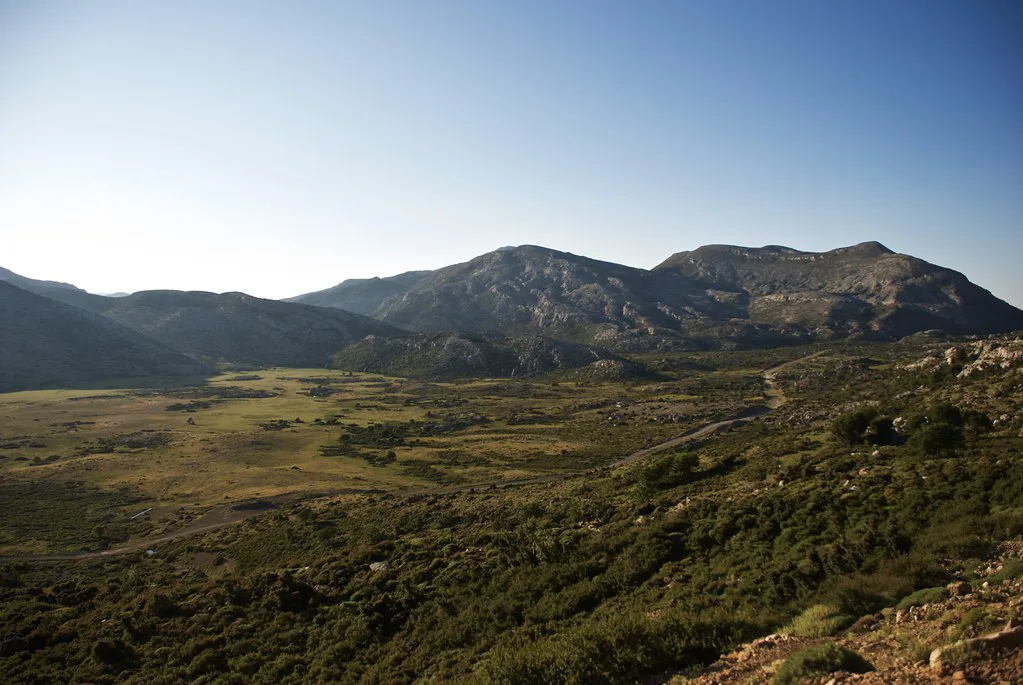
This is a high-mountain cult cave, not a show cave with a ticket desk. It sits at roughly 5,000 ft (1,538 m) on Mount Ida, and excavations there began in 1885. Visitors come for the setting, the legend, and the archaeology that the finds represent. If you only want to see objects from the cave, the museum route in Heraklion is far easier.
- Location: Mount Ida (Psiloritis), central Crete, Greece.
- Role in antiquity: a place of worship linked to the infant Zeus.
- Access: not guaranteed, so check status before you travel.
- Easier alternative: the finds in Heraklion, plus the Dikteon Cave in the east.
Which cave is this? Idaean vs Dikteon vs other Cave of Zeus sites
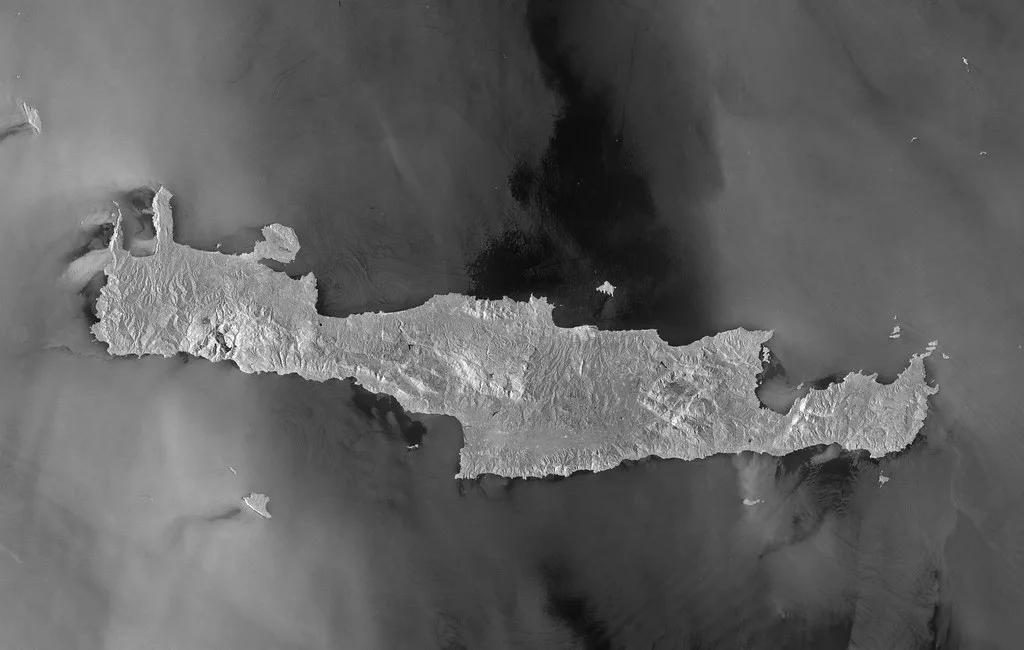
Several names point at several caves. Idaean, Idean, Ideon Antron and Ideon Andron all describe the Mount Ida cave. Some travelers also meet it as the Philosophers Cave, a label tied to Plato. Searches for Cave of Zeus can also lead to Naxos or to the Psychro cave on Crete. Our guide to the Dikteon Cave at Psychro covers that second Cretan site.
| Name you see | What it usually means | Where |
|---|---|---|
| Idaean / Idean / Ideon Andron | Cave sanctuary on Mount Ida | Psiloritis, central Crete |
| Philosophers Cave | Another name used for the Ida cave | Mount Ida |
| Dikteon / Psychro Cave | A separate Zeus birth cave | Lassithi area, eastern Crete |
| Cave of Zeus, Naxos | A different cave on another island | Naxos, Cyclades |
Can you visit? Access, tickets and opening status
No current opening status, fee or guide requirement is confirmed for this cave. Past visitors have described a locked gate at the entrance, so do not assume you can go inside. Check the Ministry of Culture's Odysseus portal and ask the regional Ephorate of Antiquities before you set out.
- Ask the Ephorate whether the cave is open, locked, or visitable by arrangement.
- Ask who holds the key and whether a guide or permit is required.
- Ask whether snow or maintenance closes the access road or the path.
- Record the date of the answer and keep a backup plan.
How to get there: Nida Plateau, road and walk
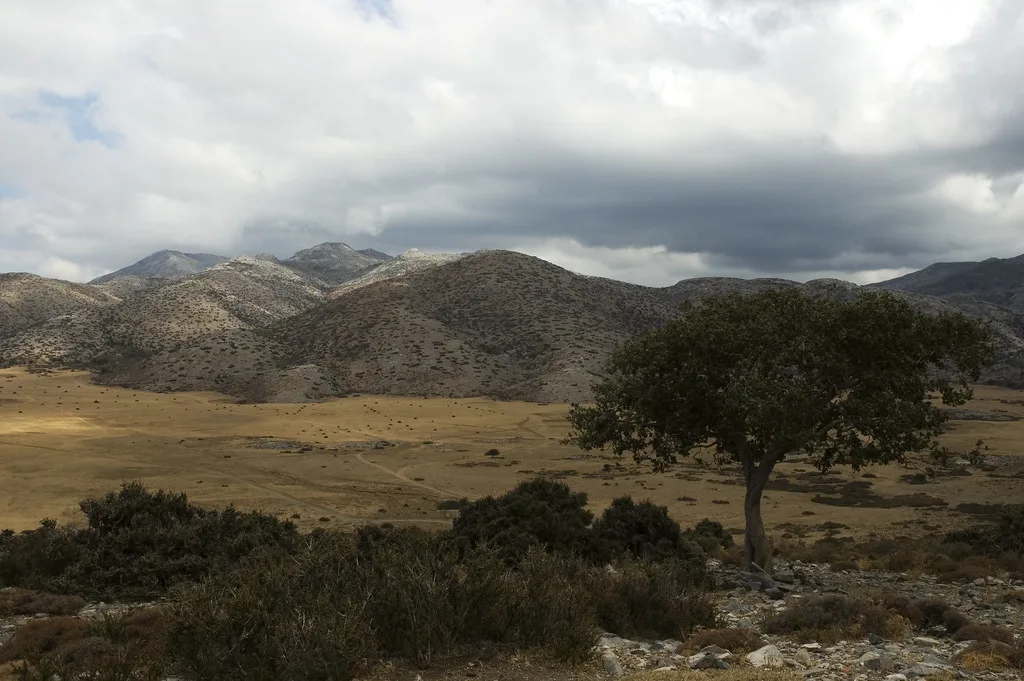
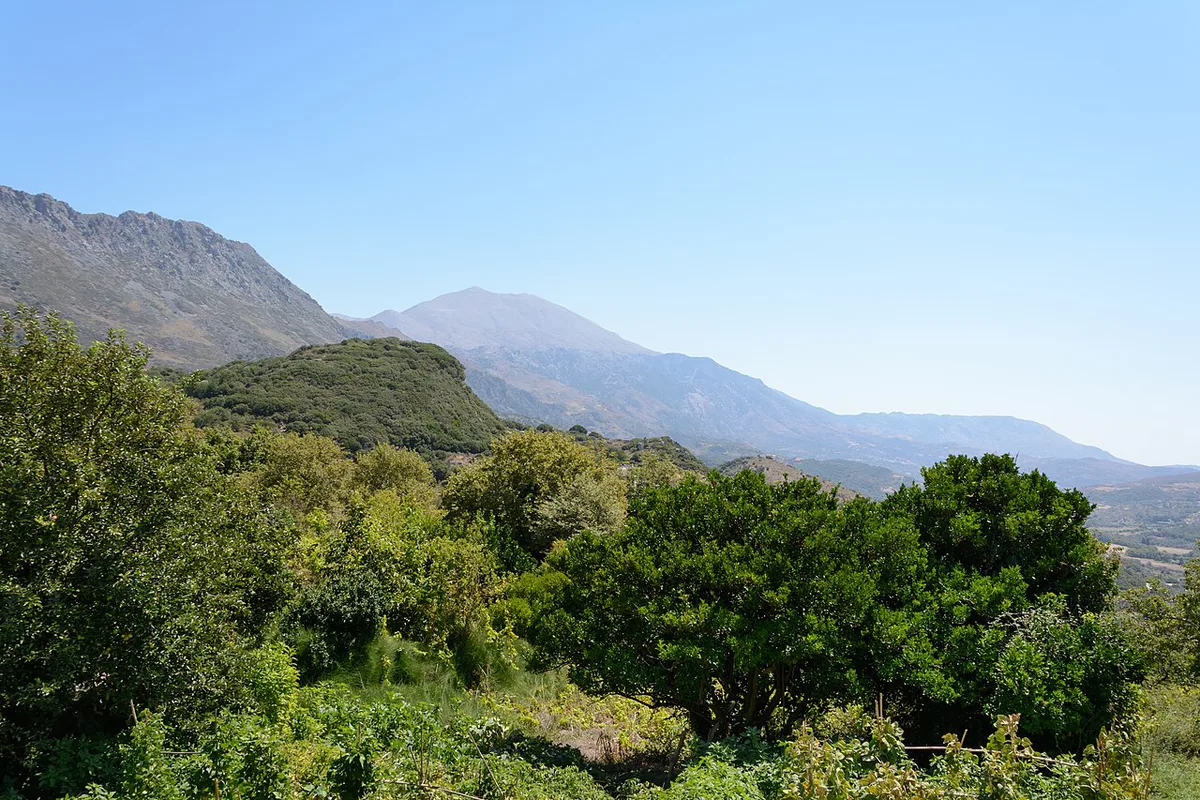
The usual approach climbs to the Nida Plateau on Psiloritis. Villages on the approach, such as Anogeia, are the natural place to ask about road conditions. Where the paved road ends, you continue on foot to the cave. Past visitors describe a hike of roughly five miles round the upper mountain, but that is anecdotal. Ask locally about the current road end and walking time.
Starting from the paved road end, the walk climbs toward a cave at 5,000 ft (1,538 m) on Mount Ida. Plan extra time for the final stretch.
- Rental car: the most flexible option, with the most exposure to mountain driving.
- Taxi: workable from a village base if the driver knows the plateau road.
- Organised tour: the lowest planning effort, if an operator currently runs it.
- Public transport: not a realistic way to reach the trailhead.
Best time to go and what to bring
Altitude drives everything here. Snow, hail and cold can occur near the summit even in spring, so a sunny coast tells you little about the peak. Start early to keep daylight in hand. Wear sturdy hiking shoes and carry layers, water, and a windproof jacket. Skip the trip if you have knee trouble, a tight schedule, or no confirmed access, because the walk may end at a closed gate.
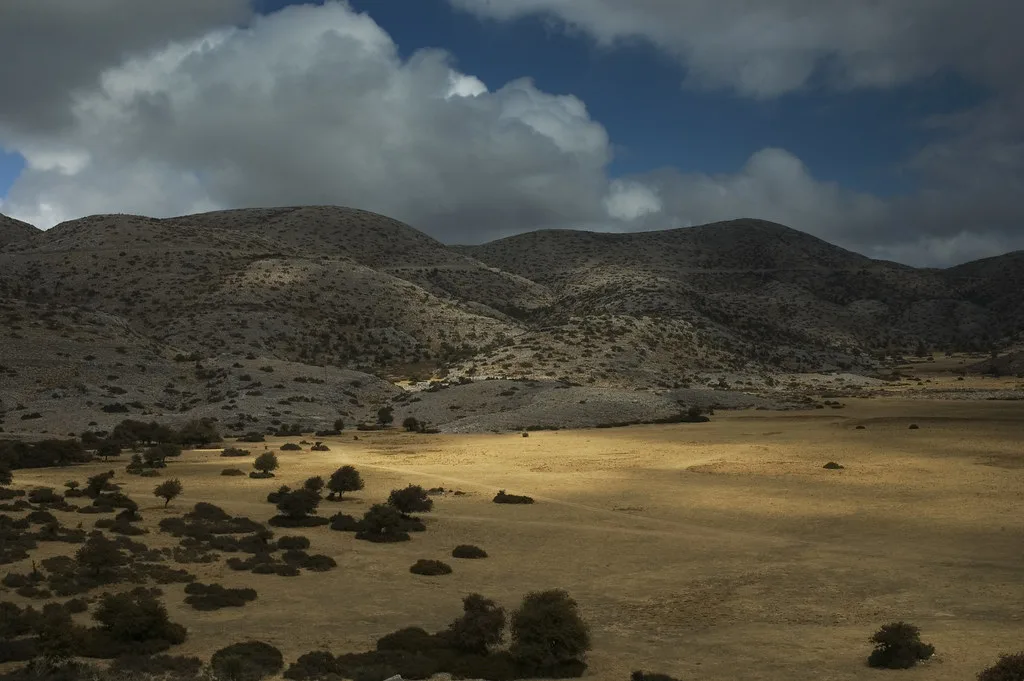
Beyond the cave: Nida Plateau and the Psiloritis summit
The Nida Plateau is a large upland basin and a destination in its own right, so a locked gate at the cave does not have to ruin the day. Treat the plateau as the main plan and the cave as the bonus.
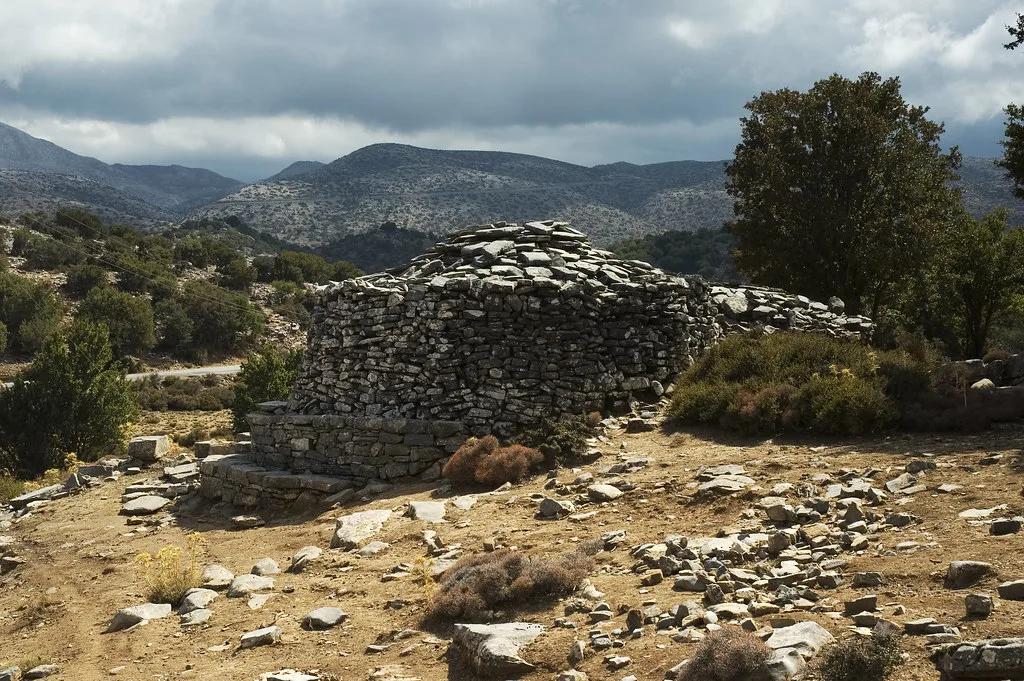
- The plateau itself: an open, treeless bowl ringed by the high peaks of Psiloritis, grazed by sheep and goats. Shepherds' stone huts (mitata) are scattered around it. Light and weather change quickly, so photographs and walking are usually better early in the day.
- Psiloritis summit: the highest point in Crete, Timios Stavros, reaches about 2,456 m. The ascent is a long mountain walk, not a stroll. Allow most of a day, start early and watch the forecast. Do not attempt it as an add-on to a cave visit unless you are an experienced hiker.
- Zominthos: a Minoan settlement on the approach side of the mountain, at around 1,200 m. Opening times are seasonal and can change, so ask the Ephorate along with the cave's status.
Food and supplies: do not count on services on the plateau, especially outside summer. Buy water and food in the villages below, such as Anogeia, before you drive up. Fuel up as well, because there are no stations once you leave the village road.
Weather: conditions at the plateau can be far colder and windier than on the coast, and low cloud can close in without warning. Turn back if visibility drops, whether or not you have reached the cave.
What the cave was: myth, cult and excavation
Legend says Rhea hid the infant Zeus from Cronus, who swallowed his children. In one variant, the Kouretes danced noisily outside to cover the baby's cries. Another story says the sage Epimenides slept in the cave for 57 years. Treat these as legend. The documented side is the cult: excavations starting in 1885 turned up large numbers of votive offerings, which show the cave was a real place of worship. For wider context, see our guide to Minoan religion and culture.
What was found in the Idaean Cave: the bronze shields and offerings
The cave's reputation among archaeologists rests on what was left inside it, not on any carved or painted interior. Excavations from the 1880s onward, and again in the late 20th century, recovered a large body of votive material from the cave and its forecourt. Most of it dates to the first millennium BC, when the cult was at its peak.
- Bronze shields: the best-known finds are decorated votive shields and related bronzes. They carry lions, hunting scenes and ritual figures, and their style shows Near Eastern influence. Scholars treat them as evidence for the cult of the infant Zeus and the Kouretes who, in the myth, clashed their weapons to hide his cries.
- Votive objects: small bronzes, jewellery, seals and pottery were left as offerings over many centuries.
- A long cult history: the material runs from the Minoan period through Greek and Roman times, so the cave was a place of worship for a very long span.
The site itself holds little to look at once you are there. The finds are the reason to visit the Heraklion Archaeological Museum, which has a gallery devoted to the cave. Displays are rearranged from time to time, so ask at the desk or on the museum's own site whether the Idaean material is on view before you go.
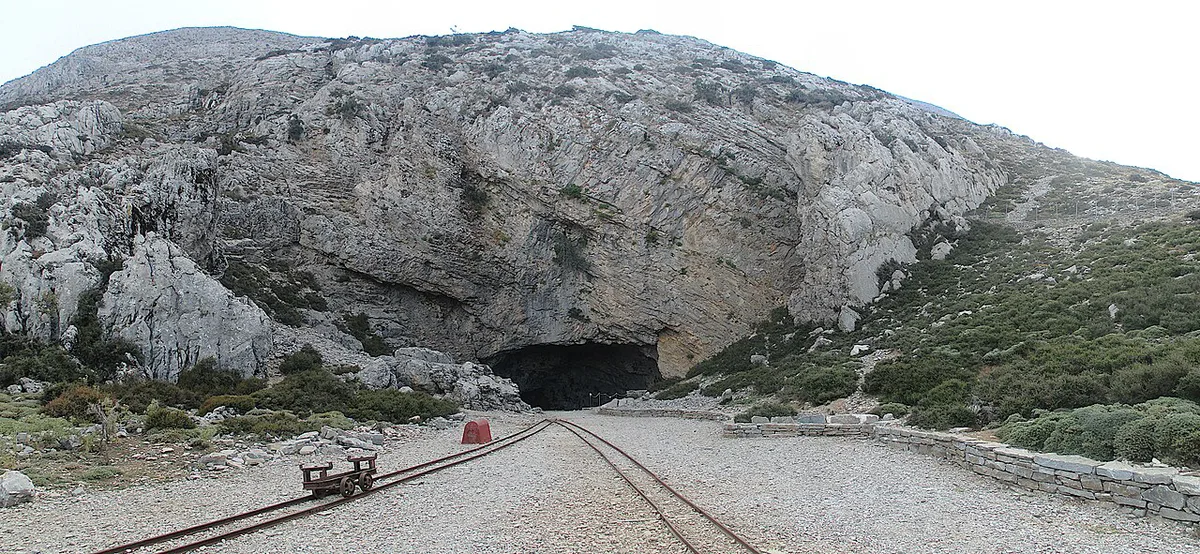
A practical way to use this: see the finds first, then decide whether the mountain hike is worth it. Knowing what was dedicated here makes the empty cave mouth and the plateau much easier to read.
Idaean vs Dikteon vs the museum: which is worth your time?
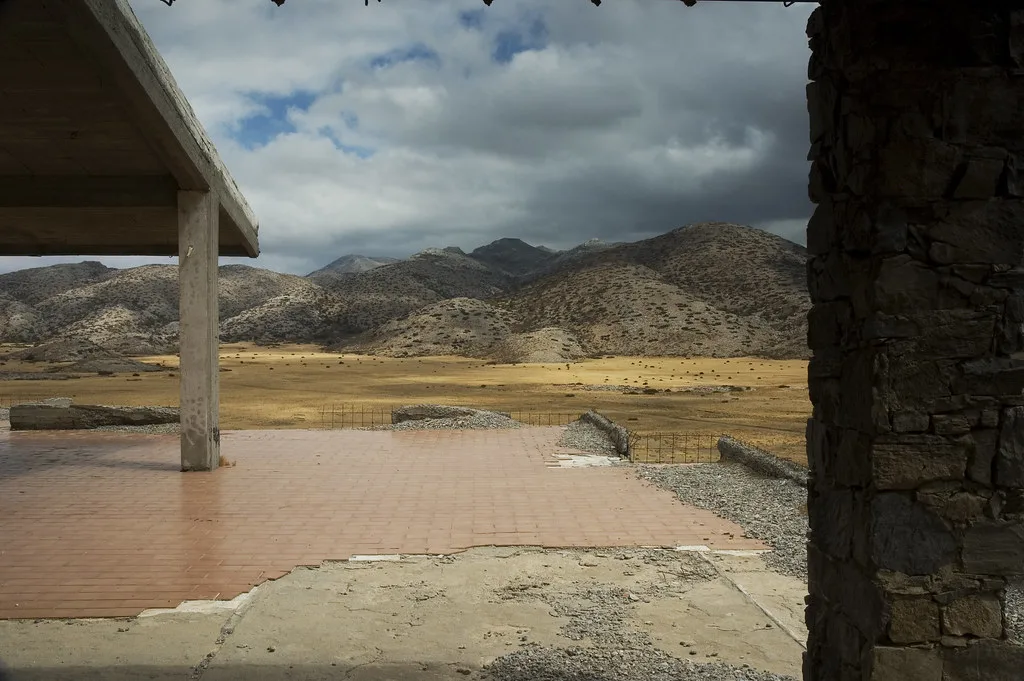
Pick by what you want from the day. The finds from the Ida cave are the main archaeological payoff, and the Heraklion Archaeological Museum is the place to ask about them. Check which pieces are currently on display before you go. Choose the Idaean Cave only if you want the mountain and can accept a closed gate.
| Option | Effort | Access certainty | What you see | Best for |
|---|---|---|---|---|
| Idaean Cave | High: mountain drive and hike | Low until confirmed | Entrance, plateau, scenery | Hikers and myth fans |
| Dikteon (Psychro) Cave | Moderate | Check locally | A second Zeus birth cave | Visitors who want to go inside |
| Heraklion museum | Low | Check hours | Cult finds and Minoan objects | Short itineraries |
Pairing it with other Crete sites
Keep the mountain day separate from palace touring. Our overview of the Minoan palaces of Crete helps you plan the rest of the trip. The south offers Phaistos, Agia Triada, Crete: Minoan Site vs Monastery Guide and Gortyna. Check driving times before you try to combine any of them with the cave in one day.
Related guides



Continue reading
Guides on the same trip

