
Roman Theatres in Europe: Best Preserved Sites and How to Visit
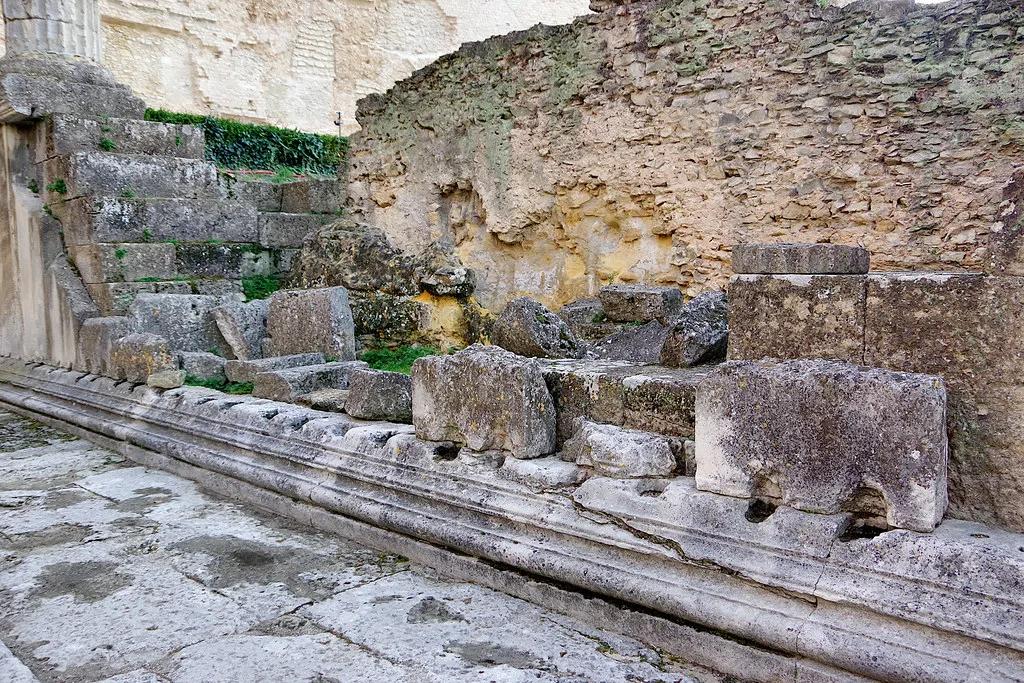
Last updated November 2026: Roman theatres in Europe are semicircular and stand on their own vaulted substructures, while Greek theatres were cut into a hillside. Mérida in Spain, Orange in France and Aspendos in Türkiye are the best to visit. Scope is Europe only, and Aspendos is labelled as the one edge case.
Featured image: Juhele_CZ, CC0 1.0, via Flickr.
Roman Theatre or Amphitheatre?
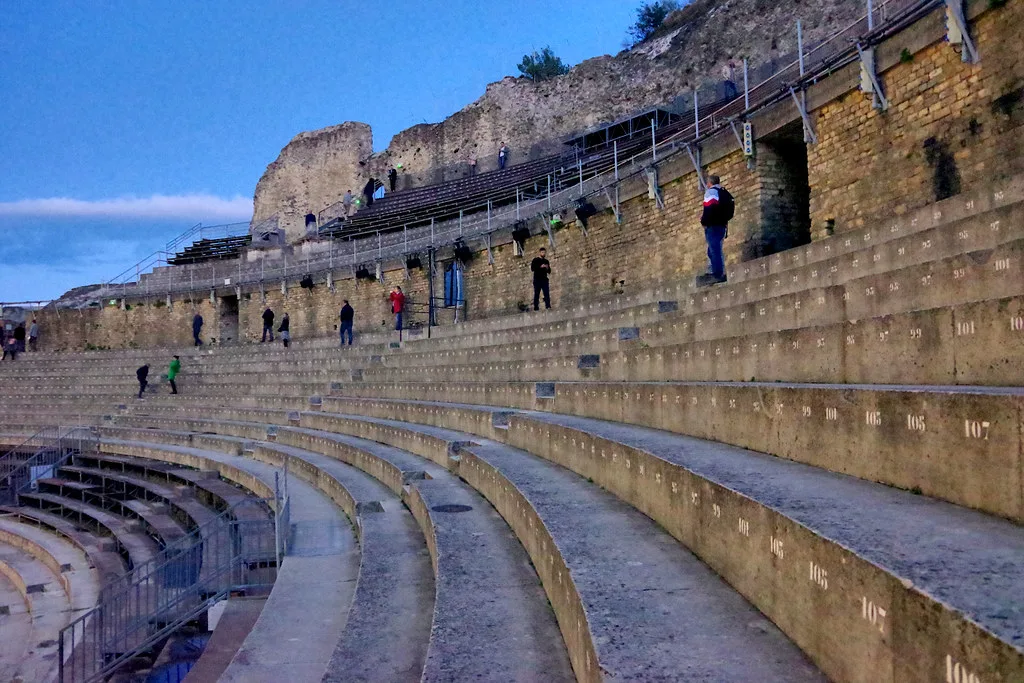
A theatre is a half circle built for drama and music. An amphitheatre is an oval built for games and spectacles. Verona, Pula, Arles and Nîmes are arenas of the second kind. Our guide to oval arenas across Europe covers them. For the design lineage behind the half circle, see Greek theatre design.
Roman Theatres in Europe at a Glance
This table compares the three headline sites on what survives and how they are used today. Check each official site for current opening arrangements.
| Site | Country | What survives | Live use |
|---|---|---|---|
| Mérida | Spain | Cavea and a reconstructed stage building | Classical theatre seasons in summer |
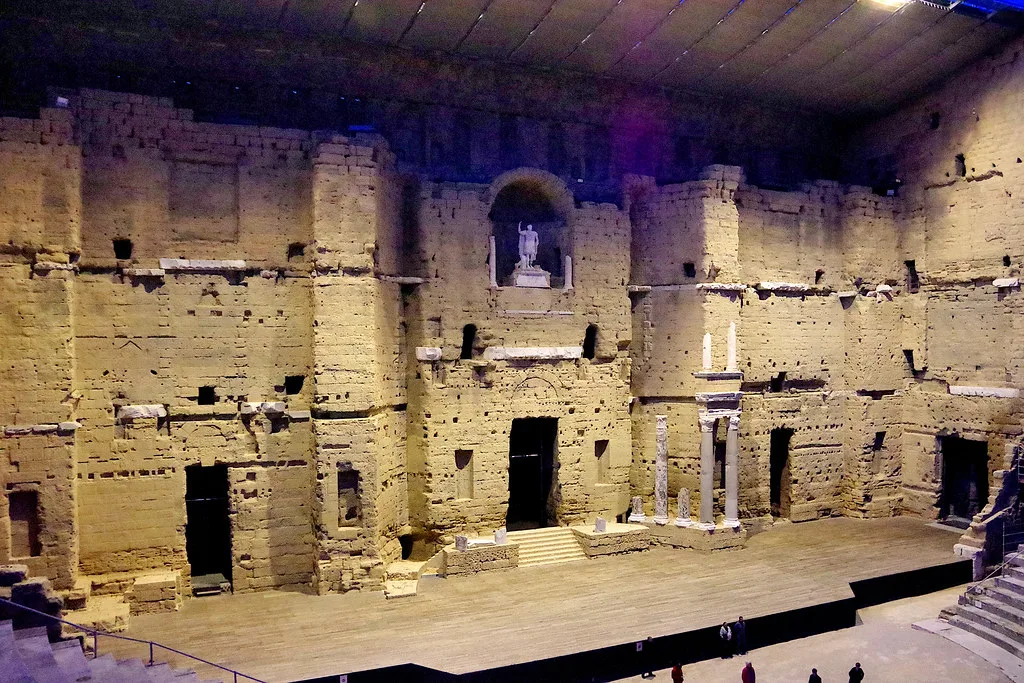
| Orange | France | Massive stage wall and tiered seating | Staged performances on the original stage |
| Aspendos (edge case) | Türkiye | Stage building and seating, a non-EU comparison | Check local listings |
France: Orange and Its Stage Wall
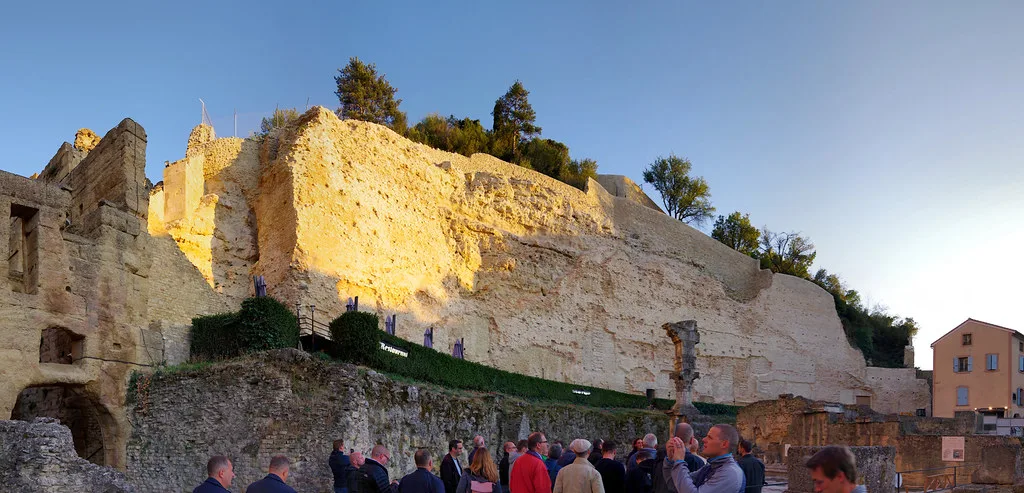
Orange is the choice if you want to see what a Roman stage building looked like. Its towering stage wall still frames the seating. The Théâtre antique d'Orange site lists visiting information and the performance programme. Allow around an hour for a standard visit. On performance days, access may differ, so check before you travel.
Spain: Mérida's Reconstructed Stage
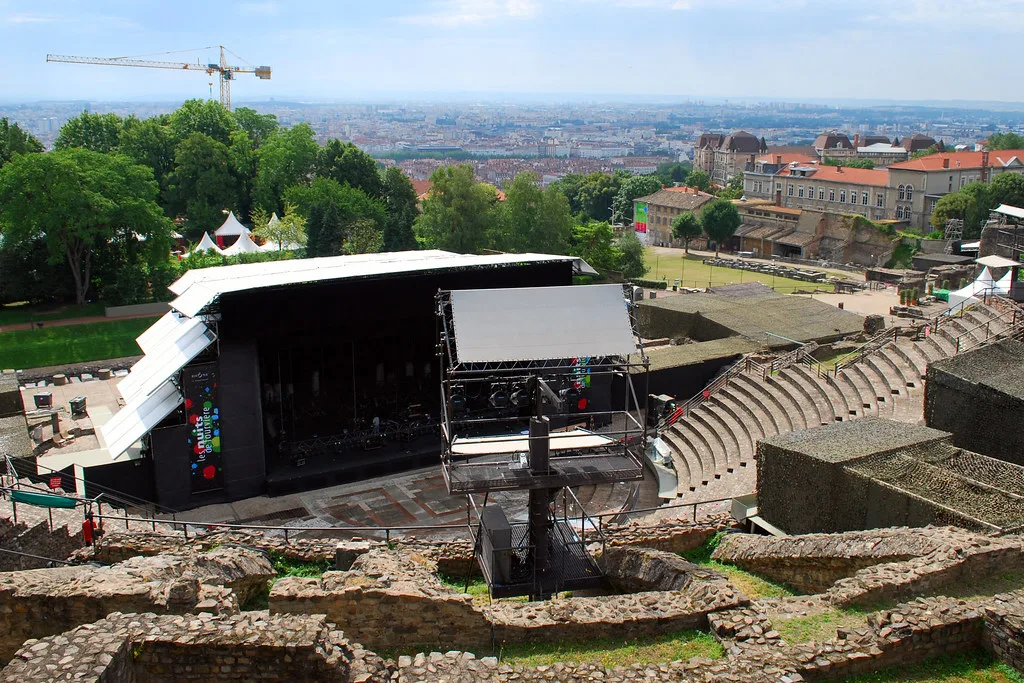
Mérida sits inside a wider archaeological ensemble, so the theatre is one stop among several. You can walk the seating, then see the neighbouring Roman remains on the same ticket system. The Mérida Consortium publishes tickets, hours and the summer theatre programme. Pair the visit with the town's Roman water engineering. Our piece on Roman water engineering explains how those systems worked.
Türkiye: Aspendos as a Non-EU Comparison
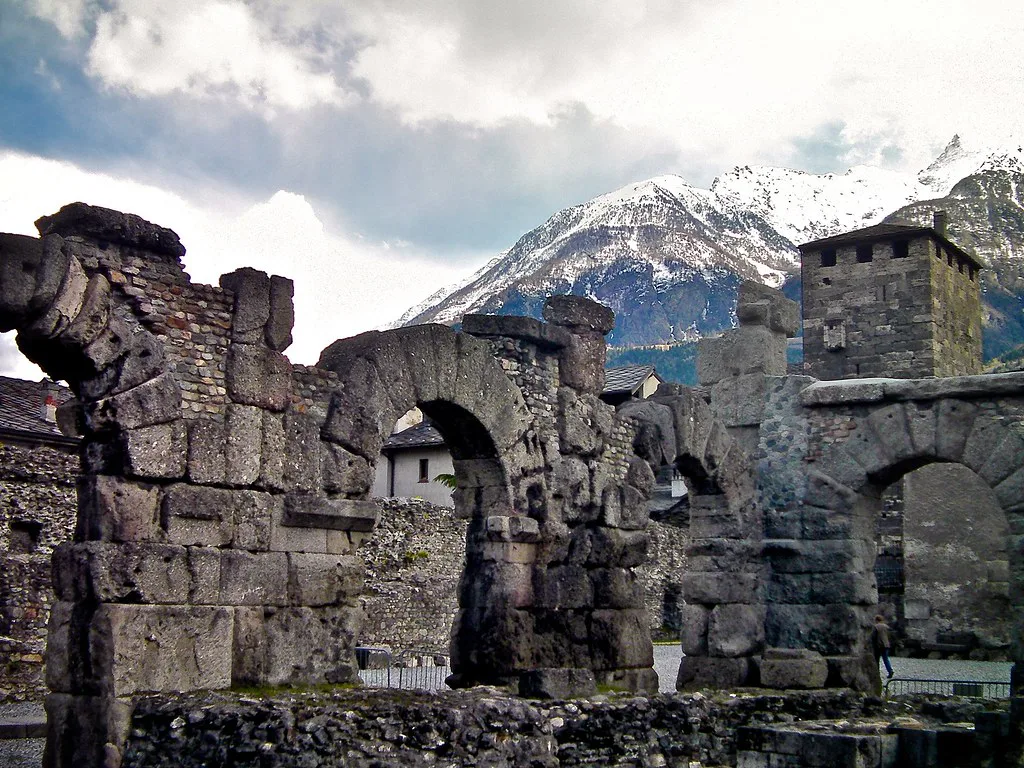
Aspendos lies outside the EU, so treat it as a comparison rather than a core stop. Its stage building is the reason to go, because few theatres keep so much of the structure above ground. Confirm opening arrangements with Turkish heritage authorities. Anyone sticking to the EU can skip it and lose nothing in the comparison.
More Roman Theatres Worth a Detour in France, Italy and Bulgaria
The three headline sites are not the only theatres where a Roman stage still stands. These are worth adding when your route passes nearby. Each is a shorter stop than Mérida.
- Lyon, France: The theatres on Fourvière hill are among the oldest Roman theatres in Gaul. They sit above the city and are used for summer performances. Our guide to Lyon's Roman theatres covers the two side-by-side buildings.
- Arles, France: The theatre is only partly preserved, with a few standing columns and tiered seating. It is best combined with the town's other Roman buildings, listed in our Arles Roman monuments guide.
- Autun, France: The theatre here was one of the largest in Roman Gaul, and the seating curve is still visible in the town. See our Autun Roman guide for the wider walk.
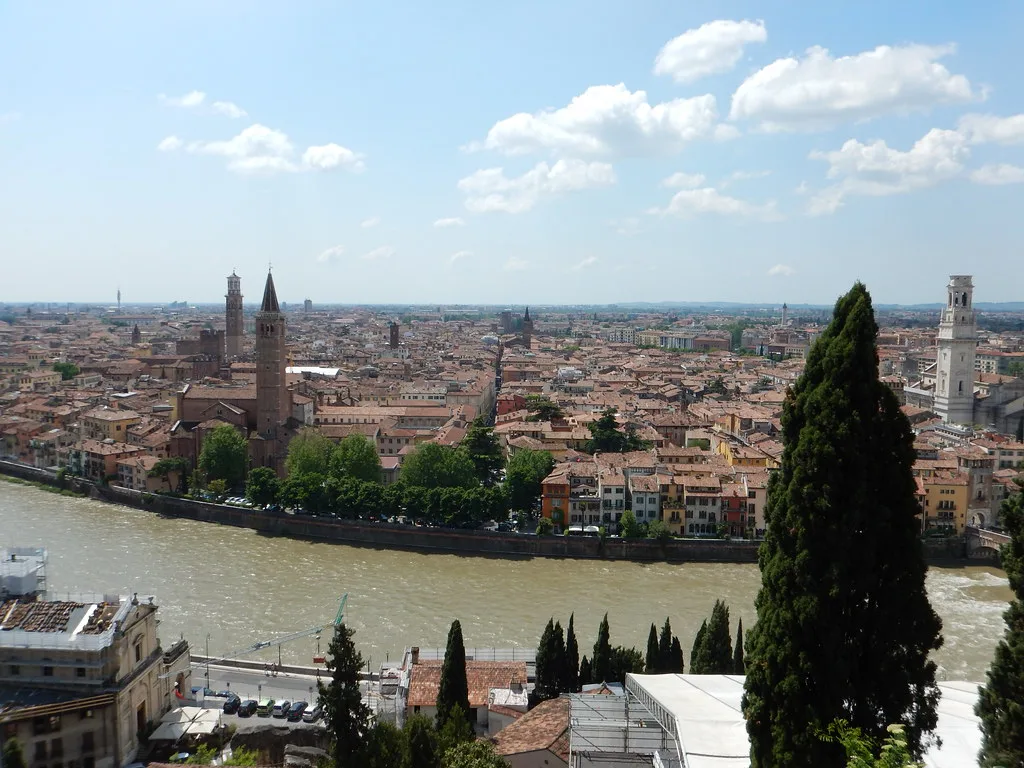
- Verona, Italy: The Roman Theatre sits on the bank of the Adige below the hillside. It is easy to pair with the city's famous arena, which belongs to the oval-arena category rather than the theatre one.
- Plovdiv, Bulgaria: The Ancient Theatre sits in the old town and still hosts concerts and performances. Its seating looks over the city and the plain beyond, which makes it one of the more atmospheric settings on this list.
Opening hours and ticket arrangements change, so check each site's official page before you go.
Taormina and Other Edge Cases
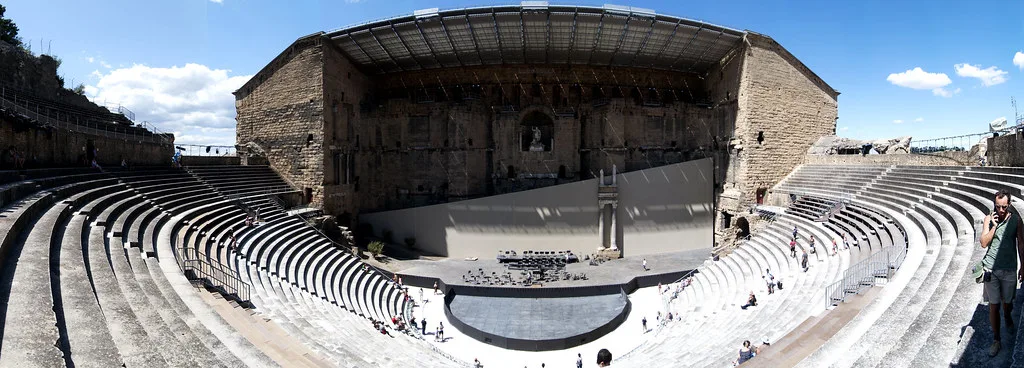
Taormina's theatre in Sicily is largely Greek, with later Roman rebuilding. That makes it a poor fit for a pure Roman list. Read about it among Greek sites beyond Greece instead. For a side-by-side comparison of the two traditions, use Roman and Greek ruins compared.
How to Choose and Plan Your Visit
Decide on three things before you pick a site. First, do you want original seating or a reconstructed stage? Second, do you want to see a performance, or simply walk the ruin? Third, can you handle uneven stone and heat? Most sites have little shade, so go early in summer. Orange is the better pick for a stage wall, Mérida for a full archaeological day, and Aspendos for a comparison trip. Base yourself in Orange for southern France and in Mérida for Extremadura.
Seeing a Performance in a Roman Theatre
A Roman theatre is at its best when it is used as one, but a performance changes the visit. The seating is original stone or heavily restored stone, and the stage is in the open air.
- Pick the festival, not just the site. Mérida hosts its classical theatre festival in the summer, usually July and August. Orange stages its summer opera and concert season on the original stage. Programmes and booking are on each theatre's official site.
- Book early. Popular evenings at both theatres sell out well ahead, so reserve before you fix your travel dates.
- Bring something to sit on. Stone benches are hard after an hour. A folded jumper or a thin cushion helps, though some venues restrict what you can bring, so check the rules first.
- Pack for the temperature drop. A hot afternoon can turn cool after sunset, particularly in the open theatre at night.
- Expect a limited daytime visit. On performance days the stage and seating may be closed for rehearsals or set-up. This is why the article above advises checking access before you travel.
If your main goal is photography or a slow walk through the ruin, avoid festival weeks. Choose a spring or autumn date when the site is open normally and the stone is less crowded and less hot.
Common Mistakes
These errors cost visitors the most time.
- Confusing theatres with amphitheatres and arriving at an arena when you wanted a stage.
- Visiting at midday in summer, with little shade on the stone seating.
- Assuming a site is open for walk-in visits on a performance day.
- Treating Taormina as Roman when most of what you see is Greek.
Where Roman Theatres Fit in a Longer Trip
Theatres work best as one stop on a route. Our guide to wider Roman ruins shows how to build that route. Add Roman towns that survive well for streets and houses. For the full context, return to the broader ancient ruins overview.
Standalone theatres can fit a 30–60 minute visit, while Mérida's wider ensemble calls for a half-day instead.
How Much Time to Allow at Each Theatre
Plan your time around the scale of the site and whether you are seeing a performance. Orange works well as a focused stop. Allow around 1 hour to see the stage wall, seating and visitor areas without rushing.
A standalone Roman theatre can often fit into a 30–60 minute visit. This suits travellers linking it with another nearby sight or continuing by road. Arrive earlier in summer, when the exposed stone seating has little shade.
Mérida needs more time because the theatre belongs to a wider Roman archaeological ensemble. Set aside a half-day if you want to combine the theatre with its neighbouring remains. Check access arrangements before performance days, since regular visitor entry may change.
Related guides
Continue reading
Guides on the same trip