
Uffington White Horse: Visiting Guide, History & Access
Last updated November 2026: the Uffington White Horse is a stylised chalk figure, roughly 3,000 years old, cut into the Berkshire Downs in Oxfordshire. You can see it from the Vale below or walk up to the hilltop, and the right choice depends on your legs, footwear and the weather. Uneven grass and chalk rule out wheelchairs and pushchairs, so plan your approach before you set out.
Featured image: Ethan Doyle White, CC BY-SA 3.0, via Wikimedia Commons.
What the Uffington White Horse is
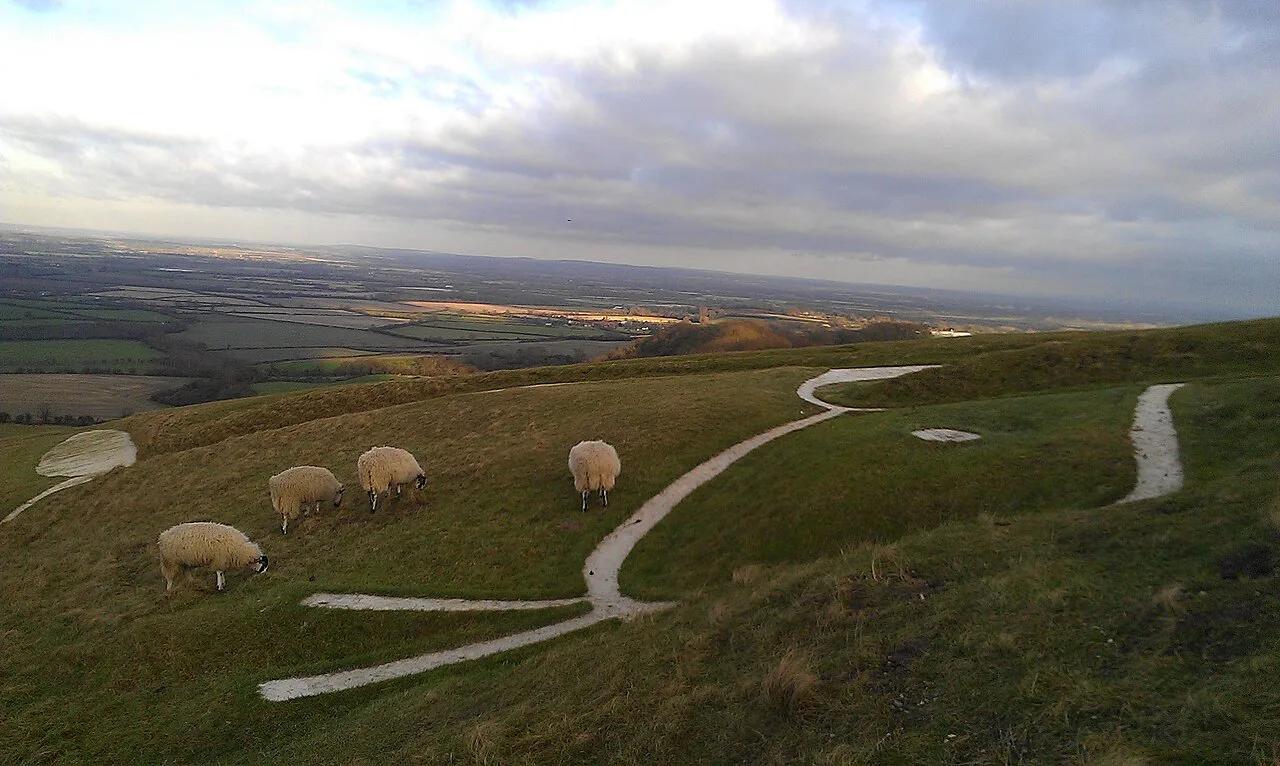
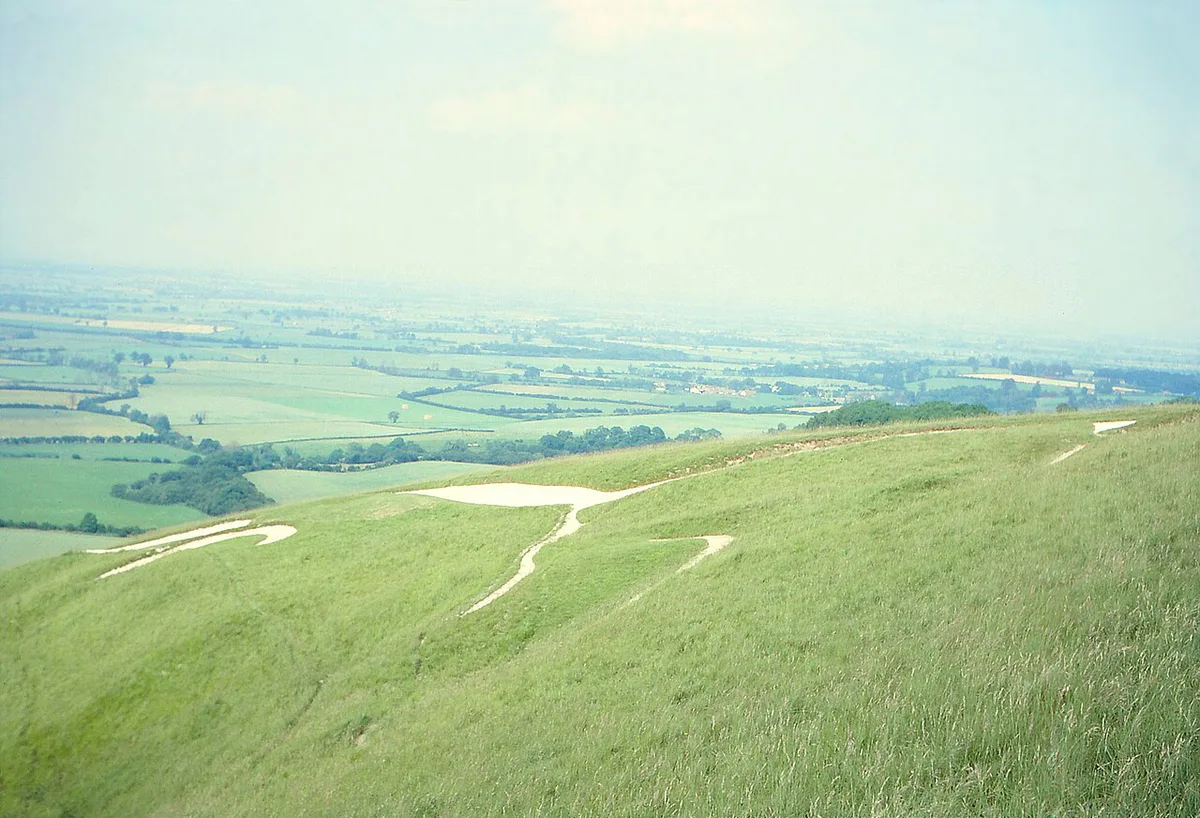
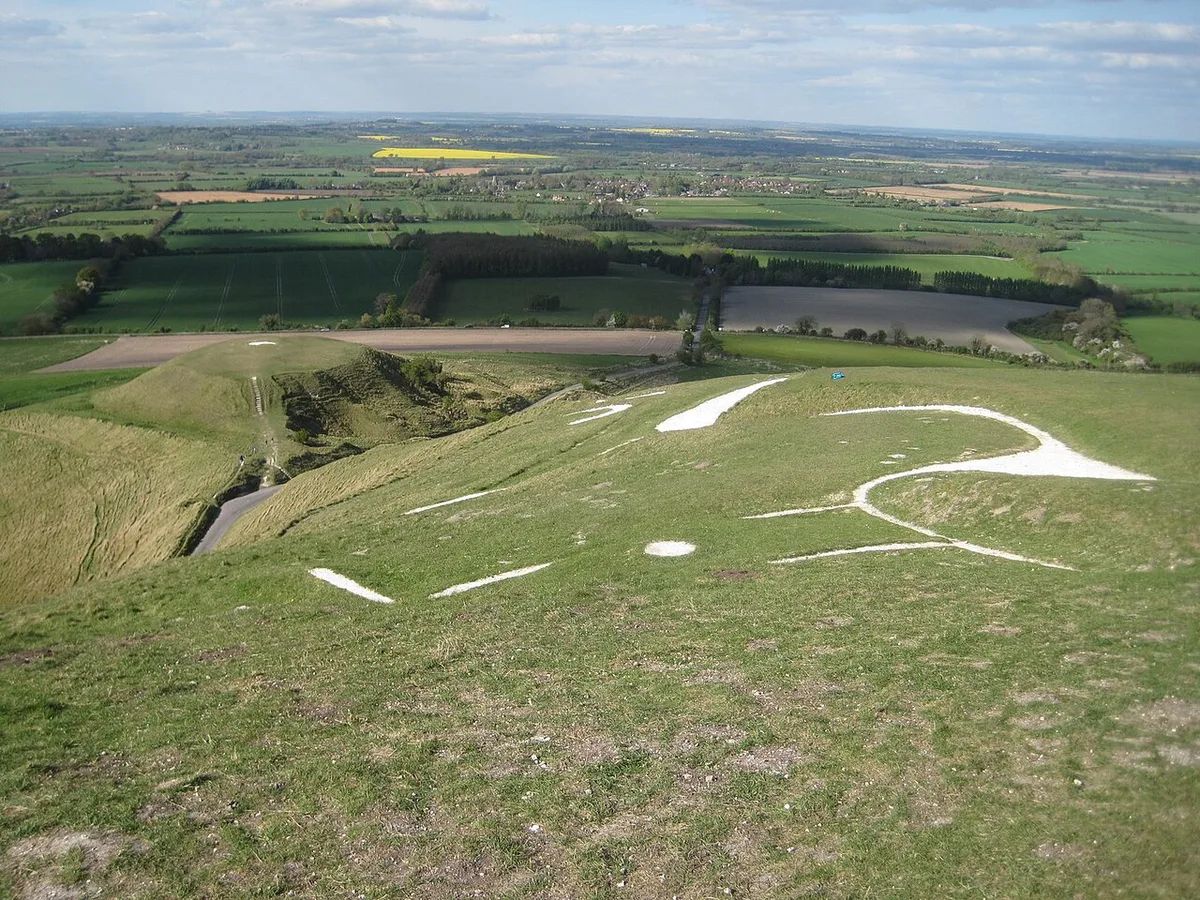
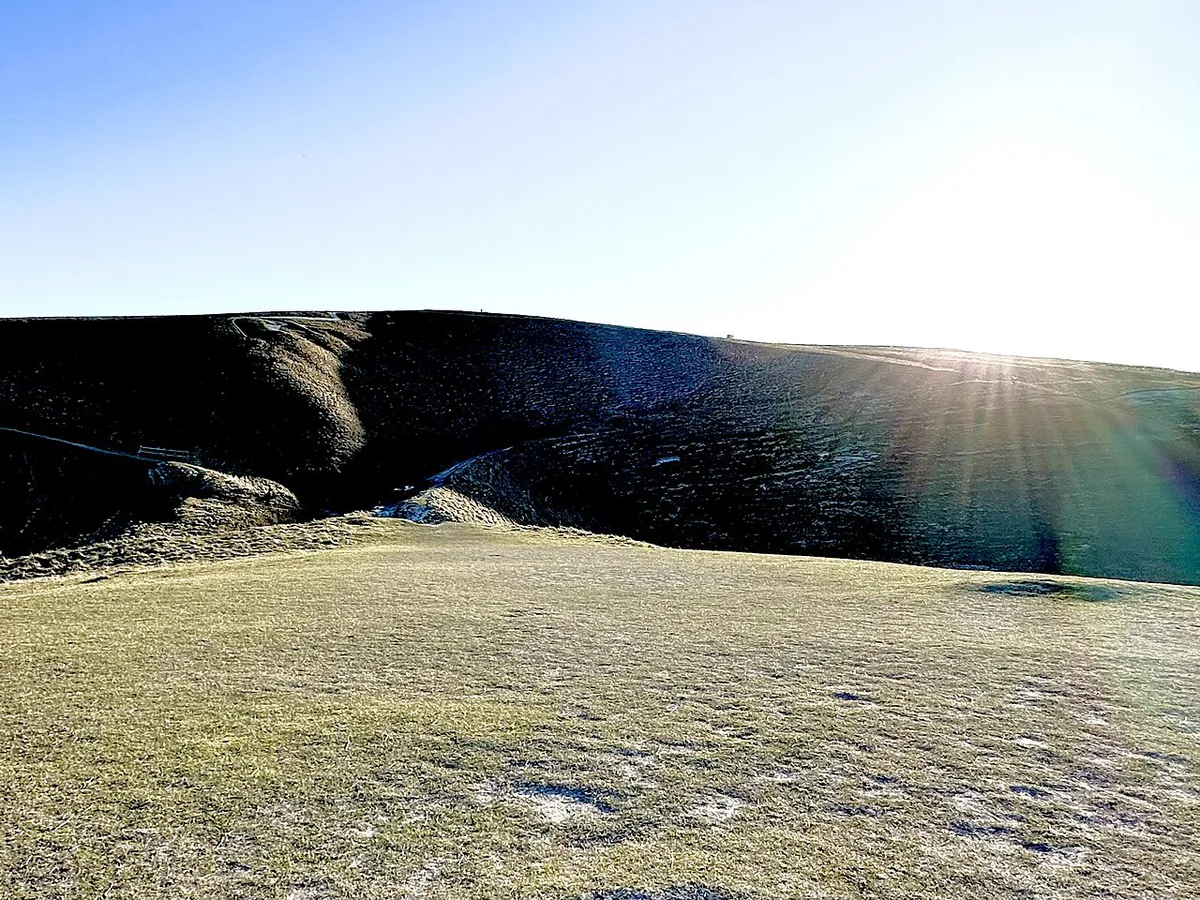
Uffington's horse is cut into the north slope of the Berkshire Downs, above the village of Uffington. Chalk is exposed in a hillside outline, so you see a shape rather than a building. Visitor sources describe it as Bronze Age, over 3,000 years old, and about 360 ft long. Age estimates differ between sources, so treat both numbers as approximate. Stuart Piggott's 1931 paper in Antiquity counted fifteen White Horses in Wiltshire and the adjoining counties. Only this one, he argued, can be dated before the 18th century. It gives its name to the Vale of the White Horse. Abingdon abbey records from the 11th century cite it as a landmark. A 14th-century manuscript lists it second among the Marvels of Britain, after Stonehenge. Why it was made remains debated. Joshua Pollard's 2017 Antiquity article on the geoglyph as sun-horse is one place to start reading.
Best way to see the Uffington White Horse
Seen from close range, the outline is hard to read, and the full shape is best understood from afar. Choose the option that matches what you want from the day.
| Option | What you see | Effort | Time | Who it suits |
|---|---|---|---|---|
| View from the Vale below | The full horse outline | Low | Shortest | Anyone who wants the shape, including those who cannot manage the climb |
| Walk up to the horse and hillfort | Hilltop, Uffington Castle, views across six counties | Uneven grass and chalk | Medium | Walkers in sturdy shoes |
| Longer Ridgeway walk | Hill plus Wayland's Smithy | Highest | Longest; check route maps | Confident walkers with a half day |
Getting there and parking
Use postcode SN7 7UK for navigation, and expect on-site parking. National Trust directions for White Horse Hill cover the route in full. Public transport timings change, so plan the last mile on a live journey planner. A taxi is the fallback from a nearby station if you book ahead.
Enter SN7 7UK for the car route, and book a taxi ahead from a nearby station as the fallback.
Access, terrain and who should skip the climb
Terrain is uneven grass and chalk, which makes the hilltop unsuitable for wheelchairs or pushchairs. Rain turns chalk slick and grass muddy, so wear boots or shoes with real grip. Assistance dogs are welcome, and other dogs must stay under close control. Livestock graze the surrounding fields. Anyone who cannot manage the slope still gets the best view of the figure from the Vale below.
Skipping the slope still gets you a view of the figure, which is about 360 ft long, from the Vale.
Best time to visit and what to bring
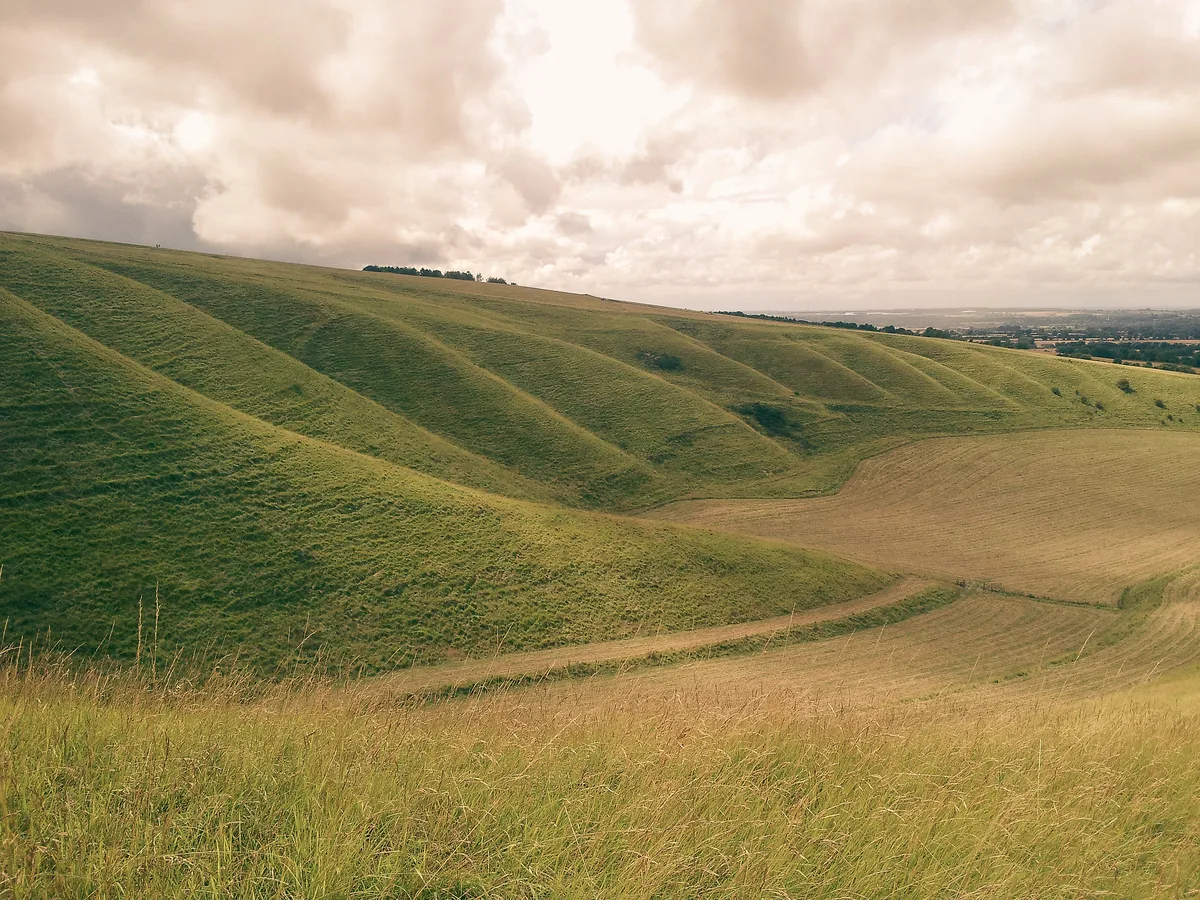
The hilltop is exposed downland with little shelter, so conditions matter more than the calendar.
- Dry spells: chalk and grass are most manageable after several dry days. After heavy rain the climb is slippery, and you may prefer the view from the Vale instead.
- Wind: the ridge is noticeably colder and windier than the car park, even on mild days. Bring a windproof layer.
- Light: morning and late afternoon light is lower and tends to make the hillfort ramparts and the horse's outline easier to read. Winter days are short, so plan the walk to finish before dusk.
- Crowds: fine weekends and school holidays are the busiest. A weekday morning is usually calmer, and parking is easier.
Pack list: boots or shoes with real grip, water, a snack (do not count on a café being open; check the National Trust page before you go), a phone with offline map, and a lead for your dog.
If you are walking on to Wayland's Smithy, allow extra daylight and bring a paper or offline map, because mobile signal on the downs can be patchy.
Costs and opening details
No verified figures for parking charges or opening arrangements are available here. Member benefits and any closures are set by the National Trust, so read its current White Horse Hill page before you leave.
What else is on the hill
The horse shares its hilltop with several named features. Each adds a reason to walk up rather than stop at the view.
- The Manger: a named feature of the site, alongside the horse.
- Dragon Hill: another named feature at the foot of the horse.
- Giant's Steps: a third named landscape feature on the same slope.
- Uffington Castle: an Iron Age hillfort with views for miles across six counties.
- Wayland's Smithy long barrow: a nearby prehistoric tomb that pairs naturally with the horse.
Legends and the scouring of the White Horse
Chalk figures do not stay visible by themselves. Left alone, turf and soil creep over the outline and the horse fades. Local communities kept it clear by scouring: clearing the grass and refreshing the chalk at intervals, traditionally every few years and often combined with a fair on the hill. Thomas Hughes wrote about one such festival in The Scouring of the White Horse (1859). Today the National Trust looks after the site, so you should not add chalk or alter the outline yourself.
Folklore has gathered around the neighbouring landforms too:
- Dragon Hill: the flat-topped mound below the horse. Legend says St George killed a dragon here and that its blood left a bare patch where grass will not grow.
- The Manger: the steep combe beside the horse, where the horse was said to graze.
- The horse itself: some stories treat it as a Saxon memorial. The Bronze Age date given above is the better-supported view, but it is still debated.
These are traditions, not documented history. They are worth knowing because they give the hilltop walk a story to follow, especially with children.
Combine it with other sites
A half day covers the horse, Uffington Castle and the hilltop views. Add a walk to Wayland's Smithy if you have the energy and dry ground. Uffington sits in Oxfordshire, not Wiltshire. Even so, prehistoric sites in Wiltshire make a natural wider trip. Avebury's stone circle is the obvious next stop on a Wessex itinerary. For more hilltop earthworks, compare Old Sarum's hillfort and Maiden Castle in Dorset. Stone circle fans can also visit the Rollright Stones circle, another Oxfordshire option. Browse England's stone circles for the wider picture.
Common mistakes to avoid
Most problems come from expecting the wrong kind of stop.
- Expecting to see the whole horse from beside it.
- Wearing smooth-soled shoes on wet chalk.
- Assuming step-free access.
- Treating Uffington as a quick roadside stop.
- Letting dogs run near livestock.
Frequently Asked Questions
What is the oldest white horse in the UK?
Piggott's 1931 study argued that Uffington is the only one of fifteen White Horses in Wiltshire and adjoining counties attributable to before the 18th century. Visitor sources call it Bronze Age and over 3,000 years old.
How many chalk white horses are there in the UK?
Piggott counted fifteen in Wiltshire and the adjoining counties in 1931. We have no verified national total, so check Historic England for a current count.
Related guides



Continue reading
Guides on the same trip



