Menhirs vs Dolmens: What They Are and Where to See Them in France
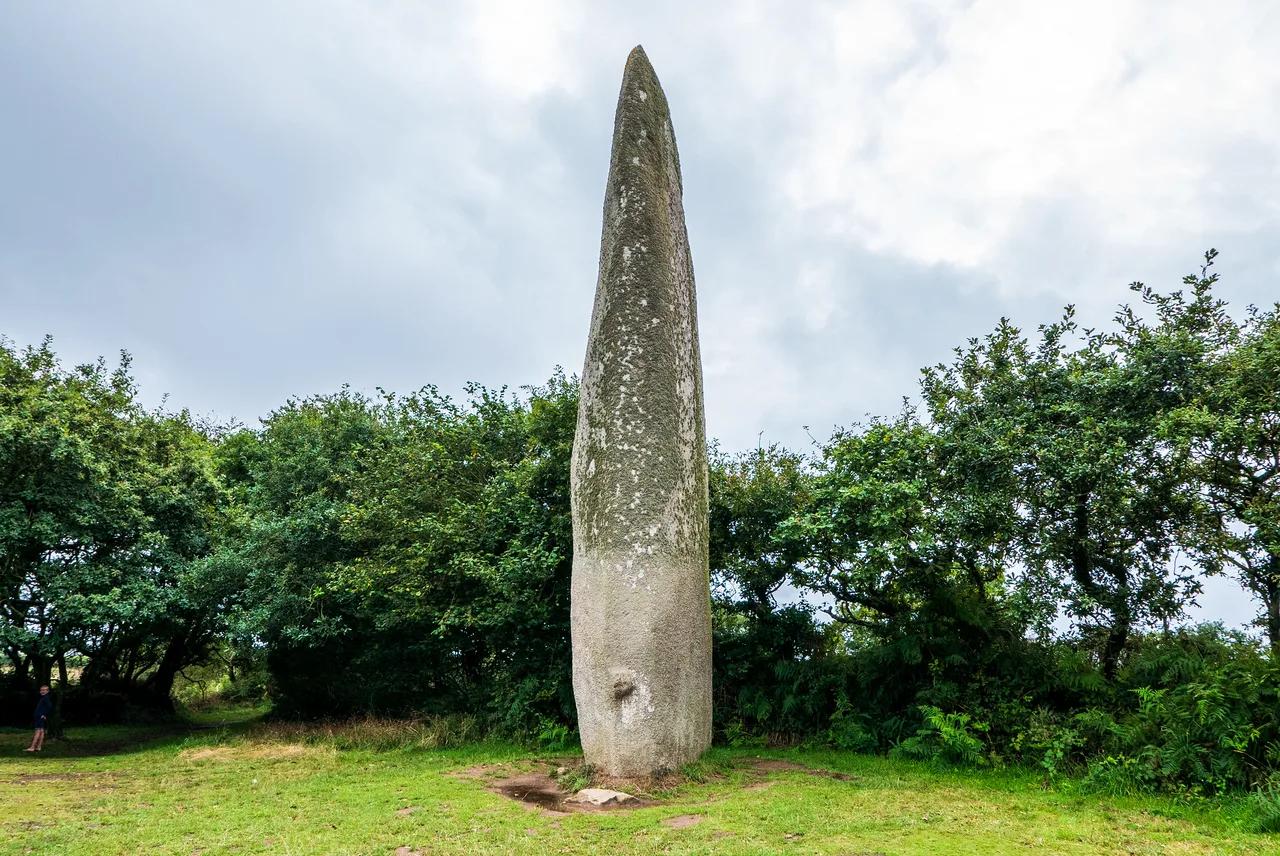
Last updated November 2026: a menhir is a single upright standing stone raised in prehistory, and in Brittany the great majority date to the Neolithic. A dolmen is a chamber of upright stones roofed with capstones, usually a tomb, so a menhir stands alone or in alignments while a dolmen encloses space. France offers both, with Brittany as the densest region to visit and Corsica as the contrast, and our Brittany megaliths guide maps the main area.
Featured image: Shadowgate, CC BY 2.0, via Flickr.
Menhir, dolmen, cromlech and tumulus: the quick difference
Four words cover most of what you will read on signs and in guidebooks. Each describes a different shape, and sites often combine several of them. Our guide to dolmens in France goes deeper on the chambered type. Earth-covered monuments are a separate case, and the Tumulus Saint-Michel is the clearest example in Brittany.
| Term | What it is | What you see |
|---|---|---|
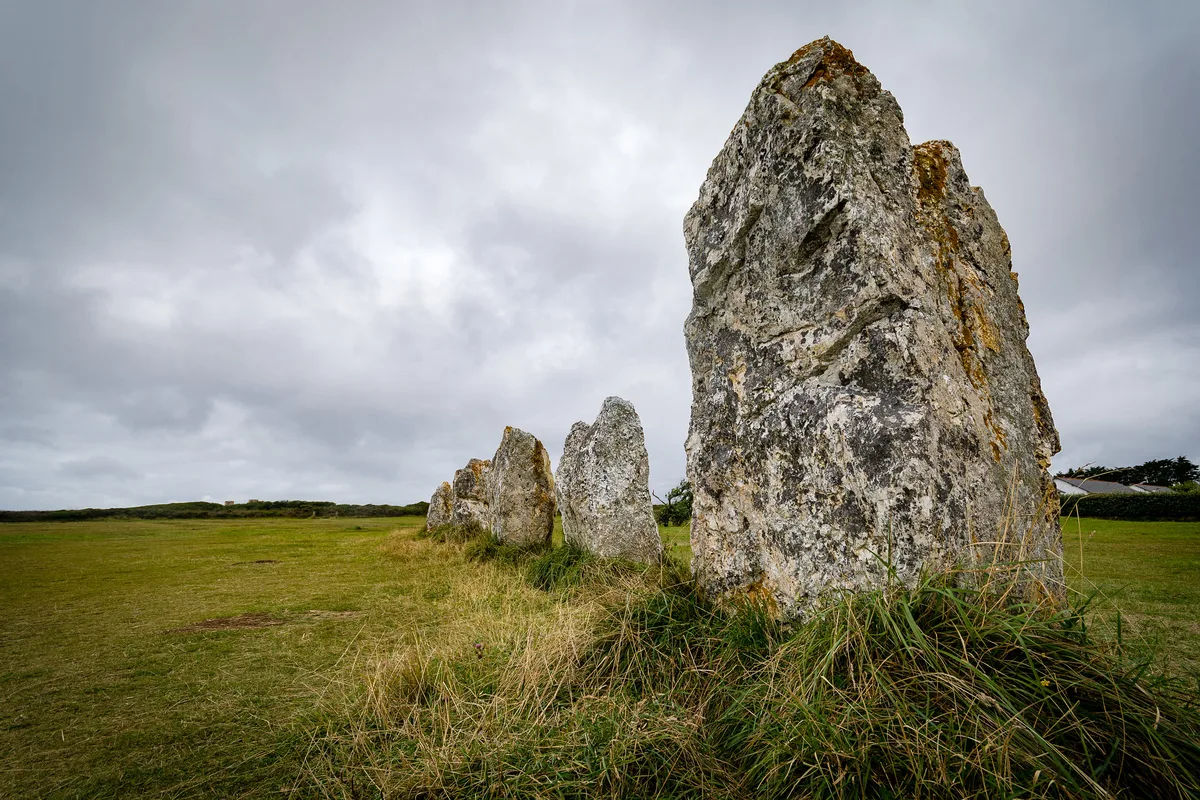
| Menhir | A single upright standing stone | One tall stone in a field, or many set in rows |
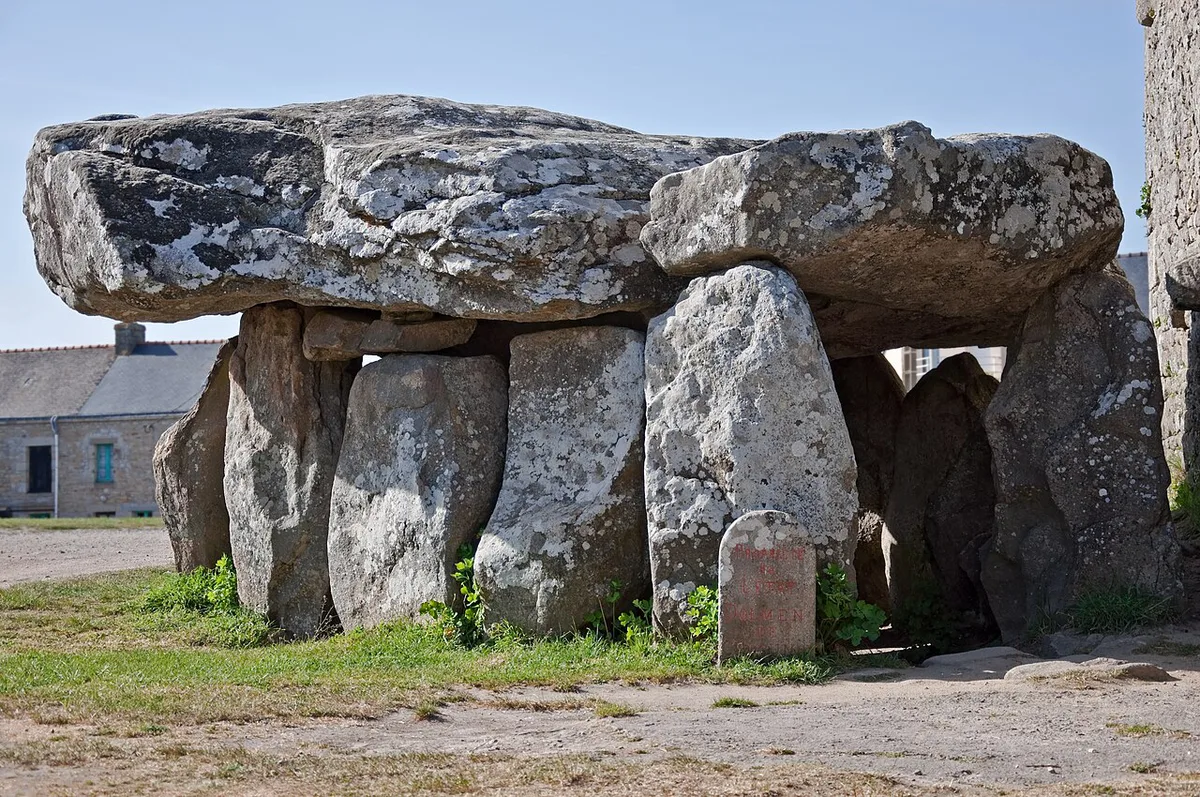
| Dolmen | A megalithic chamber, usually a tomb | Upright stones carrying flat capstones, often open to the sky today |
| Cromlech | An arrangement of standing stones in a circle or arc | A ring or curve of stones around an open space |
| Tumulus | A mound of earth or stones raised over a burial | A hill-like mound, sometimes with a chamber inside |
How dolmens were built and what they were used for
A dolmen looks like a stone table today, but most began as something different. Builders set large upright stones (orthostats) in a ring or a corridor, laid capstones across the top, and then usually piled earth or small stones over the whole structure. Centuries of erosion, farming and stone-robbing stripped many of those mounds away. That is why so many French dolmens now stand bare against the sky.
Two broad shapes are worth recognising on site:
- Simple dolmen: one chamber of uprights and a capstone, often with no visible entrance.
- Passage tomb: a narrow corridor leading to a chamber, with the whole structure covered by a mound or cairn. Gavrinis and Barnenez are the Breton examples in this guide.
Excavations have found human remains and offerings such as pottery and polished stone axes in many chambers, so the burial reading is well supported. Some tombs were reused for generations. The same builders also raised menhirs and alignments, but what those stones were for is far less settled.
On dating, Brittany holds some of the oldest monumental stone architecture in Europe. Radiocarbon work places the earliest cairn at Barnenez in the mid-5th millennium BC, which makes it older than Stonehenge. Treat any single date on a sign as an estimate, since many sites were built, altered and reused over long periods.
One practical point follows from this. If a dolmen looks small or plain, look for the outline of a surviving mound or kerb around it, and read the interpretation panel before you move on.
Where to see a menhir in France
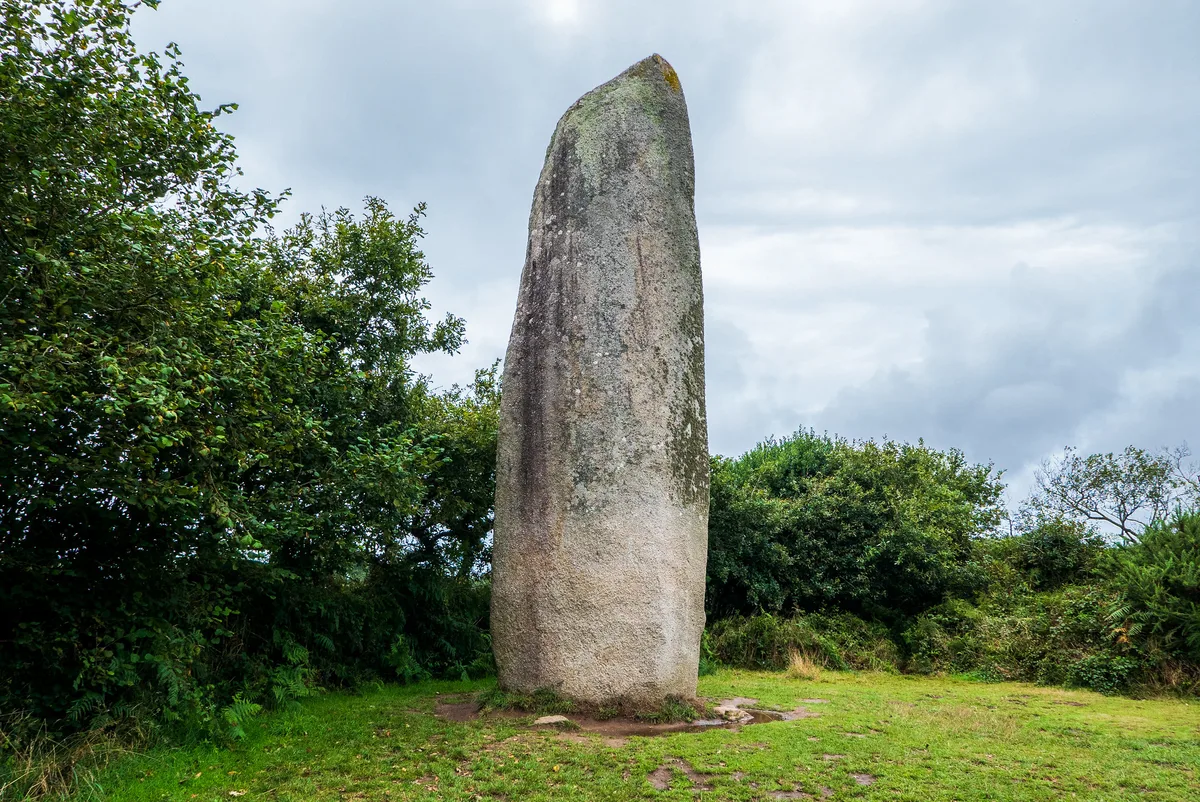
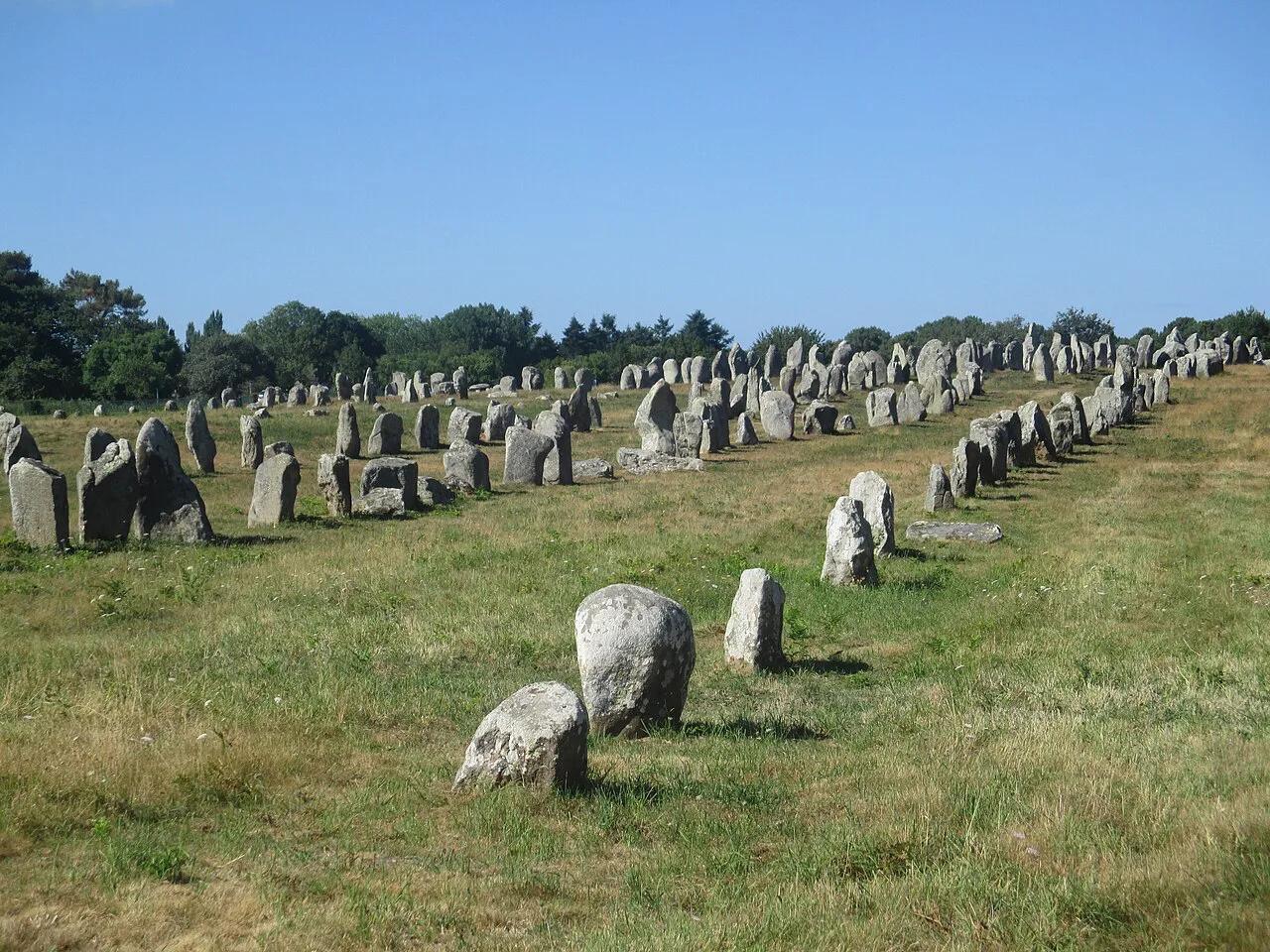
Brittany is the place to start. Carnac holds the famous alignments, where menhirs are set in long rows across the land, and our Carnac stones overview explains what you are looking at. Practical planning sits in the Carnac visit guide. Near the coast, Locmariaquer pairs standing-stone remains with a tomb in a single stop. For access rules at Carnac, the Centre des monuments nationaux is the official reference.
- Carnac: rows of standing stones in open ground, the classic alignment landscape.
- Locmariaquer: a compact site where menhir remains and a tomb sit close together.
- Filitosa in Corsica: carved standing stones in a very different island setting.
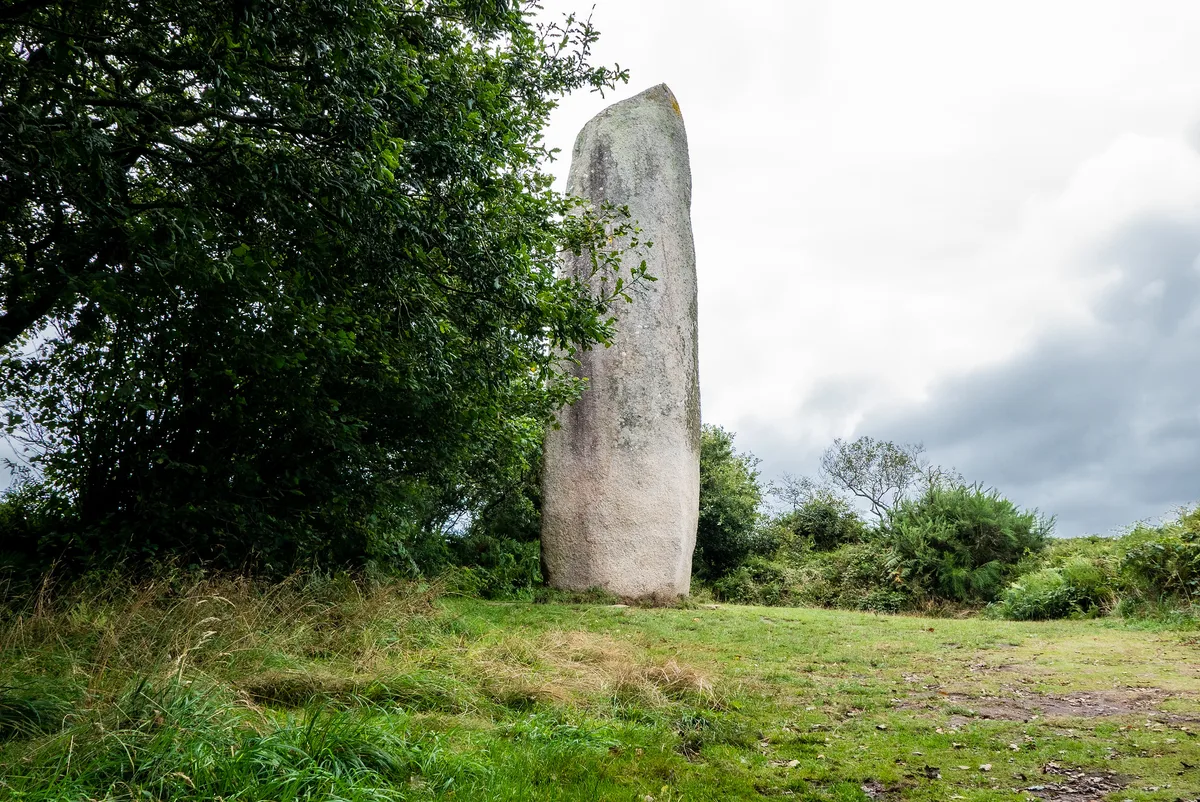
Filitosa: the Corsican contrast
Corsica shows that menhirs are not only a Breton story. Filitosa is known for its standing stones, and the island setting feels far from the Morbihan coast. Current access details are on the Corsica tourism site. Treat it as a second trip rather than a day out from Carnac.
Where to see dolmens and chambered tombs
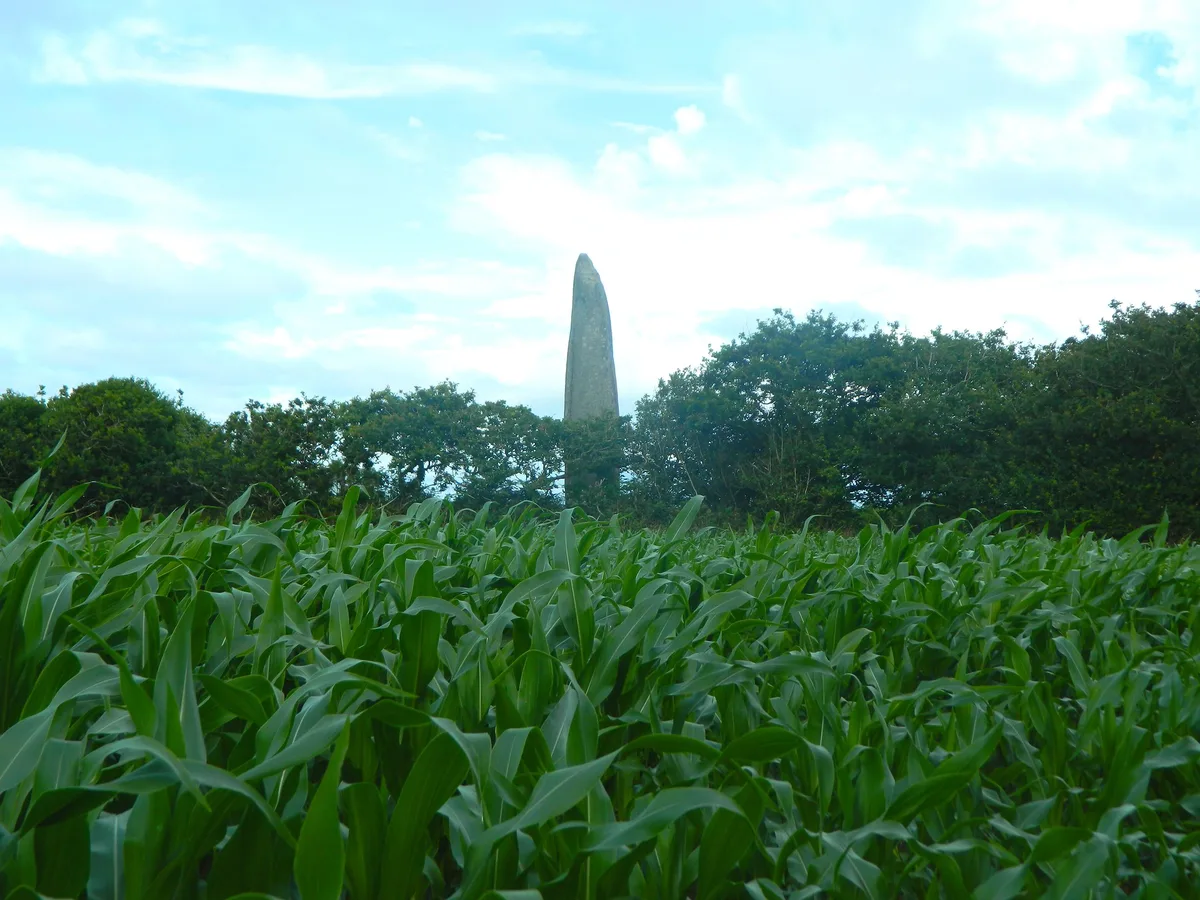
Dolmens and cairns are about interiors, so access matters more. Gavrinis is a decorated chambered tomb that depends on a boat crossing. Barnenez is a long stone cairn with chambers inside. Both are managed sites, and some chambers are viewed only from outside or on a guided visit. Check the linked guides for current rules before you plan around entering one.
Which site fits you?
Start with the kind of experience you want. Standing stones in a landscape suit a long, open-air walk. Enclosed tombs suit shorter, more structured visits. Free open-air sites generally cost less and bend to your schedule, while managed or ticketed ones add booking, boat or tour constraints. Walking effort varies, so look at each site's own page before assuming easy access. A car makes the scattered Breton sites far simpler, and the Carnac day trip from Vannes covers public-transport options.
| Site | What you see | Best for |
|---|---|---|
| Carnac alignments | Open-air rows of menhirs | Landscape and photography |
| Locmariaquer | Standing-stone remains and a tomb | A compact first stop |
| Gavrinis | Enclosed decorated tomb, reached by boat | Interior carvings |
| Barnenez | Large cairn with chambers | Seeing monumental construction |
| Filitosa | Carved standing stones in Corsica | A second, island trip |
- Mistake: confusing menhirs and dolmens. One is a single stone, the other encloses a chamber.
- Mistake: assuming every site is open all year. Seasonal closures and weather change access.
- Mistake: planning to walk among stones without checking. Carnac's rules have changed over time, so read the Morbihan tourism pages first.
A simple route for one or two days
Sequence matters more than a timetable. Begin with the open-air alignments while you are fresh and the light is good. Add an interpretation stop to understand what you have seen. Finish with a tomb, which gives the stones a purpose. A second day can add a boat-access site or the Barnenez cairn. Base yourself in Carnac or Vannes and use the linked guides for timings.
How to read a megalith site
Look at how stones are arranged: single, in rows, in a ring or around a chamber. Notice the landscape around them, including slopes, water and horizon lines. Signage and interpretation centres explain what archaeologists have found. Ideas about astronomy, ritual and purpose remain debated, so treat any single explanation as one theory rather than settled fact. Photograph a stone with a person or a path beside it, since scale is hard to see in a plain shot.
Best time to visit and what it costs
Most open-air standing-stone sites in Brittany can be seen without paying. Costs arise from managed sites, guided visits and boat crossings, so budget for those rather than for the stones themselves.
| Site type | Typical cost pattern | What to check |
|---|---|---|
| Open-air alignments and roadside menhirs | Generally free to view | Seasonal fenced areas and guided-only access in some zones |
| Interpretation centres | Usually a modest entry fee | Opening days and winter hours |
| Gavrinis | Boat crossing plus guided visit | Booking, tide and weather; trips can be cancelled |
| Barnenez and Locmariaquer | Ticketed national monuments | Current price and any free-entry days on the Centre des monuments nationaux site |
Fares and ticket prices change by season and year, so confirm them on the operator's or monument's official page before you book.
Season: April to June and September to early October are the most comfortable months. The light is good, the paths are drier than in winter and the crowds are thinner than in July and August. Summer is the busiest period, and boat-access sites are likely to be booked ahead. Winter visits suit the open-air stones, but some interpretation centres and boat trips run reduced schedules or close. Rain and wind off the Atlantic can also make field paths muddy.
Early morning or late afternoon works best at any open-air site. The low sun throws the stones into relief and makes the rows easier to read.
Related guides
Continue reading
Guides on the same trip