
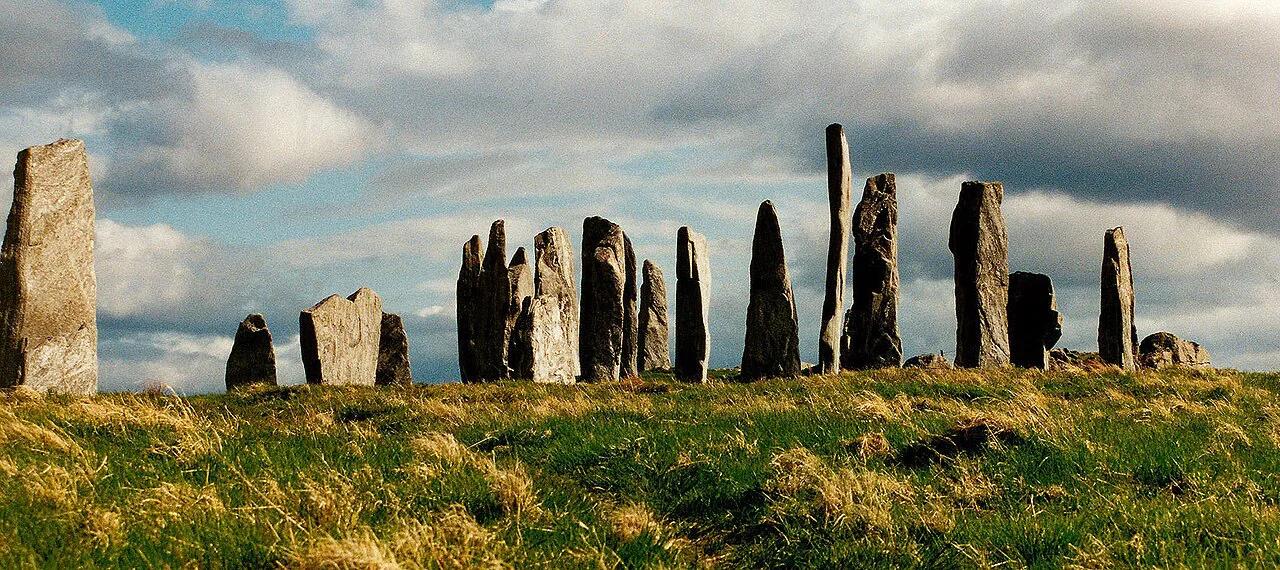
Last updated November 2026. The Callanish Stones, spelled Calanais in Gaelic, are a Neolithic stone setting on the Isle of Lewis in the Outer Hebrides. Their cross-shaped layout makes them one of the most distinctive prehistoric sites in Scotland's standing stone landscape. This guide covers what you see, how to reach Lewis, how long to allow and which nearby sites are worth adding.
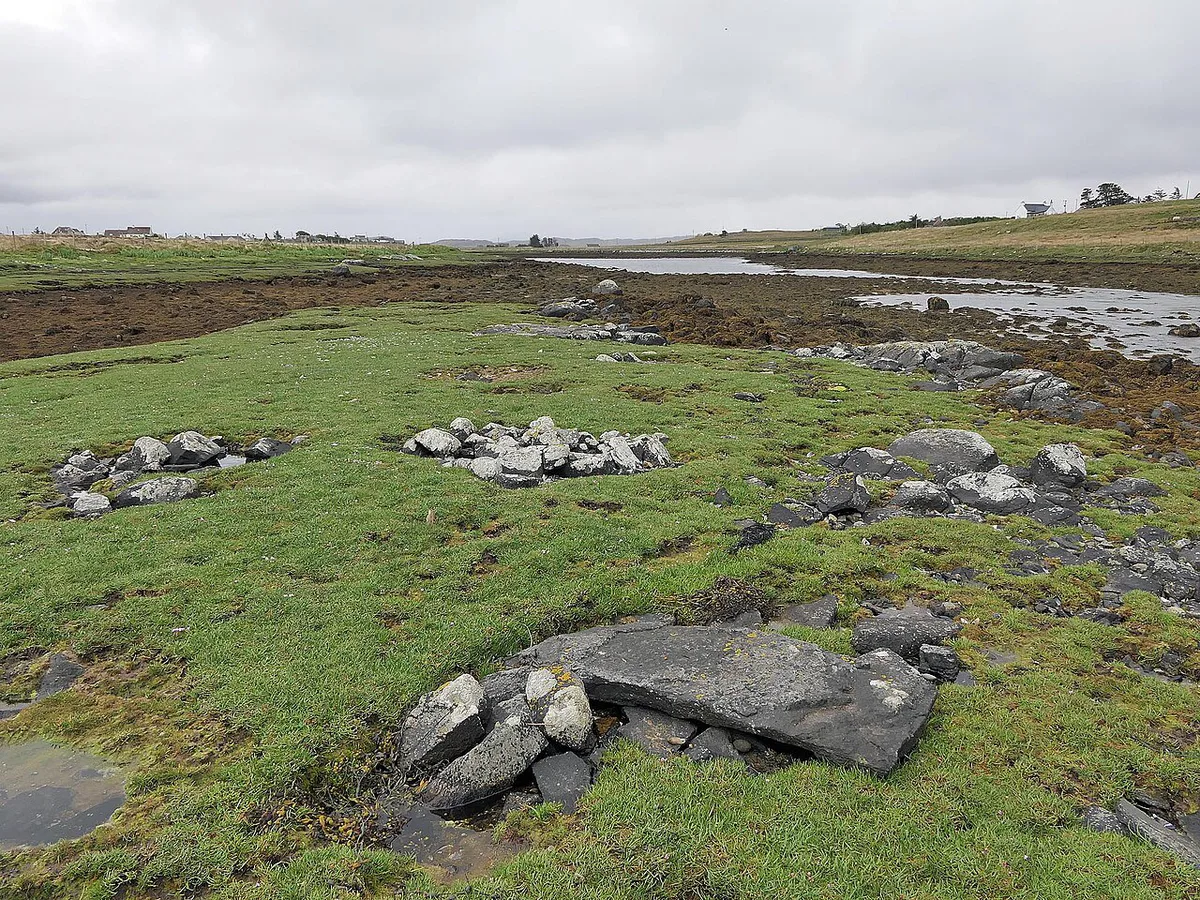
Featured image: Marta Gutowska, CC BY 2.5, via Wikimedia Commons.
What the Callanish Stones are
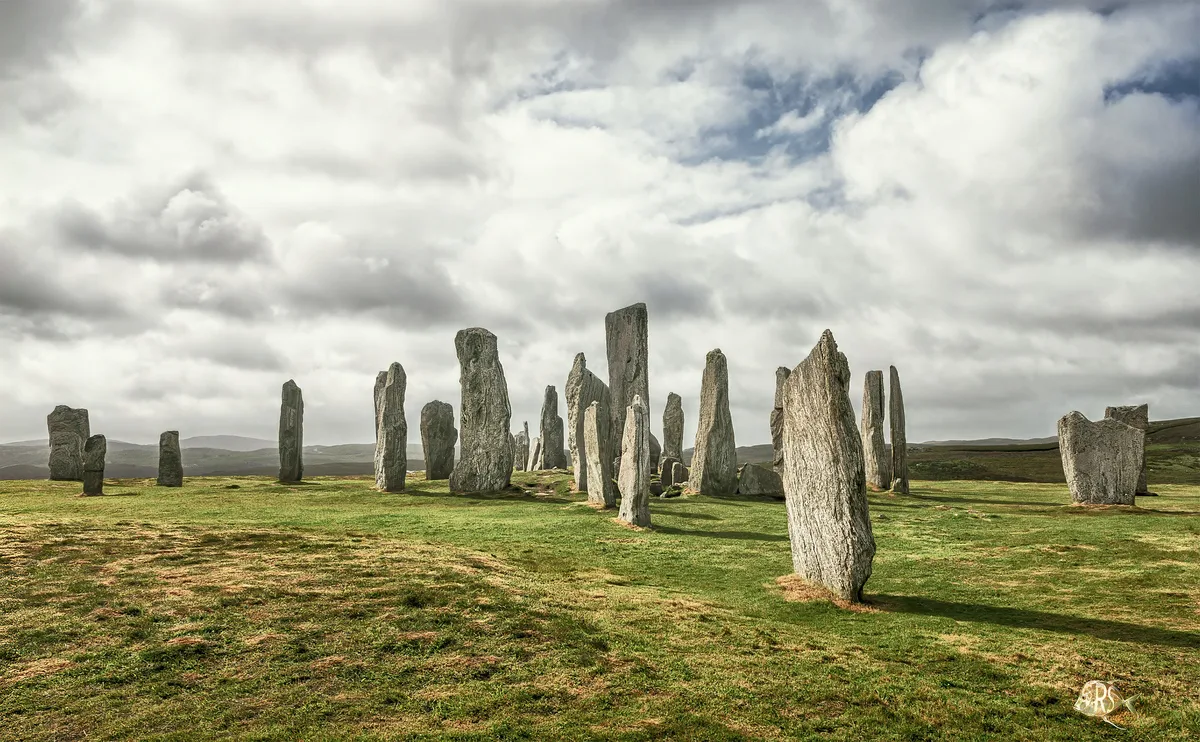
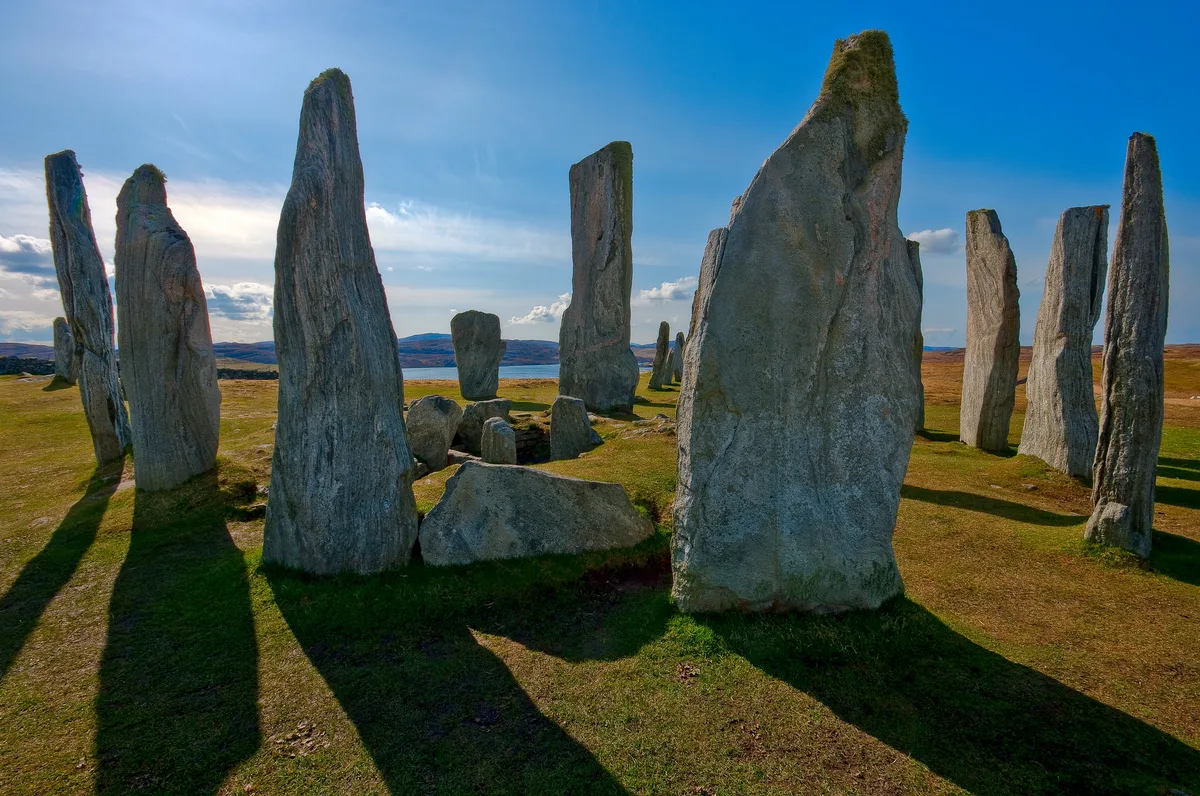
Calanais is a cruciform setting of standing stones at Callanish on the Isle of Lewis. A central stone circle sits inside a cross-shaped arrangement of stone rows. Historic Environment Scotland presents the site as Neolithic, and popular accounts put its building at roughly 5,000 years ago. Dates and construction phases are best taken from the official site, because archaeologists still refine them. Why the stones were raised is interpretation rather than proven fact. Many writers suggest ritual and astronomical roles, but no one can confirm what the builders intended.
Layout of Callanish I: circle, avenue and rows
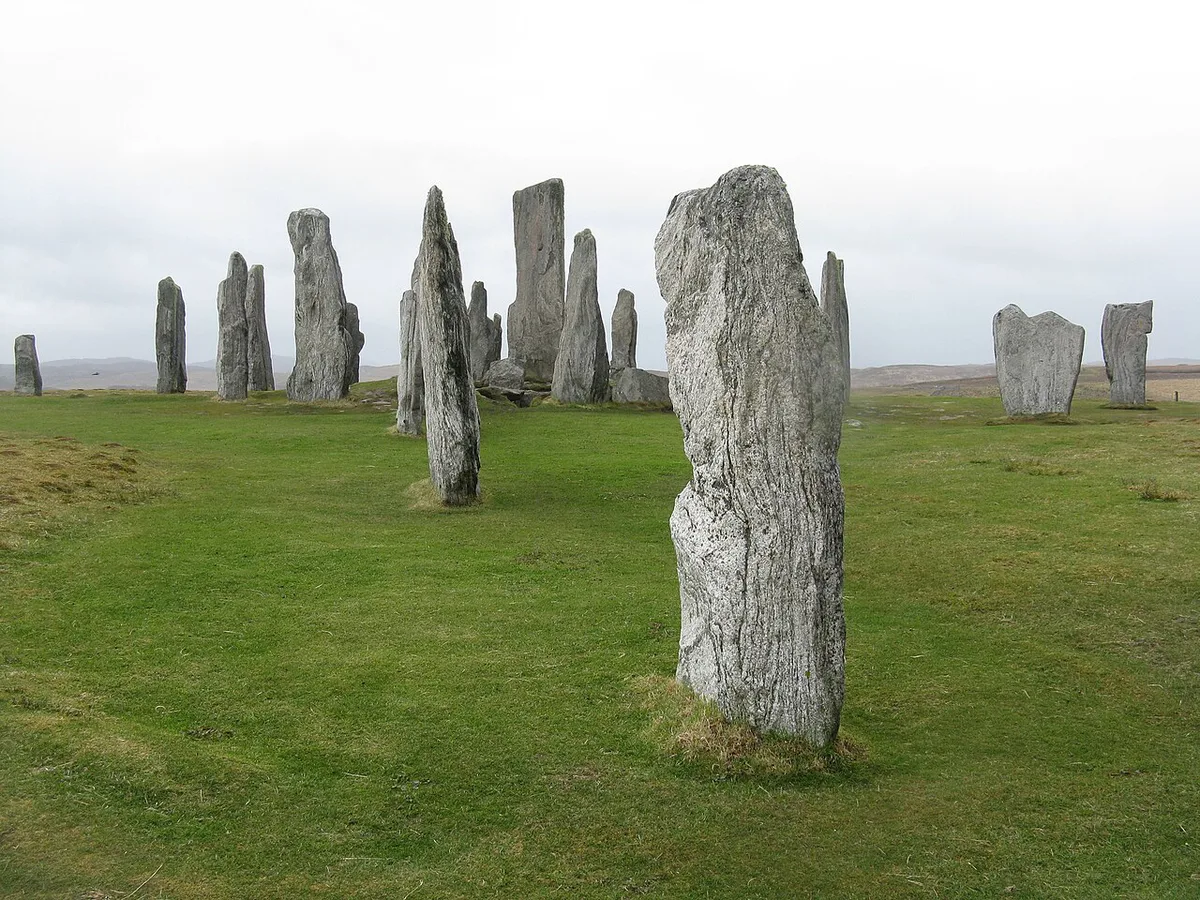
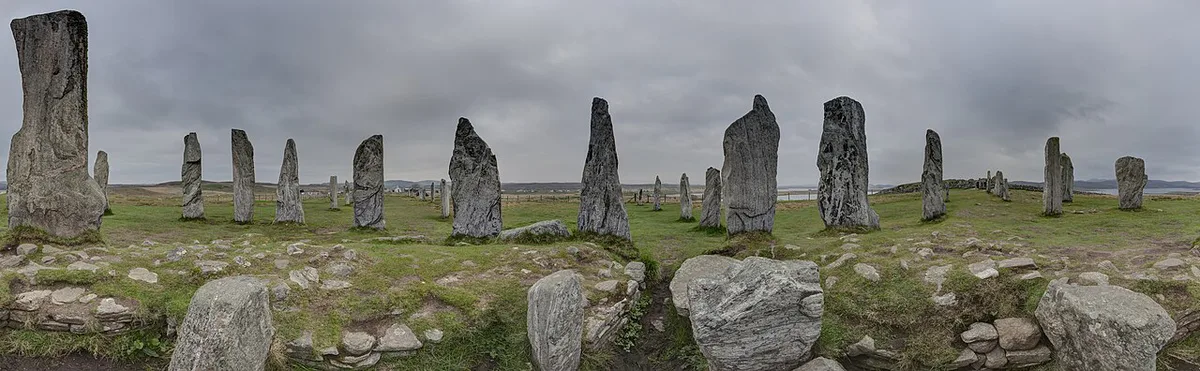
Knowing the plan helps you read the site as you walk it. The main setting, usually called Callanish I, is built from a few distinct parts that together form the cross shape.
- Central monolith: a tall slab of Lewisian gneiss at the middle of the circle, about 4.8 metres high. It is the stone most visitors photograph first.
- Stone circle: a ring of 13 stones around the monolith.
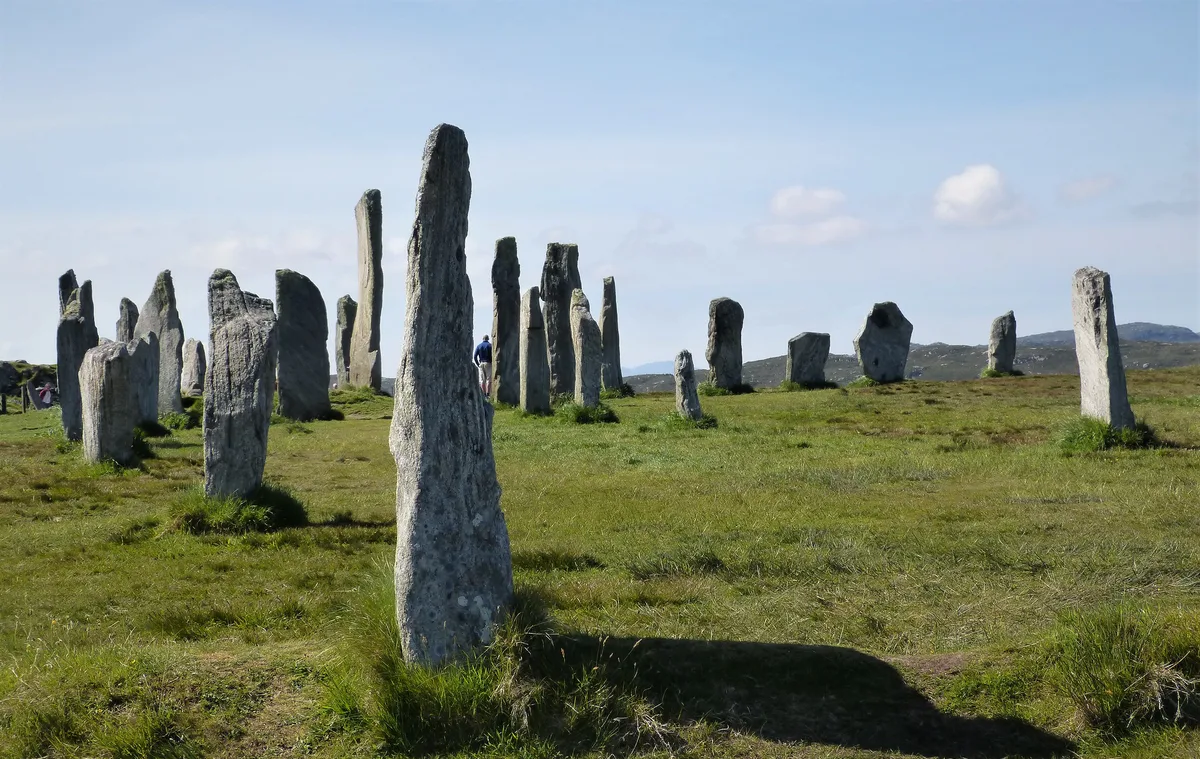
- Avenue: a double line of 19 stones running north from the circle. It is the longest arm and gives the cross its long axis.
- Single rows: shorter lines of stones extending east, south and west.
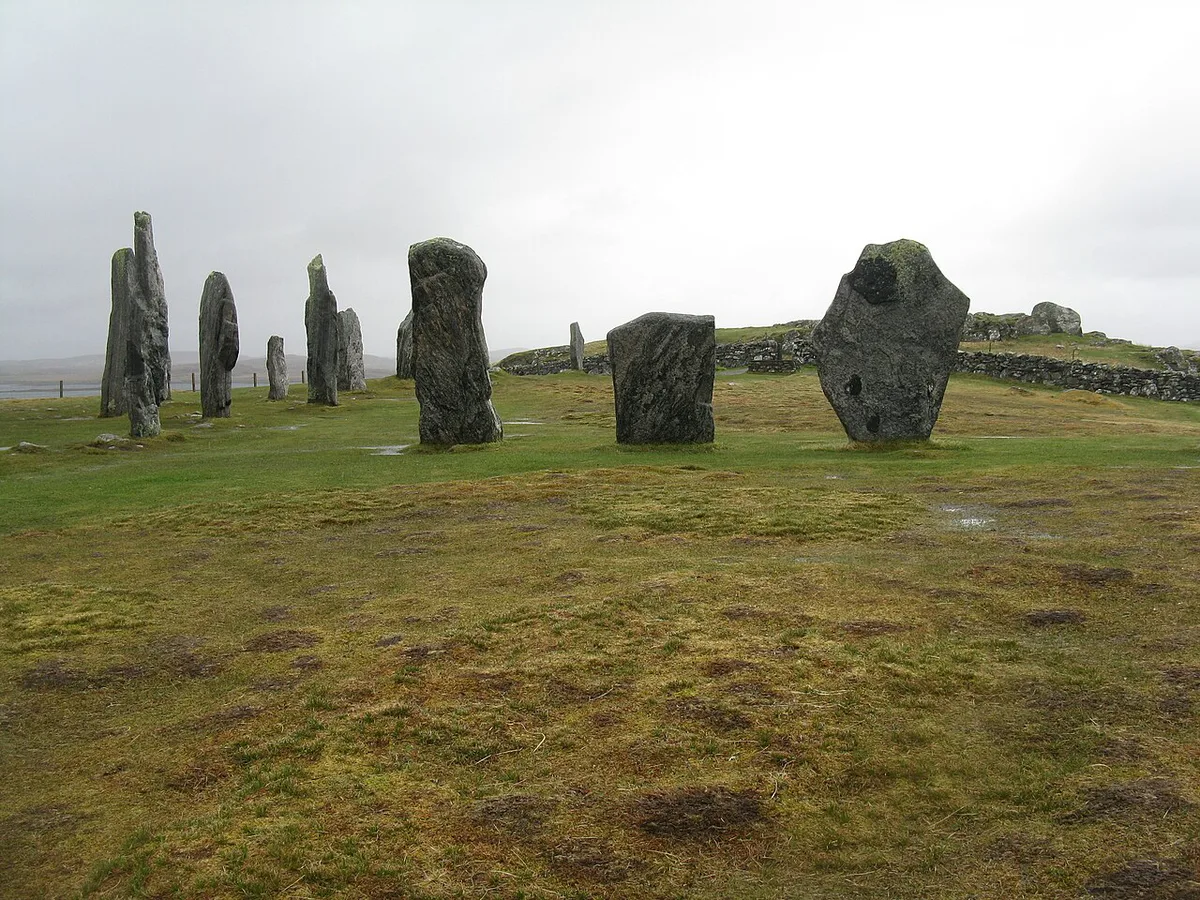
- Chambered cairn: a small burial structure inside the circle, between the monolith and the east side of the ring. Many people walk past it without noticing.
Stand at the head of the avenue and look back towards the circle to see the cross-shaped plan most clearly. Walking the full outline takes longer than a glance from the path, which is why the half-day option in the timing table suits most visitors.
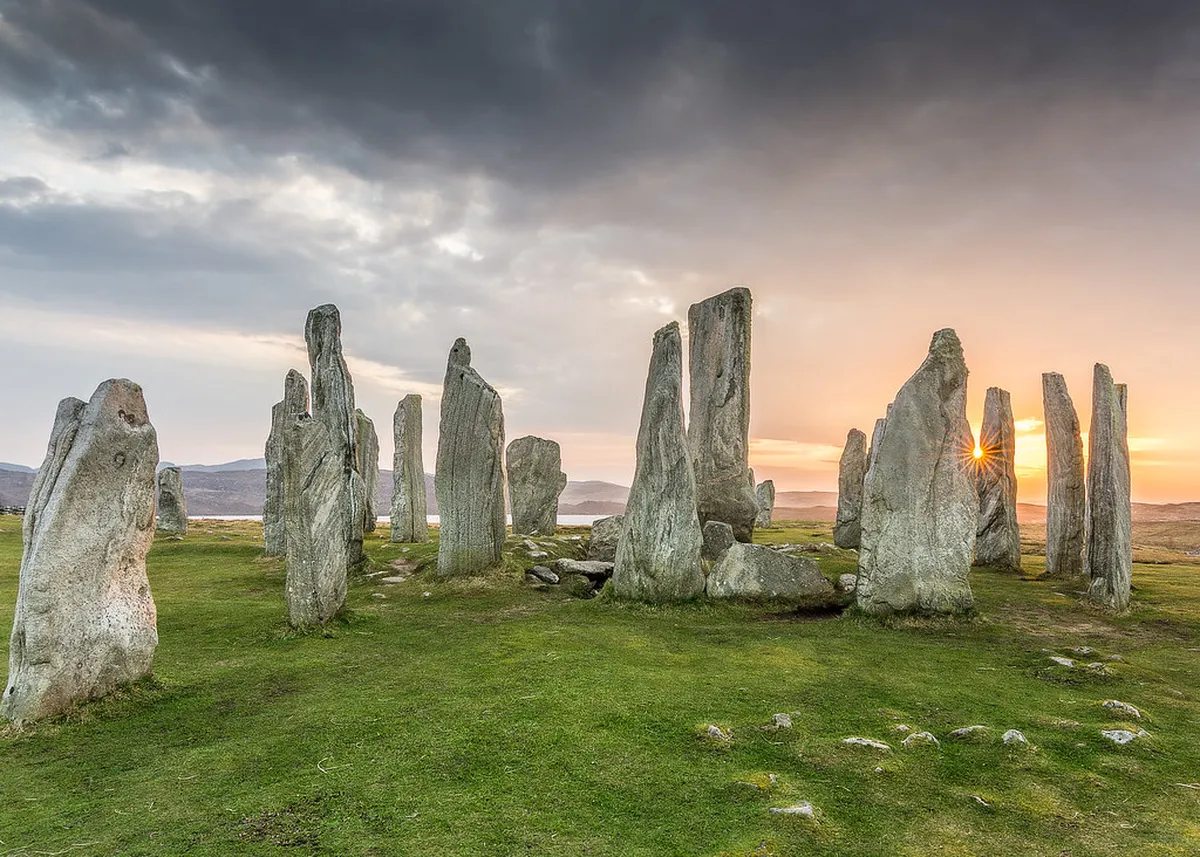
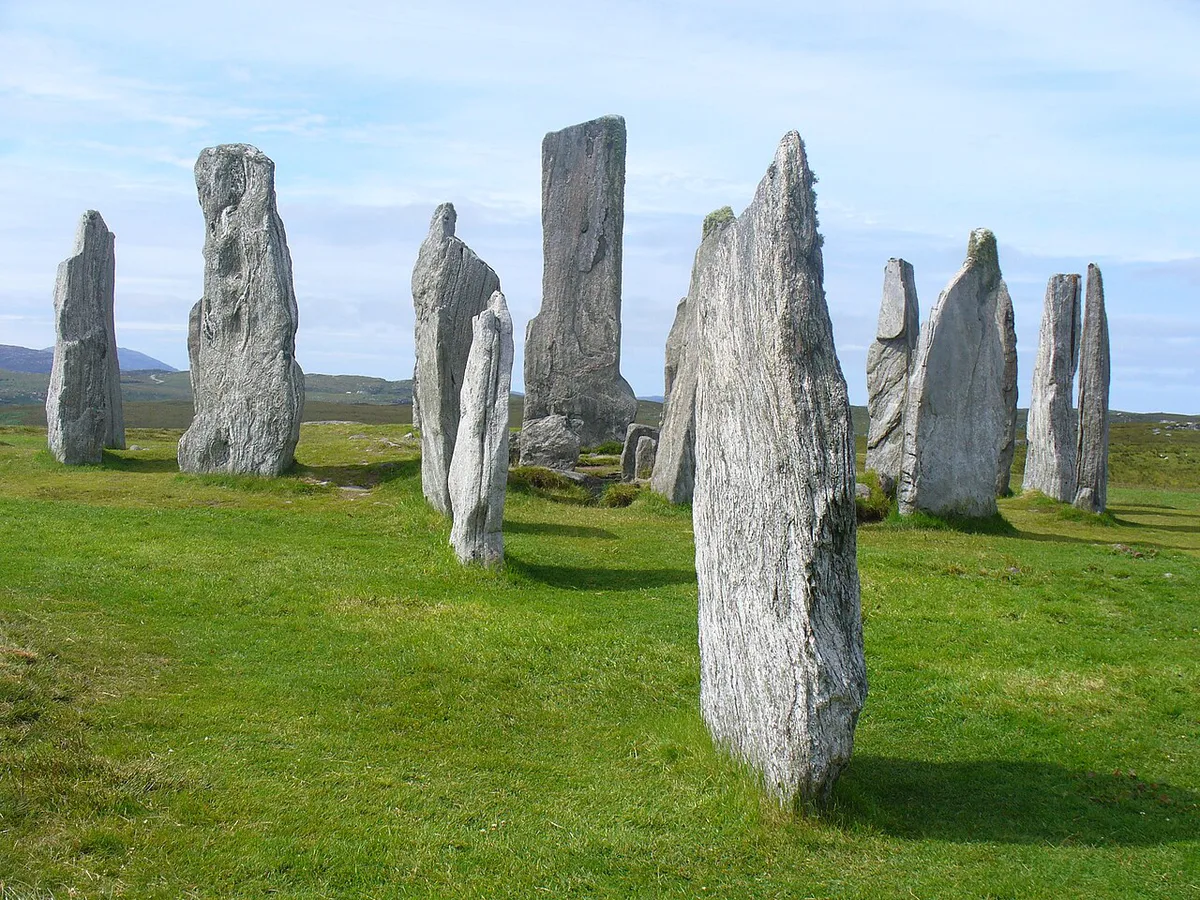
Gneiss is among the oldest rock in Britain, and the stones are streaked and banded rather than smooth. Light changes their texture a great deal. For a different kind of Neolithic setting, the Standing Stones of Stenness in Orkney use thin upright slabs rather than heavy gneiss pillars.
Is Callanish worth the trip?
Callanish rewards visitors who already plan to be on Lewis. It is a single-site visit, not a day of sightseeing, so judge it as part of a wider island route. Skip it if you have only a few hours on Lewis and no car. Public transport and tours can be limited, and the journey from Stornoway will consume most of your time. If you want standing stones on the mainland instead, visiting Clava Cairns from Inverness is a simpler alternative.
- Worth it for: prehistory fans, photographers and anyone already crossing to the Outer Hebrides.
- Think twice if: you have a short layover in Stornoway and no way to reach the west coast.
- Mistakes to avoid: arriving without checking ferry or flight timings, assuming everything opens on Sundays, and underestimating how fast island weather changes.
How to get to Callanish from Stornoway and the mainland
Lewis is reached by ferry or by air from the mainland, so check current CalMac and airline timetables before you build a plan around the stones. From Stornoway, the west-coast village of Callanish is a road journey. A rental car gives the most freedom. Other options trade flexibility for convenience. Visit Outer Hebrides is a good starting point for current local transport and tour information.
| Option | Flexibility | Cost level | Best for |
|---|---|---|---|
| Rental car | Highest: you set the timing and can add other Lewis sites | Mid-range once fuel is counted | Visitors combining Callanish with Dun Carloway and the west coast |
| Local bus | Low: tied to timetables, with fewer services on Sundays | Cheapest | Budget travellers with a flexible schedule |
| Guided tour | Fixed itinerary, no driving | Dearer than the bus | Visitors without a car who want context |
| Taxi | High but short-term | Dearest per trip | Small groups with a tight schedule |
Visiting the stones: access, visitor centre and charges
Historic Environment Scotland manages Calanais, and its page is the place to check current access arrangements. Opening days, seasonal changes, any charges and the exhibition and cafe facilities can change between seasons. Check them there before you travel rather than relying on older guides. Treat the site with care. Do not climb on the stones, and keep dogs under control. Look up the current rules on drones before flying one. Sunday observance is strong on Lewis, so expect some services to be closed or limited on that day. Accessibility depends on path surface and parking distance, which the official page should clarify before you go.
How long to spend at Callanish
Allow time to walk the whole setting rather than photograph it from the car park. These are rough planning ranges, not official figures. Add a buffer for weather and for stops on the way back to Stornoway.
| Plan | What it covers | Rough pace |
|---|---|---|
| Quick stop | Main stones only | Short visit, best with a car |
| Half-day | Stones plus visitor centre and a slow walk round the setting | Relaxed, with time for photos |
| Full day on Lewis | Stones, satellite circles and other west-coast heritage sites | Needs a car and an early start |
Best time to visit: weather, light, crowds and midges
Weather in the Outer Hebrides changes quickly, so pack a waterproof layer and windproof clothing in every season. Summer brings long daylight hours and the best chance of photographing the stones at sunrise or sunset. Summer is also when midges and visitor numbers peak. Winter days are short, which limits your time on site. Cruise-ship arrivals at Stornoway can make midday busier, so early morning or late afternoon is a safer choice. Some writers link the site to the lunar standstill, a long-cycle moon alignment. That remains a theory, so check the official site for any dated claims.
Photographing the Callanish Stones
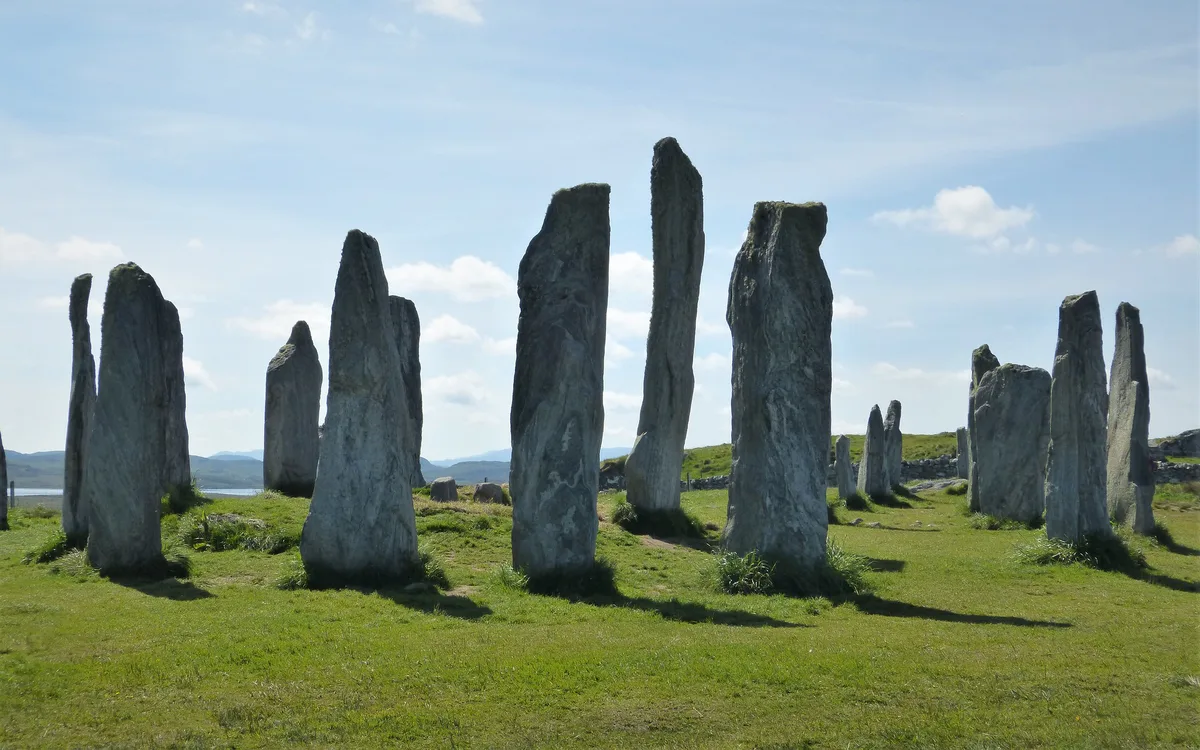
Callanish is one of the most photographed prehistoric sites in Scotland, and the conditions you choose matter more than the camera.
- Go early or late. Low sun picks out the grain in the gneiss. Midday light is flat, and the busiest hours bring more people into the frame.
- Shoot along the avenue. The double line of stones leads the eye to the central monolith. A wider lens from the north end captures the cross plan better than shots from the car park.
- Use cloud and dusk. Moody skies suit the stones well. In the long days of summer, the light near sunset can last a long time.
- Keep the stones intact. Do not climb on them or lean equipment against them. Check Historic Environment Scotland's current rules before flying a drone.
- Protect your kit. Wind and sudden showers are common, so carry a rain cover and a lens cloth.
If you plan to stay for a late-evening shoot, remember that daylight hours vary greatly between summer and winter on Lewis. Midges are worst at dawn and dusk in warm, still weather, so bring repellent or a head net.
Nearby sites worth adding
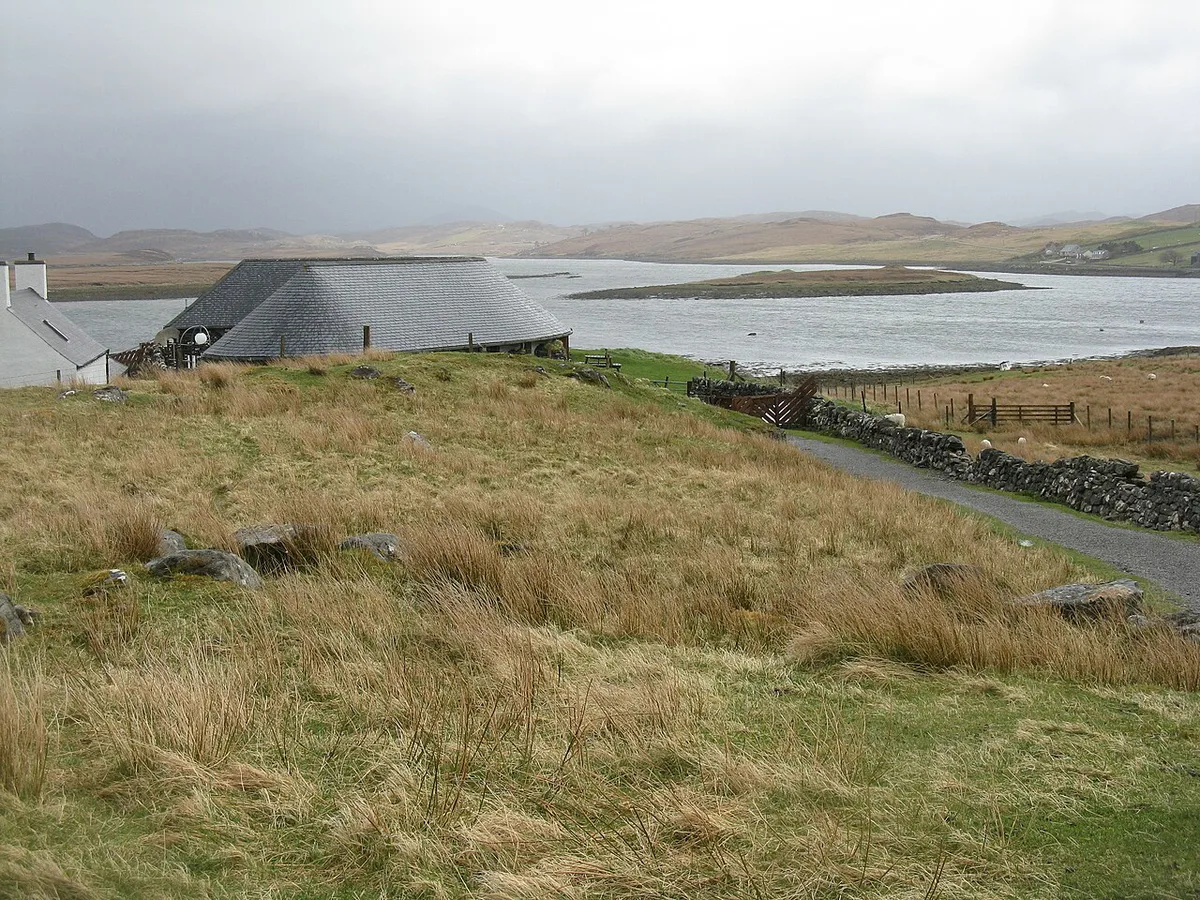
Callanish is not one monument. Smaller satellite circles lie within the same area and are often numbered Callanish II and III, with other settings nearby. Check the official site for their names, distances and access before you go. For a heritage pairing on the same day, add Dun Carloway Broch Guide: Visiting Lewis's Iron Age Tower on Lewis's west coast. If you enjoy Iron Age towers, brochs across Scotland puts it in wider context.
Pairing the satellite circles Callanish II and III with the main stones turns a quick stop into a full day, which needs a car and an early start.
How Callanish compares with other Scottish stone sites
Callanish stands out for its cross-shaped plan. Mainland sites offer different experiences and are easier to reach. Clava Cairns near Inverness has burial cairns ringed by standing stones. Machrie Moor on Arran is another island option with several circles on one moor. For a wider prehistoric route, see Kilmartin Glen's ritual landscape and Jarlshof in Shetland.
Where to stay and practical tips
Stornoway has the widest choice of places to stay and the island's main transport links. The west coast near Callanish is quieter, but it depends on a car and fills up quickly in summer. Book early in peak season. Bring layers, waterproofs, sturdy footwear and midge protection from late spring through summer. Fill the fuel tank and buy supplies in Stornoway, because services thin out on the west side, especially on Sundays.
Related guides



Continue reading
Guides on the same trip



