
Ancient Theatre of Ohrid: History, Access & Visit Tips
Last updated November 2026. The ancient theatre Ohrid is a Hellenistic theatre later adapted in Roman times, set in the old town below Samuel's Fortress in North Macedonia. It still hosts summer performances, which makes it a working stage as well as a ruin. This guide covers its history, the walk up, access checks and how it fits with the wider Roman Ruins in the Balkans: 12 Sites Worth Visiting.
Featured image: liako, CC BY-SA 2.0, via Flickr.
Ancient Theatre of Ohrid at a Glance
Expect a compact, partly reconstructed site. It is not a Split- or Pula-scale monument. It rewards history and architecture fans and festival-goers most. Visitors with one short stop in town can fit it in as a quick detour on the way to the fortress.
| Traveller type | Verdict |
|---|---|
| History buff | Visit it: Hellenistic origins with Roman-era changes |
| Festival-goer | Visit it: an evening performance is the strongest reason to come |
| Family | Combine it with the fortress and lakefront |
| Mobility-limited | Approach is over cobbles and a climb |
| Day-tripper with little time | Skip it, or pass by on the way to the Upper Gate |
History: Hellenistic Origins to Roman Arena
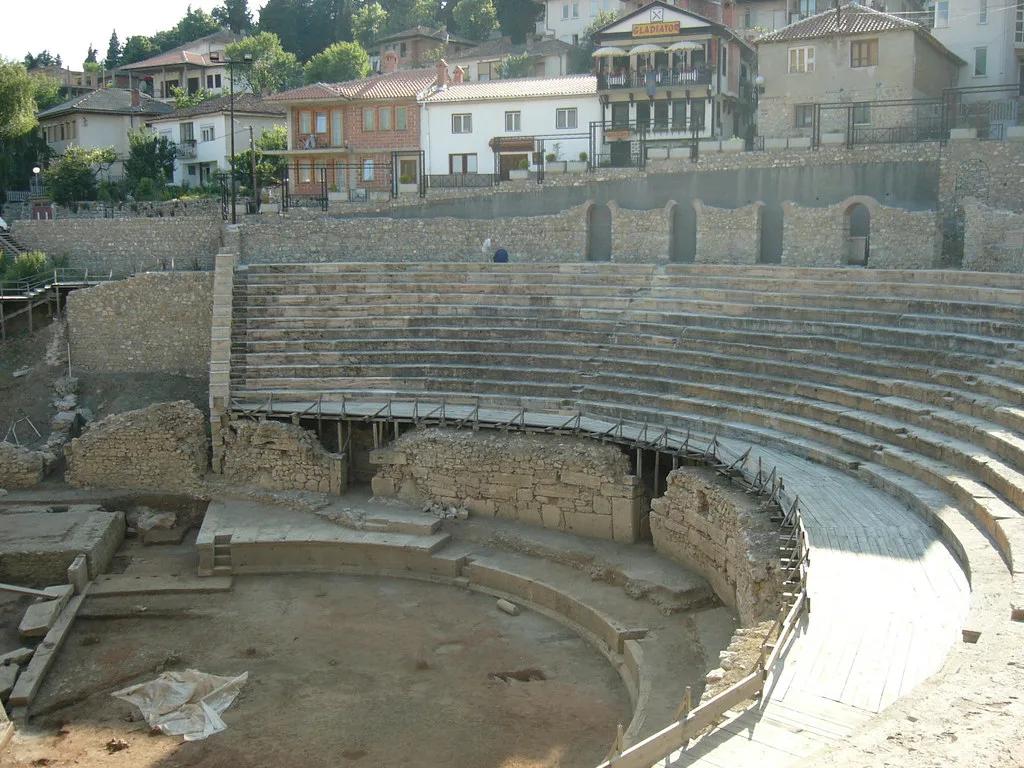
Local guides usually date the theatre to around 200 BC, in the Hellenistic period. The ancient town here is generally given as Lychnidos. Sources describe Roman-era changes, including use for gladiator games. Tradition holds that stones from the building were later reused around the town, including in churches. Accounts of executions on the site and of locals burying it come from tradition rather than firm records, so treat them as stories. Houses are said to have stood on the spot until excavation and reconstruction in the twentieth century. Archaeological publications are the place to check exact dates and type.
What You Will See Today
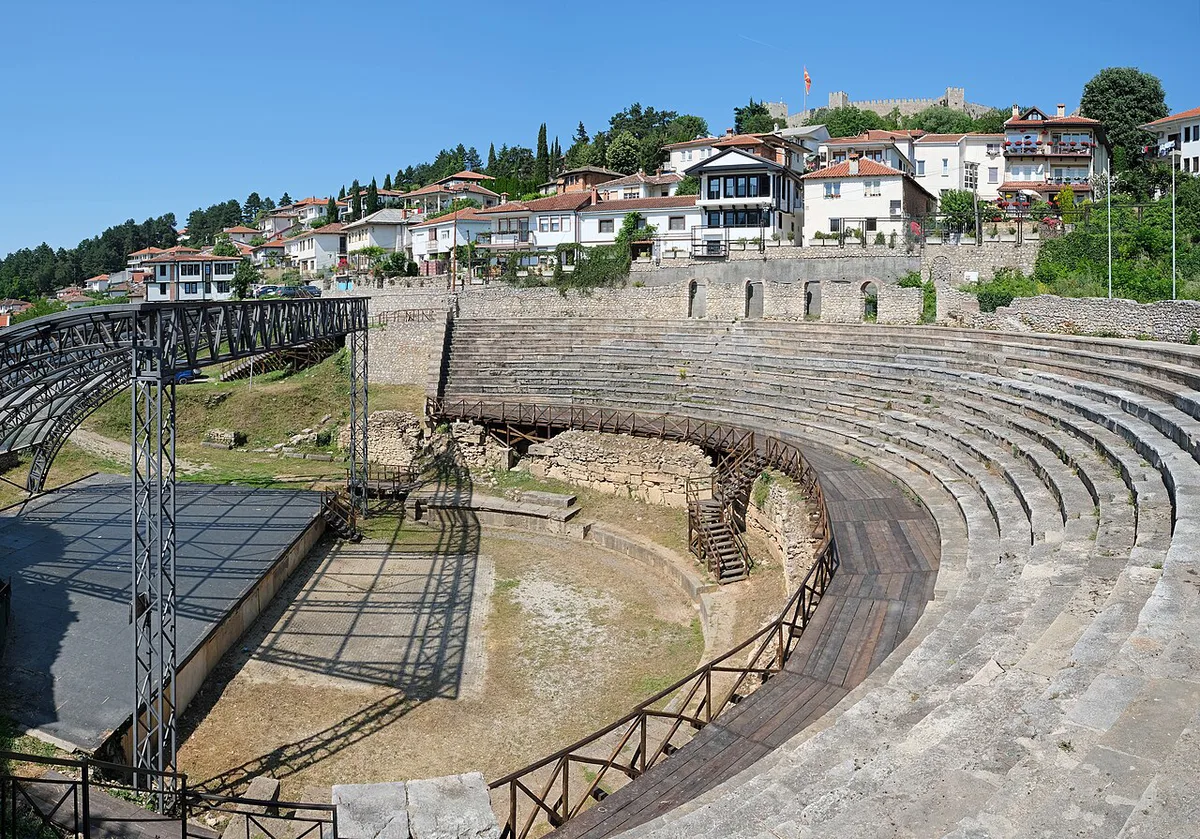
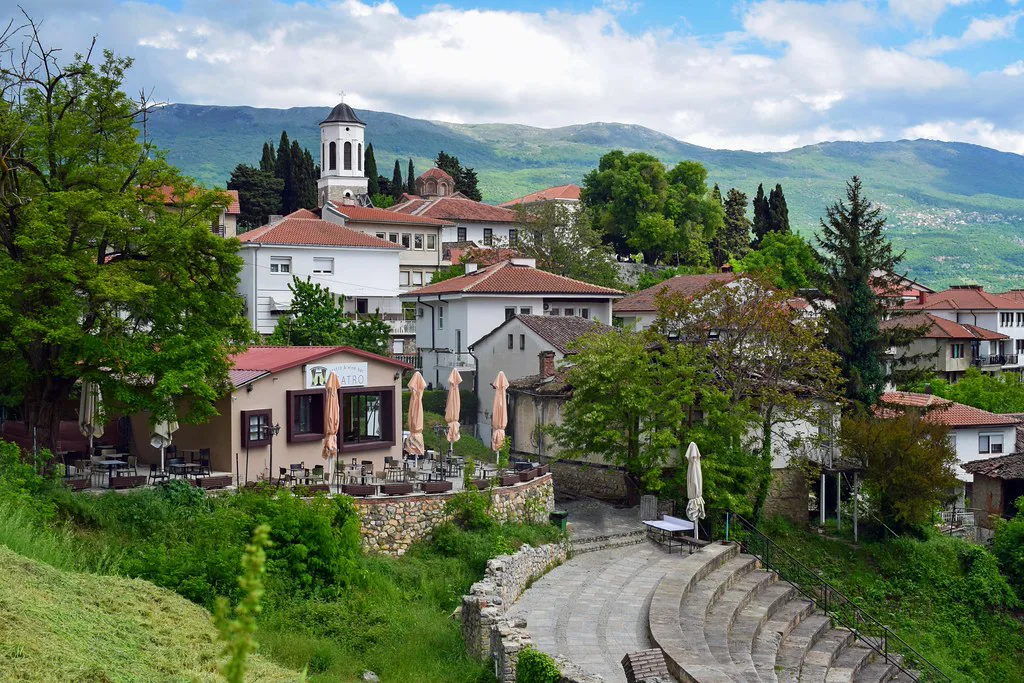
Surviving stone seating curves into the slope of the higher Ohrid hill, beneath Samuel's Fortress. Two hills shelter the bowl from wind, which is why performers prize its acoustics. Parts of the structure have been reconstructed, so look for the difference between weathered original stone and newer work. The orchestra floor and stage area are used for modern events, so staging may be present on some days.
Tickets, Opening Hours and Access
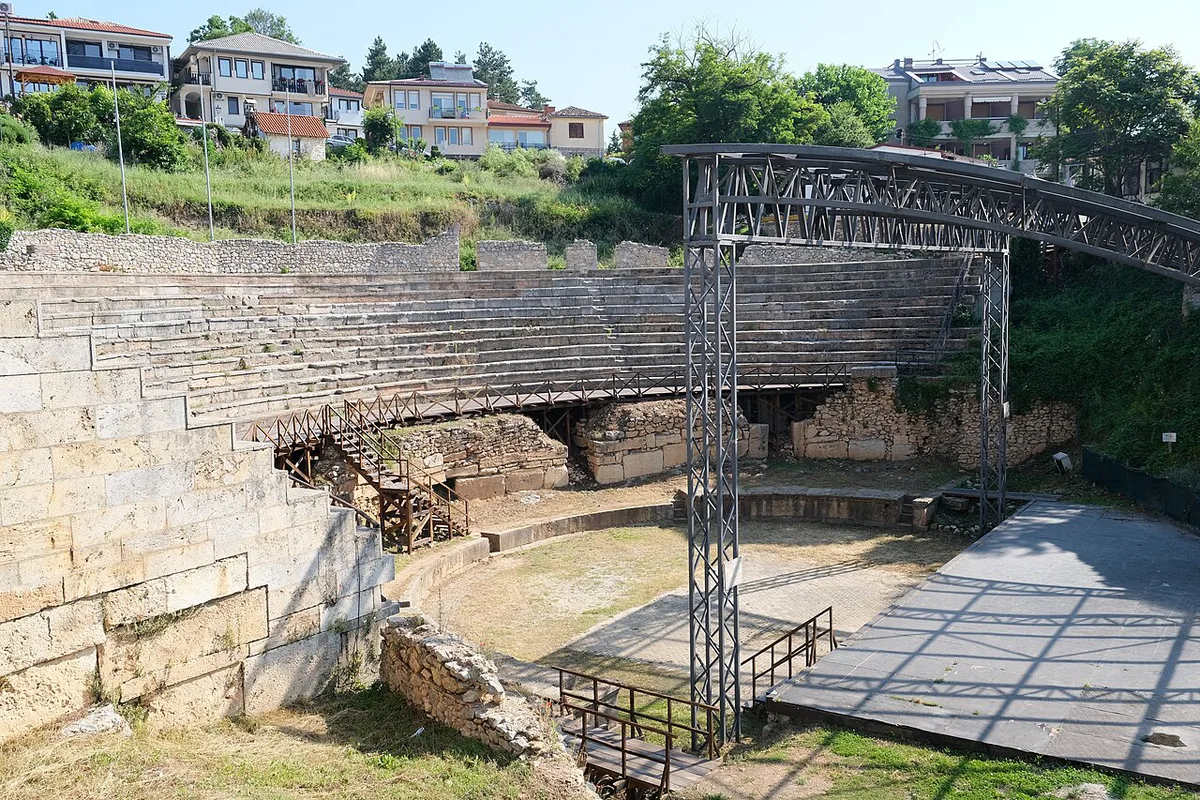
No published fee or opening hours are listed here, and arrangements can change on performance days. Check North Macedonia's official tourism site or the Ohrid tourist office before you go.
How to Get There and Plan Your Time
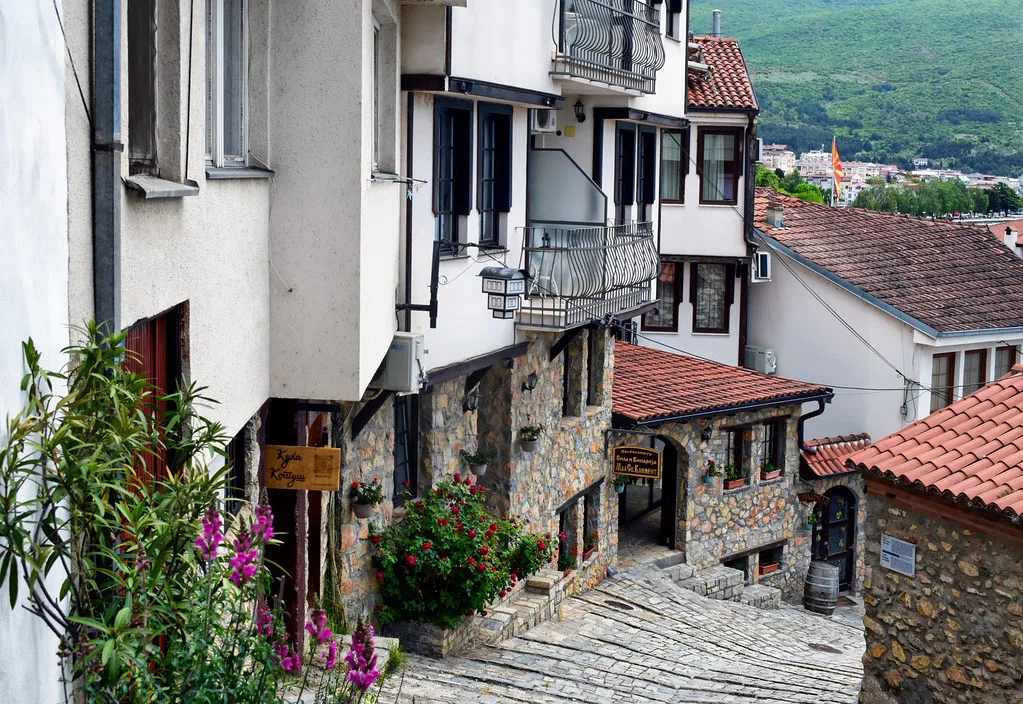
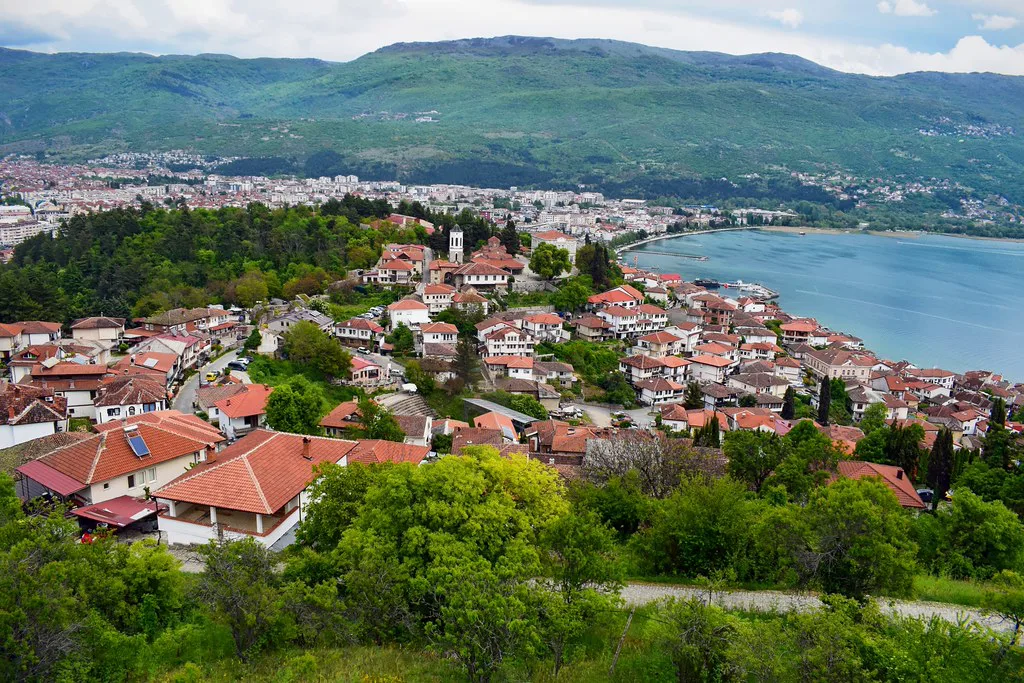
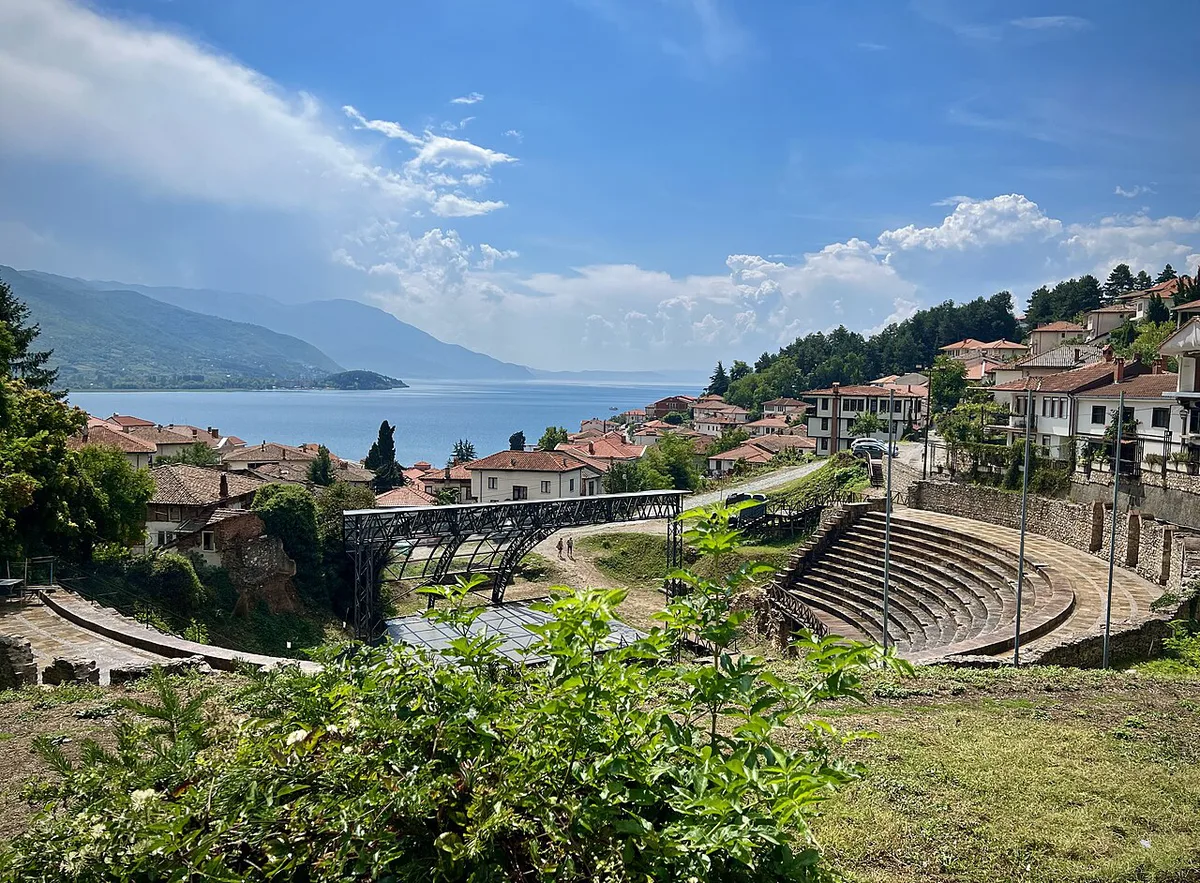
Walk from the lakefront into the old town and climb toward the Upper Gate. The theatre sits near this gate, at the foot of the slope below Samuel's Fortress. Streets are cobbled and steep in places, with little shade at midday. Pair it with the fortress above and the Church of St. John at Kaneo for a half-day loop.
Budget 60–90 minutes for the theatre and Upper Gate, and climb in morning or later afternoon to skip peak summer heat.
| Plan | Effort | Cost |
|---|---|---|
| Theatre alone | Short stop, moderate climb | Free or ticketed |
| Theatre + fortress + Upper Gate | Longer, steeper, little shade | Ticket status varies |
| Full old-town loop with Kaneo | Half day, mostly walking | Ticket status varies |
- Avoid midday in peak summer heat.
- Check for performance-day closures before climbing.
- Do not expect full Roman amphitheatre scale.
- Wear grippy shoes: worn stone and cobbles are slippery.
Summer Festival and Best Time to Visit
The theatre is a main stage of the Ohrid Summer Festival. One 2005 concert by José Carreras is often said to have drawn about 3,500 people, which is quoted as the maximum capacity. Dates, lineups and ticket outlets change yearly, so read the current festival programme. Summer evenings give atmosphere and crowds. Spring and autumn days give quieter seats and softer light, and you can walk up without the peak heat. Bring water and a layer for after dark.
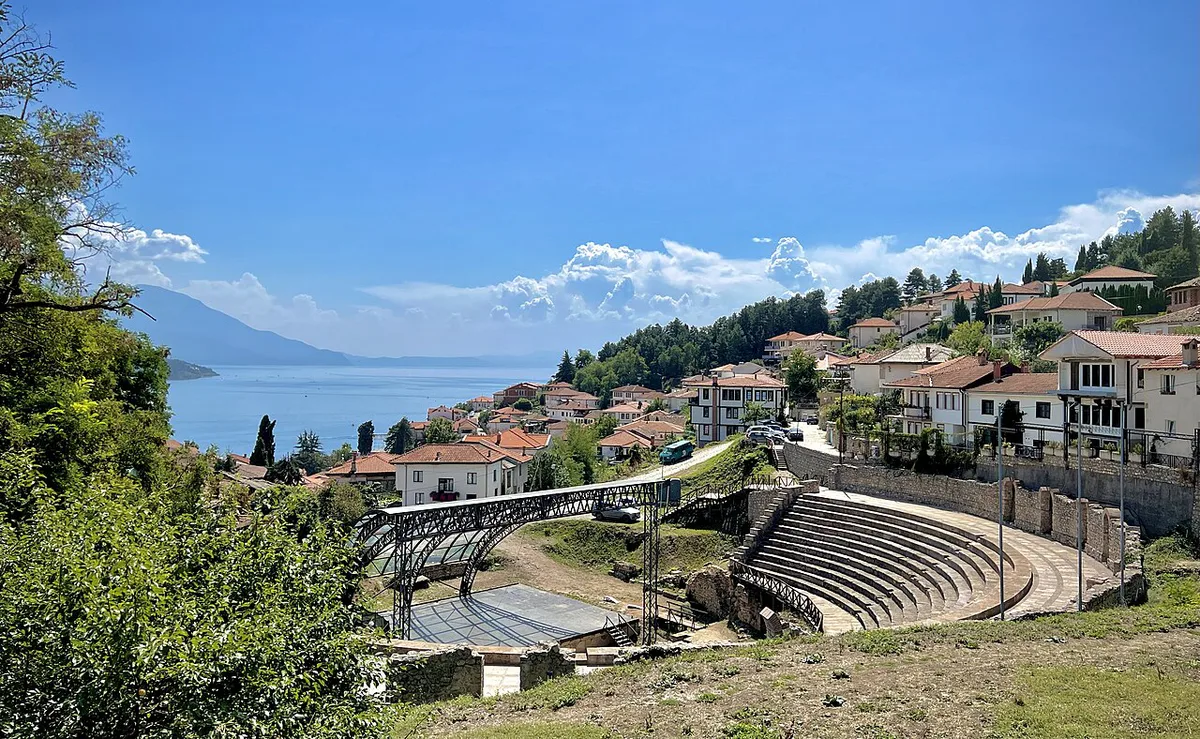
Use about 3,500 people only as a reference point, since it traces back to one 2005 concert.
Where It Fits in the Balkans' Roman Story
Ohrid's theatre is a Greek-then-Roman counterpoint to Roman-only monuments. Other ancient sites in North Macedonia include Heraclea Lyncestis, Bitola: Visitor Guide to the Roman Ruins. Stobi is another. For a Roman-built contrast on the Adriatic, see Diocletian's Palace. Continue by country with Roman Ruins in Serbia: Best Sites, Routes and Tips. Bosnia is covered in Roman Ruins in Bosnia: Sites Worth Visiting (and What to Skip).
A 60–90 Minute Old-Town Loop
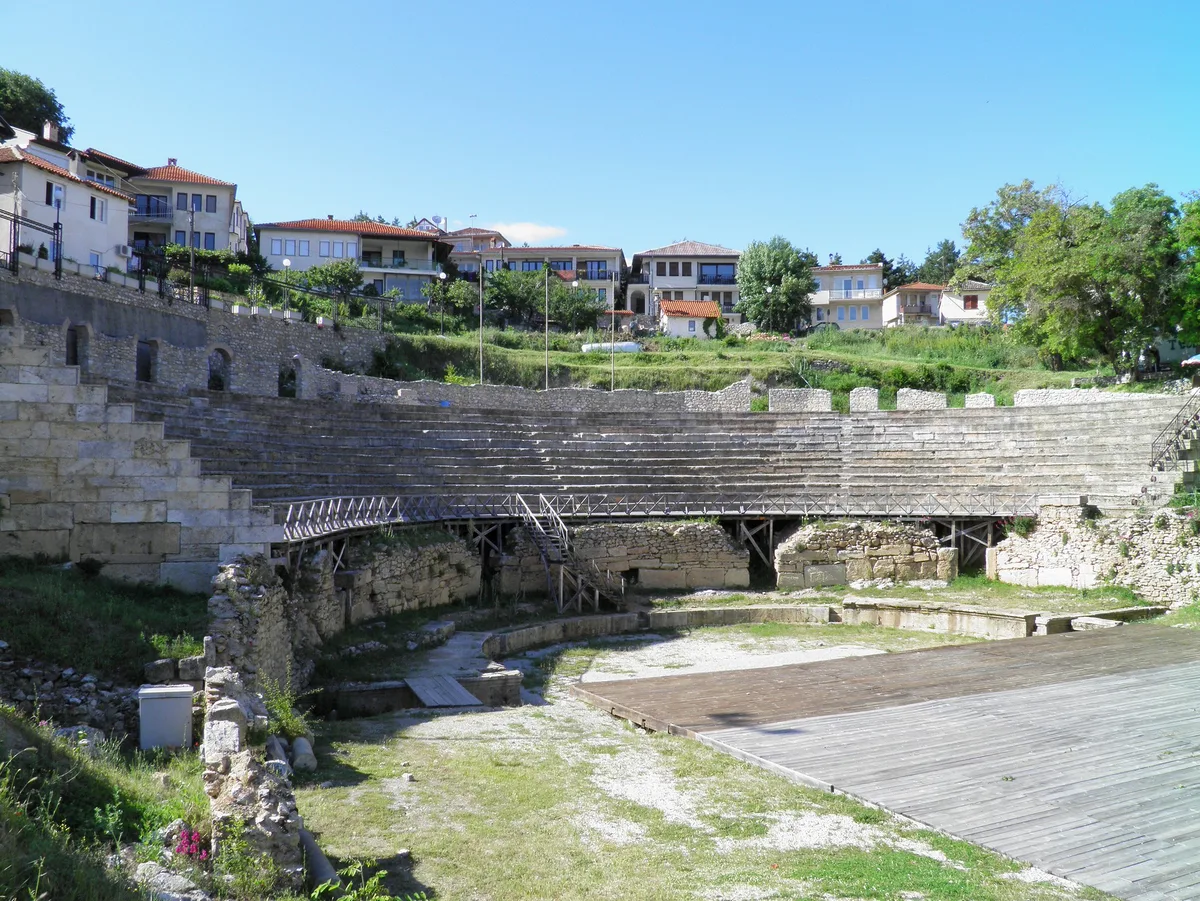
Allow 60–90 minutes for the theatre, Upper Gate and the lower approach to Samuel’s Fortress. Start from the lakefront, then follow the uphill old-town streets toward the Upper Gate. The theatre sits just below the fortress slope, so it works best as a stop before continuing upward.
Give the theatre time beyond a quick photograph. Its Hellenistic origins are usually dated to around 200 BC, while the visible setting explains why it later became an important Roman-era venue. The seating and stage area are compact, but the position between the hills is part of the experience.
For a longer outing, continue to Samuel’s Fortress, then descend through the old town toward St. John at Kaneo and the lakefront. That version is better treated as a half-day walk. Save the climb for morning or later afternoon, and wear shoes with grip for the worn stone and cobbles.
Related guides
Continue reading
Guides on the same trip