
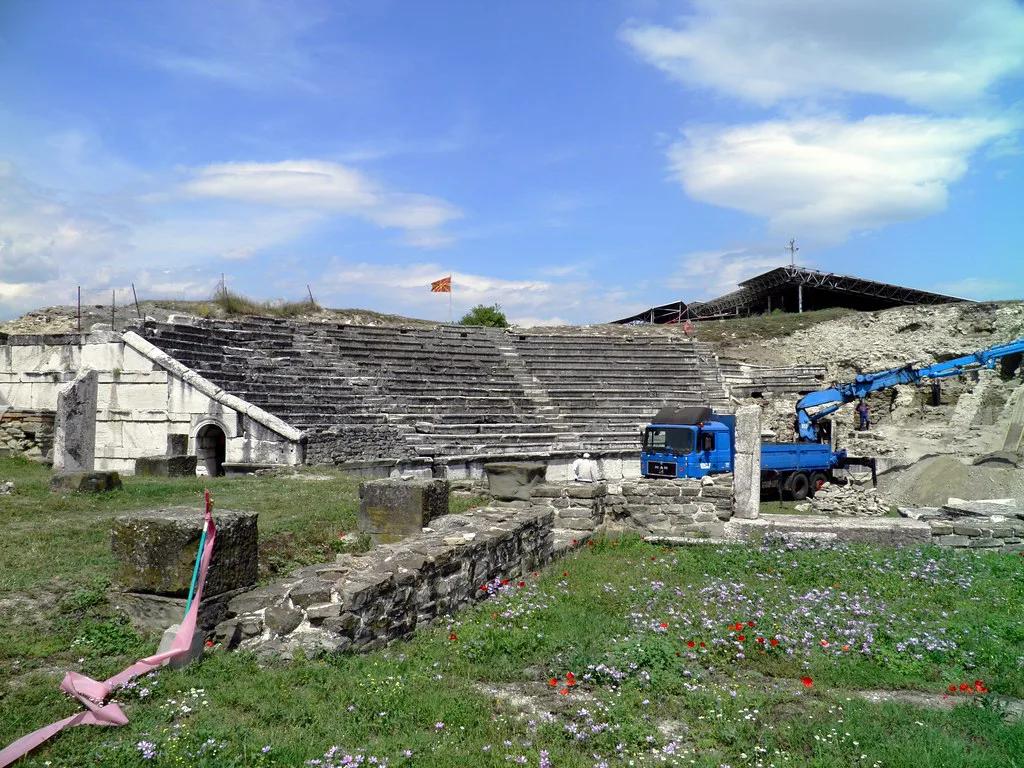
Stobi, North Macedonia: Visitor Guide to the Roman City
Last updated November 2026: Stobi is an ancient city in North Macedonia, near Gradsko, where the Crna (Erigon) and Vardar (Axios) rivers meet. It was the capital of the province of Macedonia Secunda and keeps famous mosaics and an early-Christian baptistery. Plan a half-day stop, or a short halt on the road between Skopje and Greece, and use our Roman Ruins in the Balkans: 12 Sites Worth Visiting guide for wider routes.
Featured image: Following Hadrian, CC BY-SA 2.0, via Flickr.
Stobi at a glance
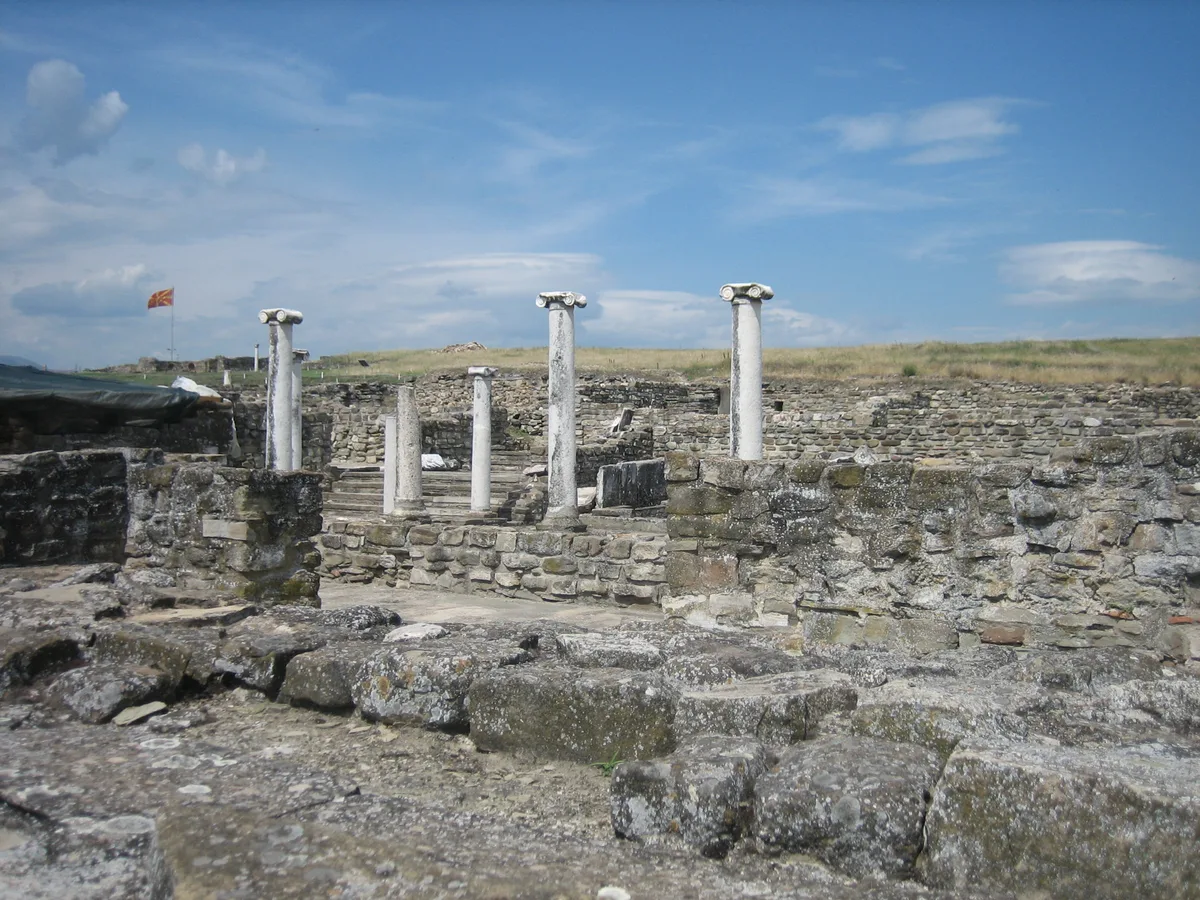
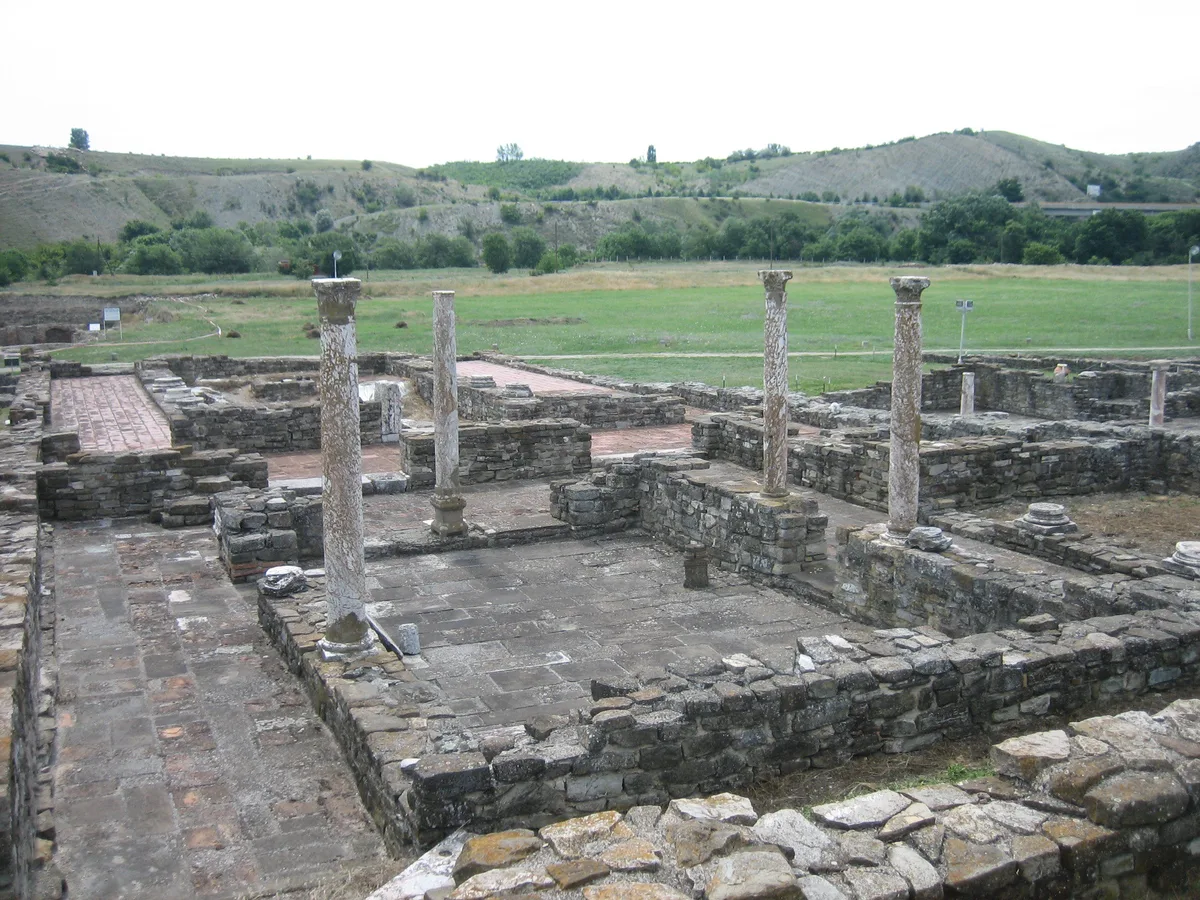
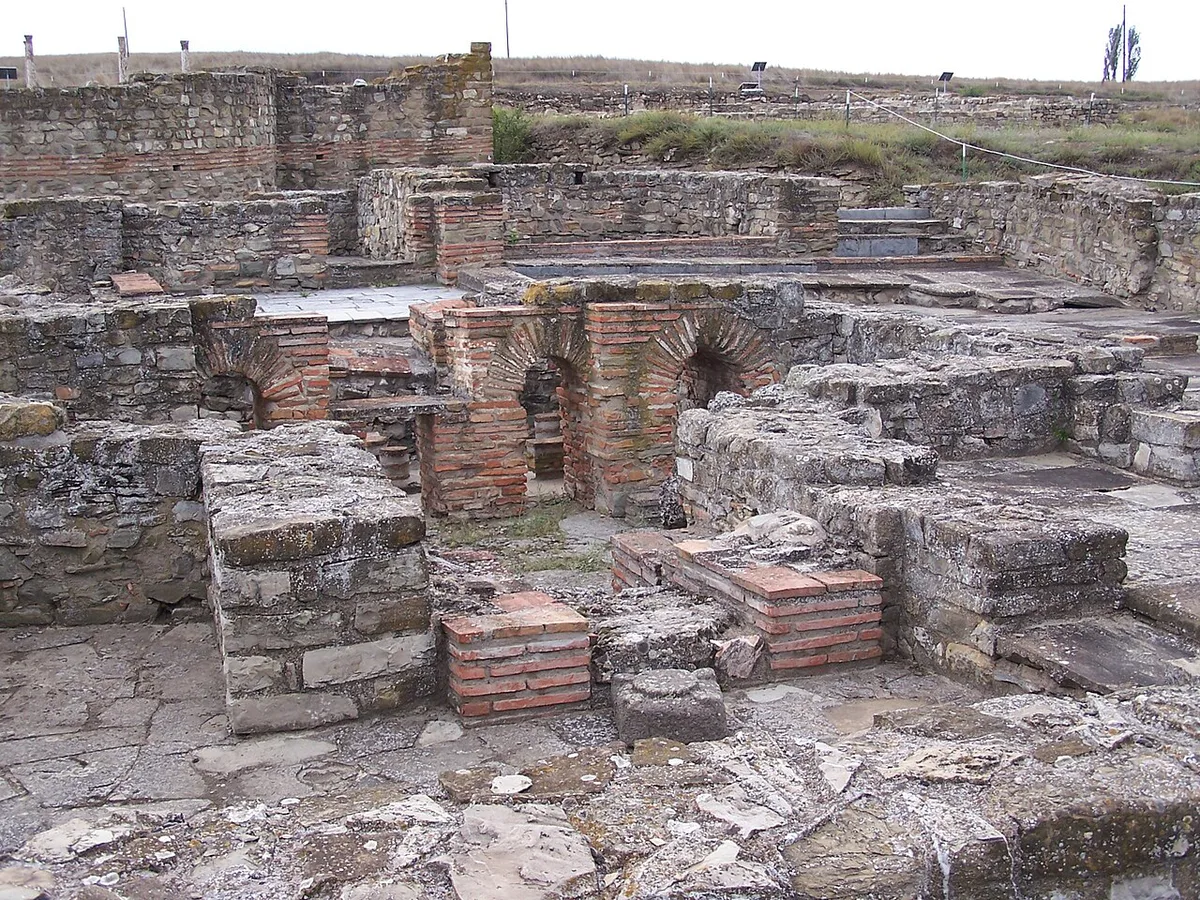
Stobi sits beside the main road corridor that links the Danube region with the Aegean. Only about 15% of the area inside the city walls has been excavated, so the visible remains are a fraction of the ancient town.
| Fact | Detail |
|---|---|
| Location | Near Gradsko, Vardar region, North Macedonia |
| Rivers | Crna (Erigon) meets the Vardar (Axios) |
| Periods | Roman and Late Roman, 2nd to 6th century CE |
| Status | Capital of Macedonia Secunda in the 5th and 6th centuries |
| Highlights | Theatre, Temple of Isis, synagogue, baptistery, mosaic houses |
| Tickets and hours | Check the site operator, National Institution Stobi (stobi.mk) |
Why Stobi matters
Stobi began as a Paeonian settlement and appears in writing through the historian Livy. It became a Roman municipium and the largest urban centre in the north of Roman Macedonia. Its position on the Thessalonica to Singidunum road made it a trade and administrative hub. Stobi had a Christian bishop who attended the Council of Nicaea in 325. Theodosius the Great stayed in the city in 388. An Ostrogothic attack in 479 and an earthquake around 518 to 520 weakened it. Life continued until the early 7th century, when the city was abandoned.
What to see at Stobi
This walking order is an editorial suggestion and follows the logic of the ruins. Layouts and access can change between seasons, so look at the signage at the entrance before you commit to a route.
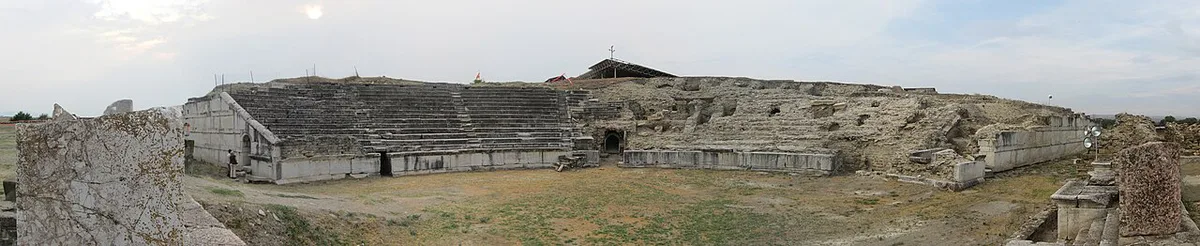
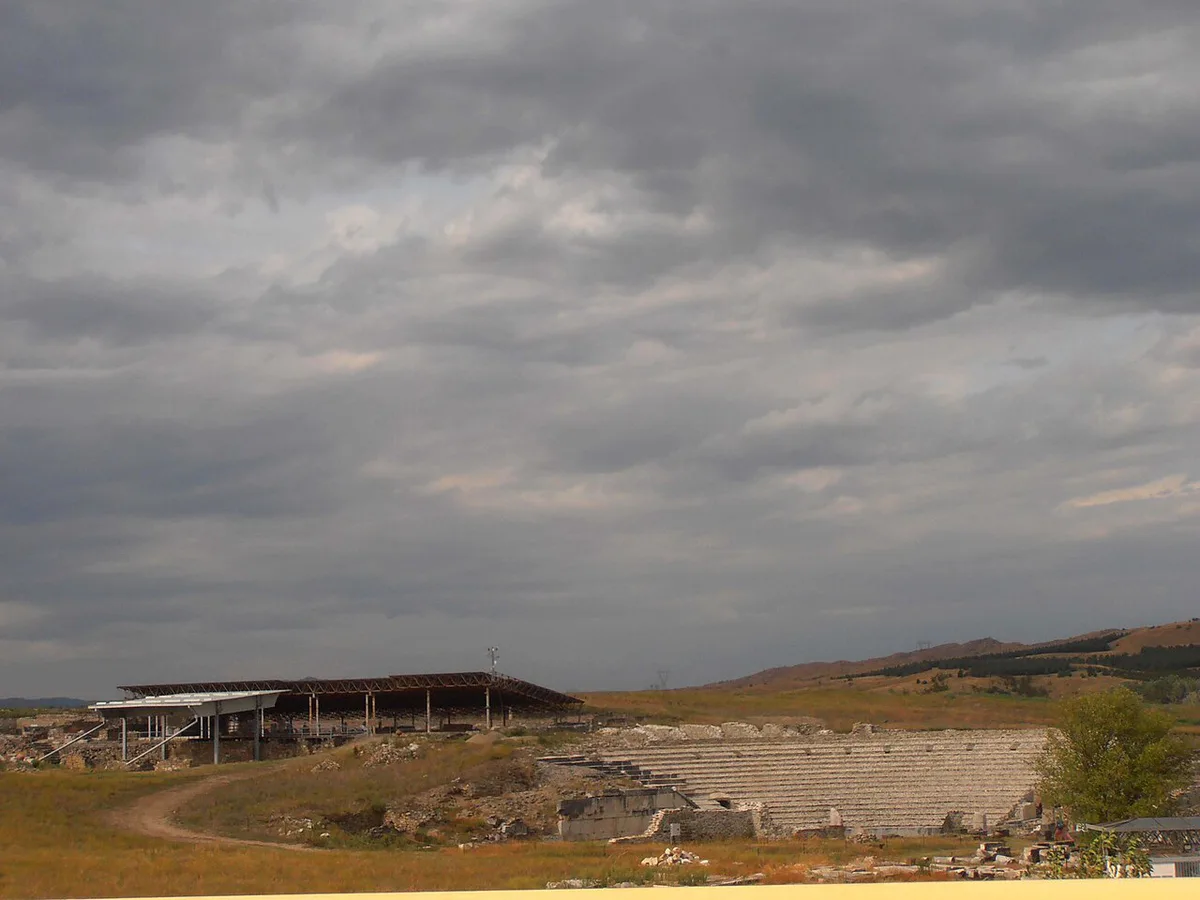
- Theatre: the 3rd-century theatre is the first landmark most visitors photograph, and it is a good orientation point.
- Temple of Isis: a 2nd and 3rd-century sanctuary, worth a short stop for the religious history rather than for mosaics.
- Synagogue and Central Basilica: a Christian church built over a Jewish prayer house. See the layering section below.
- Northern and Civil Basilicas: the Northern Basilica dates from the early 5th century and has its own baptistery. The Civil Basilica lies south of it.
- Episcopal Basilica and baptistery: the top priority if you are short on time. Its peacock mosaic is the site's best-known image.
- Casa Romana: a 1st to 3rd-century house, useful for seeing how earlier residents lived.
- Theodosian Palace and House of Peristeria: richly decorated residences from the 4th and 5th centuries, with mosaic floors.
- House of the Psalms: a mosaic room in front of the Central Basilica.
- Casino (Episcopal Residence): the bishop's residence, reflecting the city's late prosperity.
- Baths: Thermae Minores and Magnae Thermae, the latter used until the late 6th century.
The mosaics and the baptistery
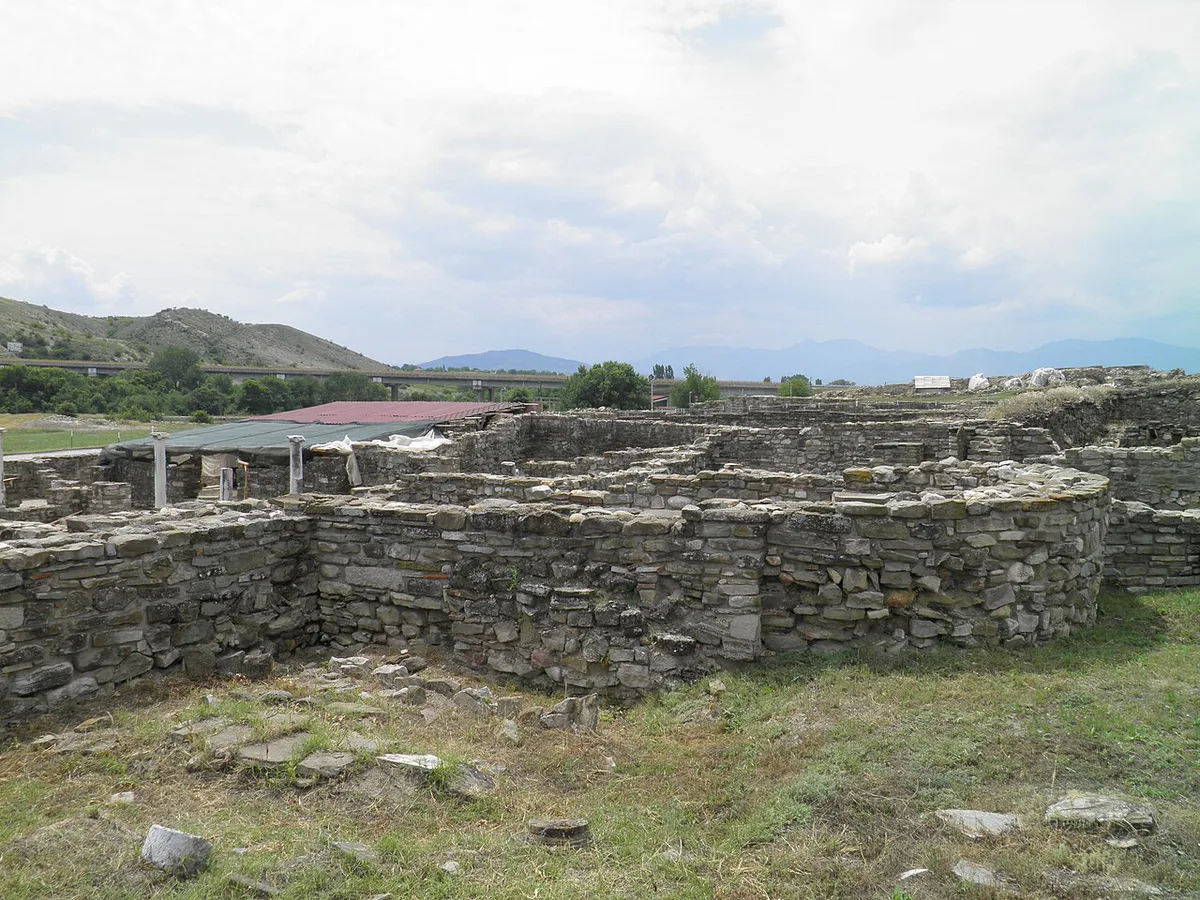
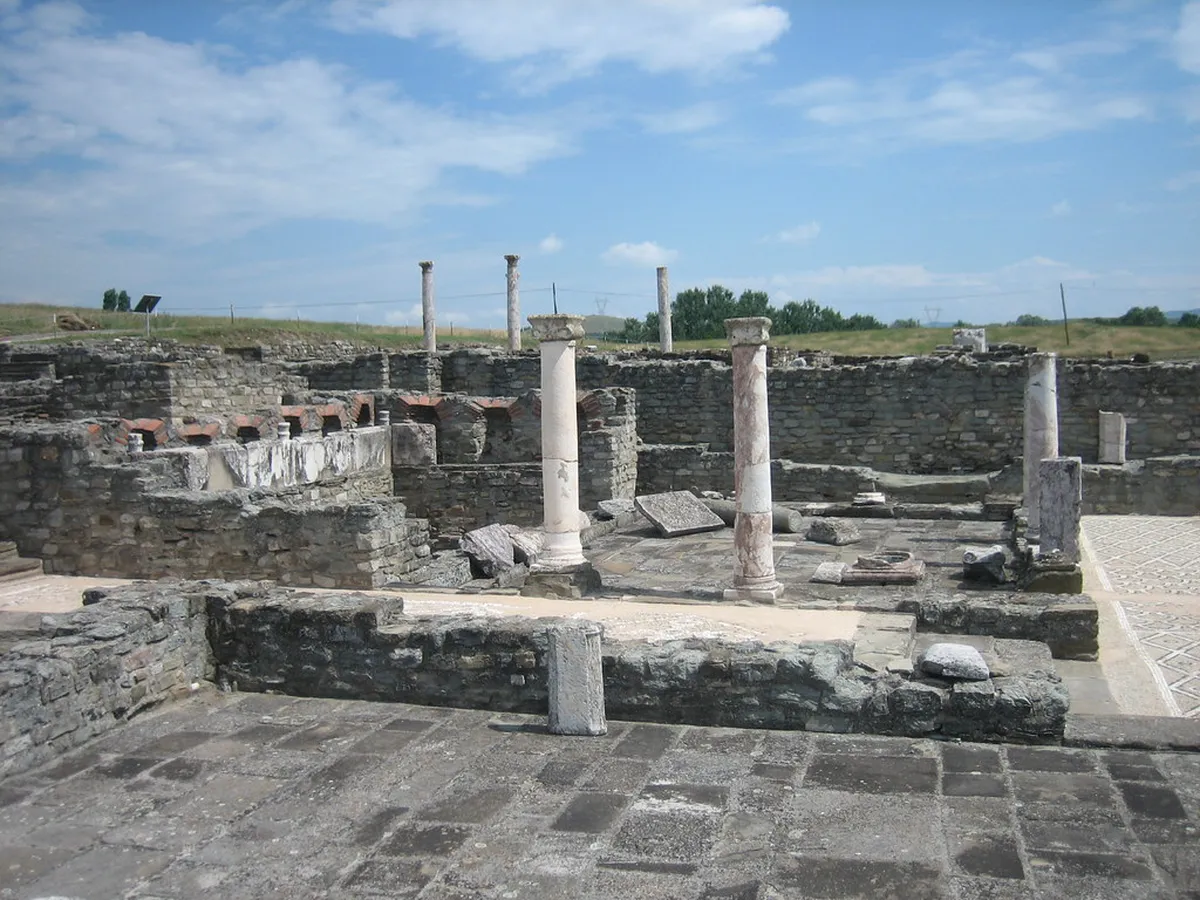
The baptistery of the Episcopal Basilica is the mosaic stop to prioritise. Its peacock floor appears on North Macedonia's 10 denar banknote, issued in 1996, and on the 10 denar coin from 2008. A visitor who stopped here briefly described the surviving floors as simple and economical in line and colour. The Theodosian Palace and the House of Peristeria hold more decorated floors. The bath mosaics are fainter and less accomplished, but their designs are still worth a look. Protective covers and shelters can limit what you see, so check which floors are open when you arrive.
The synagogue beneath the Central Basilica
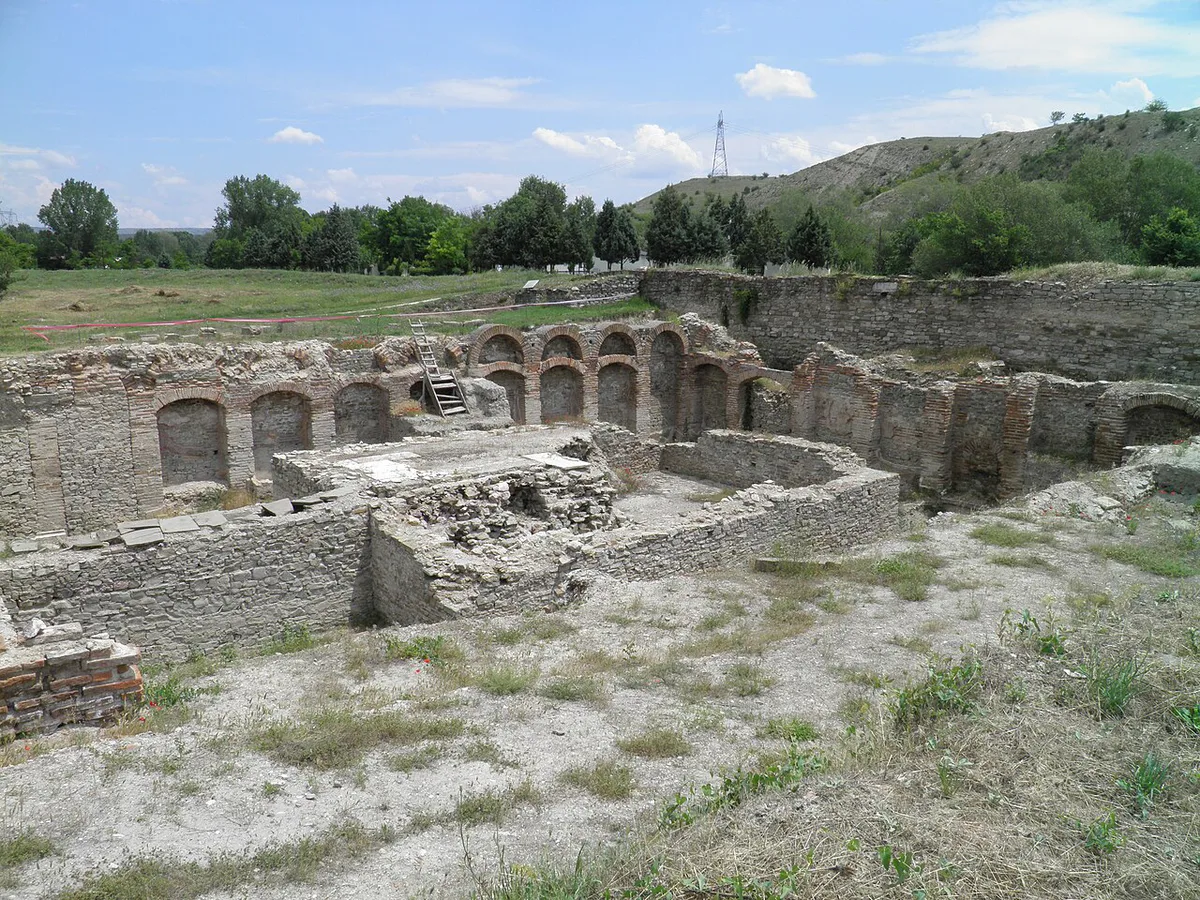
Stobi's synagogue story is its most unusual layer. A 2nd-century synagogue was rebuilt in the 3rd or 4th century. An inscription names Tiberius Claudius Polycharmos as the "father of the synagogue". By the close of the 4th century the building was demolished. A Christian basilica rose on the spot at the start of the 5th century. The synagogue floor lies about 1.5 m below the basilica level. Archaeologists report that every Christian basilica found so far was built over earlier structures.
How to get to Stobi
Stobi lies about 80 km from Skopje airport and about 160 km from Thessaloniki airport, per the field-school travel notes. Drivers can reach the site beside the E-75 road, which signs the turn-off. A train from Skopje to Stobi was listed at 06:23. Buses were listed hourly from 6 am to 9 pm to Gradsko, which is 5 km away. Confirm current timetables with the national railway and the Skopje bus station, because the listings are older.
| Option | Best for | Trade-off |
|---|---|---|
| Car | Flexible stops on a Skopje to Greece drive | You handle parking and fuel; shade is scarce |
| Bus to Gradsko | Budget travel | Leaves you 5 km short, so you need a taxi or a ride |
| Train | Early starts from Skopje | The listed departure is early; check current times |
| Organised tour | No driving | Fixed time on site; check what is included |
How much time to allow
Use these three plans as editorial estimates, not official visit times. A blogger once dashed through the mosaics in 17 minutes, but that is not a normal visit.
Only about 15% of the walled area is excavated, so a half-day plan focuses on the baptistery and theatre rather than the whole town.
| Plan | Suits | Prioritise |
|---|---|---|
| Quick stop | Drivers on the E-75 | Baptistery and the theatre |
| Half day | Most visitors | Baptistery, Theodosian Palace, House of Peristeria, synagogue layering, theatre |
| Full day | Mosaic and history fans | Every monument, plus a slow look at the baths and residences |
Tickets, opening hours and facilities
The site is run by National Institution Stobi, founded in December 2008 under the Ministry of Culture. Ticket prices, seasonal hours and closed days are not confirmed here, so check stobi.mk before you go. Do not assume a cafe or full facilities on site. Gradsko has grocery stores and a pharmacy for supplies. For wider country planning, see North Macedonia's official tourism site.
Best time to visit and what to bring
Average summer temperatures here run from 25 to 35°C or higher, and shade is limited. Arrive early in the morning or late in the day, and avoid midday in July and August. Bring a hat, sun protection, water and sturdy shoes for uneven ground. Spring and autumn are gentler for walking the full site.
Summer temperatures of 25 to 35°C and scarce shade make a dawn start on the E-75 route wiser than a midday stop.
Where to eat and stay nearby
Gradsko, 5 km away, has grocery stores, a pharmacy and an ATM. Negotino, 13 km away, has a larger supermarket, banks and a hospital. Skopje is the main base for a day trip, about 80 km from the site by the airport measure.
Combining Stobi with other Roman and Late Antique sites
Heraclea Lyncestis, Bitola: Visitor Guide to the Roman Ruins near Bitola is the closest Roman pairing in North Macedonia, and the same road network links both. Continue to the Ancient Theatre of Ohrid: History, Access & Visit Tips for a lakeside finish. Heading north, compare Stobi with Felix Romuliana (Gamzigrad) Visitor Guide: Is It Worth the Trip? in Serbia. On the coast, Narona offers another Roman provincial city. Stobi works as a stop on a Skopje to Thessaloniki drive.
Is Stobi worth it? Who should go and who should skip
Stobi rewards visitors who care about mosaics and early-Christian history more than large standing monuments.
| Visitor | Verdict | Reason |
|---|---|---|
| Mosaic fans | Go | Baptistery and palace floors |
| Early-Christian history readers | Go | Basilicas built over a synagogue |
| Road-trippers | Quick stop | Sits beside the E-75 |
| Heat-averse visitors | Skip midday | Little shade in summer |
| Fans of tall monuments | Skip | Mostly foundations and floors |
Volunteer and field-school options
Field schools run at Stobi through the Institute for Field Research and Balkan Heritage. Both list a June 6 to July 3, 2027 session. These are separate offers with different costs and credit arrangements. Read each provider's official page before applying.
Related guides
Continue reading
Guides on the same trip