
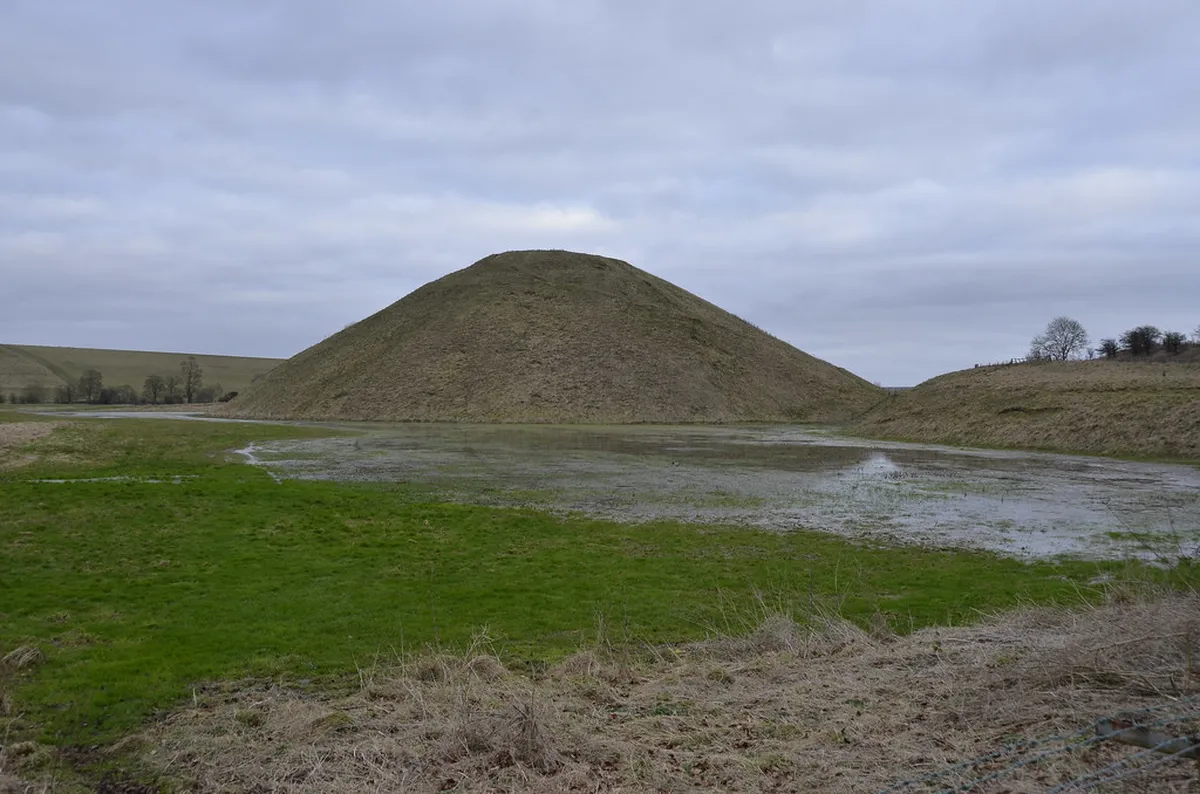
Last updated November 2026. Silbury Hill is a prehistoric man-made chalk mound beside the A4 near Avebury in Wiltshire, and it is among the largest artificial mounds in Europe. It is a viewing site, not a climbing site, so plan a short roadside stop or fold it into a longer walk through the Avebury landscape.
Featured image: Brian Marshall, CC BY 2.0, via Flickr.
What Silbury Hill Is
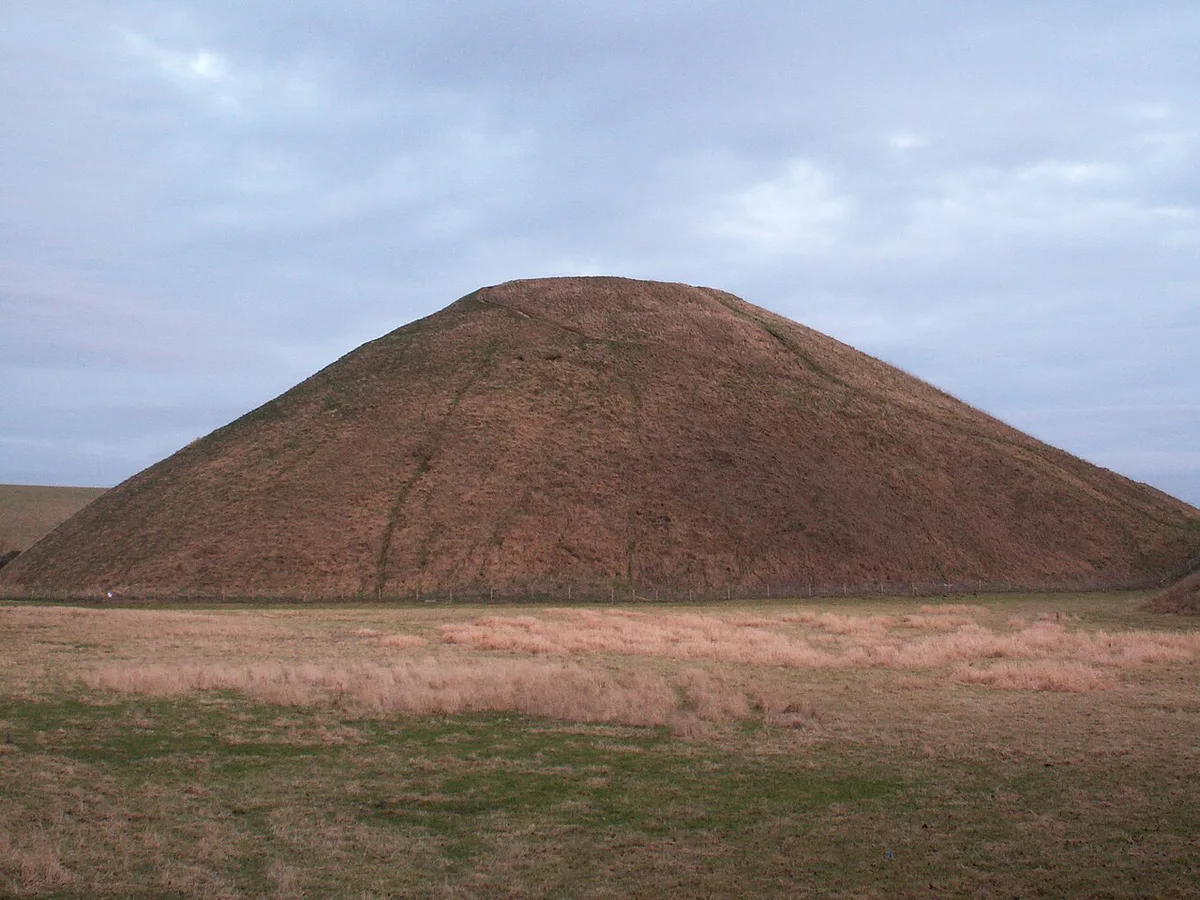
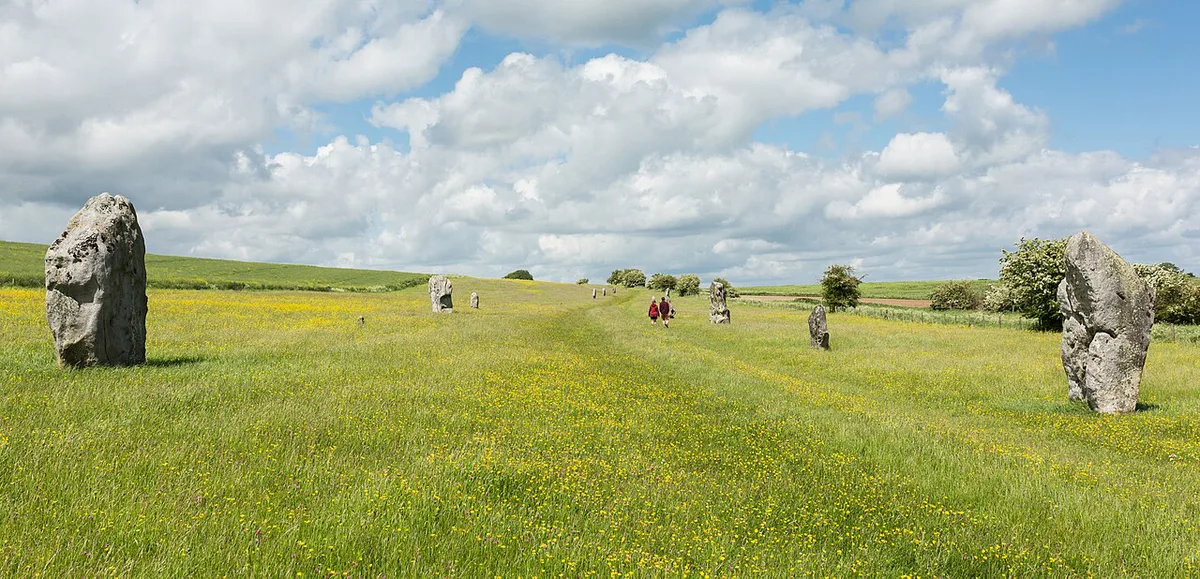
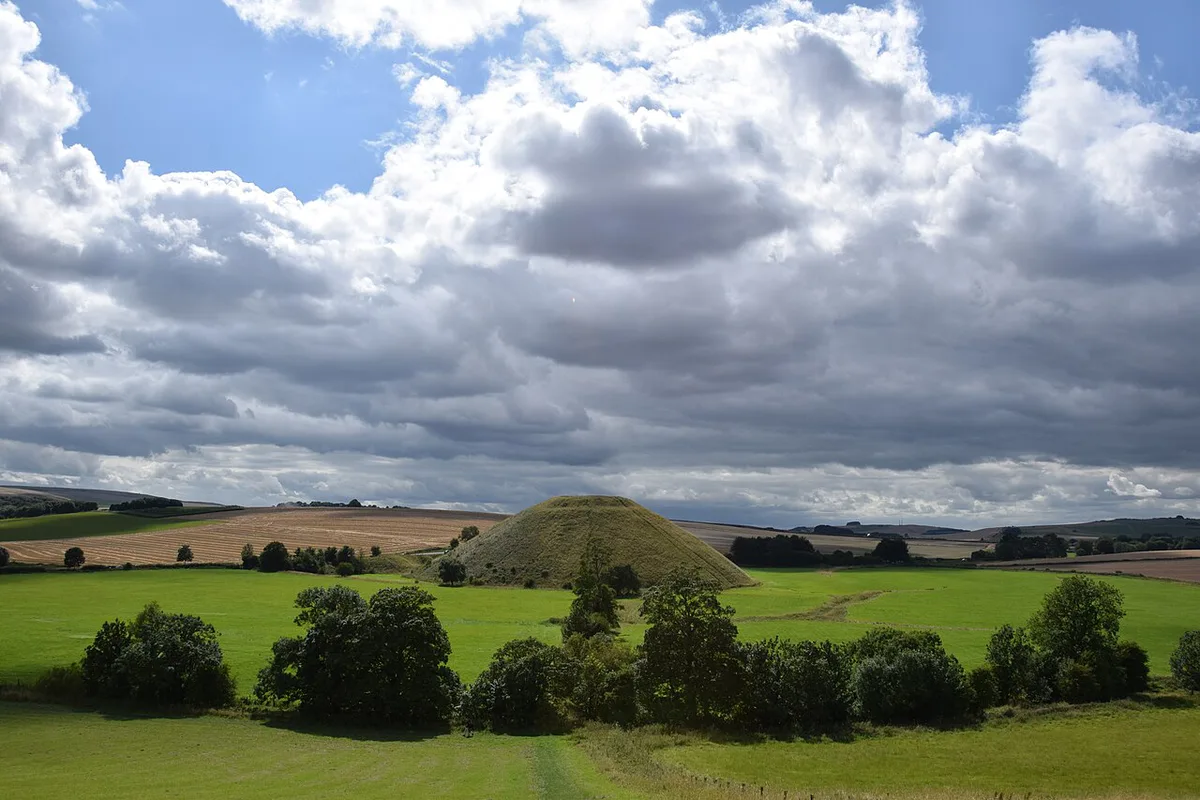
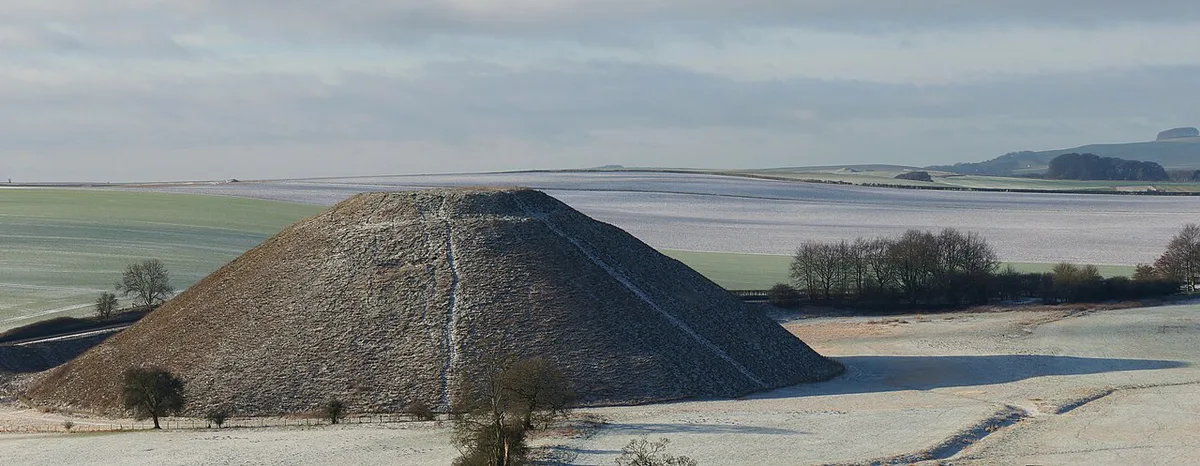
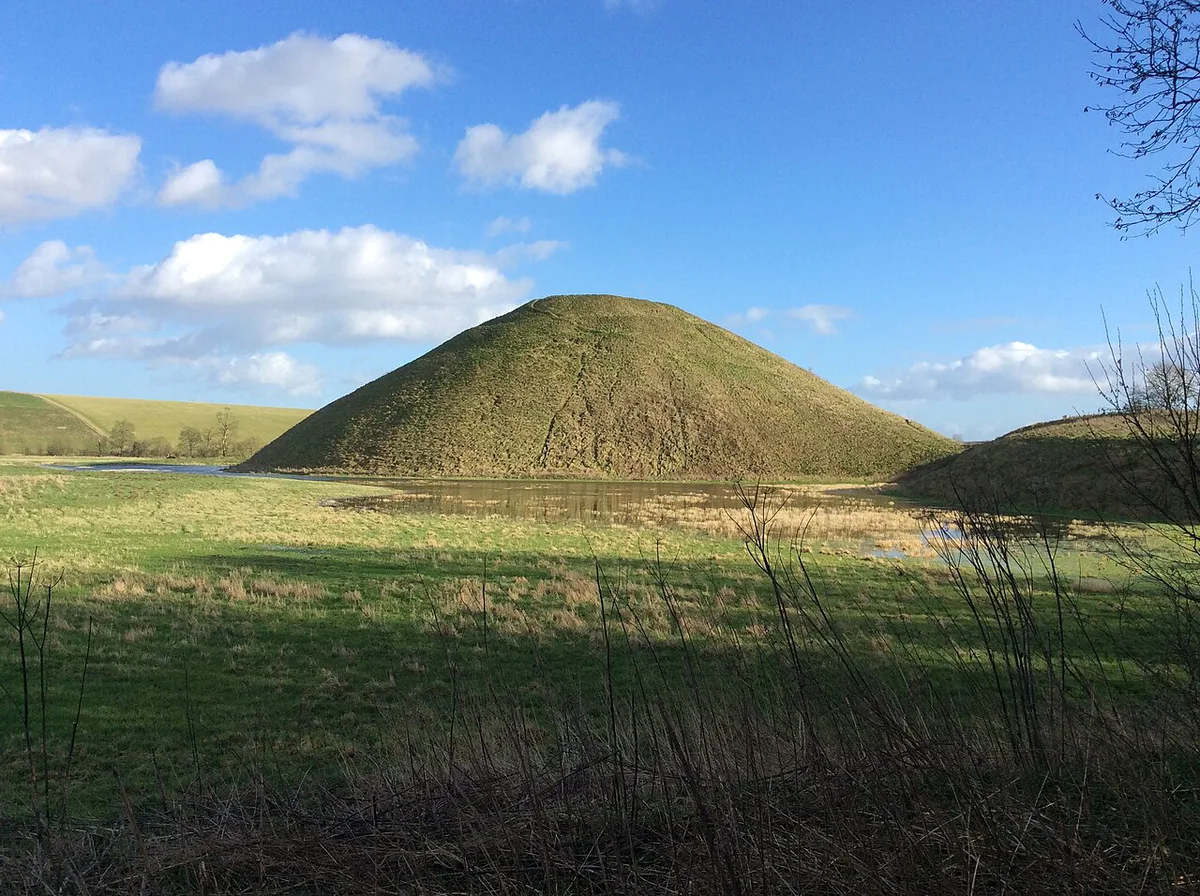
Silbury Hill is a flat-topped, grass-covered mound built in the Neolithic period. Commonly quoted dates place construction between 2400 and 2300 BC, roughly 4,500 years ago, though dating of prehistoric earthworks is refined over time. Figures often given are about 40 m (130 ft) high with a base around 167 m across. Treat those as approximate. It sits inside the wider Avebury landscape, so it makes most sense alongside the Avebury henge and stone circles. For the regional picture, read our guide to prehistoric sites across Wiltshire.
Can You Climb Silbury Hill?
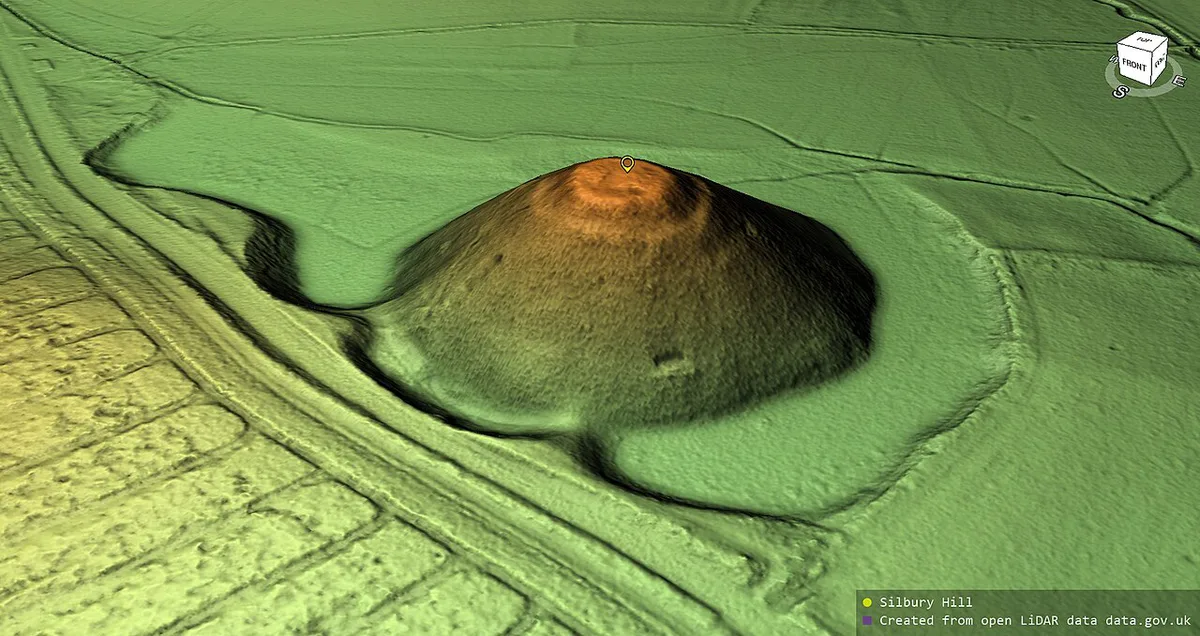
No. Silbury Hill is a protected monument, and visitors view it from a distance rather than walking on it. English Heritage manages the site, so its Silbury Hill page is the place to read current access notes before you travel. Some web pages still describe hiking to the summit or booking guided tours. Do not plan around those claims. Walking on the mound damages the chalk grassland and the earthwork itself. The protected area covers about 2.3 hectares (5.7 acres).
Where to View It and Where to Park
Silbury Hill stands right beside the A4, so you see it from the road before you stop. Use the designated viewing area and car park rather than the verge. Stopping on the A4 itself is a safety risk for you and for passing traffic. Exact space counts and layout can change, so check the English Heritage page for the current arrangement. From the viewing point you get a clear look at the stepped, flat-topped profile. The monument's best-known features are visible from outside the boundary.
Cost, Opening Hours and Facilities
Viewing Silbury Hill from outside the protected area is not a ticketed experience, and there is no summit visit to book. Do not expect a visitor centre, café or toilets at the viewing spot. Prices and hours for nearby sites were checked in November 2026 against official listings, but they change. The National Trust Avebury page lists current details for the village, the henge and the Manor. Silbury Hill is not part of that ticketed zone.
How Long to Allow at Silbury Hill
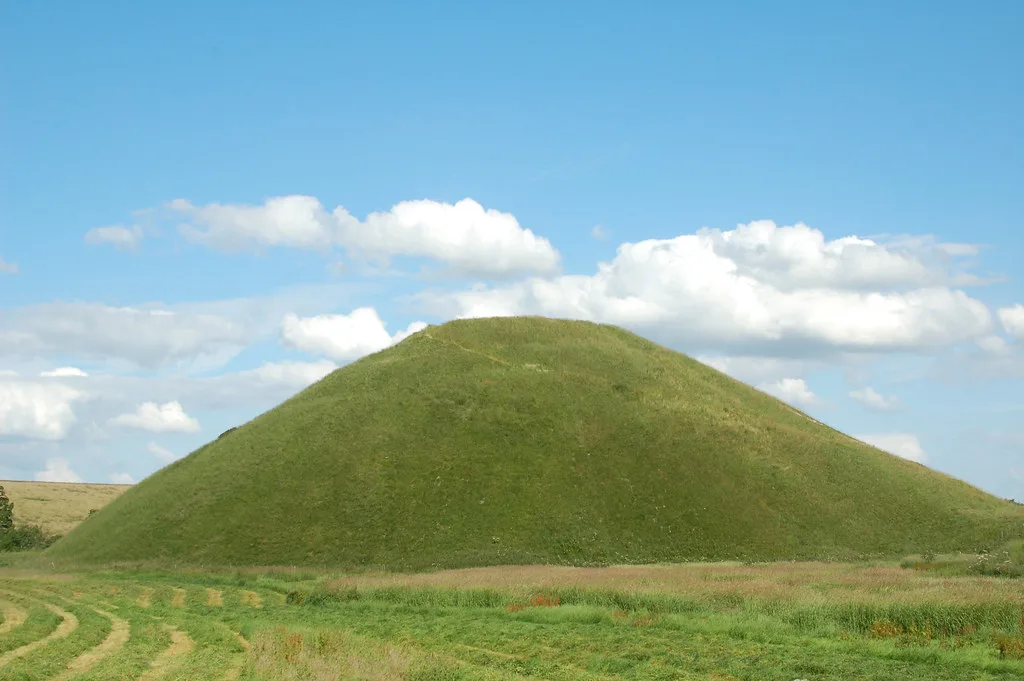
Allow a short stop if you are driving the A4. The hill is quick to see and photograph. A longer plan is better if you walk. Silbury Hill pairs naturally with West Kennet Long Barrow: Visiting Guide, Access & History, a Neolithic burial chamber nearby, and then with the village of Avebury. Public footpaths link these sites, but check current route maps and conditions before setting off. Chalk paths can turn muddy after rain.
| Site | Can you go inside or on top? | Best for |
|---|---|---|
| Silbury Hill | No, view only | Quick roadside look at the mound |
| West Kennet Long Barrow | Yes, you can walk to the barrow and look inside | Walkers wanting a burial chamber |
| Avebury henge and stone circle | Yes, open landscape | Half a day among the stones |
| Avebury Manor Visit Guide: Access, Timing & Tips | Ticketed house, managed by the National Trust | Visitors who want a house interior |
The Story: Construction and Theories
Silbury Hill was built in stages from chalk and clay quarried nearby. Estimates of the labour involved vary widely, and you will see large numbers quoted for workers and years. Treat these as estimates, not records. Excavations over the centuries found few prehistoric artifacts inside, and no burial has been identified. Burial mound, astronomical marker and ceremonial platform have all been proposed. None is proven. What the evidence does show is a deliberately engineered monument. For wider context, our guide to Stone Circles in England: Where to Go and How to Choose shows how it fits with other ritual landscapes.
Built roughly 4,500 years ago, the mound has yielded no confirmed burial, so its proposed purposes remain unproven.
Excavations, the 2000 Summit Collapse and the Repairs
Most of what is known about the inside of Silbury Hill comes from tunnels dug into it over about 250 years. The same tunnels explain why the mound needed engineering repairs in the 2000s.
Earlier digs
- 1776: a shaft was sunk from the top down into the mound. It found nothing of note.
- 1849: a tunnel was driven in from the side towards the centre.
- 1968-70: Richard Atkinson led a larger tunnel excavation, filmed for the BBC. It showed that the mound was built in phases around an earlier smaller mound.
The 2000 and 2007 collapses
In May 2000 a hole opened in the summit, caused by the old 1776 shaft settling. In late 2007 heavy rain brought a further slump on the top. English Heritage then investigated the inside of the mound and found the older tunnels unstable.
The conservation work that followed ran through 2008. It stabilised the mound by filling the old tunnels and voids with chalk, without removing the structure. The investigation also recovered samples of soil, insects and plant material. These have helped researchers work out how and when the mound was built.
What this means for a visit
- The mound you see today is stable, and the summit stays closed to protect it.
- Nothing from the excavations is displayed at the viewing area. Finds and archive material are held elsewhere, so check the English Heritage page or the Alexander Keiller Museum in Avebury before expecting to see objects.
- Older accounts of tunnels or shafts describe work that has since been backfilled. They do not describe anything open to the public.
Getting There Without a Car
Reaching Avebury by public transport takes planning. Our guide to getting to Avebury from London covers the main options. Local bus links from Swindon, Marlborough and Pewsey vary by season, so check timetables on Visit Wiltshire before committing. Silbury Hill lies on the A4 between these places. Walking from Avebury village is the car-free route, provided you are comfortable on footpaths.
When to Go and Who Should Skip It
Go in dry weather if you plan to walk, because chalk tracks get slick. Low morning or evening light shows the stepped outline best. Skip the stop if you expect a climbable hill or interpretation displays. Drivers short on time can still pull in for a few minutes. If you want more prehistoric stops, Old Sarum Visitor Guide: Is It Worth It and How to Get There is in Wiltshire. Note that Wayland's Smithy and the Uffington White Horse: Visiting Guide, History & Access lie in Oxfordshire, not Wiltshire.
Frequently Asked Questions
Is Silbury Hill older than the pyramids?
Not the oldest of them. Dates of 2400–2300 BC place it later than the Great Pyramid of Giza, which is usually dated to around 2600 BC. It is still roughly 4,500 years old.
Related guides



Continue reading
Guides on the same trip


