
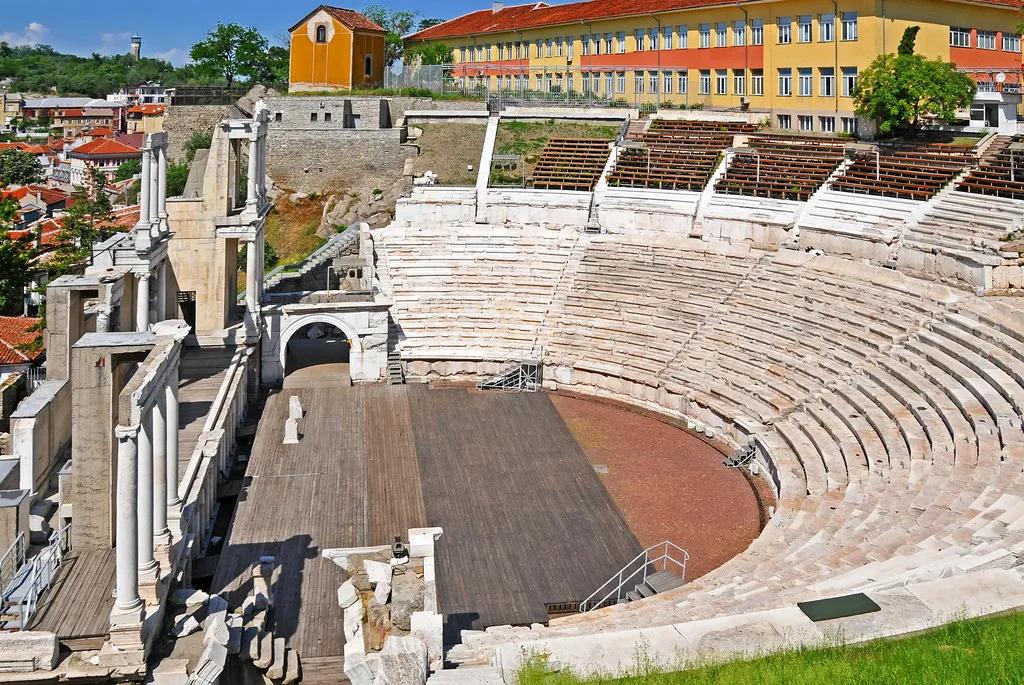
Last updated November 2026: the Plovdiv Roman Theatre, also called the Ancient Theatre of Philippopolis, is a well-preserved Roman theatre set between hills in Plovdiv's Old Town. It still hosts performances, so a visit can be a quiet daytime stop or an evening show. Allow 30 to 60 minutes, and read on for access, timing and how it pairs with the stadium.
Featured image: dgjarvis10@gmail.com, CC BY-SA 2.0, via Flickr.
Plovdiv Roman Theatre at a glance
Short on time? This is the Roman monument to prioritise in Plovdiv, and a stop of 30 to 60 minutes is enough for most visitors. Use the list below to decide quickly.
- What it is: an open-air Roman theatre in the Old Town, still used as a performance venue.
- Time needed: about 30 to 60 minutes, depending on how much you read and photograph.
- Best hour: early morning or late afternoon for softer light and fewer people.
- Short-stop verdict: worth it if you only have time for one Roman site in Plovdiv.
- Tickets, hours and events: listed on the official Visit Plovdiv site.
Why the theatre is worth seeing
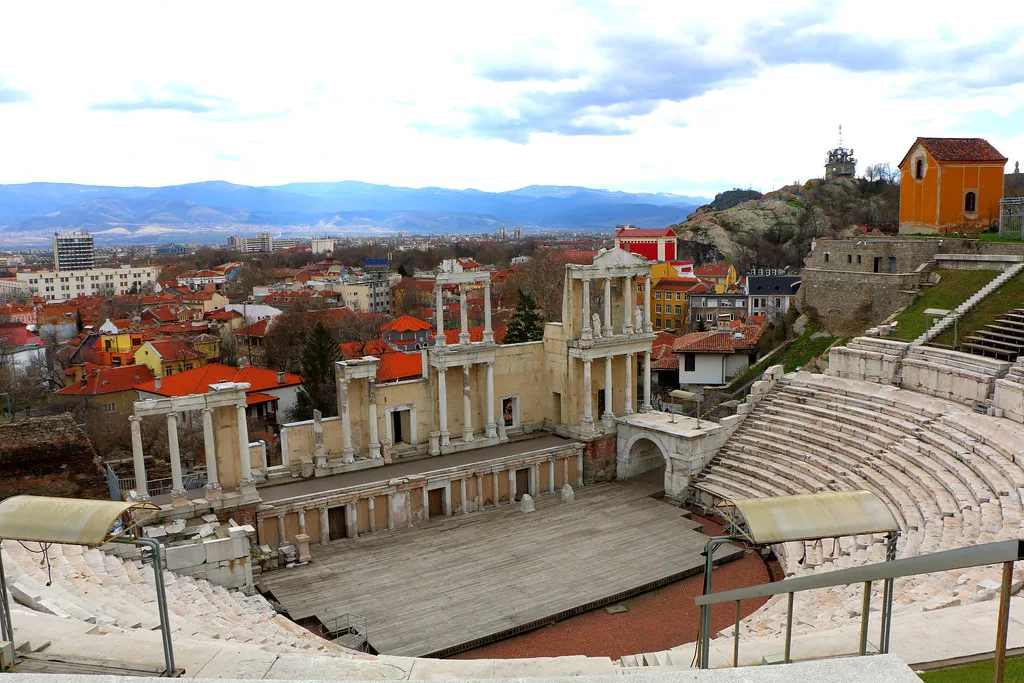
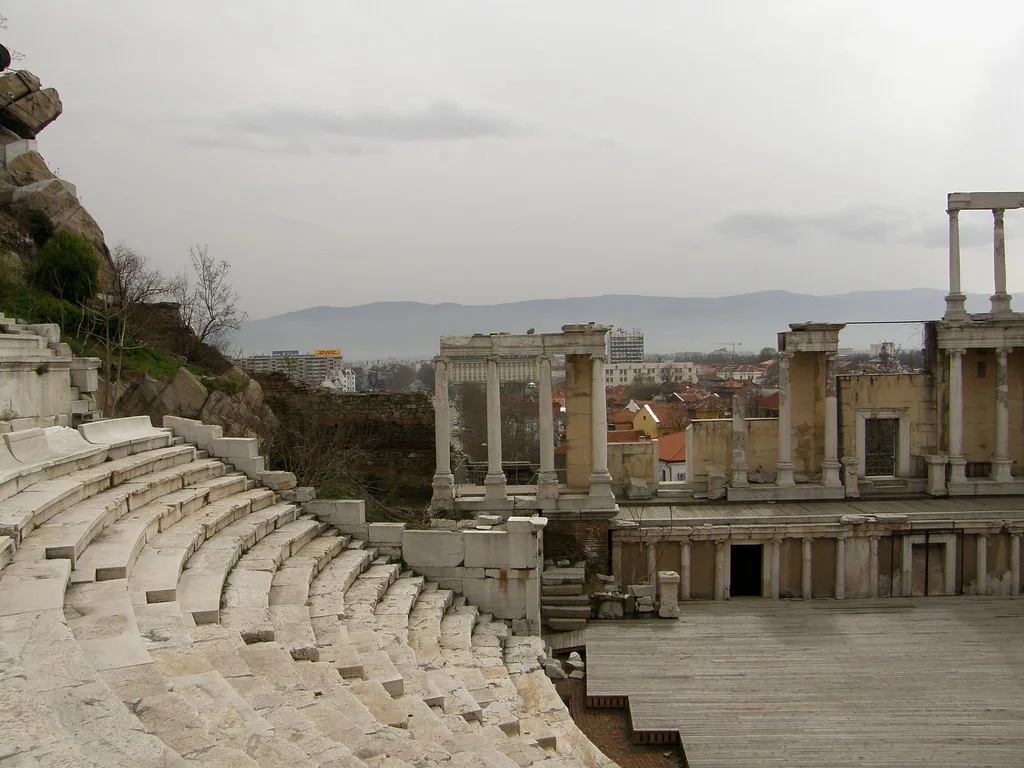
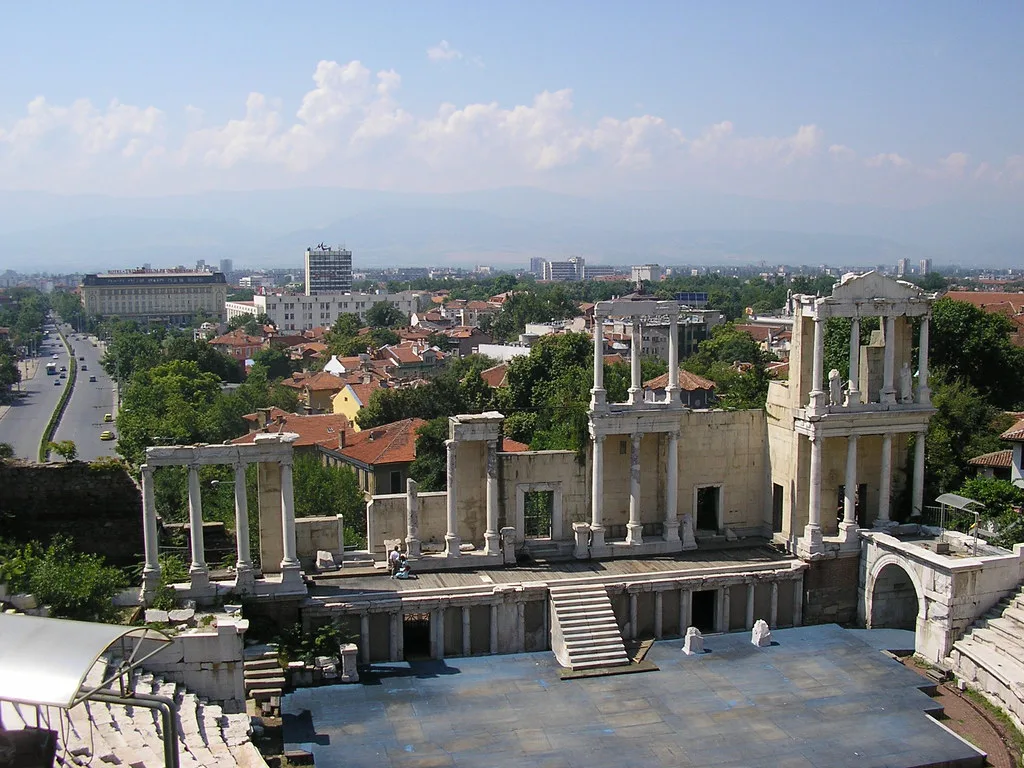
Few Roman monuments in the Balkans are still in everyday use. Plovdiv's theatre sits in a natural fold between two hills, with tiered seating facing a stage building and views toward the modern city. Accounts date it to the reign of Emperor Domitian (81–96 AD), and it is usually described as holding around 6,000 spectators. Reports describe 28 rows of seats and a burial under landslide debris until the 1960s. Because it hosts concerts and festivals today, you see the building doing its original job. That is a clearer lesson in Roman public life than a fenced-off ruin.
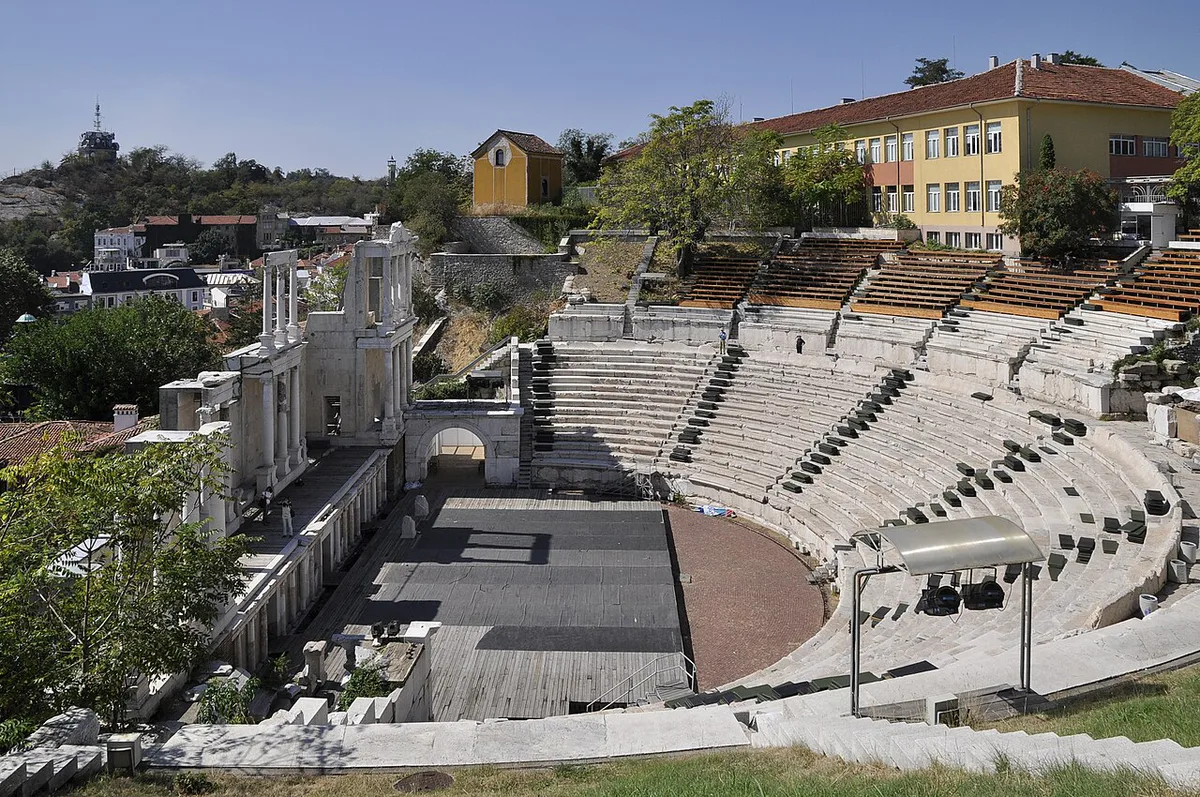
Tickets, opening hours and event nights
No current ticket price or opening hour is quoted here, because both can change with the season and the programme. Check the Visit Plovdiv tourism portal for the current fee, hours and event calendar before you plan around the site.
Event nights put you in the audience, and with the theatre described as holding around 6,000 spectators, check the calendar before choosing a show over daytime photos.
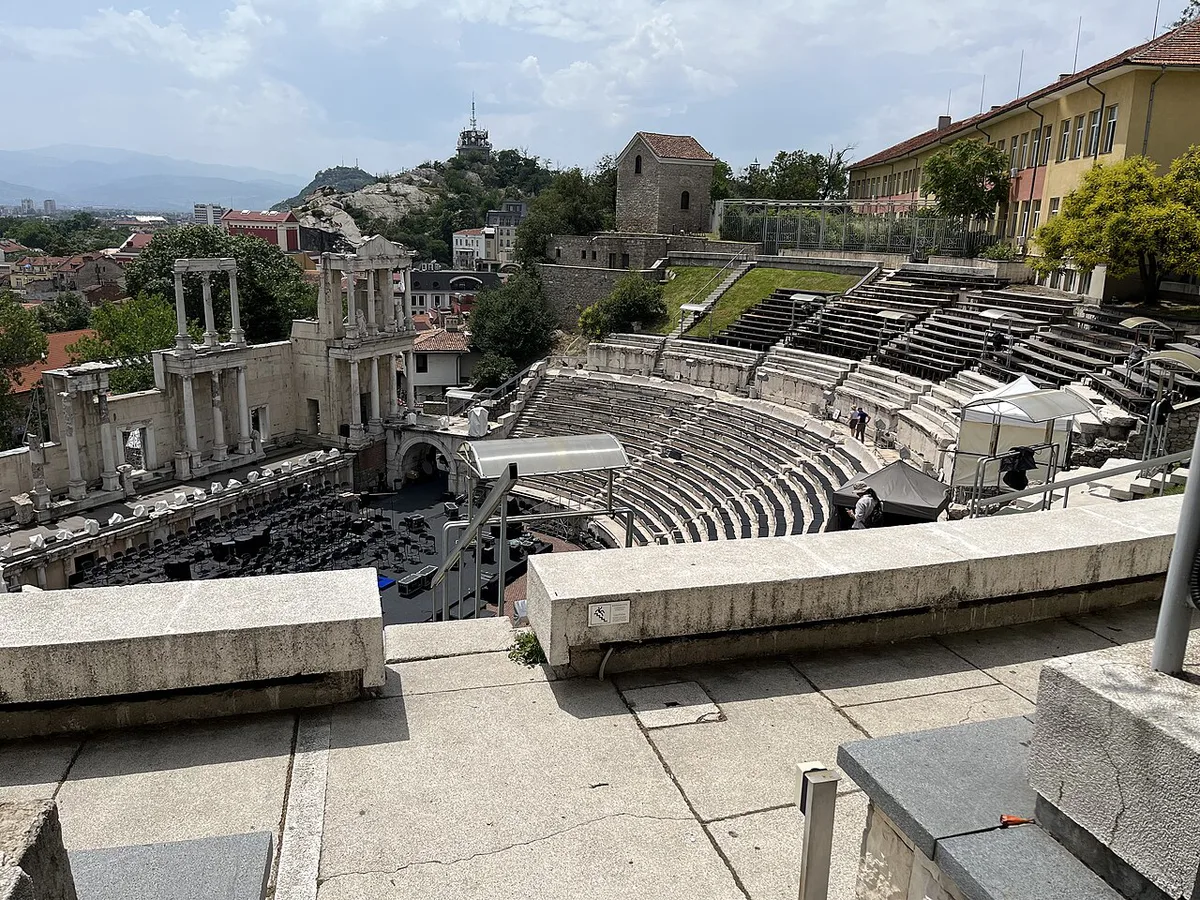
- Daytime visit: easier photos and fewer crowds, but access can be restricted when staging is being set up.
- Event night: atmosphere and a ticketed seat, but you see the theatre as an audience member rather than an explorer.
- Planning rule: look at the event calendar first, then decide whether to build your day around a show or around sightseeing.
How to get there and what the approach is like
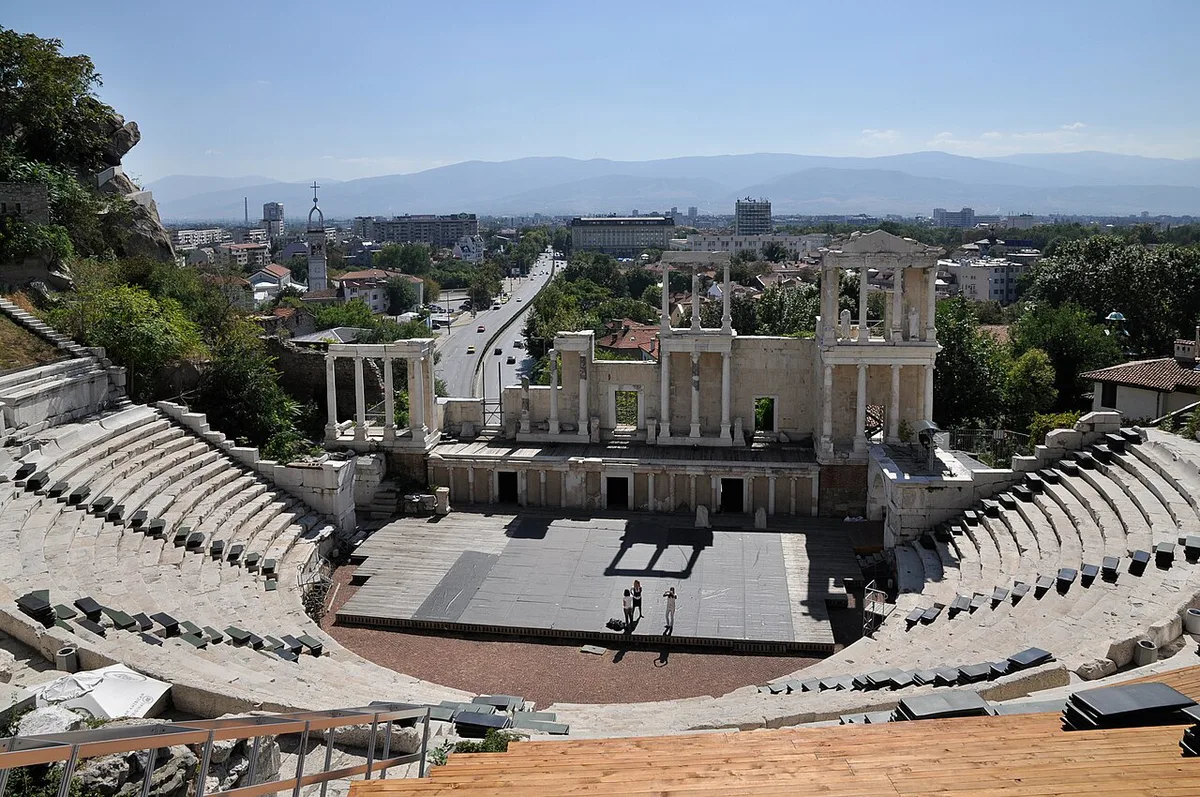
The theatre is in Plovdiv's Old Town, which means an uphill walk on uneven cobbles. Smooth-soled shoes are a poor choice here. Visitors with limited mobility should expect steep, uneven sections on the approach, and should ask the local tourist information office about the easiest route. Summer heat makes the climb tiring at midday, so carry water and plan pauses in the Old Town.
How long to spend and the best time to go
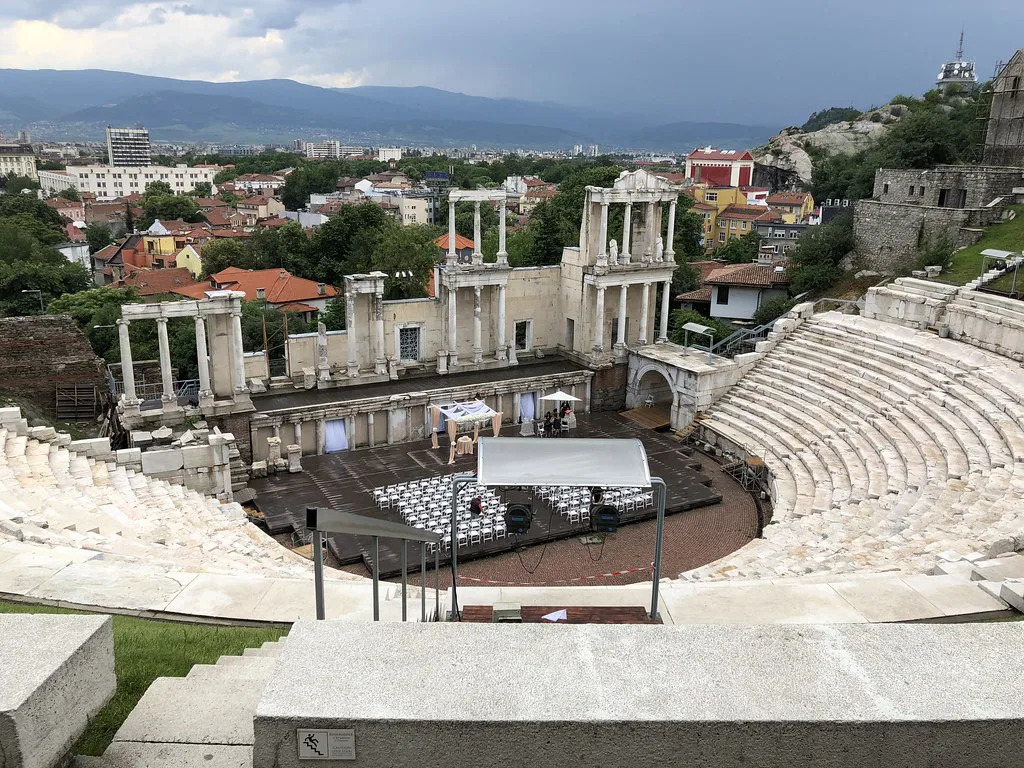
Most visitors need 30 to 45 minutes at the theatre itself. Add up to an hour if you like reading signs and shooting photos from different angles in the surrounding Old Town streets. Early morning and late afternoon bring better light and thinner crowds. Late afternoon can overlap with event set-up, so check the calendar before aiming for sunset. Spring and autumn suit sightseeing, while summer evenings suit performances.
Keep 30 to 45 minutes at the theatre itself; with the stadium's 15 to 30 minutes, a half day covers both plus a short Old Town walk.
Combine it with the stadium and other Roman sites
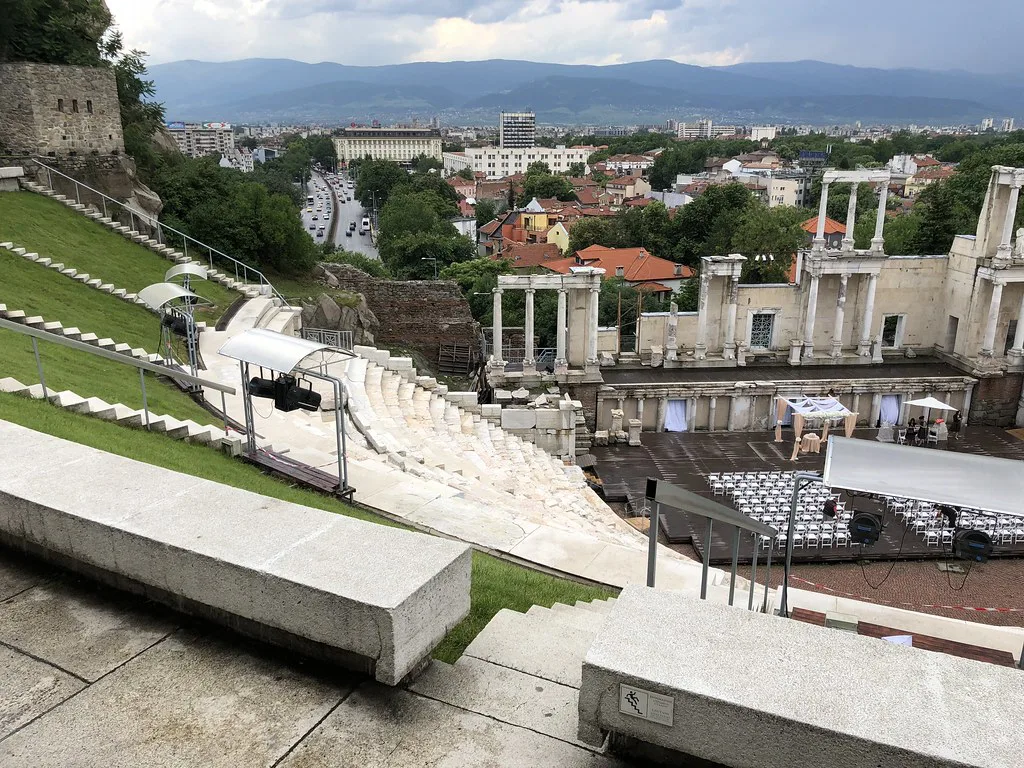
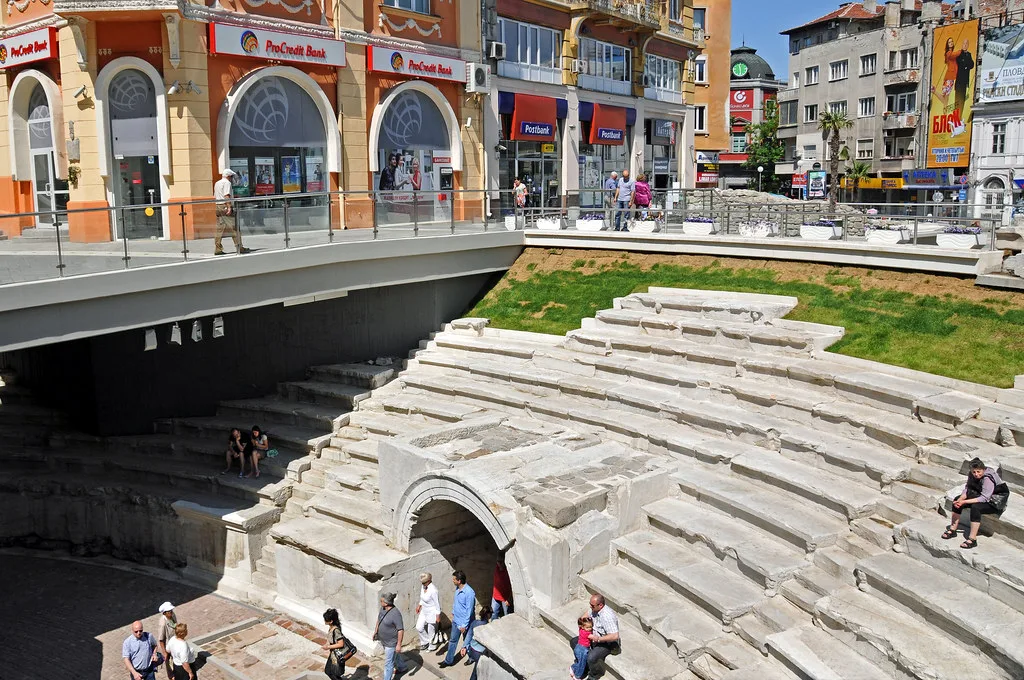
A sensible route runs from the city centre uphill. Start with the stadium beneath the pedestrian street, which needs roughly 15 to 30 minutes. Then walk into the Old Town for the theatre, and finish at Nebet Tepe if energy and daylight remain. Starting low means you climb once, when the day is cooler. A half day covers stadium, theatre and a short Old Town walk. A full day adds Nebet Tepe, the forum and odeon area, and proper breaks.
| Site | Best for | Rough time | Access | Cost |
|---|---|---|---|---|
| Theatre | First-time visitors, photography | 30–60 minutes | Uphill, cobbled approach | See official page |
| Roman stadium | Urban archaeology, city planning | 15–30 minutes | Central, below street level | See official page |
| Nebet Tepe | Views, pre-Roman context | Extra time on top of the theatre | Hilltop climb | See official page |
| Forum and odeon | Roman civic life | Short stop | Old Town and centre | See official page |
Who should skip it, and mistakes to avoid
First-time visitors, history fans and photographers should go. Families can enjoy the open space, but small children need watching on steps and stone seating. Anyone who cannot manage steep cobbles may prefer the flatter stadium stop. Expect an open-air monument rather than a museum, with limited indoor displays.
- Assuming the theatre is always open: hours and access vary with season, weather and events.
- Climbing at midday in summer: start early or wait for late afternoon.
- Arriving on an event night without a ticket: look at the calendar first.
- Wearing smooth soles: Old Town cobbles are uneven and can be slippery.
- Expecting a large museum: this is an open-air site, so budget the time accordingly.
Roman and Thracian sites beyond Plovdiv
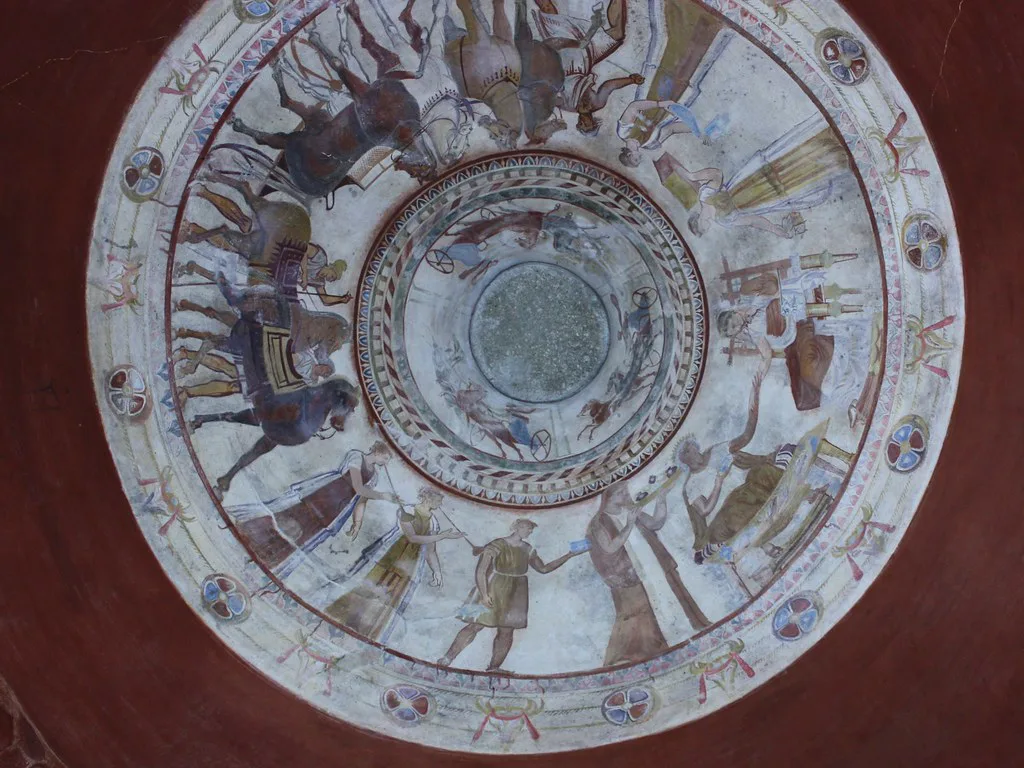
Plovdiv is one stop on a wider ancient route. Roman sites across Bulgaria make a natural next step. Extend the Roman thread with Roman Serdica in Sofia. For the earlier Thracian layer, start with the Thracian burial mounds. The painted tomb at Kazanlak shows what that world looked like. The Thracian gold finds add the craftsmanship, and the rock sanctuary of Perperikon suits a longer trip. Bulgaria's official travel portal lists more regional options.
Related guides
Continue reading
Guides on the same trip