
Thracian Gold: Treasures to Know and Where to See Them in Bulgaria
Last updated November 2026: Thracian gold means the gold and silver hoards of the Thracian elite, from the Varna cemetery of about 4500–4200 BCE to royal drinking sets of the late 4th century BCE. Most of it sits in museums, not at tomb sites. Start with the Panagyurishte treasure in Sofia, then use our guide to Thracian tombs in Bulgaria for the painted chambers.
Featured image: Adam Jones, Ph.D. - Global Photo Archive, CC BY 2.0, via Flickr.
What Is Thracian Gold?
The Thracians were Indo-European tribes who lived across modern Bulgaria, Romania and northern Greece. Herodotus described them as the most numerous people in the world after the Indians. They left no written language. Their story survives in gold and silver hoards from the tombs of warrior-kings. These were political and ritual objects meant to show the elite's status, not simple ornaments.
Where to See Thracian Gold: Quick Table
Original versus replica is the main decision. Only the Panagyurishte location is firmly established here. For every other hoard, check the holding museum's own page before building a trip around it.
| Treasure | Era | Original displayed | Replica or related site | Next step |
|---|---|---|---|---|
| Panagyurishte treasure | Late 4th to early 3rd century BCE | National History Museum, Sofia (permanent display) | Replica in the Panagyurishte history museum | Sofia add-on: Serdica |
| Varna Necropolis gold | c. 4500–4200 BCE | Holder not confirmed here; see the Varna museum | None confirmed | Museum site before you go |
| Rogozen hoard (silver) | Found 1985 | Holder not confirmed here; check regional museums | None confirmed | Museum site before you go |
| Shipka gold mask | Found 2004 | Holder not confirmed here | None confirmed | Museum site before you go |
| Valchitran treasure | c. 1300 BCE | Display status not confirmed | None confirmed | Museum site before you go |
The Panagyurishte Treasure
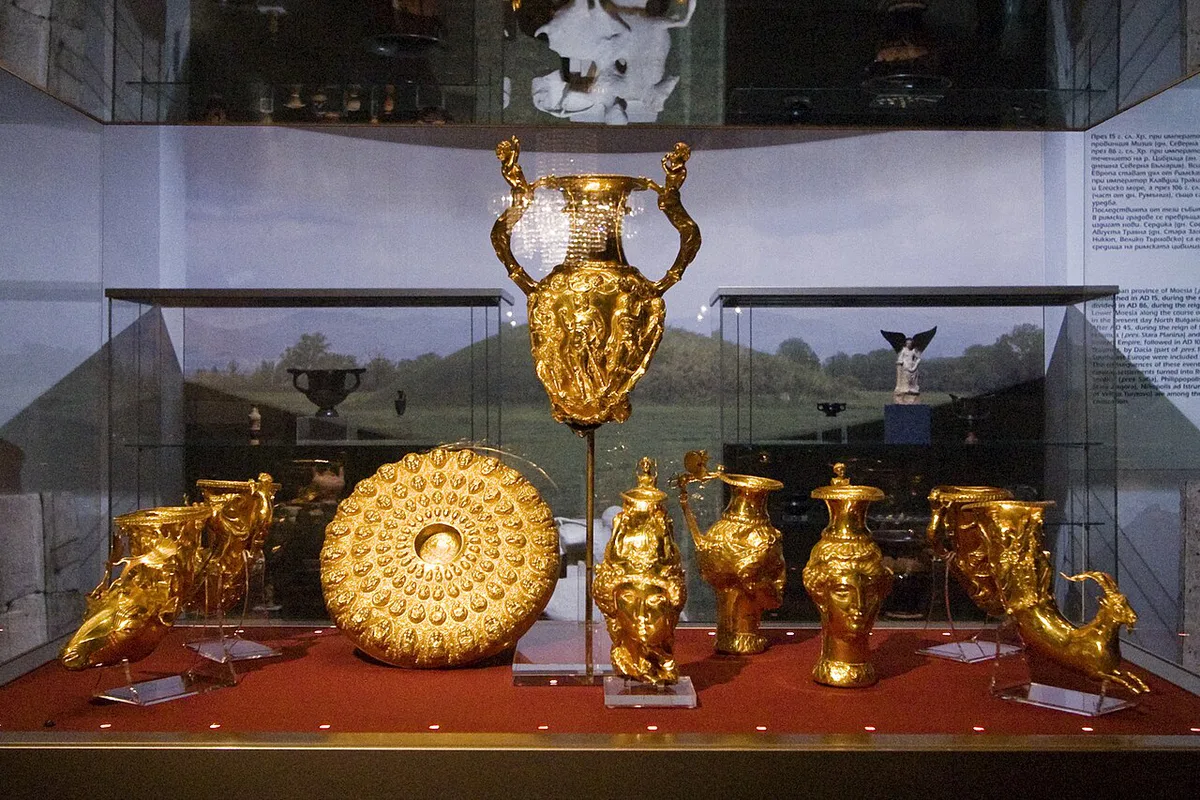
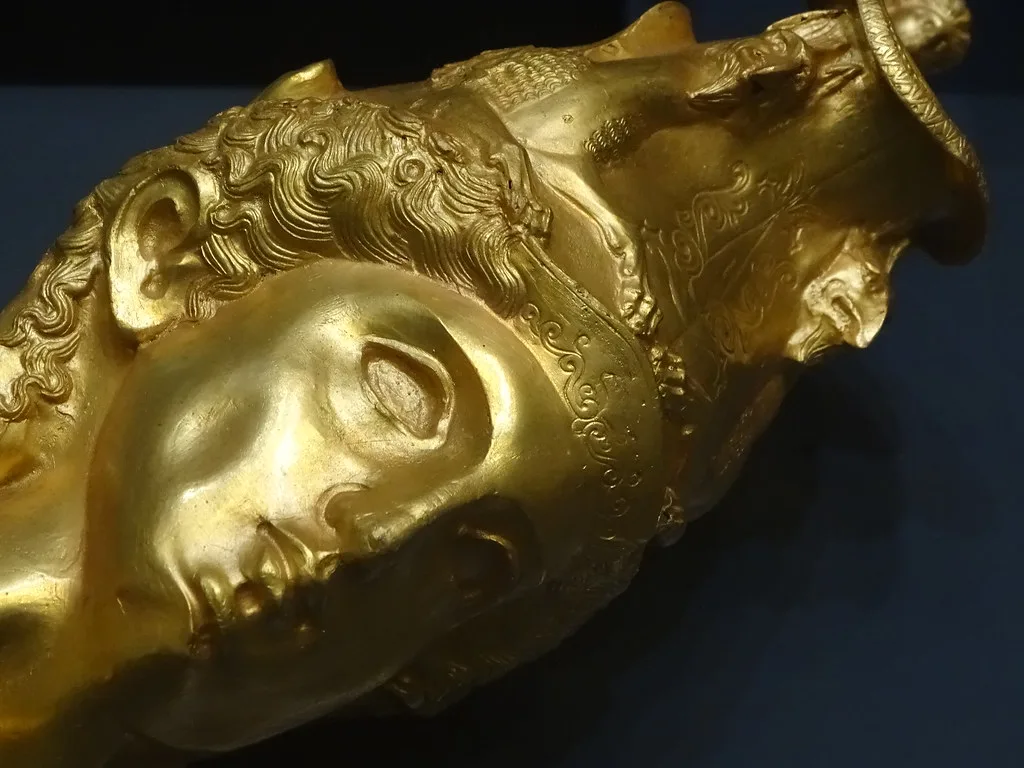
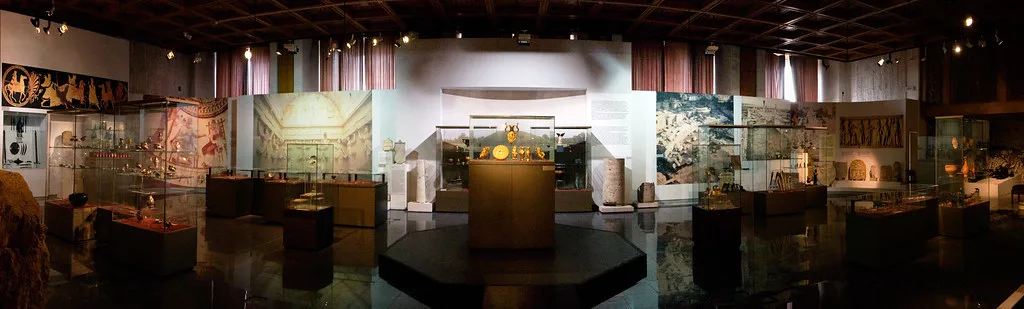
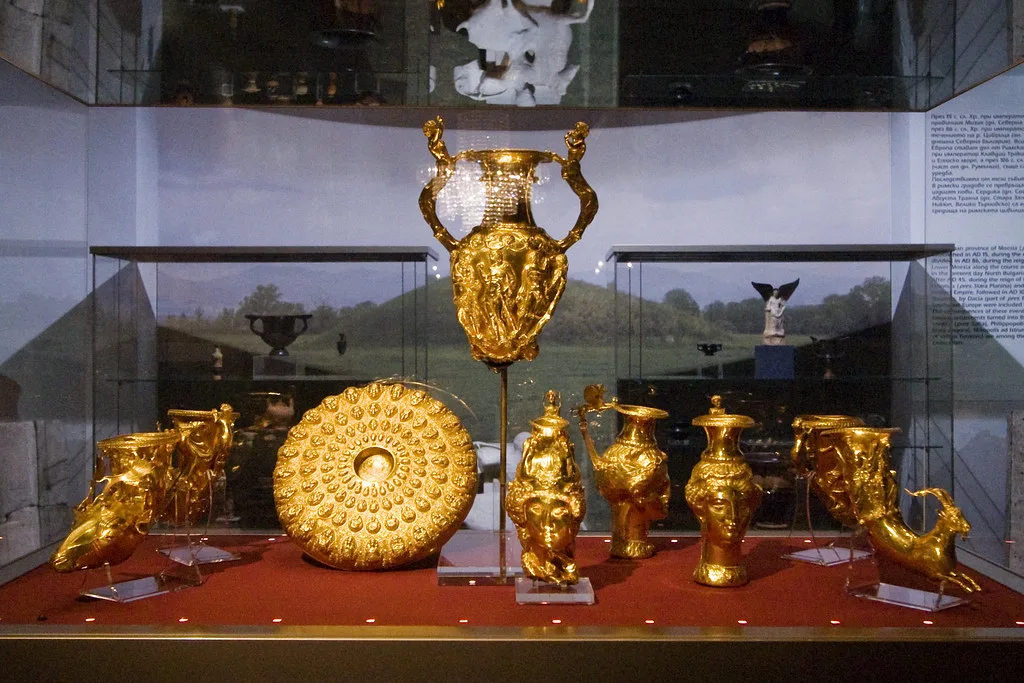
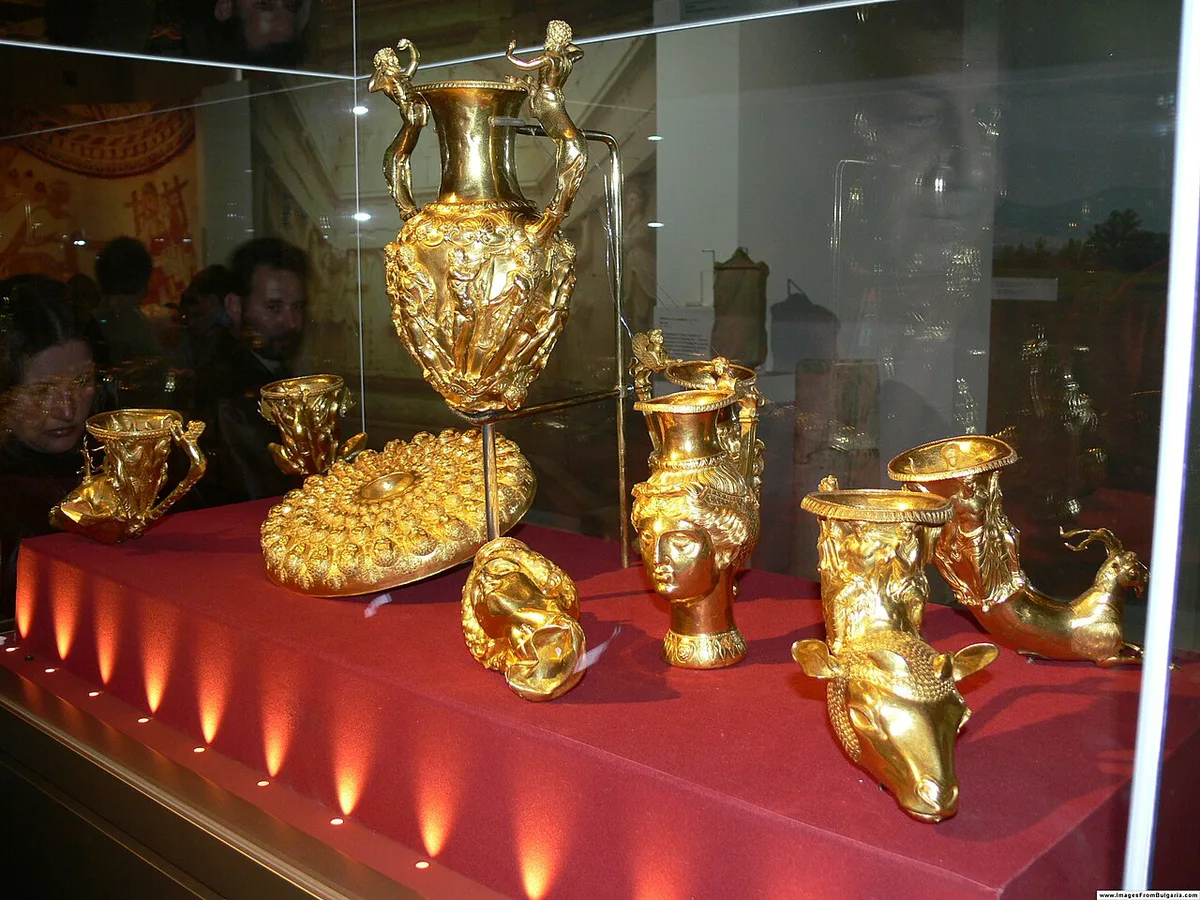
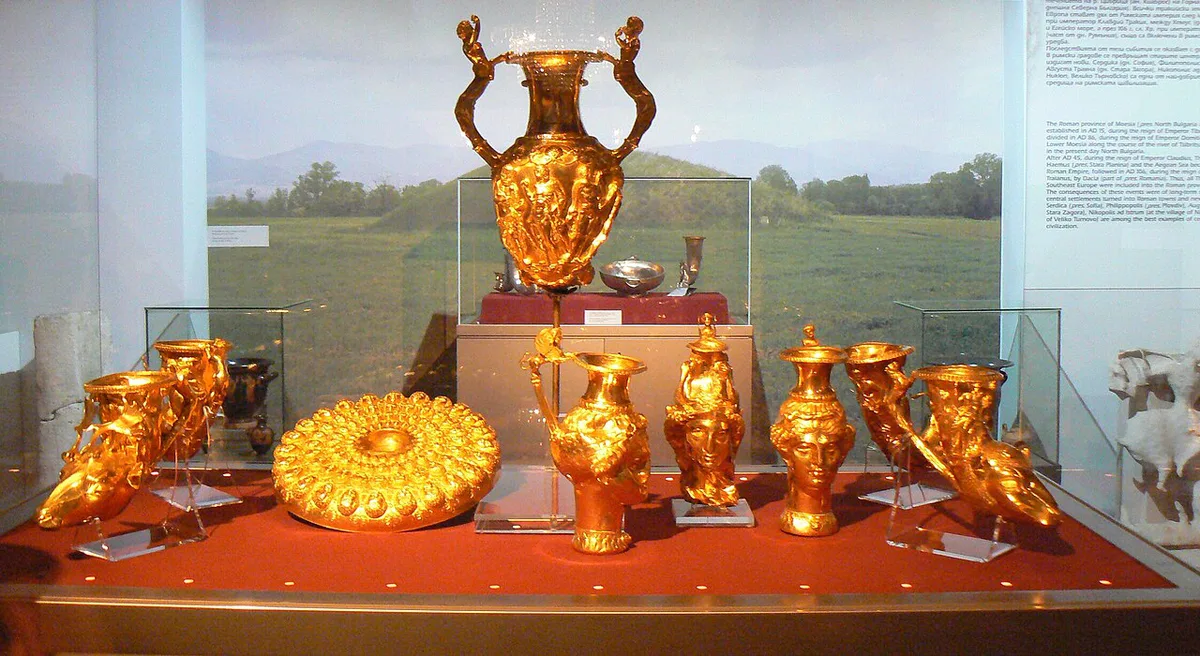
Three brothers, Pavel, Petko and Michael Deykov, found this hoard in 1949 while digging clay near Panagyurishte. It has nine solid gold vessels weighing 6.1 kg in total, about 13.4 lb. The set holds seven rhyta, a rare amphora-rhyton and a phiale. Researchers think the set belonged to a Thracian king, presumably Seuthes III. Inscriptions on the phiale and two vessels point to Lampsakos on the Dardanelles. Where the pieces were made and what the scenes mean are still debated. The originals have a permanent home in the National History Museum in Sofia. A replica is shown in the Panagyurishte history museum. The treasure has also toured widely, including London, Paris, New York and Tokyo. Panagyurishte town lies about 90 km (56 miles) east of Sofia and 80 km (50 miles) northwest of Plovdiv. Starosel, a Thracian cult site, is about 35 km (22 miles) away. Visitors who base themselves in Sofia can pair the museum with Roman Serdica in the same day.
The Varna Necropolis: Oldest Worked Gold
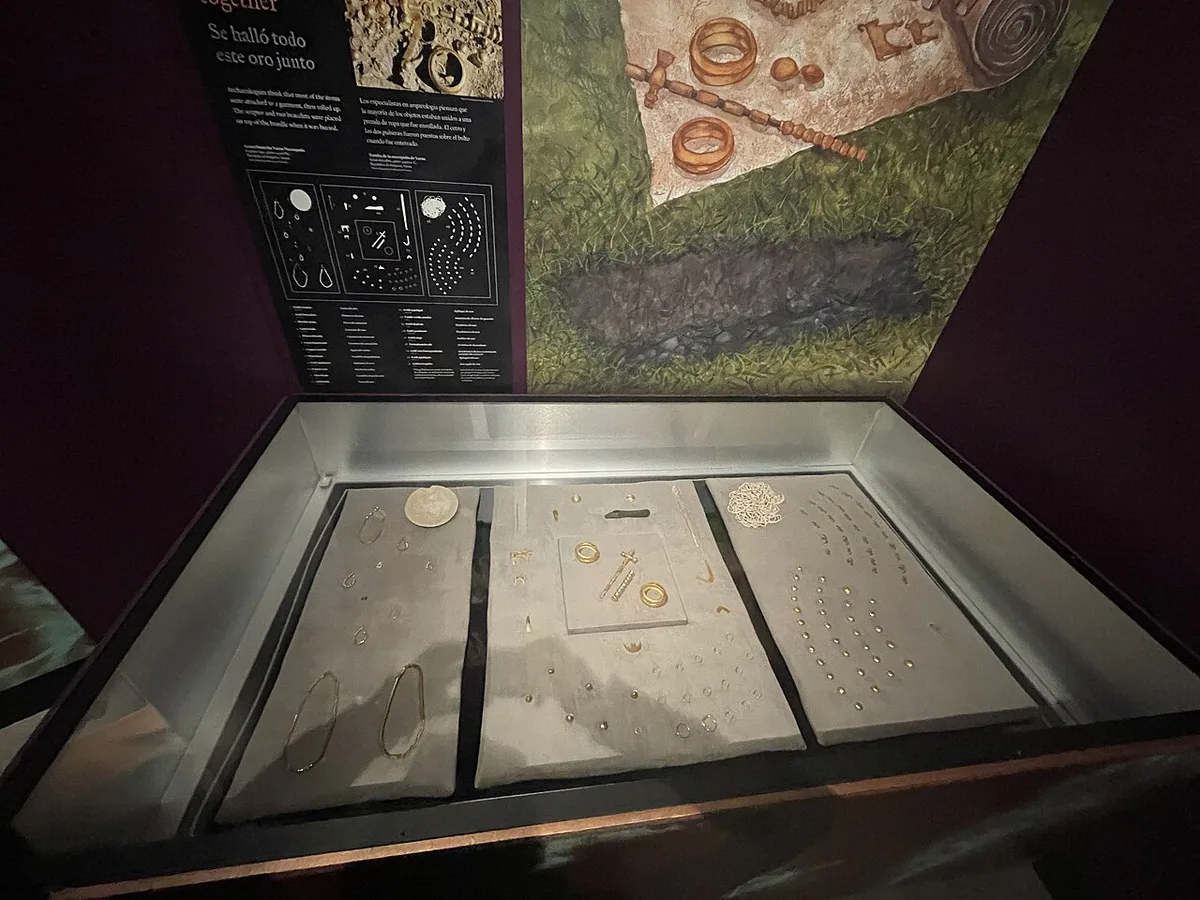
Archaeologists found the Varna cemetery in 1972. It dates to roughly 4500–4200 BCE. Grave 43 held a high-ranking male buried with gold axes and hundreds of gold beads. Many writers call this the oldest worked gold in the world. Scholarly wording on that claim varies, so treat "oldest" as an attributed label, not a settled record. Which museum displays the finds today is not established here.
The Rogozen Hoard
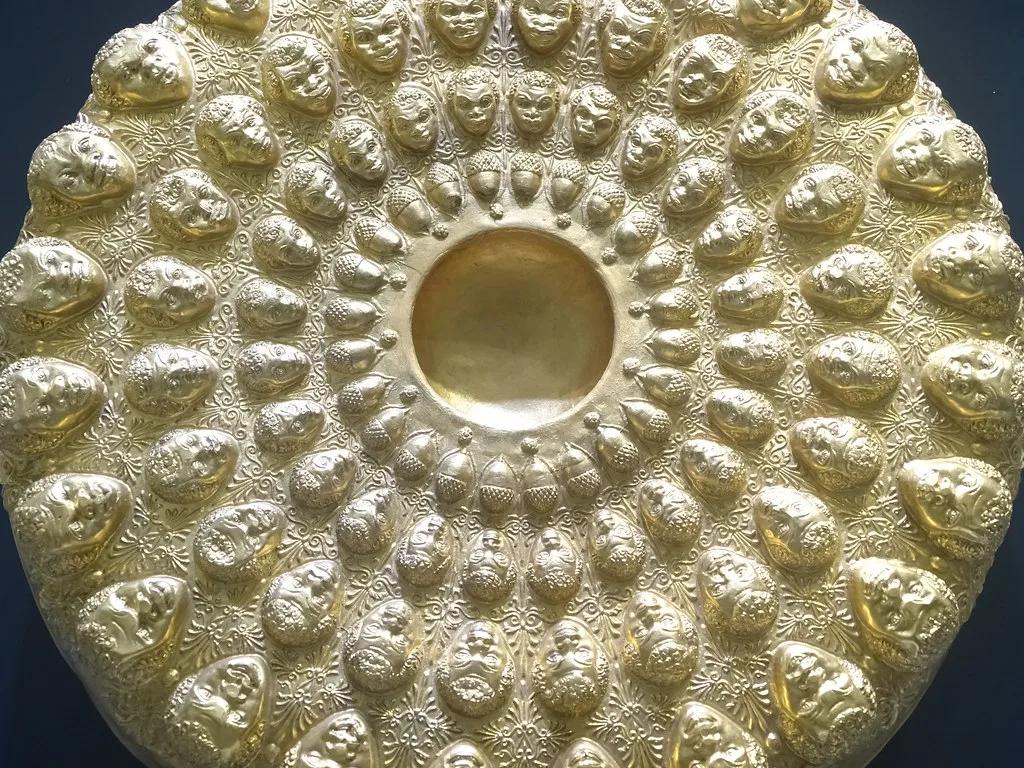
Rogozen is a silver hoard, not a gold one. A garden find in 1985 produced 165 silver vessels, many of them heavily gilded. Several bowls carry inscribed names of Thracian kings, such as Kotys I, and of craftsmen. Researchers read many of them as diplomatic gifts that sealed treaties or marriages. Imagery includes the Thracian Horseman and a goddess riding a lion.
The Gold Mask of Shipka
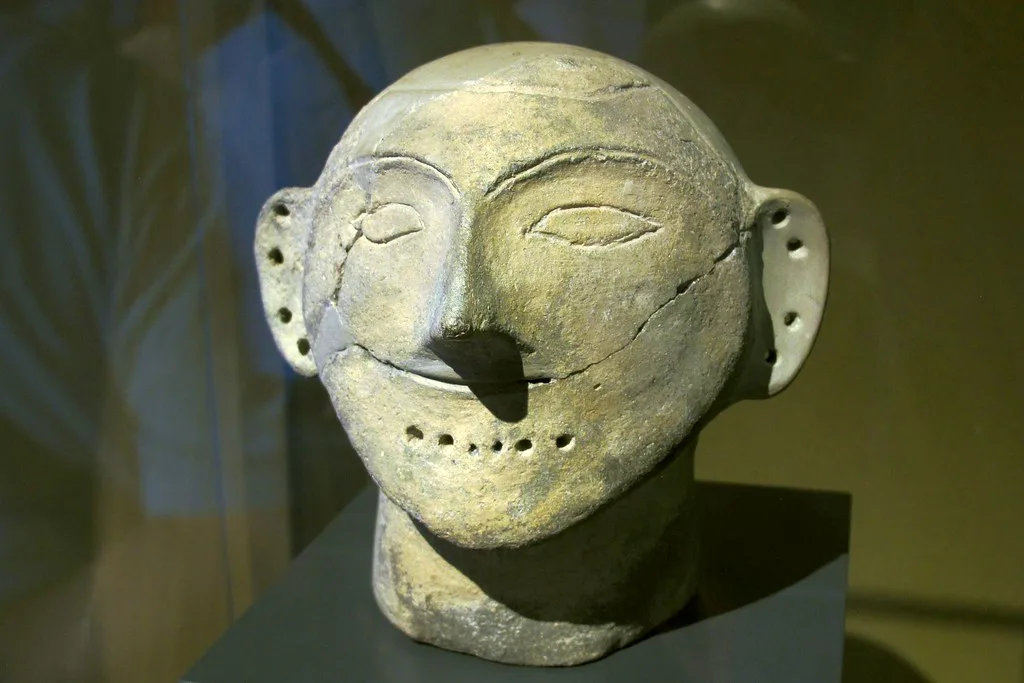
Excavators found a solid gold mask in 2004 in the Svetitsata mound near Shipka. It weighs 673 g, about 1.5 lb. The face shows a thick beard and closed eyes. Many scholars believe it is the funerary mask of Teres I, founder of the Odrysian Kingdom. Treat that name as an attribution, not a proven identity. Its current display location is not confirmed here, so ask the museum before you travel.
The Treasure of Valchitran
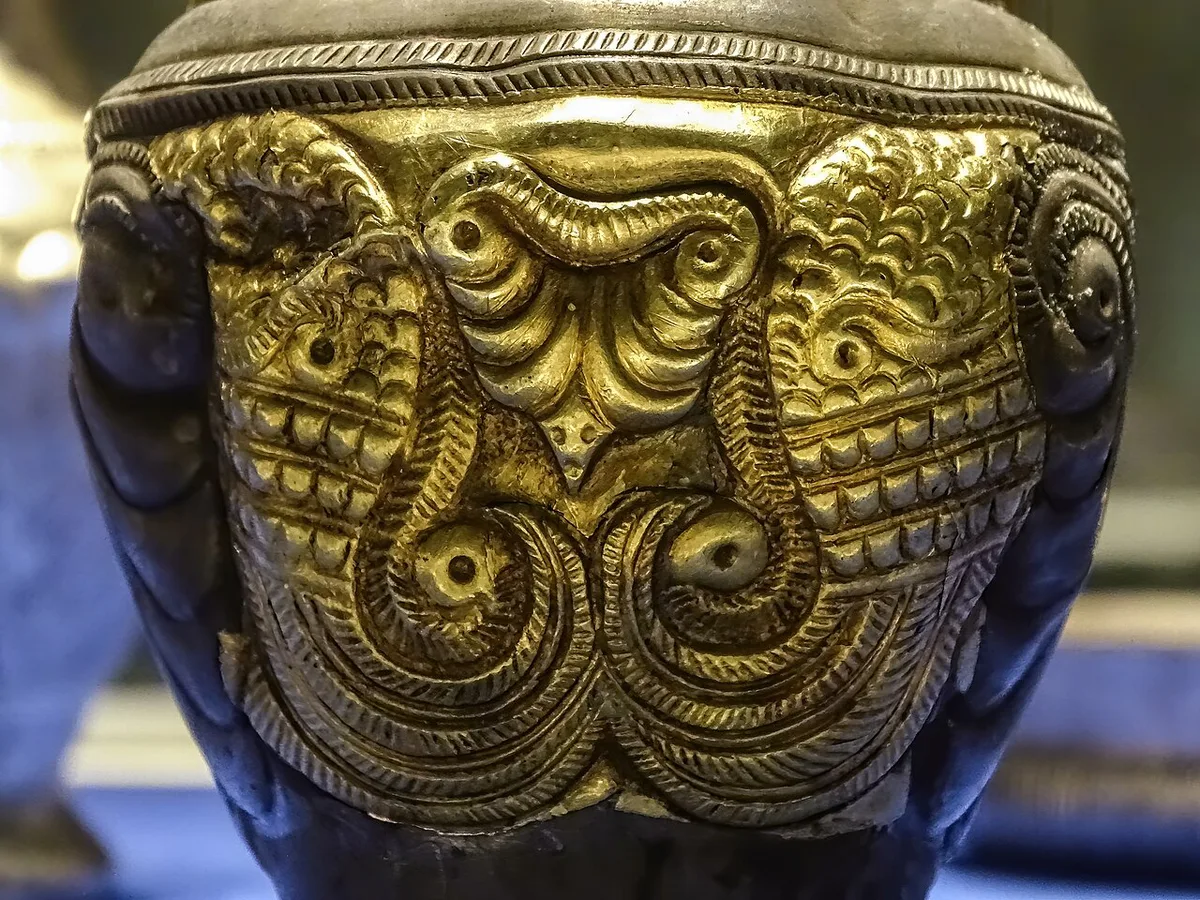
Valchitran dates to the late Bronze Age, around 1300 BCE. It has 13 vessels, including a unique triple vessel with connected tubes. Archaeologists believe the set served cult ceremonies, perhaps mixing three liquids as they were poured. Display status is not confirmed here. Do not plan a trip around seeing it. It suits readers who already love archaeology and can check a museum's collection page in advance.
How the Goldsmiths Made It: Filigree, Granulation, Repoussé
Three techniques explain most of what you see in a display case. Look for them on beads, rings and vessel rims.
- Filigree: fine gold wires twisted into patterns. Look for thread-like coils along edges.
- Granulation: tiny gold spheres soldered onto a surface. Look for dotted textures that look like grain.
- Repoussé and chasing: hammering the metal from the back (repoussé) or the front (chasing). Look for raised figures on vessel walls, as on the Panagyurishte rhyta.
Planning a Thracian Gold Trip
No verified ticket price or opening hours came with this guide. Check the museum's official page for entry fees, seasonal hours and tomb access limits. The official Sofia tourism portal is a good starting point for the capital. For regional context, see Bulgaria's official travel site. Many tombs sit in rural areas, so a car helps. Some tombs are reached only through replicas, and the tomb sites rarely hold the gold itself. Pick the route that matches your time.
Originals are in Sofia, while the Panagyurishte replica sits about 90 km (56 miles) east of Sofia, so book it as a separate outing.
- One-day museum visitor: stay in Sofia for the Panagyurishte originals, then add Serdica's Roman remains.
- History fan with a car: drive to Panagyurishte for the replica, then on to Starosel about 35 km (22 miles) away.
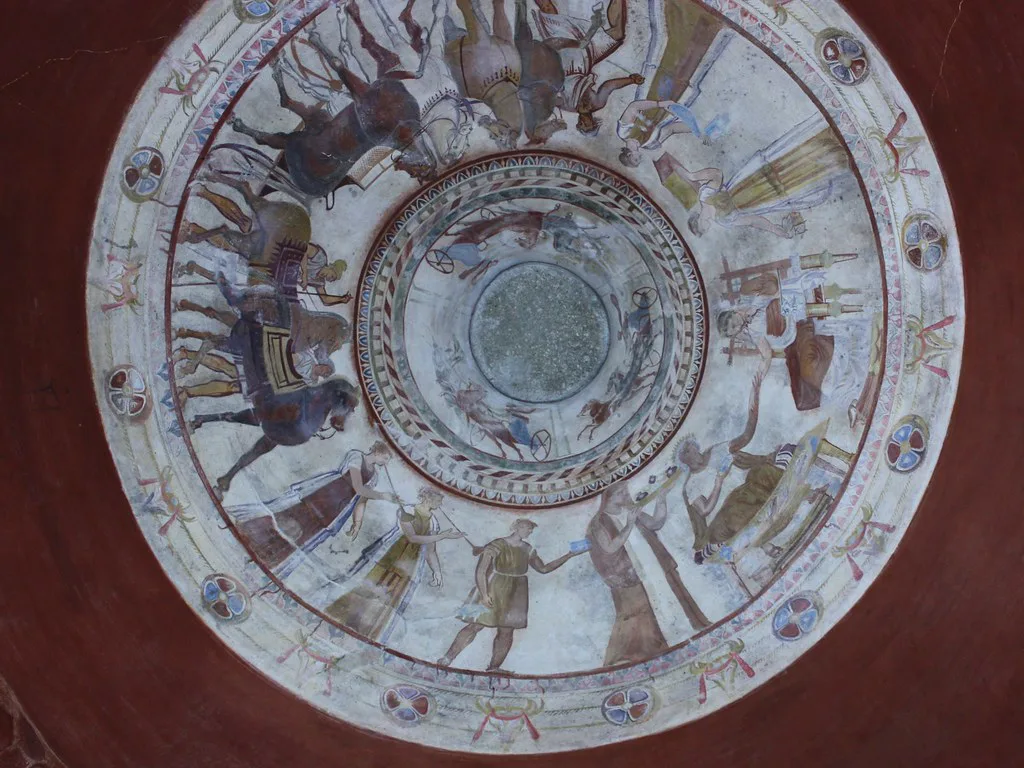
- Tomb-focused route: choose the Kazanlak tomb for its wall paintings, not gold.
- Other tomb options: Sveshtari Tomb: Visiting the UNESCO Thracian Tomb (Access, Tips) and Aleksandrovo Tomb: Thracian Murals Near Haskovo (Visitor Guide) suit travelers who want a quieter site.
- Rhodope extension: add Perperikon or Tatul Thracian Sanctuary, Bulgaria: Visitor Guide for Thracian sacred sites.
- Family with limited time: pick one museum and one outdoor site, then stop.
Mistakes to Avoid
Do not expect gold at tomb sites, because most of it sits in museums. Do not assume the Panagyurishte treasure is on tour without checking. Do not assume every treasure is in one place. For the layer after the Thracians, see Plovdiv's Roman theatre, then the wider Roman ruins across Bulgaria.
Rogozen's 165 silver vessels are silver, not gold, so a gold-only checklist would skip them even though they belong to the same story.
Frequently Asked Questions
What is the oldest gold treasure ever found?
Varna Necropolis finds, dated to about 4500–4200 BCE, are often called the oldest worked gold. Scholarly wording on that claim varies, so treat it as an attributed label.
What is the name of the skeleton found in Bulgaria that contained gold?
Grave 43 at the Varna Necropolis is the best-known case. It held a high-ranking male buried with gold axes and hundreds of gold beads.
What was gold used for in ancient times?
Thracian elites used gold for ceremonial drinking sets, jewelry and status objects. Silver vessels such as the Rogozen bowls were often gifts that sealed treaties or marriages.
Related guides
Continue reading
Guides on the same trip