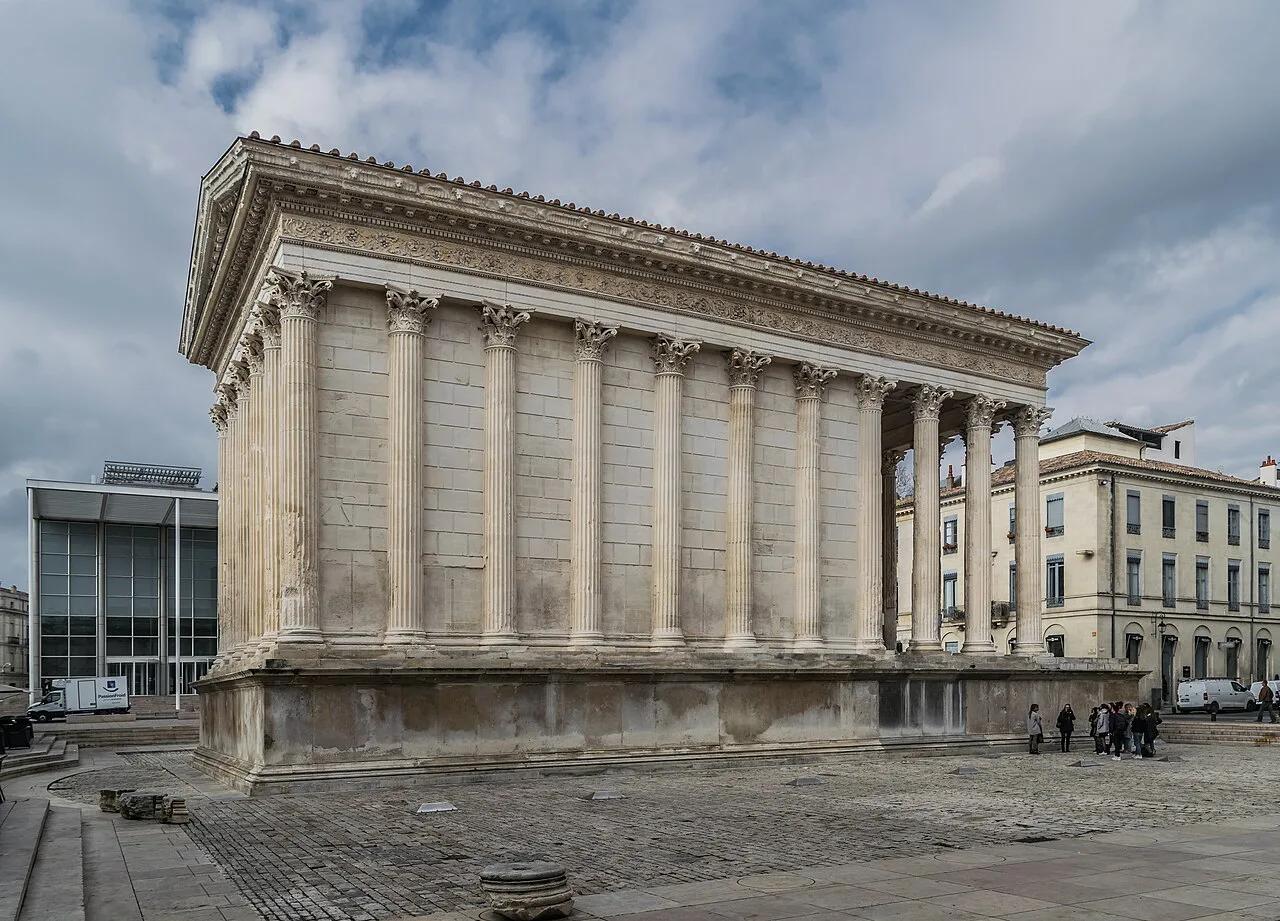
Last updated November 2026: maison carree is a Roman temple on Place de la Maison Carrée in central Nîmes, and it ranks among the best-preserved Roman temples in the former Roman Empire. UNESCO inscribed it on the World Heritage List in September 2023. Treat it as a short stop that works best inside a wider day through the Roman sites in Nîmes.
Featured image: Krzysztof Golik, CC BY-SA 4.0, via Wikimedia Commons.
Maison Carree at a glance: what it is
Maison Carrée means “square house” in French, yet the plan is a rectangle almost twice as long as it is wide. Built around the turn of the 1st century AD, it was dedicated to Gaius and Lucius Caesar, the grandsons and heirs of Augustus. Reconstruction work on the temple’s dedication shows it served the imperial cult. UNESCO lists it as reference 1569, criterion iv, inscribed in 2023 at the 45th session.
- Where: Place de la Maison Carrée, central Nîmes.
- What: a Roman temple of the imperial cult.
- Inside: a small, windowless cella that shows a tourist film on Roman Nîmes.
- Best for: architecture fans and anyone building a Nîmes Roman-sites day.
- Skip the interior if: you want original decoration, since none remains in the cella.

What you’ll see outside
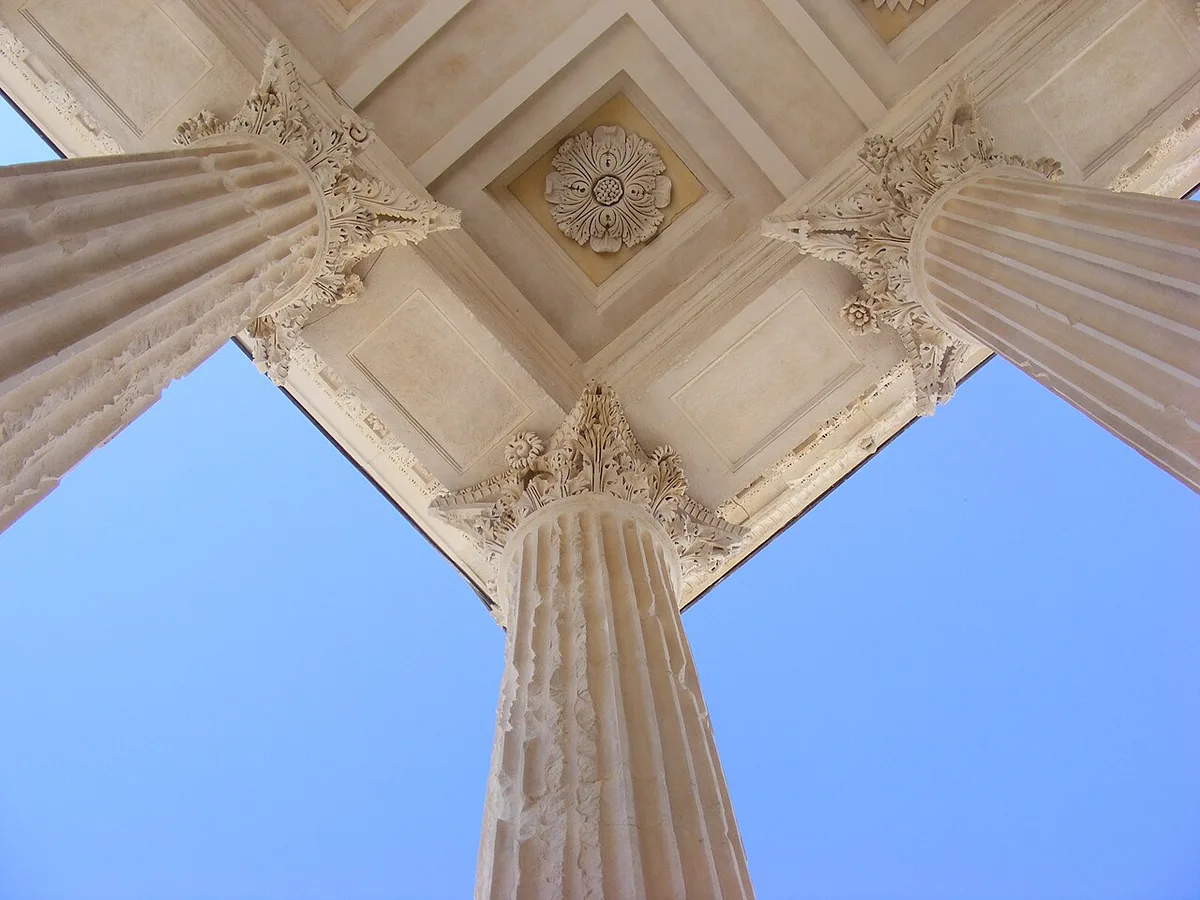
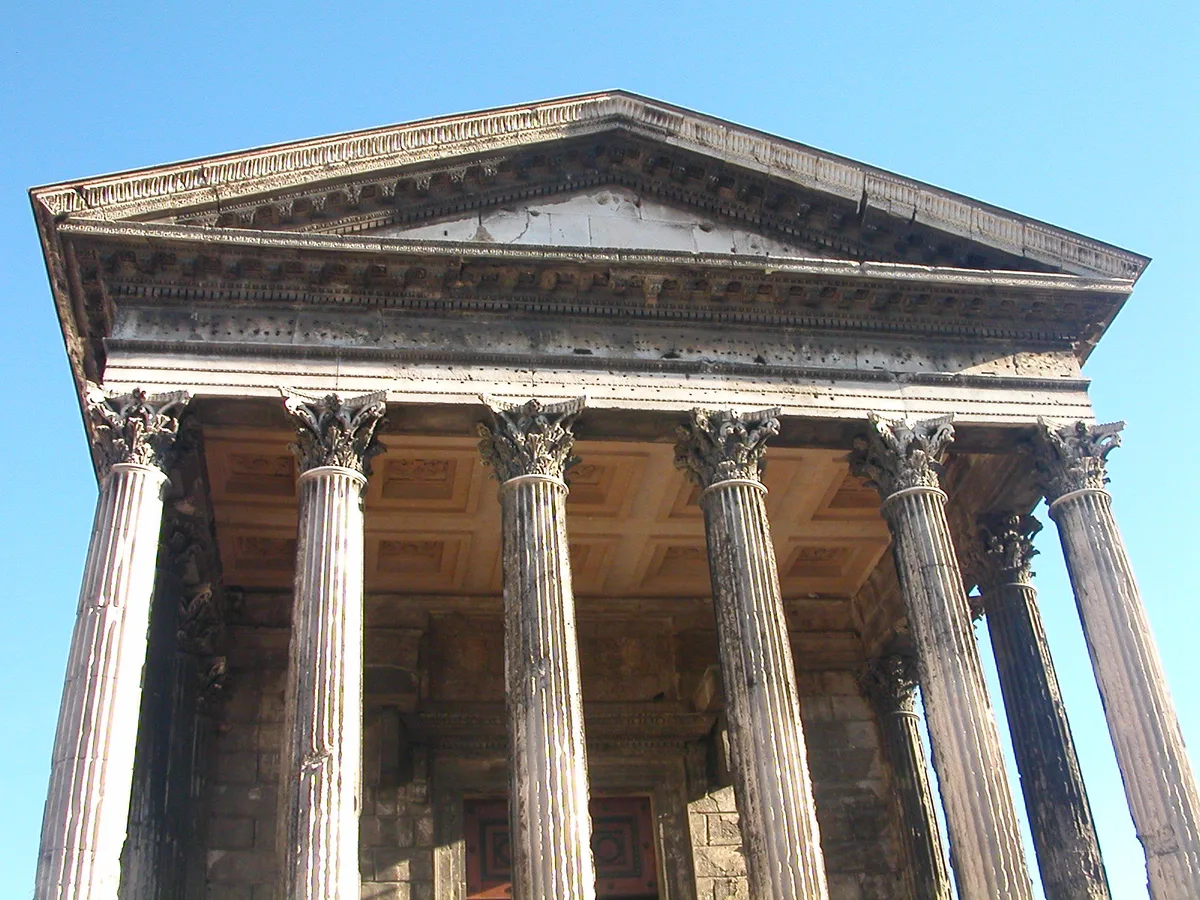
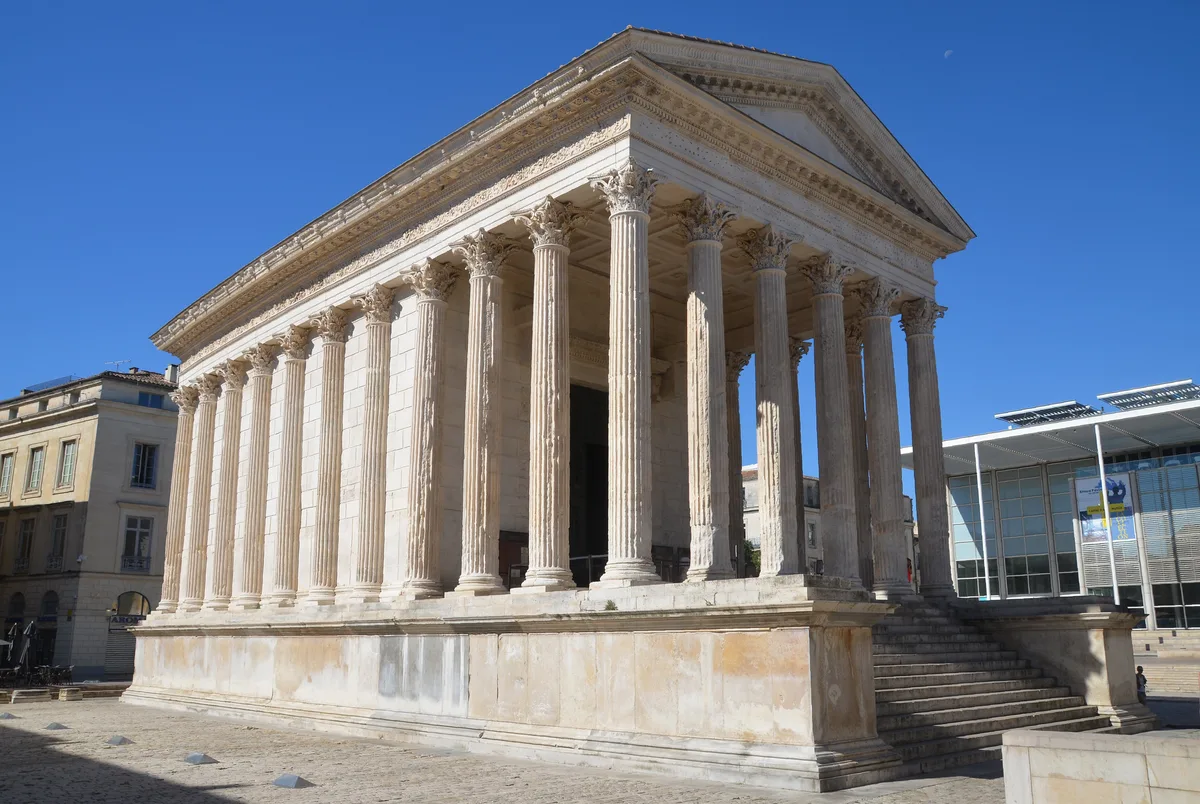
Start with the podium. Raised 2.85 m above the square, it isolates the temple and gives it a dominant position. A single staircase at the front leads up to a deep portico, which takes up almost a third of the building’s length. Six Corinthian columns stand under the pediment at the front. Twenty more are engaged in the walls of the cella, so the sides carry a half-column rhythm of light and shadow.
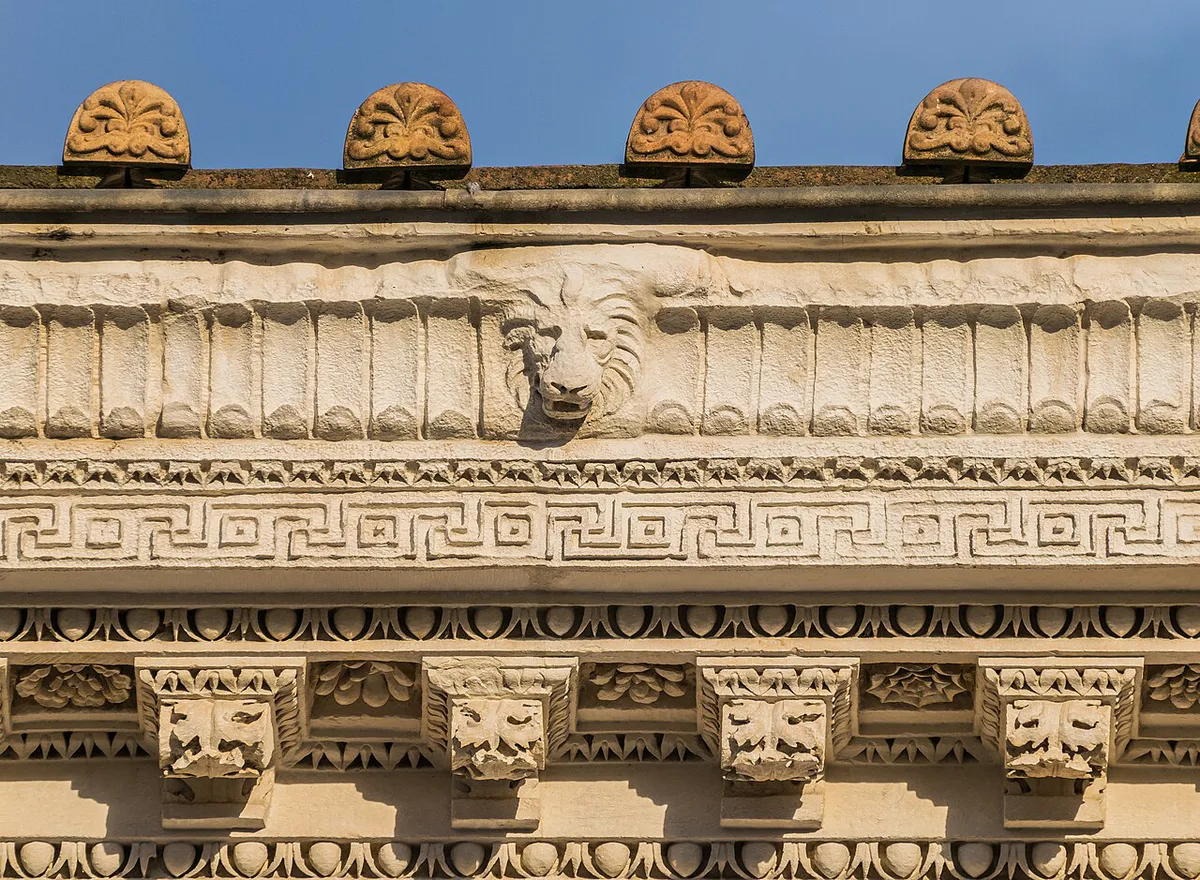
Look up at the frieze. Scrolling acanthus leaves and rosettes run along three sides, with birds among the scrolls in places. Sources give slightly different dimensions: roughly 26 m long, 13.5 to 15 m wide and about 17 m high. Use “roughly 26 by 15 by 17 m” as a safe description.
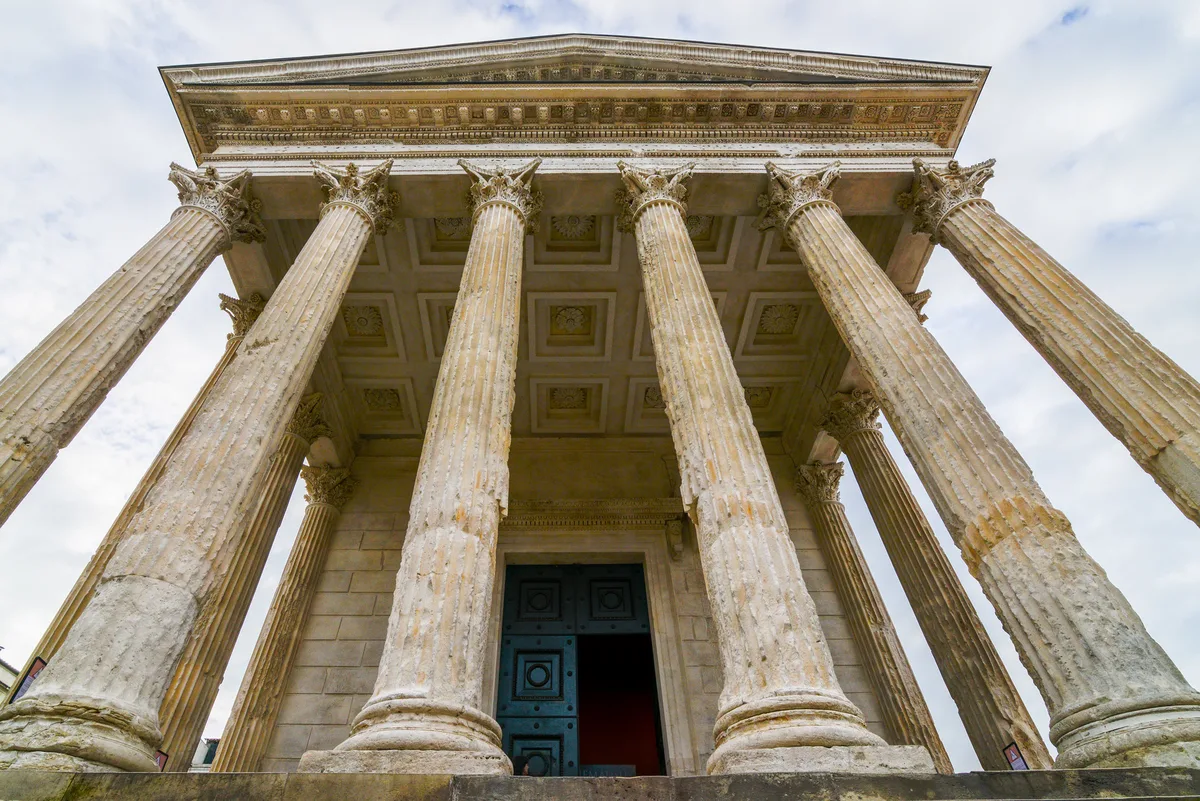
Now find the holes across the front frieze and architrave. Bronze dedication letters were once fixed there, and they are gone. In 1758 the Nîmes scholar Jean-François Séguier read the order of the fixing holes and reconstructed the text of the dedication to Gaius and Lucius Caesar.
Is it worth going inside?
Go inside if you want a brief orientation to Roman Nîmes. The cella is small and windowless, and its main use today is a tourist-oriented film on the city’s Roman history. Film length, format and any seasonal changes are set by the city, so read the current notes on the Nîmes tourist office site before you queue. Architecture fans lose little by staying outside, because the columns, podium and frieze are all visible from the square.
Since the 11th century the building has served many uses, while the cella today mainly offers a film, not original carvings.
| Option | Time | Cost tier | Best for |
|---|---|---|---|
| Exterior only | Short | Free to look | Short stopovers, photographers |
| Interior film | Short to medium | Single ticket | Families, first-time visitors |
| Pass combo | Half to full day | Higher, spread over several sites | Visitors seeing the Arena, Tour Magne and museum |
Why it’s so well preserved
Continuous reuse is the main answer. Since the 11th century the building has served as a residence, stables, a convent, government offices and the archives of Nîmes. It then became the first museum of the city, and it housed what is now the Musée des Beaux-Arts de Nîmes from 1821 to 1907. Because someone always needed the building, it was always maintained.
Until the 19th century it sat inside a larger block of adjoining buildings. Their demolition restored the isolation it had in Roman times. Restoration followed between 1988 and 1992, when the temple was re-roofed and the square was cleared to reveal the outline of the forum. Another campaign ran from 2006 to about 2010, tackling facades damaged by pollution.
Opposite the temple, Norman Foster’s Carré d’Art now holds a modern art gallery and public library. It replaced the city theatre, which burned down in 1952.
Tickets, passes and opening hours
No price or hour is quoted here, because both can change by season. Hours, closing days and any restoration closures are listed on the official Nîmes visitor information pages. Viewing the exterior needs no ticket at all.
For the interior, the choice is a single entry or a pass. The Musée de la Romanité sells the Romanité Pass and the Romanité Tour, which it says include the Maison Carrée alongside the museum, the Arena and the Tour Magne. That makes four sites in one product. Check price and validity on the Musée de la Romanité site. A pass pays off when you plan to enter at least two of those sites, and it is aimed at stays of 2 days or more. Our guide to the Nîmes Roman pass compares the options.
Combining it with Nîmes’ other Roman sites
Four sites make a natural sequence. Begin at the temple, then walk to the Arena, the Tour Magne and the Musée de la Romanité. Our Arena of Nîmes guide covers the amphitheatre in detail. Climb the hill afterwards using the Tour Magne visitor notes.
- Morning: Maison Carrée, when low light on the columns is usually flattering (editorial advice, not a fixed fact).
- Midday: Musée de la Romanité, a good indoor stop in heat or rain.
- Afternoon: the Arena, then the Tour Magne for a final viewpoint.
- Pass holders should enter the temple, museum, Arena and Tour Magne in one trip to get the full value.
Getting there and nearby
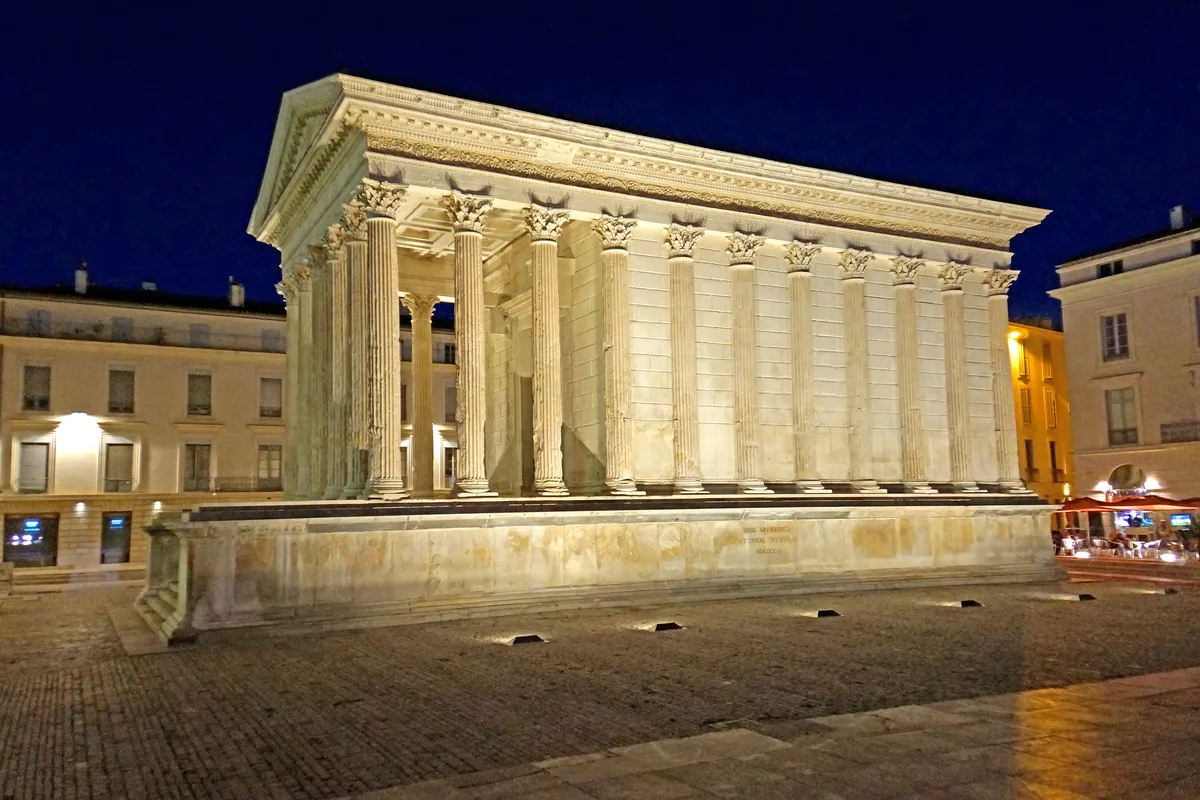
The temple stands in the centre of Nîmes, on the square that bears its name. Most visitors reach it on foot from the old town. Opposite it is Norman Foster’s Carré d’Art, which makes a useful landmark and a place to pause. Check walking times to the Arena and Tour Magne on a map app, as no verified distances are given here. If you are staying overnight, choose somewhere in central Nîmes so every Roman site is close.
Mistakes to avoid
Two assumptions trip people up. Visitors expect a large interior with original decoration, but the cella is small and has no ancient decoration left. Others assume a pass is needed to see the temple, yet the exterior is open to anyone standing in the square.
- Do not allow time for a big interior; the film is the main interior feature.
- Do not buy a pass for one site only without comparing it with a single ticket.
- Do not skip the frieze and the fixing holes, which are the best details outside.
If you have another Roman day
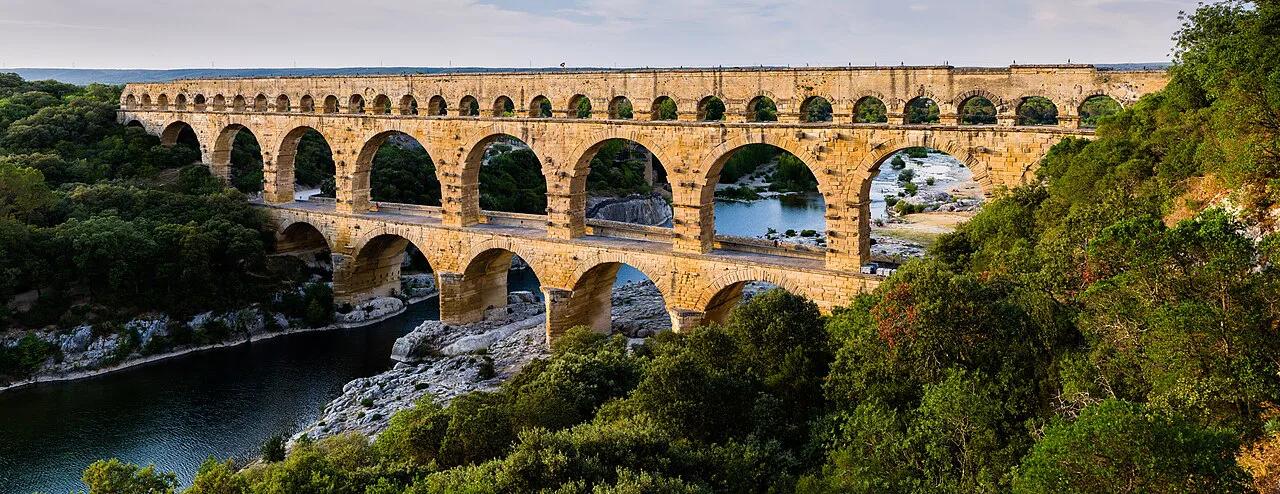
The Maison Carrée is a compact temple, while the Pont du Gard is a large aqueduct in open countryside. Choose the temple for a city stopover and the aqueduct for a full outing. Our guide to the 6 Ways to Visit Pont du Gard: Costs, Parking and Swimming covers that second site. If you are based in Nîmes, read about the trip from Nîmes to the aqueduct as a separate day.
Frequently Asked Questions
What does Maison Carrée mean?
It means “square house” in French. The building is not an exact square, since it is a rectangle roughly 26 m long and 15 m wide.
Can you go inside the Maison Carrée?
Yes. Inside is a small, windowless room showing a tourist film on Roman Nîmes, and no ancient decoration remains there.
Related guides

Continue reading
Guides on the same trip