
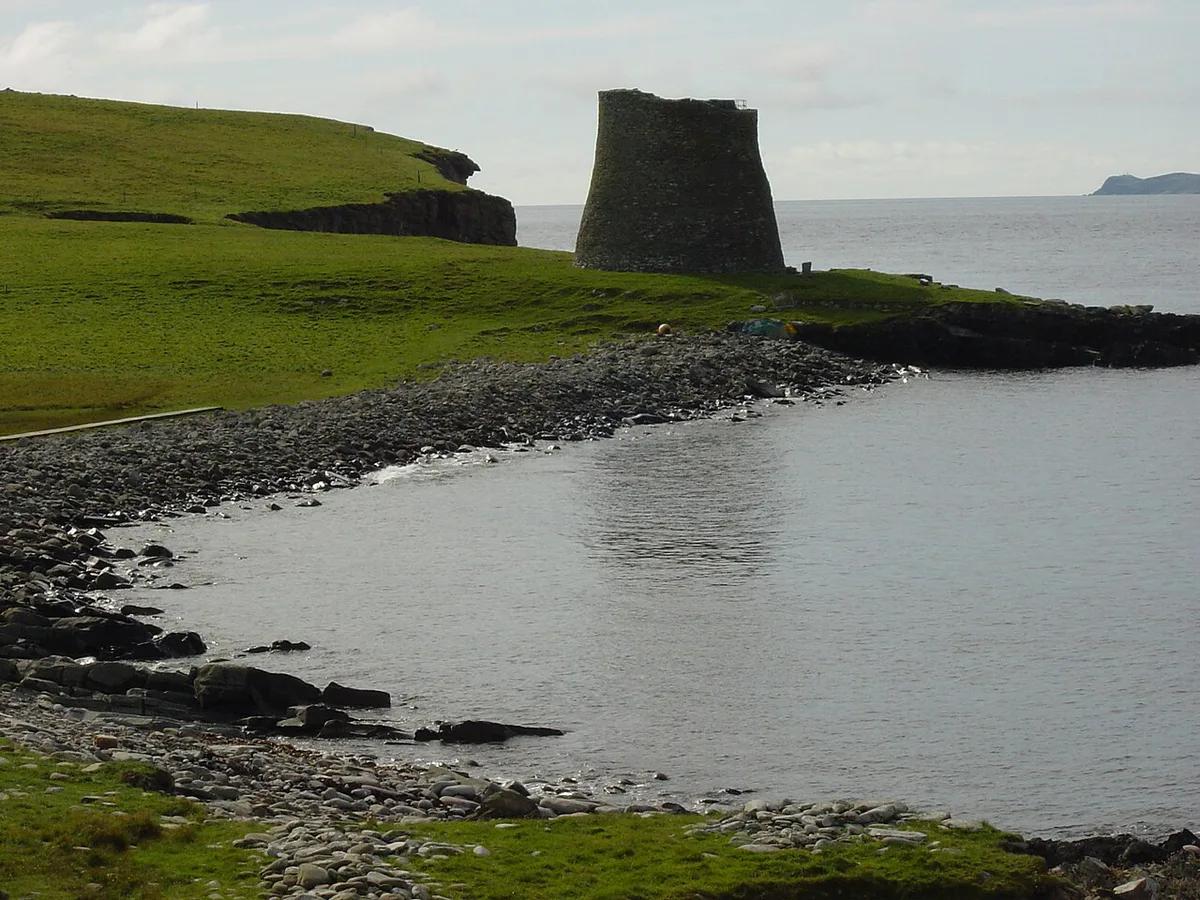
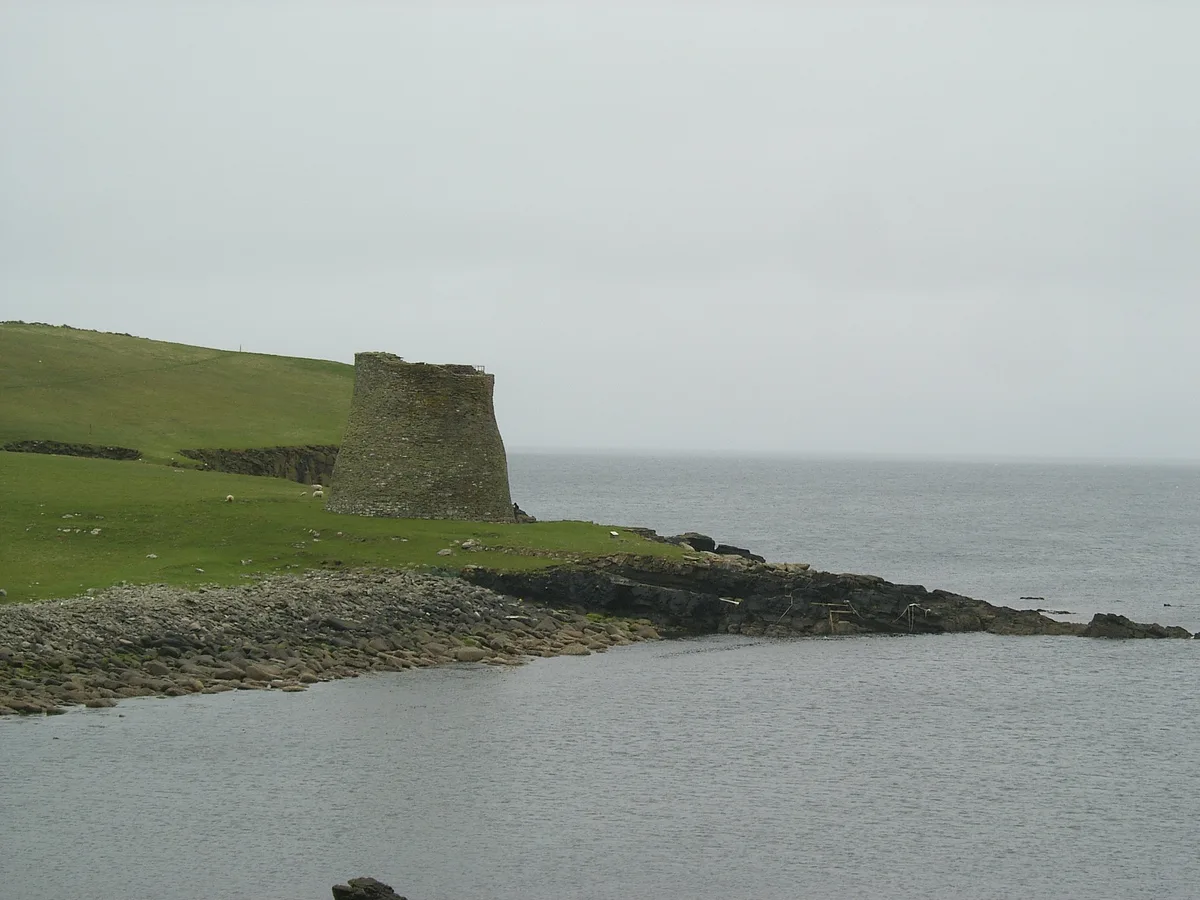
Last updated November 2026. Mousa Broch is often described as the best-preserved broch in Scotland and one of the tallest surviving Iron Age towers. It stands on the uninhabited island of Mousa, off Shetland's east coast. Go if you want a broch you can study up close, and plan around a boat crossing that weather can disrupt.
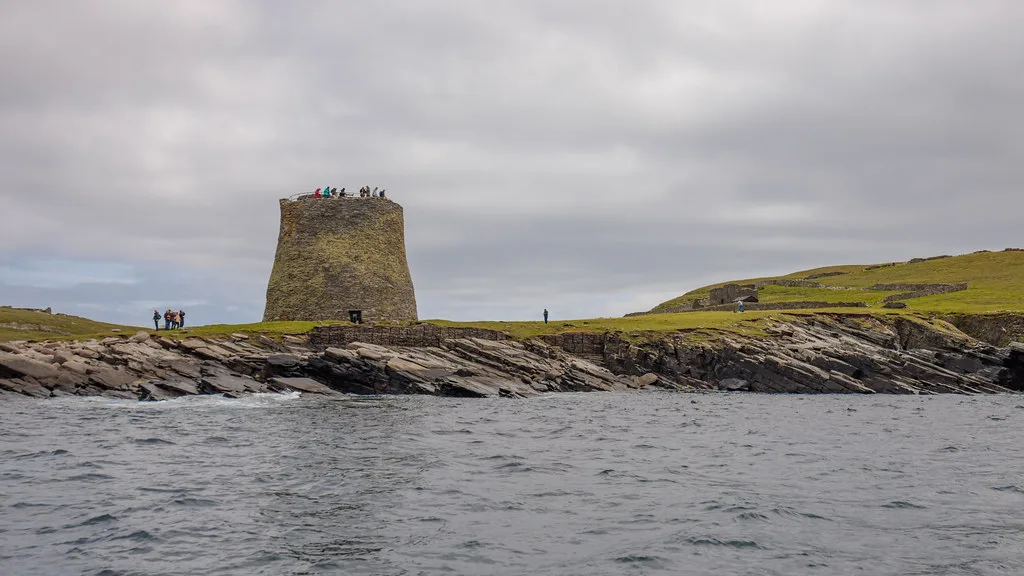
Featured image: Langus (talk), Public domain, via Wikimedia Commons.
Mousa Broch at a glance
Mousa is a small island with no permanent residents. Its broch is the main reason to cross. Use this list to decide quickly whether it fits your Shetland plans.
- Location: the island of Mousa, off Shetland's east coast.
- What it is: an Iron Age broch, a thick-walled round tower.
- Access: by boat only, so book a sailing before you plan the rest of the day.
- Best for: broch and prehistory enthusiasts, photographers and wildlife-minded visitors.
- Less suited to: visitors with only a few hours, anyone needing step-free access, and anyone wary of sea crossings.
Is Mousa Broch worth visiting?
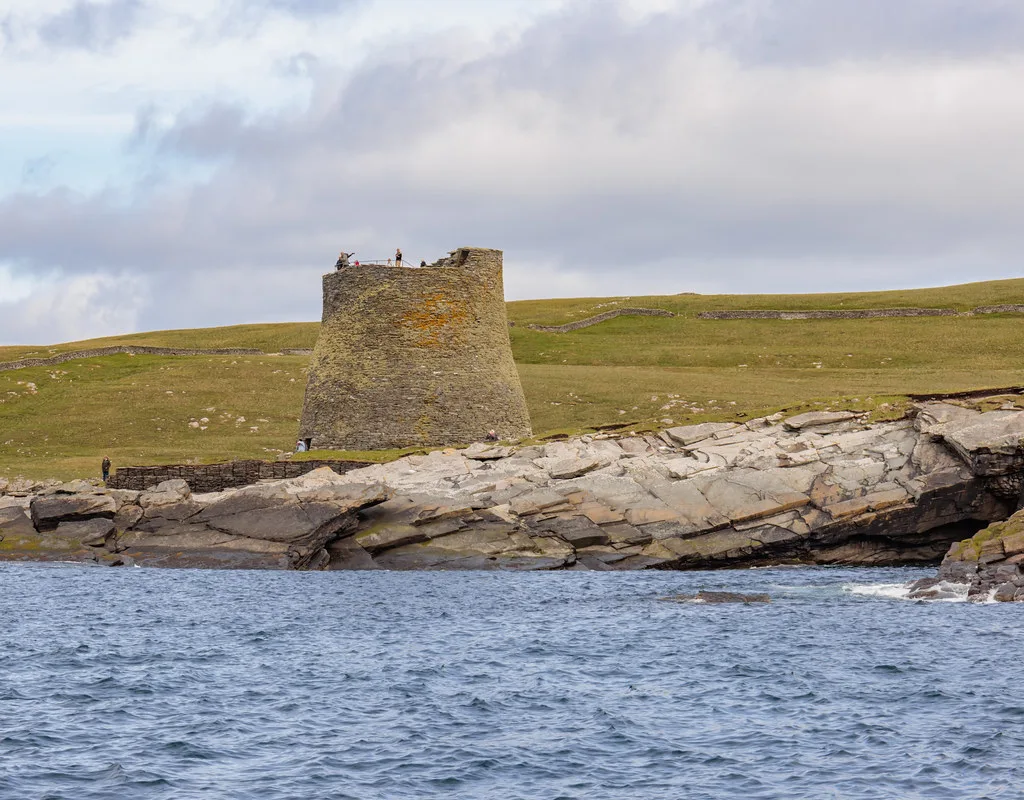
Yes, if brochs are why you are in Shetland. Mousa is the one to see when you want an intact tower rather than a ruined footing. Shetland Amenity Trust is the local heritage body to consult for background on the island. Skip it if your time is tight or the sea worries you. In that case, the mainland sites below cover similar ground with no crossing. For the wider picture, see our guide to brochs across Scotland.
How to get to Mousa Broch
Mousa has no bridge or road link, so every visit starts with a boat. Book your sailing first and build the rest of the day around it. Departure details, sailing days and booking rules come from the operator, and Visit Shetland is the place to find current operators. Lerwick and Sumburgh are the usual bases on the Shetland Mainland. Hire a car or check bus connections to reach the departure point. Weather can cancel a crossing, so keep a spare day or a mainland backup such as Jarlshof.
What to see and do on Mousa
The broch is the draw, a round dry-stone tower standing on the island's shore. Walk around it first to see how the walls hold their shape. Then look at the setting, because the coastline makes the tower easy to photograph. Seabirds and seals live around the island, and seasonal wildlife trips may run. Ask the operator what is on offer when you book. Wear sturdy footwear and layers, since the island is exposed.
Mousa Broch history: construction, sagas and survival
Mousa Broch dates to the Iron Age, roughly 2,000 years ago, and stands about 13 metres high. That makes it the tallest broch still standing. Its survival owes a lot to its position. A remote island offered few reasons to strip the stone for farm buildings, a fate that cut down many mainland brochs.
How the tower is built
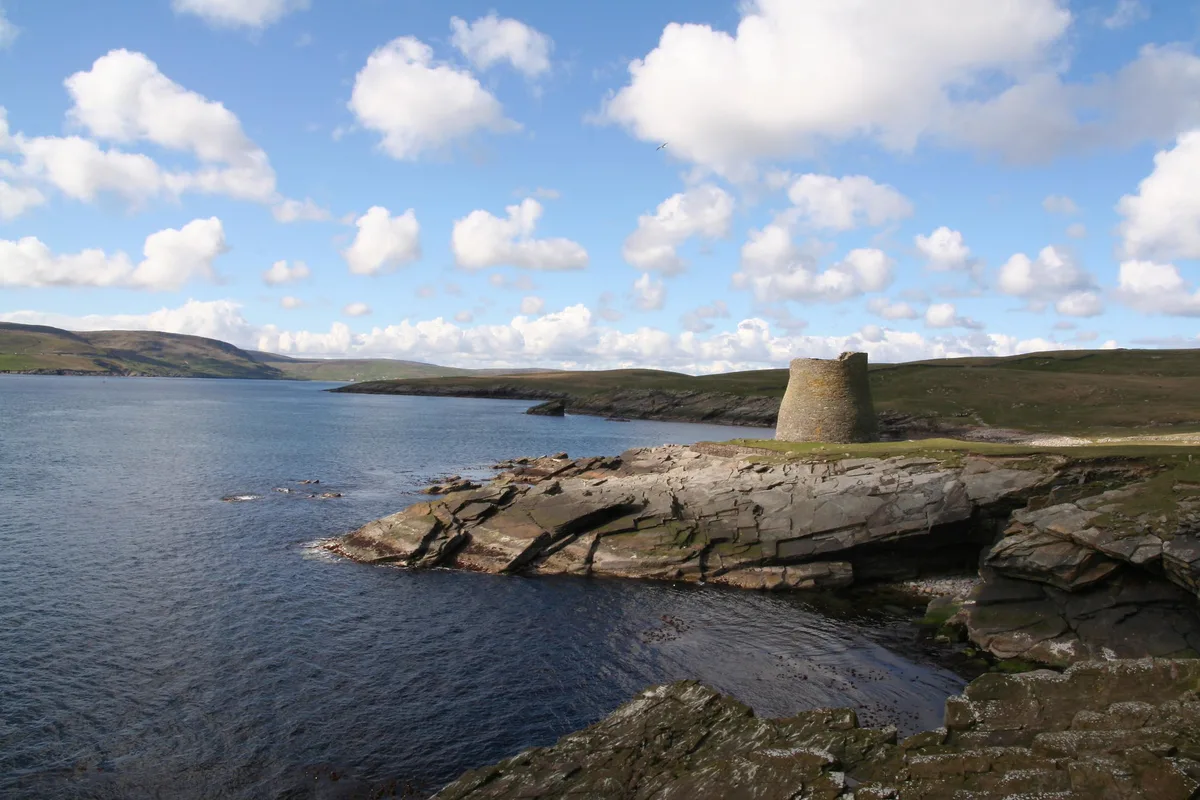
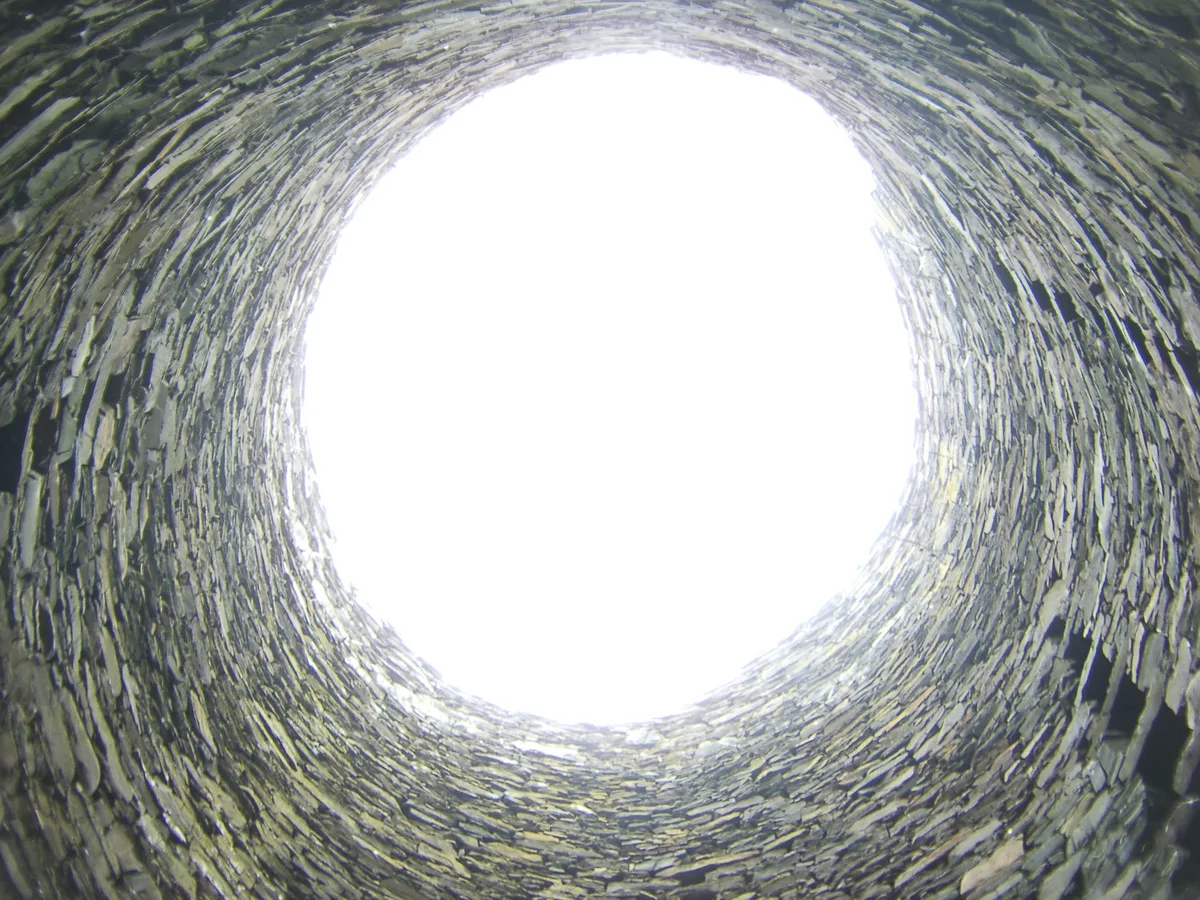
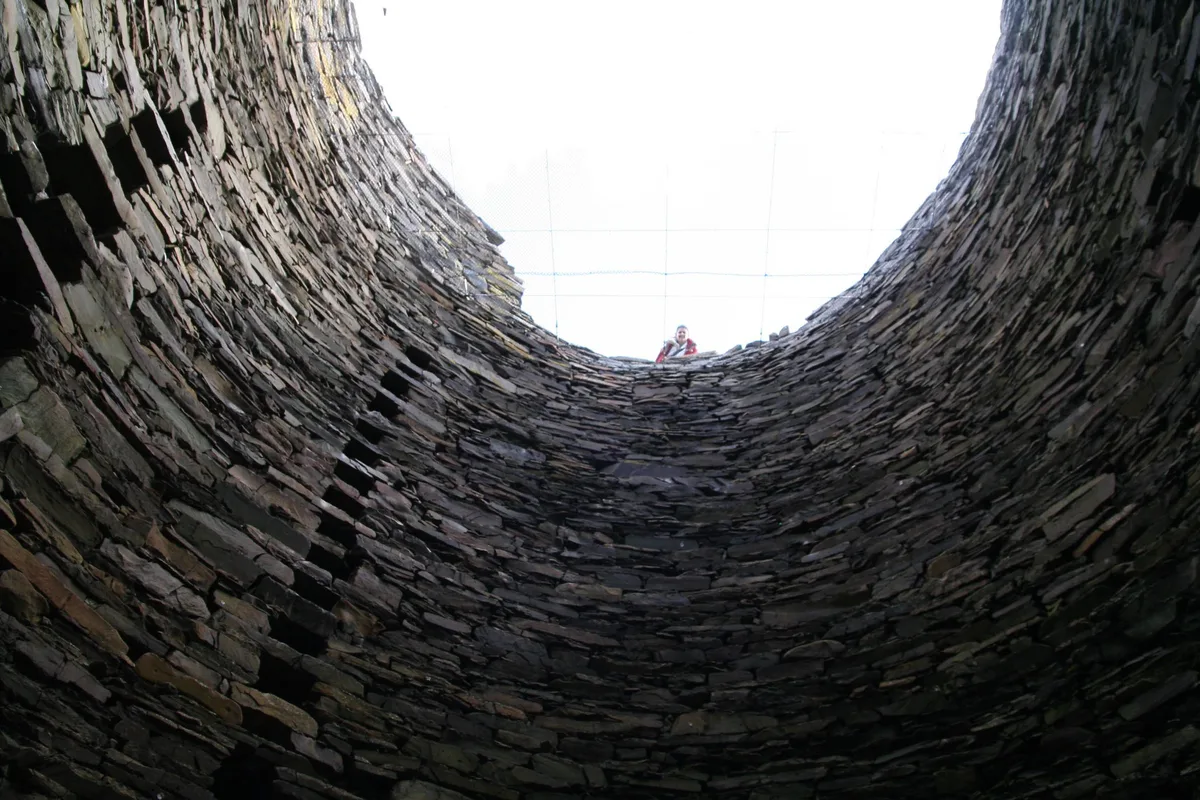
The broch is a double-walled drystone structure, with a stair rising between the inner and outer wall faces. Gaps in the masonry open onto the stair, and the walls narrow as they climb. Look for these details as you walk round the outside. On the inside, the stair is what shows how a broch was put together.
Norse sagas and later use
Mousa appears in two Norse sagas. In Egil's Saga, a runaway couple are shipwrecked on the island and shelter at the broch. In the Orkneyinga Saga, the broch is described as a refuge that withstood a siege in the 12th century. These accounts show that the tower was still being used and valued long after the Iron Age.
Repairs and care
The tower was repaired in the 19th century and has since passed into state care. It is now looked after as a scheduled monument by Historic Environment Scotland.
For a comparison with a broch that survives only at low height but has a village around it, see the Broch of Gurness: Visitor Guide, Access & Worth It? on Orkney.
Costs, sailing times and seasons
Fares, sailing times and the visiting season are set by the boat operator and can change from year to year. Check the operator's current timetable and the Historic Environment Scotland page for Mousa Broch before you commit.
Storm petrels on Mousa: when and how to see them
Mousa is also known for its storm petrels, tiny seabirds that nest in the gaps in the broch's walls and in the island's stone dykes and boulder beaches. The colony is among the largest in Britain, and the birds are the reason some visitors time their trip for after dark.
Why evenings matter
Storm petrels spend the day at sea and come back to their nests only at night. In the Shetland summer, nightfall is late and the sky stays pale well after the sun has set. The birds return in the half-light, and the best viewing is on the late-evening sailings rather than the daytime ones.
When to go
- Season: the birds nest in summer, typically from late May into August. Outside that window you will see the broch but not the colony.
- Booking: the evening sailings are different from the daytime crossings. Ask the operator which dates run and book early, because crossings depend on weather.
- What you will notice: the birds flit around the tower, and you may hear a purring call from inside the walls once it is dark.
Practical tips
- Bring a head torch with a red-light setting, or leave it off. Bright white light disturbs the birds.
- Wear warm layers and waterproofs. The island is exposed, and evenings are cold even in July.
- Check the return time before you land. An evening visit means you arrive back on the Mainland late.
How long to allow at Mousa Broch
Allow the whole sailing window, not just the time at the tower. The boat schedule sets your time on the island, so choose the plan that fits it.
| Plan | What it covers | Best for |
|---|---|---|
| Short stay | Broch and shoreline, then back on the boat | Visitors with limited time |
| Half day | Broch, island walk and photography | Most Shetland visitors |
| Full day | Mousa plus mainland sites near Sumburgh | Prehistory enthusiasts |
Mousa vs other Shetland and Scottish brochs
Mousa asks the most effort of these sites and gives the most intact tower. The others trade that for easier access.
| Site | Access effort | What you see | Best for |
|---|---|---|---|
| Mousa Broch | Boat crossing | Intact tower on its own island | Broch enthusiasts |
| Broch of Clickimin | Close to central Lerwick | Large, well-preserved broch | Short stays |
| Old Scatness | South Mainland | Iron Age broch and settlement | Settlement detail |
| Jarlshof | South Mainland | Settlement used across thousands of years | Layered prehistory |
| Dun Carloway | Outer Hebrides | Broch on Lewis | Island-hopping trips |
Where to stay and getting around Shetland
Lerwick suits visitors who want shops, restaurants and the Broch of Clickimin close by. The South Mainland puts you nearer Sumburgh, Jarlshof and Old Scatness. A car makes the departure point and the South Mainland sites easier to reach. If you are building a longer Iron Age route, look at the Dun Carloway Broch Guide: Visiting Lewis's Iron Age Tower on Lewis, then add Pictish carved stones. Scotland's hillforts make a further stop. For more prehistoric sites, start with Scotland's standing stones.
Related guides



Continue reading
Guides on the same trip


