
Cambodunum (Kempten): Roman Town and Archaeological Park Guide
Last updated November 2026. Cambodunum is the Roman town beneath modern Kempten in the Allgäu, Bavaria, and today you visit it at the Archäologischer Park Cambodunum (APC). Expect a park of reconstructed temples, restored foundations and a protected bath building rather than standing walls. For other sites across the country, start with our overview of Roman sites across Germany.
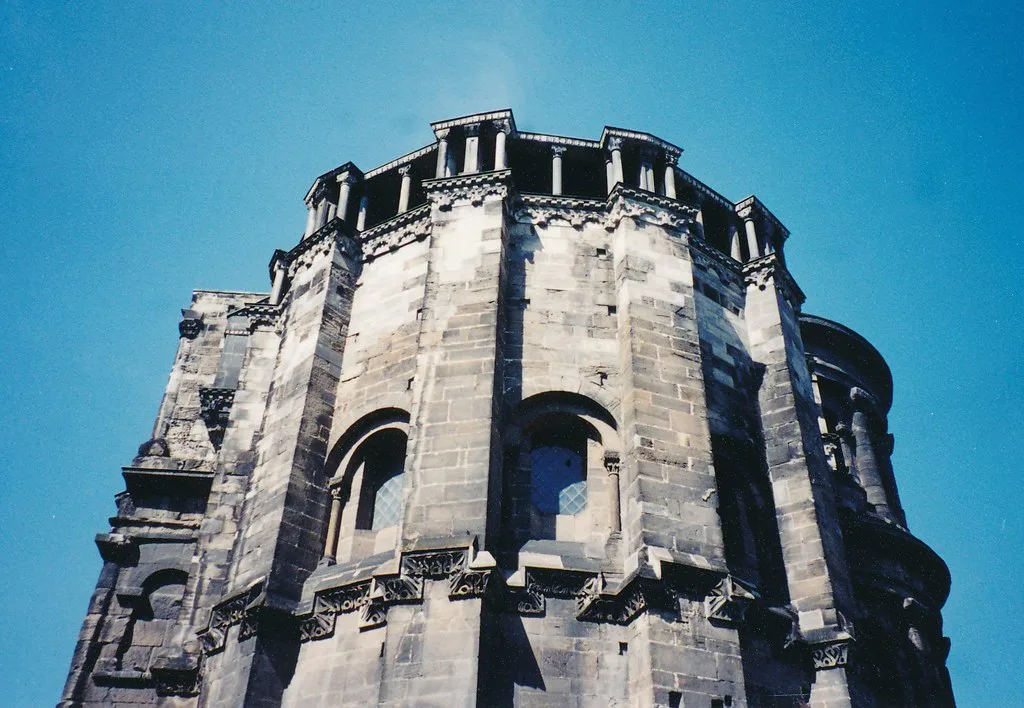
Featured image: Following Hadrian, CC BY-SA 2.0, via Flickr.
What Cambodunum was, and which one this is
Cambodunum was a Roman town in the province of Raetia, and its remains lie under and beside Kempten (Allgäu). Its oldest buildings date to the AD 10s, and the town peaked at roughly 20 hectares. The name is also attached to an unrelated fort in Yorkshire, which this guide does not cover. Everything here concerns the Kempten site and its APC. First-time visitors should treat it as a compact archaeological park. It suits readers who enjoy ground plans and reconstructions, and it asks for some imagination.
What you can see at the Archaeological Park Cambodunum
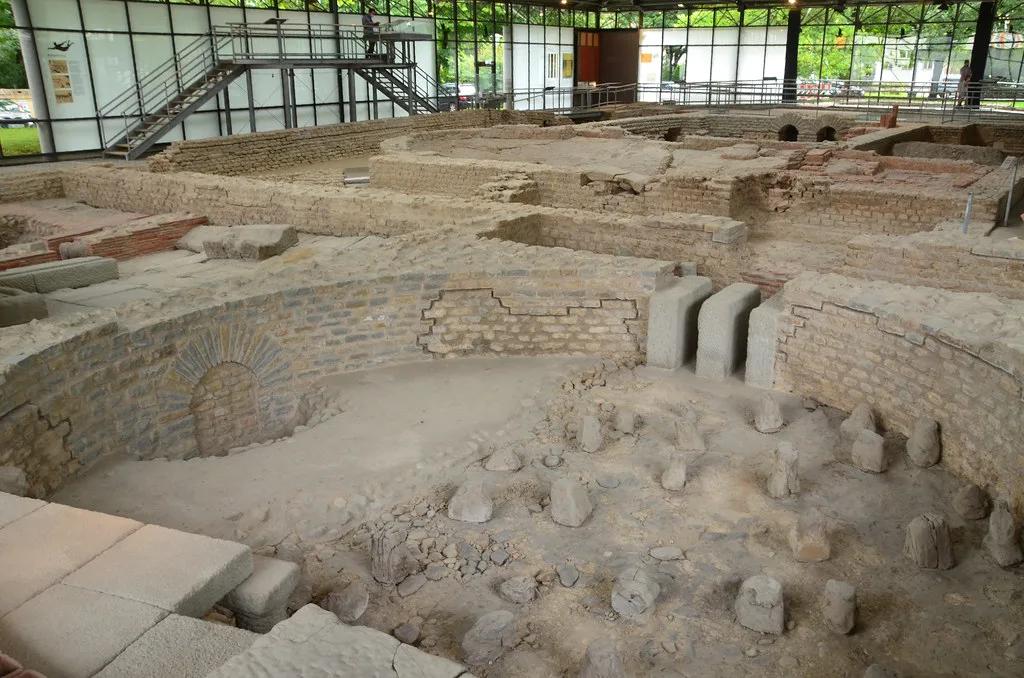
Scholarly descriptions of the park list three main things you can see: the temple district, the Kleine Thermen under a protective building, and the restored foundations of the forum basilica. Much of the rest lies beneath the turf. The city of Kempten says the core Roman area was never built over by modern development, so it survives as an archaeological monument just under the grass. That preservation is the park's big strength. It also means many streets and houses are visible only as plans, models or imagination. Details on what is open on any given day sit on the City of Kempten's official pages.
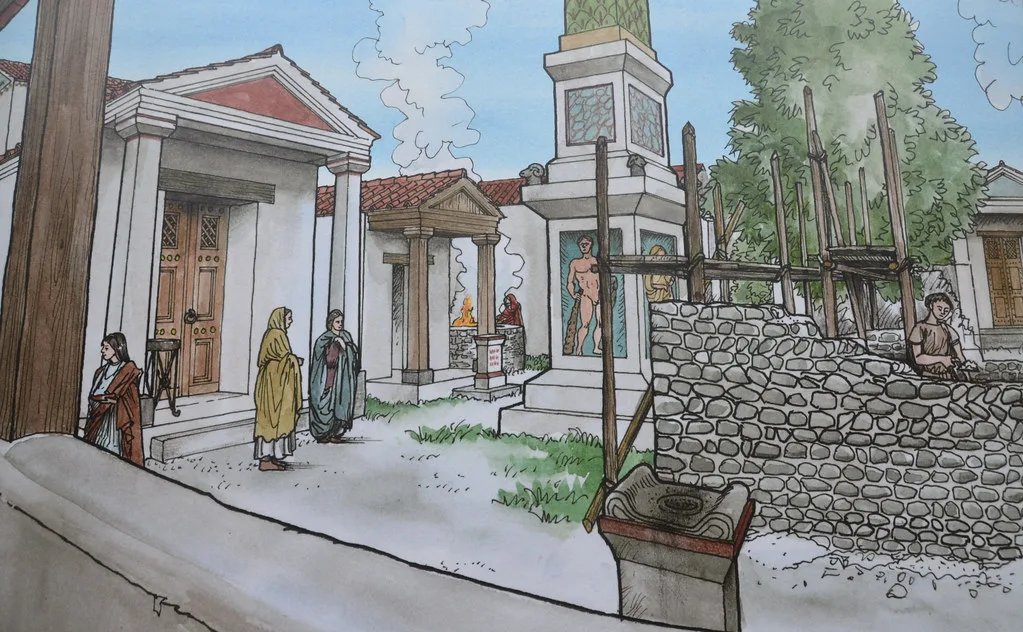
- Visible and reconstructed: the temple district, with a Gallo-Roman temple and a square temple with an apse among at least twelve buildings.
- Visible under cover: the Kleine Thermen, a bath suite protected by a dedicated building.
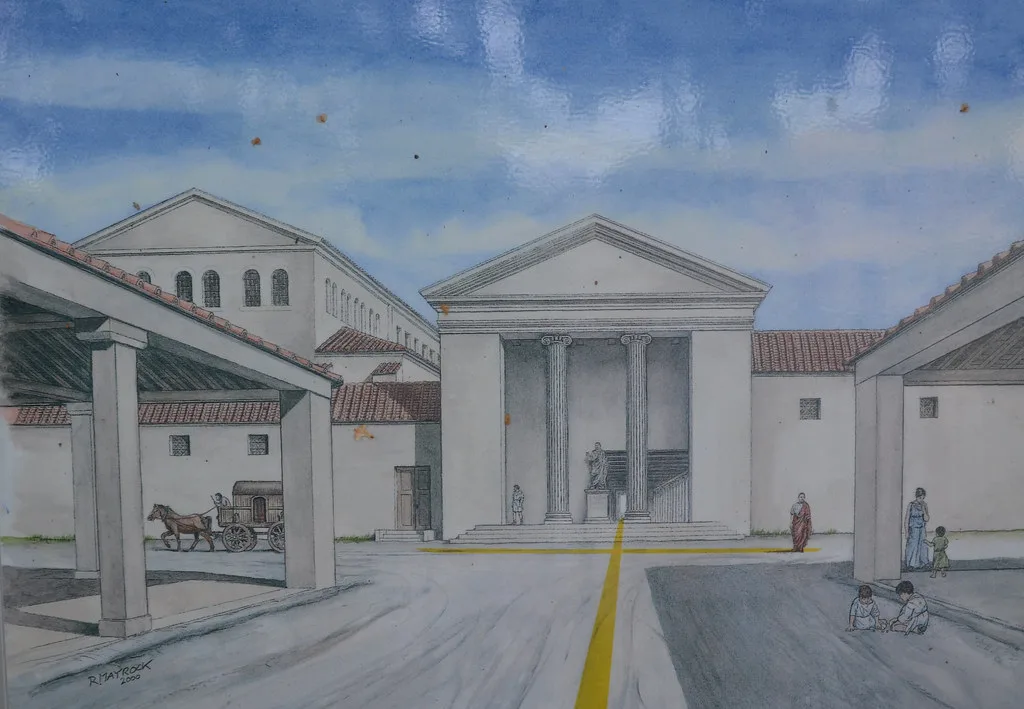
- Visible as restored foundations: the forum basilica, which measured 49.5 x 25 m in its early phase.
- Buried under turf: most houses, workshops, streets and the large sacred area south of the forum.
Roman Cambodunum in brief
Knowing the story makes the foundations easier to read. Scholars date the first buildings to the AD 10s, with no sign of an earlier native settlement or military base. A large destruction around AD 68/70 was followed by rebuilding. Public buildings look oversized next to the housing, which suggests the town was planned bigger than it ever became.
- Forum and basilica: the later forum covered over 10,000 m², and its enclosed plan with an attached basilica is highly unusual.
- Governor's palace: a large complex beside the forum, possibly converted into a hostel or inn in the 2nd century AD.
- Kleine Thermen: a three-room bath suite reached only through that palace.
- Große Thermen: a larger bath complex of about 4,200 m² around a colonnaded exercise courtyard.
- Sacred area: a walled field of 238 x 179 m south of the forum, with the plinth of a large altar.
- Temple district: west of the town, with inscriptions naming Hercules and the Celtic goddess Epona.
- Töpferhaus: a house near potters' kilns, with small rooms behind a portico that were probably workshops.
Was Cambodunum a provincial capital?
Scholars debate this. Kempten may have served as the capital of Raetia until the end of the 1st century AD, which could explain the large governor's palace. No inscription proves it, though. A Tacitus phrase about the most splendid colonia of Raetia may point to Kempten, but the link rests on the town's higher level of development compared with Augsburg. Treat the capital label as a strong possibility, not a settled fact.
Read the forum's size against the whole town: the later forum covered over 10,000 m², in a settlement that peaked at roughly 20 hectares.
Insula 1: the current dig
Since summer 2019, the APC, the Bavarian monument office and Ludwig-Maximilians-Universität München have excavated an insula, a Roman residential block. Professor Salvatore Ortisi directs the university team. In 2022 they presented a residential house of over 800 m² with intact screed floors, floor heating, a small private bath suite and wall paintings. The APC calls these stone remains among the oldest in Germany. Park director Dr Maike Sieler has said the aim is to present findings in situ as future museum highlights. That is a plan, not an exhibit you can count on. Check the APC pages for what visitors can see now.
Plan your visit to Cambodunum: time, cost, access
No ticket price, opening season or tour schedule is published in a form we can quote, so use the official pages for all three. The City of Kempten runs the park through its cultural office. Ask the same source whether the Kleine Thermen building and any museum are open on your date. Kempten sits in the Allgäu, and the Allgäu tourism site lists regional visitor information. If you arrive by train, check the walking and local bus options from Kempten Hbf. Staying in the town itself keeps the park and the old centre within easy reach.
| Visit style | Suggested time (editorial estimate) | What to focus on |
|---|---|---|
| Quick stop | About 1 hour | Temple district and the protected Kleine Thermen |
| Full visit | About 2 to 3 hours | Add forum basilica foundations and the plan of the town |
| Research-minded | Half a day | Read the Insula 1 updates and compare plans with the grounds |
Who Cambodunum suits, and who should skip it
Match the park to your expectations and it rewards a short visit. It is strongest for readers who like seeing how a planned Roman town fits together. It is weaker for anyone who wants intact buildings.
| Visitor | Verdict | Why |
|---|---|---|
| Roman and history enthusiasts | Go | Real town plan, temple district and an active dig |
| Families | Good short stop | Open-air layout, but little is standing, so keep expectations modest |
| Limited time | Go for about 1 hour | Temple district and the bath building cover the essentials |
| Expecting a full reconstruction | Skip or reset | Pick the Saalburg Roman fort reconstruction instead |
Combine Cambodunum with a wider Roman route
Cambodunum was a civil town, not a frontier fort, so pair it with sites that show other sides of Rome. For province context, read about the Raetian frontier. A wider look at the Danube frontier adds the military picture. For another open-air archaeological park, try the open-air park at Xanten. Xanten's LVR Archaeological Park shows a different scale of display. For a museum-led day, the museum-led visit at Aalen works well. Villa fans can add the Nennig villa remains or the villa at Hechingen-Stein. Forum-scale towns in Switzerland, such as the town at Augst and Roman Avenches, make good comparisons. One scholarly source compares Cambodunum's forum of over 10,000 m² with those at Augst and Nyon. For onward trips, see Swiss Roman sites and Austrian Roman sites. For a Celtic contrast rather than a Roman one, visit the Celtic hillfort at Heuneburg.
Mistakes to avoid
Two errors cause most disappointment. Do not confuse this Cambodunum with the Yorkshire fort that shares its name. Do not expect Saalburg-style full reconstruction, because most of the town is still under turf. Excavations are current, so access can change from season to season.
Most of the town still lies under turf, and its large destruction around AD 68/70 was followed by rebuilding, so expect no full reconstruction.
- Insula: a Roman residential block, such as Insula 1.
- Forum: the town's open public square and civic centre.
- Basilica: a large hall beside the forum used for law and business.
- Thermae: Roman public baths, such as the Kleine and Große Thermen.
Related guides
Continue reading
Guides on the same trip