
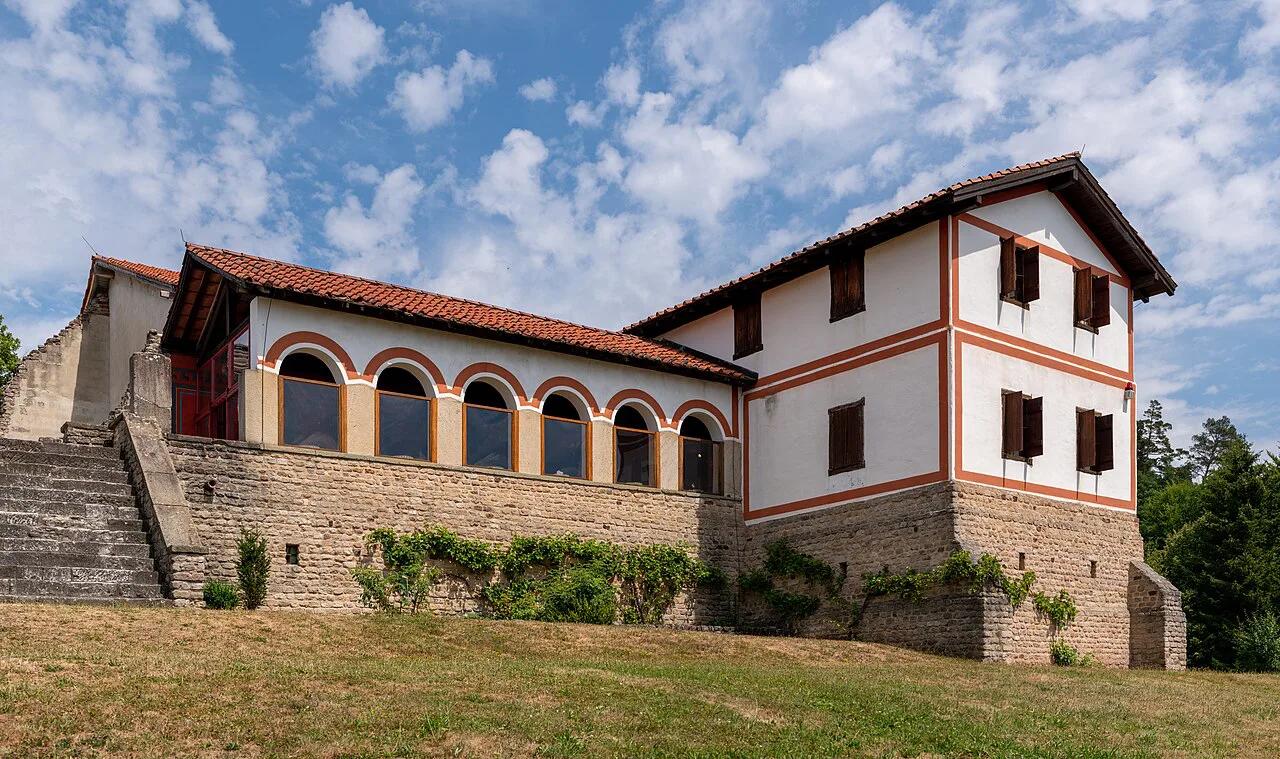
Last updated November 2026: the Roman villa at Hechingen-Stein is a partly reconstructed Roman rural estate, run as an open-air museum in the Zollernalbkreis of Baden-Württemberg. Opening is said to run from the end of March to November, so a late-November trip may find the gates shut. Come for reconstructed buildings, exposed foundations and live excavations, not for a single standing ruin.
Featured image: Dionysos1970, CC BY-SA 4.0, via Wikimedia Commons.
Roman Villa Hechingen-Stein: Quick Answer and Before-You-Go List
Locals and maps call it the Römisches Freilichtmuseum Hechingen-Stein. It sits on a villa rustica, which is a Roman farm estate with a grand residence and working outbuildings. Visitors walk a hillside site with a reconstructed main house, a small exhibition and outdoor remains. Komoot lists the site at an elevation of 530 m, so expect a hill setting rather than a flat park. Stuttgart readers get the easiest trip, since the drive is said to take about an hour. Four things decide whether the day works.
- Season: the museum is said to open from the end of March until November. Look up the current dates on the museum's own site before you set off.
- Weekday: Monday is the listed closing day. Plan for Tuesday to Sunday.
- Hours: 10 a.m. to 5 p.m. is the listed daily window, so a late arrival leaves little time.
- Tickets: entry is paid. Price categories sit on the official site, and none are quoted here.
- Language: ask the museum about English texts and tours if German is not your language.
What You Will See on Site
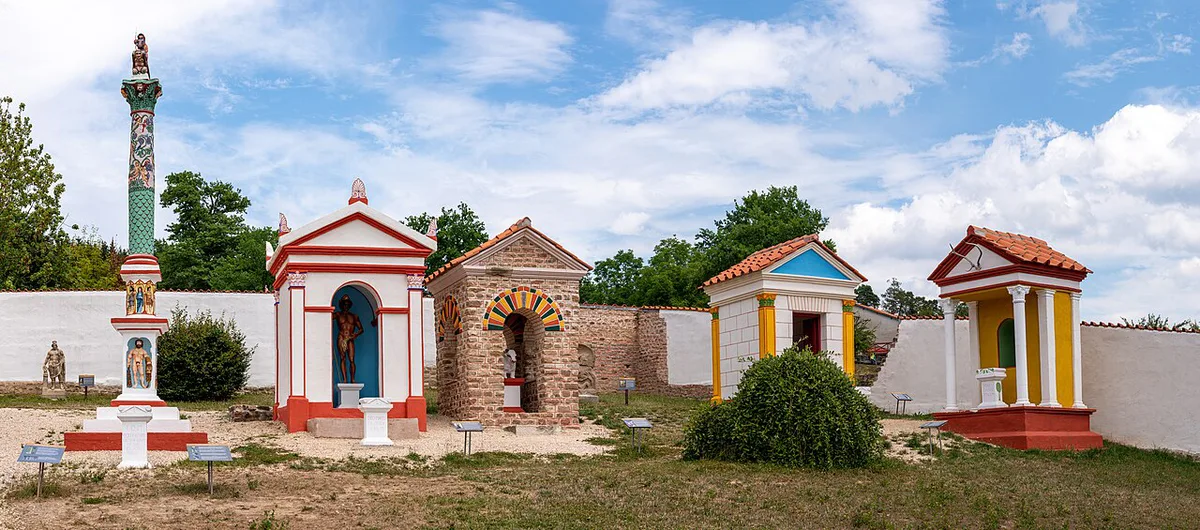
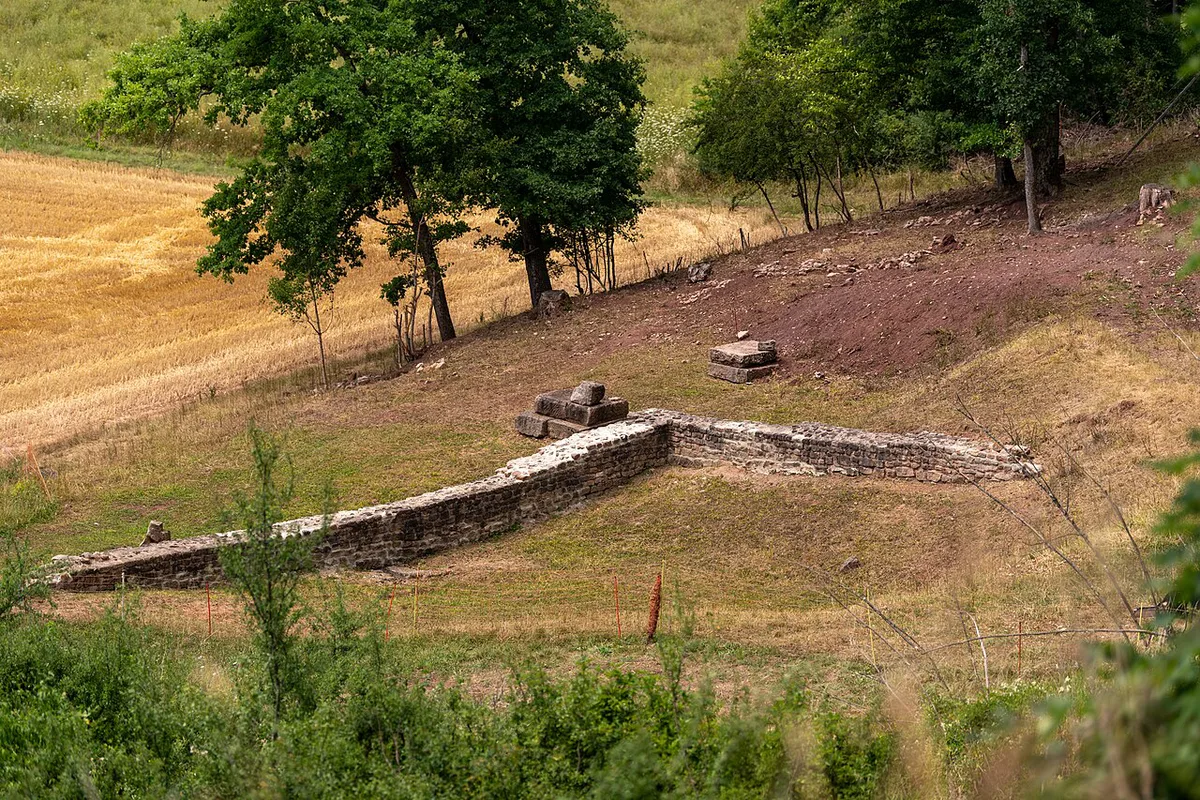
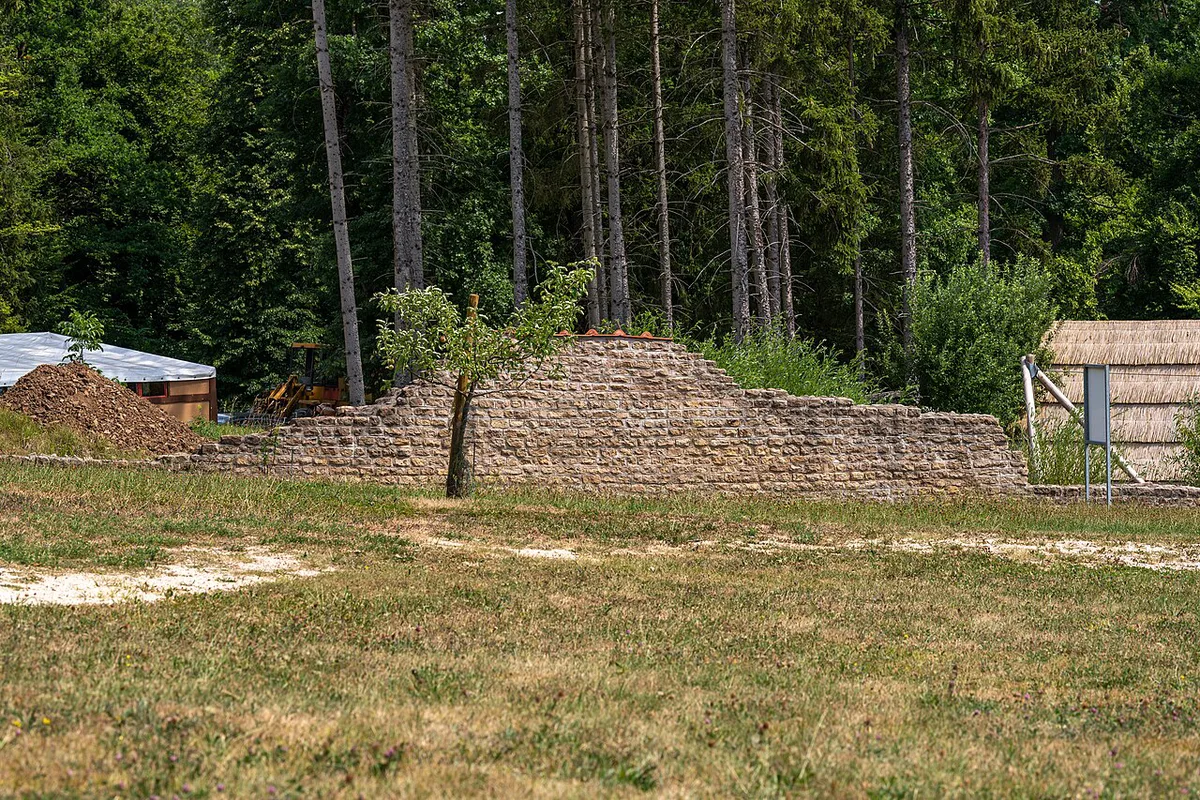
Start in the Main House, called the Pars Urbana, the lord's residence of the estate. It is described as fully reconstructed and carries a 15-minute presentation. Models show the whole complex, including the temple precinct and the bathhouses. Dioramas and information panels cover regional history and scenes of daily life. Original finds fill the exhibit area. Expect wine and oil amphorae, tableware, iron tools, and bronze brooches and belt buckles. Outside, a walk past the ruins leads to a temple district with a tall Jupiter column and 10 small chapels. Further along you pass a bathhouse, a grain mill with a storehouse and a blacksmith forge. Open dig sites sit among them. Archaeologists still work here, and a Komoot rider noted that the excavations keep expanding. That makes a repeat visit worthwhile.

- Main House (Pars Urbana): reconstructed residence, 15-minute presentation, models and dioramas.
- Exhibit area: original ceramics, iron tools and bronze fittings from the site.
- Temple district: Jupiter column and 10 small chapels.
- Working buildings: bathhouse, grain mill, storehouse and forge.
- Dig sites: active archaeology, with volunteer roles for helpers, event actors and guides.
Reconstruction Versus Original: Setting Expectations
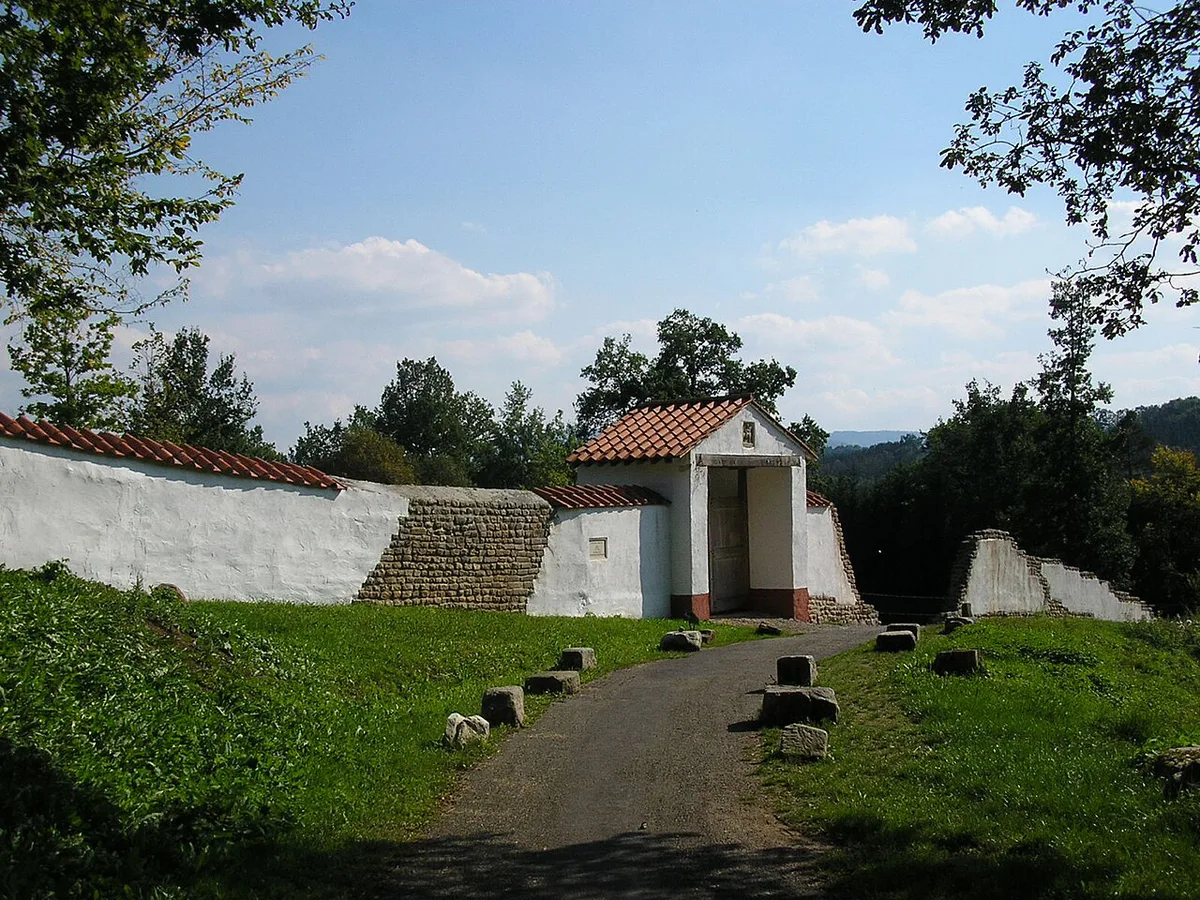
The site mixes three layers. Rebuilt structures such as the Main House give a sense of scale. Exposed foundations show the real footprint of the estate. Live digs show work in progress. Sources do not agree on exactly which outbuildings are rebuilt and which are original foundations, so ask at the entrance desk. Treat the visit as a tour of a working archaeological park. Readers who want standing walls and floor mosaics under cover should read about the Perl-Nennig Roman villa instead.
A Short History in Plain Terms
Rome took over southwestern Germany at the end of the 1st century AD. Settlers then laid out towns and estates, known as villae rusticae. More than 1,500 of them are recorded across Baden-Württemberg, and Hechingen-Stein is one. The Romans withdrew from this area around 260 AD. Archaeologists describe the withdrawal as planned, since the site shows no signs of destruction. Nothing was built over the ruins afterwards, so the remains stayed largely undisturbed. The estate's original purpose is still debated. One guess is a rural retreat for wealthy Romans from Rottenburg. Another is an administrative centre. Treat both as open questions. For the wider frontier story, read about the Upper Germanic-Raetian Limes before you go.
Opening Season, Tickets and Planning Your Time
Season is the biggest trap. With a season of late March to November, a visit in late November sits at the very edge of it. Winter closure is likely, so look at the museum's programme first. The villa's own site at villa-rustica.de is the place for current dates. Tickets are required. Price categories for adults, children, families and groups belong on the official page, and no figure is given here. Changing exhibits and living-history events run in some seasons, so they affect crowds and how long you stay. Prices and hours checked November 2026 against published reports only. Use the table to pick a visit length.
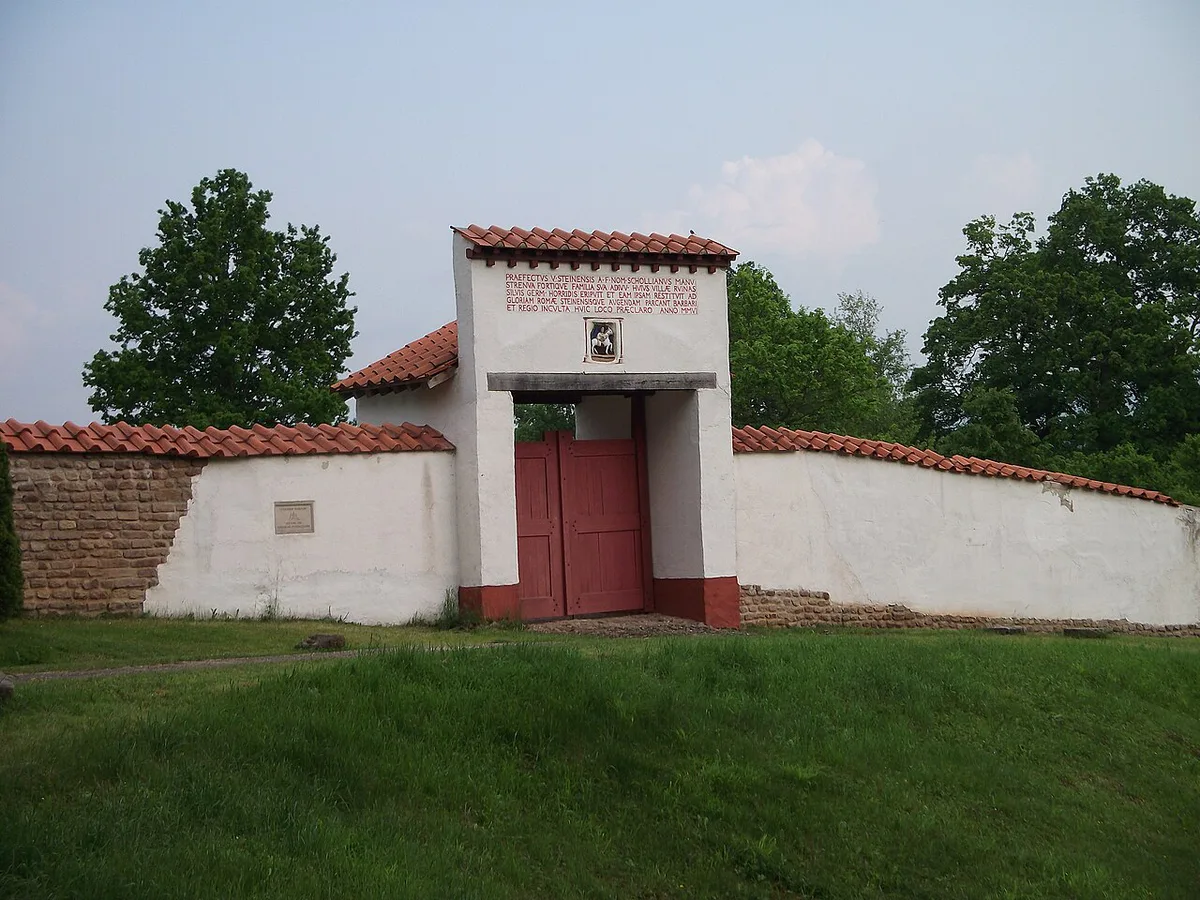
A late-November visit sits at the season edge, and the 10 a.m. to 5 p.m. window leaves little room for a late start.

| Visit style | Typical focus | Best for |
|---|---|---|
| Short stop | Main House presentation and exhibit area | Drivers passing through, history readers short on time |
| Standard visit | Main House, then outdoor ruins and temple district | Most first-time visitors |
| Full day | Standard visit plus demonstrations, events and a meal | Families, enthusiasts, repeat visitors |
Getting There: Car, Public Transport and Bike
Car is the simplest choice from Stuttgart, with a drive of about an hour. Hechingen is the nearest town, and the villa sits at Stein, on the hill above it. No bus line or rail connection is confirmed here. Ask the museum or the Hechingen town site about the last stretch from the station. Cyclists and hikers have real options. Komoot lists the villa as a highlight for hiking, cycling and mountain biking. A family trail called Römer-Tour: Villa Rustica Stein runs nearby. Views of Hohenzollern Castle appear on routes in the area. The site lies in the Geopark Schwäbische Alb, so local rules on paths may apply.
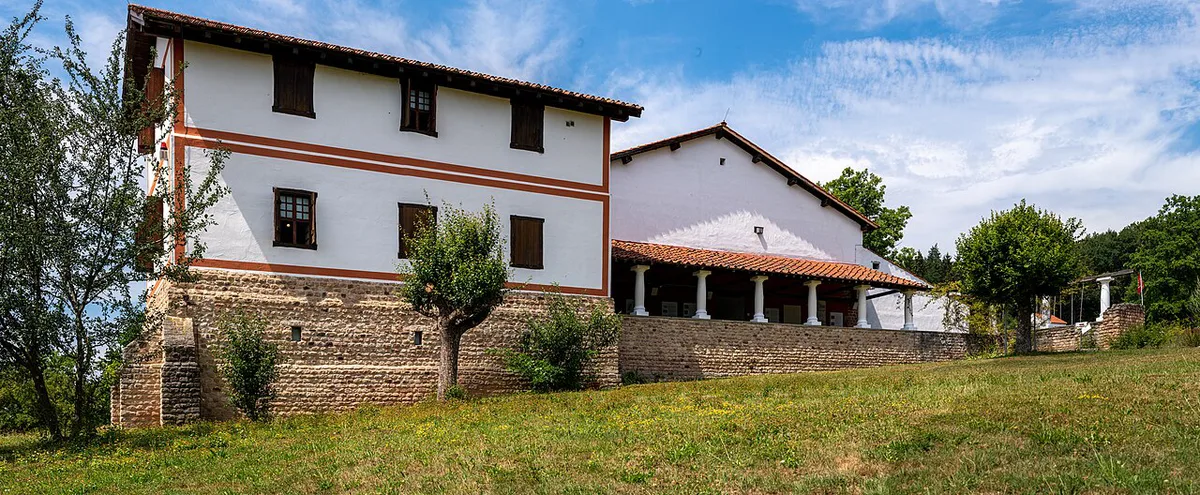
Hikers and cyclists face hilly terrain at 530 m elevation, so pack for the climb even though Stuttgart is about an hour away.

| Option | How it works | Main catch |
|---|---|---|
| Car | About an hour from Stuttgart, then park at the site | Most flexible, but you need your own vehicle |
| Rail plus local link | Train to Hechingen, then a bus, taxi or walk to Stein | Last stretch is unconfirmed, so plan a backup |
| Bike or hike | Komoot routes pass the villa | Hilly terrain at 530 m elevation |
Is It Worth It? Who Should Go and Who Should Skip
Families get the most from hands-on days. Listed activities include grain grinding, mosaic laying and bread baking, and they probably run seasonally or at events. History readers will like the open dig sites and the original finds. Cyclists and hikers can fold the villa into a day on the Swabian Jura. Skip it in the closed season. Skip it, too, if you want intact standing Roman architecture. For a mosaic and a more complete villa, the villa at Nennig fits better. Fort fans will prefer the reconstructed Limes fort at Saalburg. Its own site at saalburgmuseum.de carries the details. Wheelchair and stroller access is not documented, so ask about paths before you bring either.
- Go if you like reconstructions, digs and living history.
- Go if you can reach it between spring and November, Tuesday to Sunday.
- Skip if you need standing ruins or covered mosaics.
- Skip if winter weather is likely, since most of the site is outdoors.
Pairing It With Nearby Sights
Hohenzollern Castle appears in views on local Komoot routes, and Hechingen's old town is the closest town stop. Distances are not given here, so look at a map when you plan the day. For more Roman stops in Baden-Württemberg, see the Limesmuseum Aalen: Visitor Guide and What to See. Archaeology readers can add the Heuneburg for an earlier chapter. The full country overview lives in our guide to Roman ruins in Germany. Those chasing larger parks can compare it with Xanten on the Lower Rhine.
Mistakes to Avoid
Most problems come from timing and expectations. These are the six to dodge.
- Arriving on a Monday, the listed closing day.
- Turning up in winter without confirming the museum is open.
- Expecting standing ruins instead of reconstructions and foundations.
- Skipping the 15-minute Main House presentation.
- Assuming English texts exist without asking.
- Wearing smooth shoes on hillside paths.
Related guides

Continue reading
Guides on the same trip