
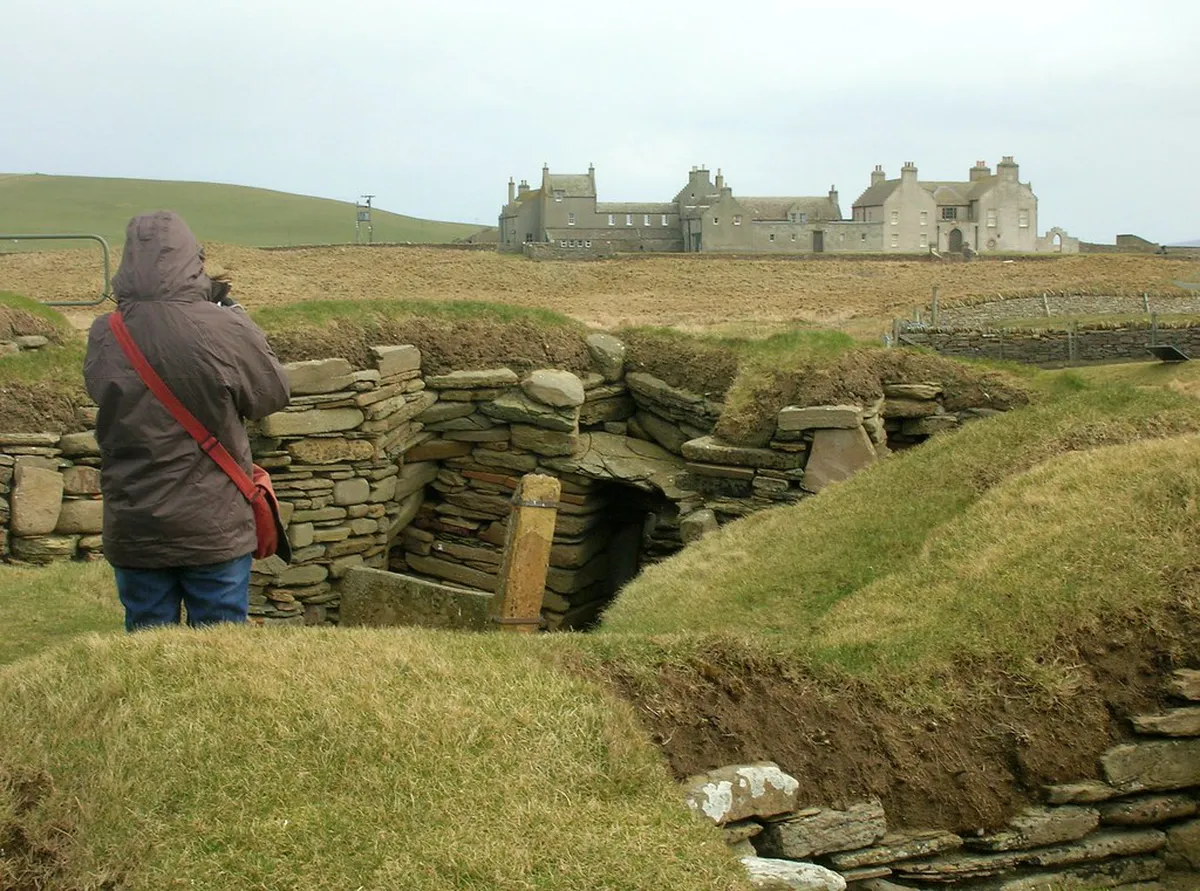
Last updated November 2026: how old is Skara Brae? The Neolithic village on Mainland Orkney was first settled around 3100 BC, which makes it roughly 5,000 years old. That puts it among the oldest standing houses in Europe and part of the wider story told in our Neolithic Orkney overview.
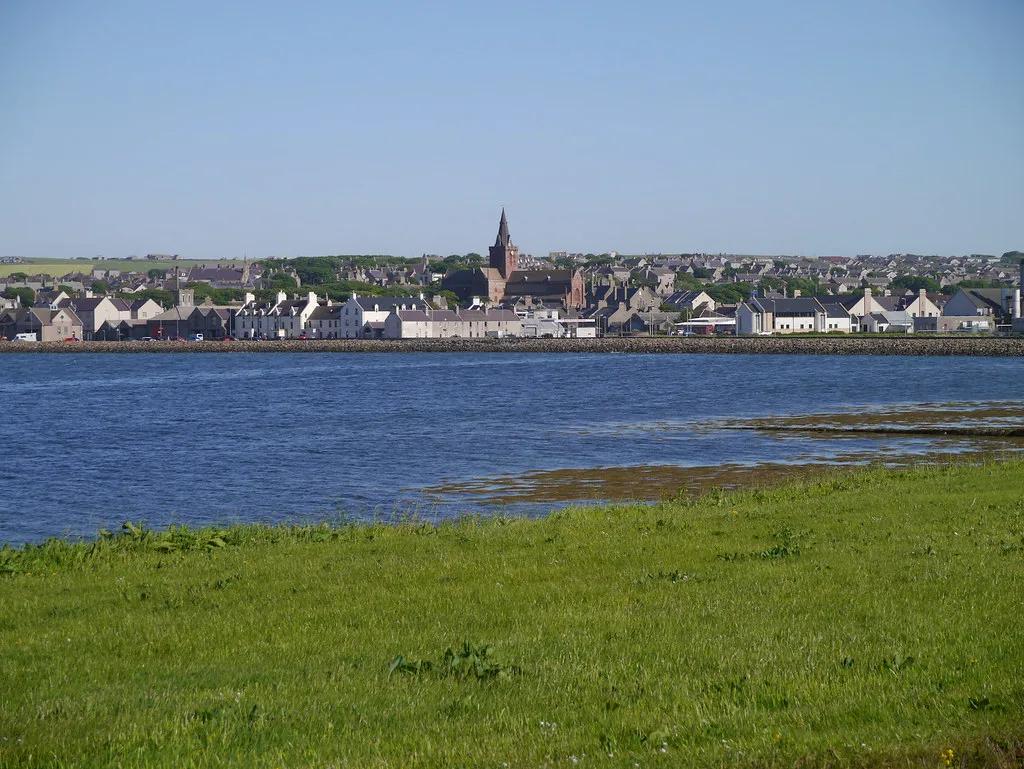
Featured image: sustainablerural, CC BY 2.0, via Flickr.
How Old Is Skara Brae? The Short Answer
Skara Brae was lived in from about 3100 BC to about 2500 BC. In round numbers that is about 5,100 years since the first houses and about 4,500 years since people left. Settlement lasted roughly 600 years.
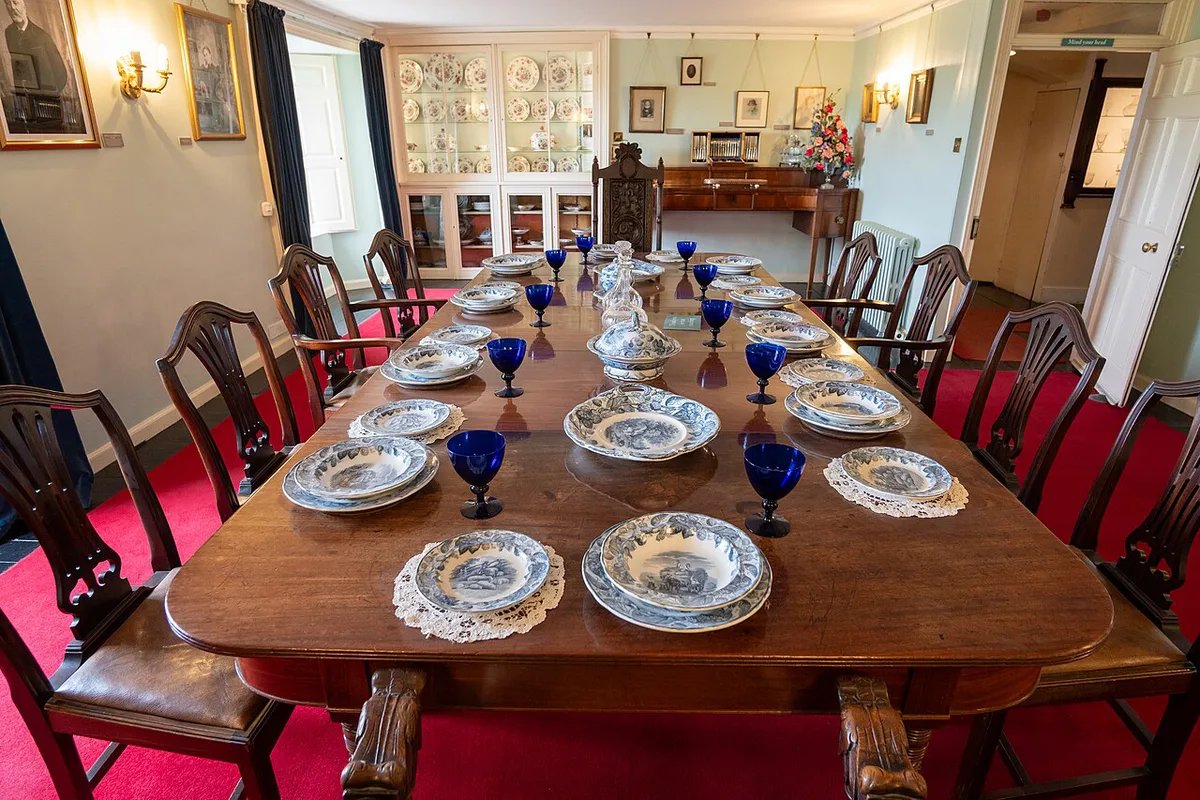
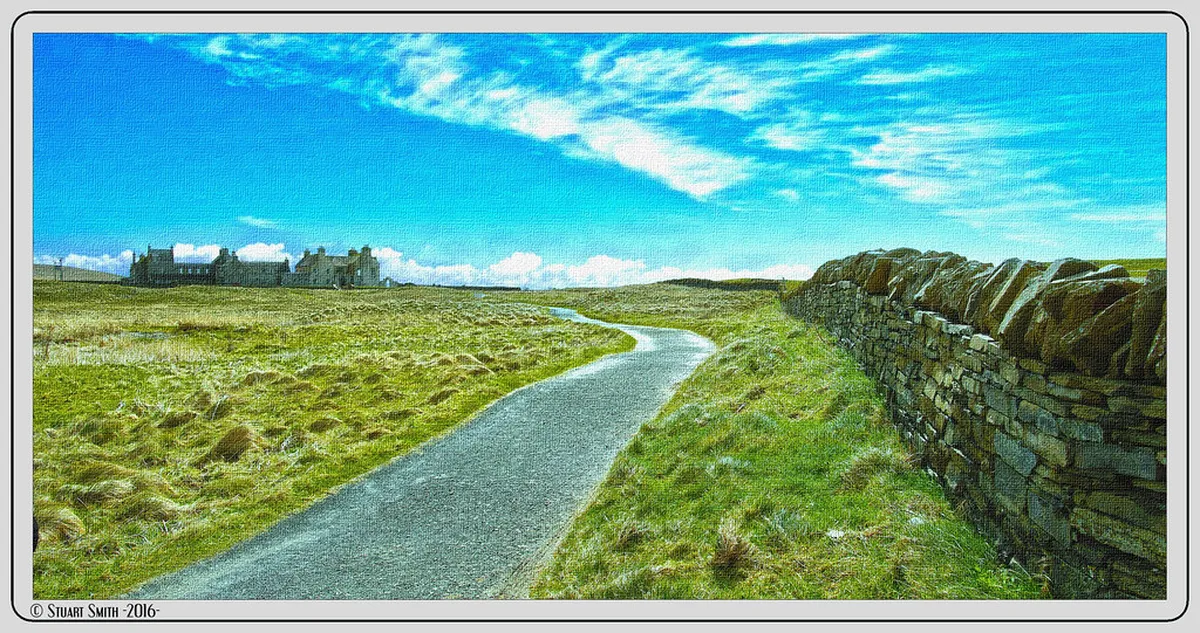
Two ways of stating age cause most of the confusion. "About 5,000 years old" counts back from today. "3100 BC" is a calendar date before the year 1. Add 2026 to 3100 and you get about 5,100 years.
Treat every date as a range. Radiocarbon results carry margins of error, and published ranges differ by a century or two. Some timeline sites stretch the occupation to 2200 BC. A careful answer is therefore "about 3100 to 2500 BC", not a single year. Historic Environment Scotland looks after the site, and its visitor information is the best place to check current wording.
- Occupied: about 3100 BC to about 2500 BC
- Length of use: roughly 600 years
- Age today: about 5,000 years, counted back from 2026
- Location: Bay of Skaill, west coast of Mainland Orkney
How We Know Its Age
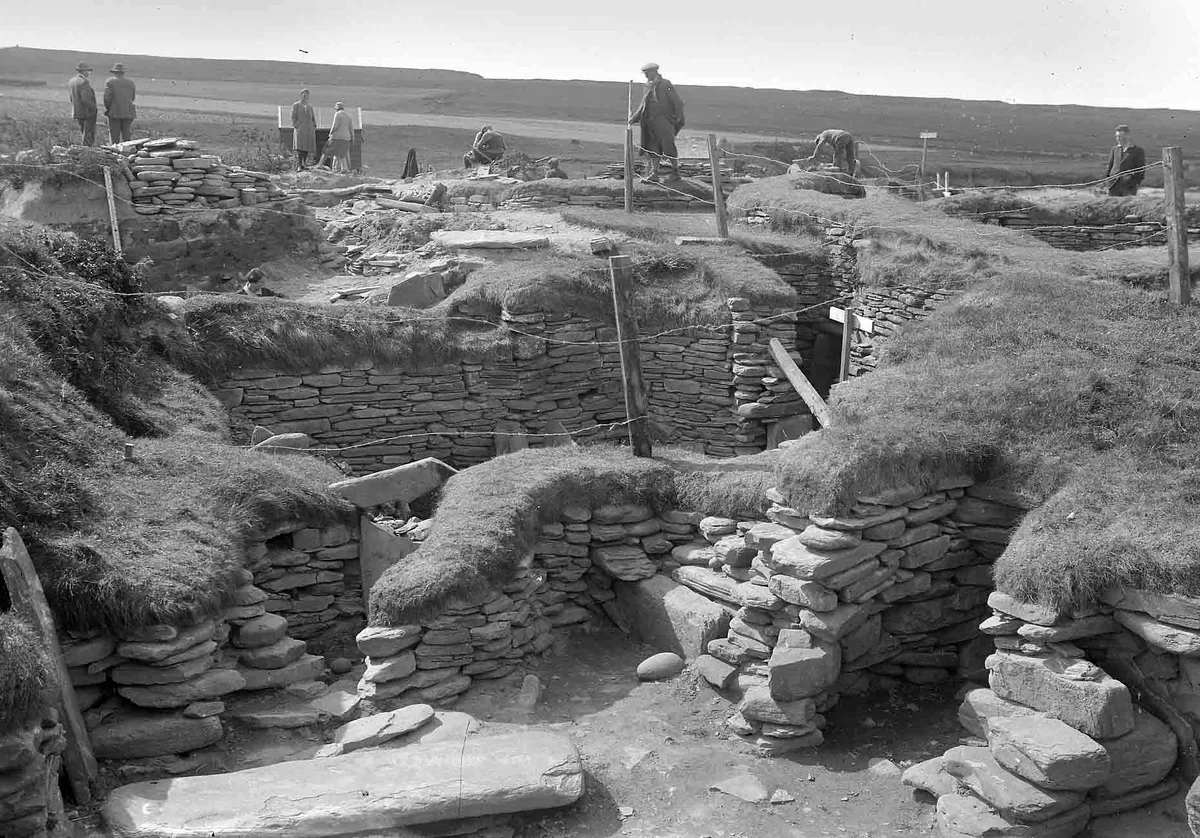
Archaeologists date Skara Brae with several lines of evidence. None of them depends on a written record, because the villagers left none.

Radiocarbon dating is the main method. Organic material such as bone and shell from the settlement layers is measured for its carbon content. Results from the 1970s excavations gave dates in the fourth and third millennia BC, and later work refined the range.
Pottery adds a cross-check. The villagers made Grooved Ware, a decorated pottery style that appears across Neolithic Britain. Finds of this type place the settlement in a known period.
The midden is the third clue. Houses were built into mounds of earlier household waste, so layers of shell, bone and ash record the order of events. Earlier rubbish sits below later rubbish. Together these methods point to the same range.
- Radiocarbon dating of bone, shell and other organic remains
- Grooved Ware pottery, a recognised Neolithic style
- Midden layers that show the order of occupation
- Stone tools and house design that fit Neolithic Orkney
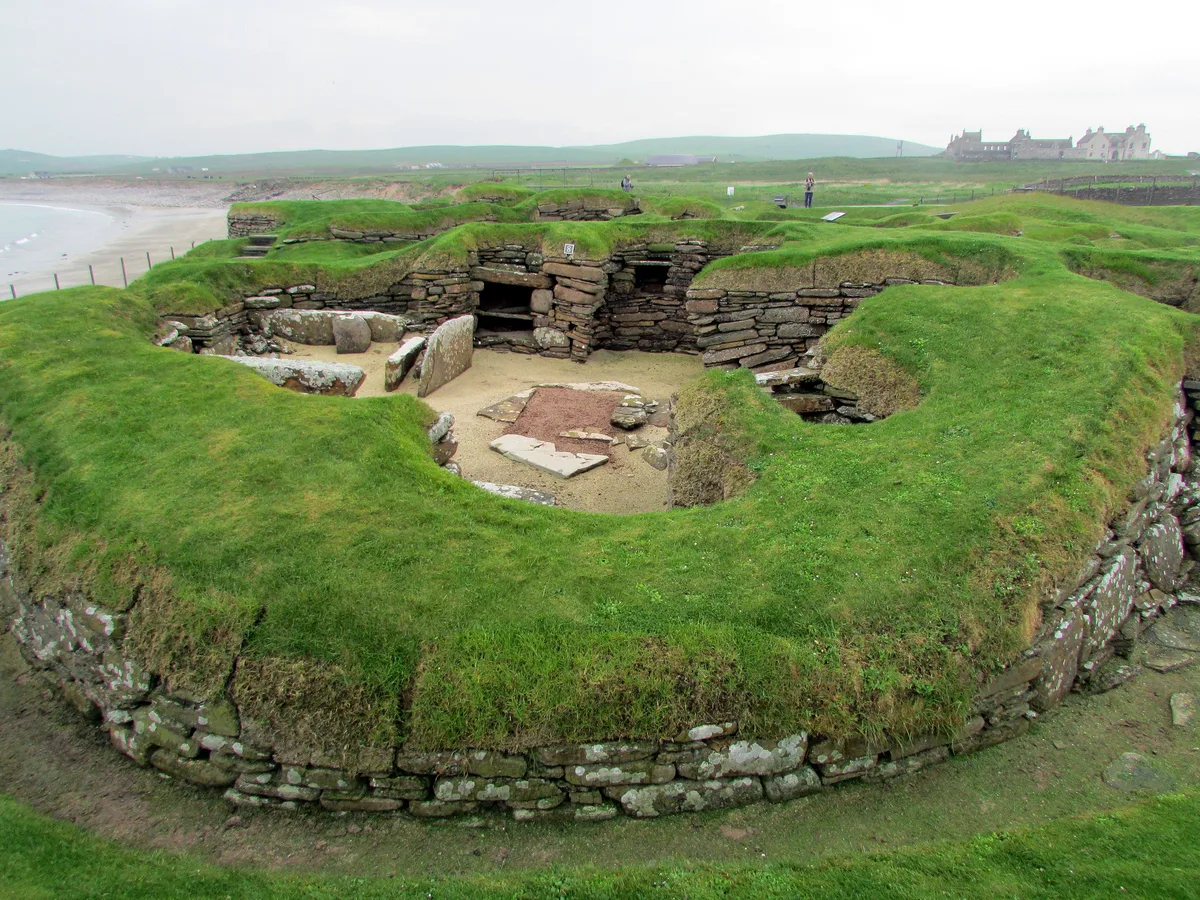
Skara Brae Timeline: From Settlement to Rediscovery
Skara Brae spent most of its history buried. The sequence below follows the standard account, and exact dates for the early digging vary slightly between sources.
The village is easy to place before 1850. After that, a storm exposed it, and the investigation took more than a century.
| Date | Event |
|---|---|
| About 3100 BC | First houses built beside the Bay of Skaill |
| About 2500 BC | Settlement abandoned; sand later covers the ruins |
| 1850 | A severe storm strips sand from the dune and exposes stone walls |
| 1860s | Local landowner William Watt of Skaill begins digging |
| 1920s | Office of Works takes over and starts protecting the site |
| 1927 onward | Archaeologist Gordon Childe excavates and records the houses |
| 1970s | Radiocarbon dating confirms the Neolithic age |
Skara Brae vs Stonehenge, the Pyramids and Other Orkney Sites
Skara Brae's houses were already standing before the great stone monuments of Britain took final shape. The table gives approximate dates, since each site has its own range of evidence.
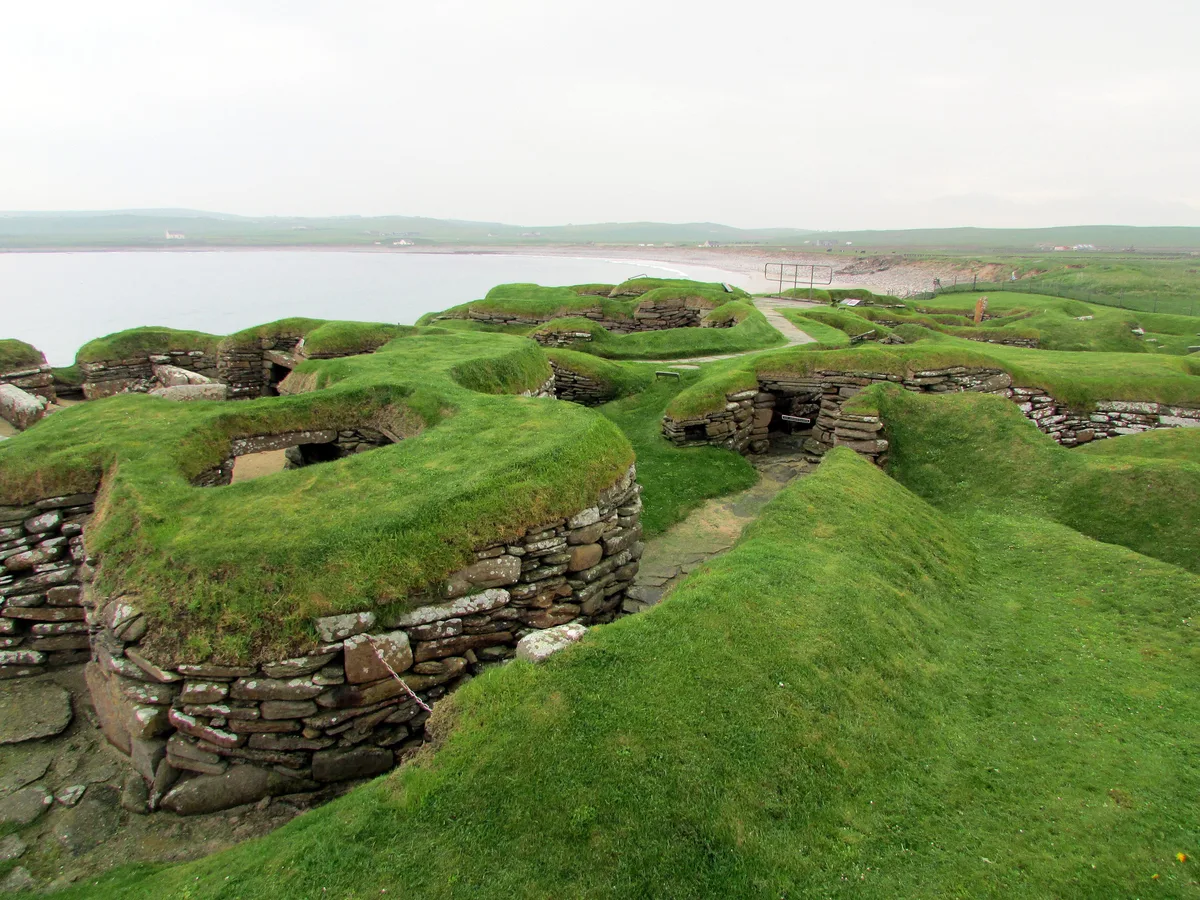
Our Skara Brae and Stonehenge comparison covers the visitor side in more depth. For now, remember that Skara Brae is a village, while most of these sites are ceremonial.
The Ness of Brodgar: What to See Now and How to Visit overlaps with Skara Brae. The Ness of Brodgar Trust publishes the excavation findings for that large temple complex.
| Site | Approximate date | Notes |
|---|---|---|
| Skara Brae | 3100–2500 BC | Domestic village, stone-built |
| Stonehenge | Earthwork about 3000 BC; stones about 2500 BC | Ceremonial monument, Wiltshire |
| Great Pyramid of Giza | About 2560 BC | Younger than Skara Brae's first houses |
| Ness of Brodgar | About 3300–2300 BC | Temple complex, approximate range |
| Maeshowe | About 2800 BC | Chambered tomb |
| Ring of Brodgar | About 2500–2000 BC | Stone circle and henge |
| Broch of Gurness | About 2,000 years old | Iron Age, not Neolithic |
Why Did People Leave? What Is Known and Not Known
Nobody knows for certain why Skara Brae was abandoned around 2500 BC. A popular story blames a sudden storm. That makes a good tale, but the evidence for a single catastrophe is debated.
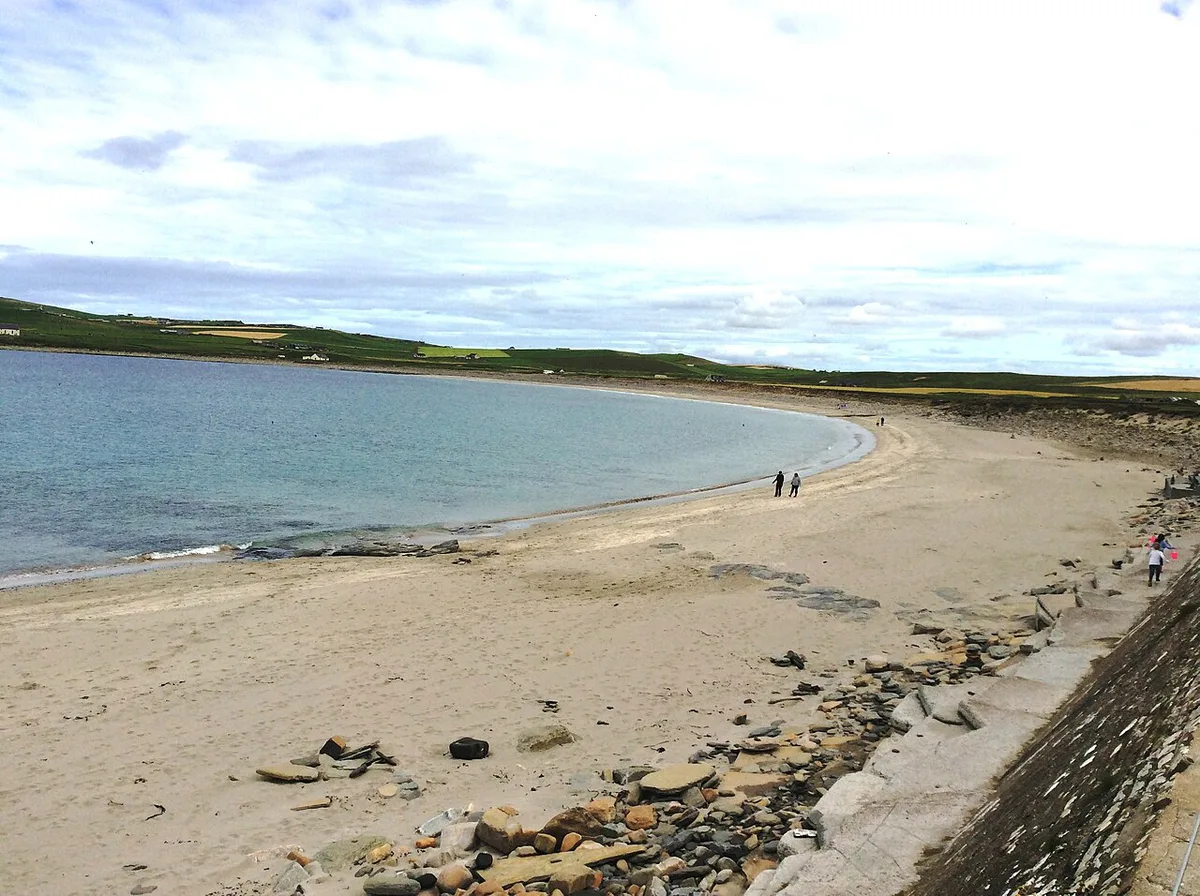
After people left around 2500 BC, the houses stayed buried until a storm in 1850 stripped the sand away.
Other explanations are also discussed. Rising seas, shifting sand and changes in the climate may have made life harder. Social change across Neolithic Orkney is another possibility, as people moved toward larger ceremonial centres.
What is clear is that the houses were not destroyed in one moment. Sand later buried them and preserved the stone furniture. Treat any tidy single cause with caution.
Common Myths and Misdated Claims
Some websites repeat claims that mainstream archaeology does not support. Use this short box to sort fact from fiction.
- Claim: Egyptians built Skara Brae. Evidence: The village predates the Great Pyramid's construction and has no Egyptian links.
- Claim: Carvings are hieroglyphs or Runic writing. Evidence: Runes appeared thousands of years later, and the grooved marks are Neolithic decoration.
- Claim: It was Pictish or Viking. Evidence: Early guesses were later overturned by radiocarbon dating.
- Claim: It had central heating and sewers. Evidence: Houses had hearths and drain-like channels, which is a safer description.
What the Age Means When You Visit
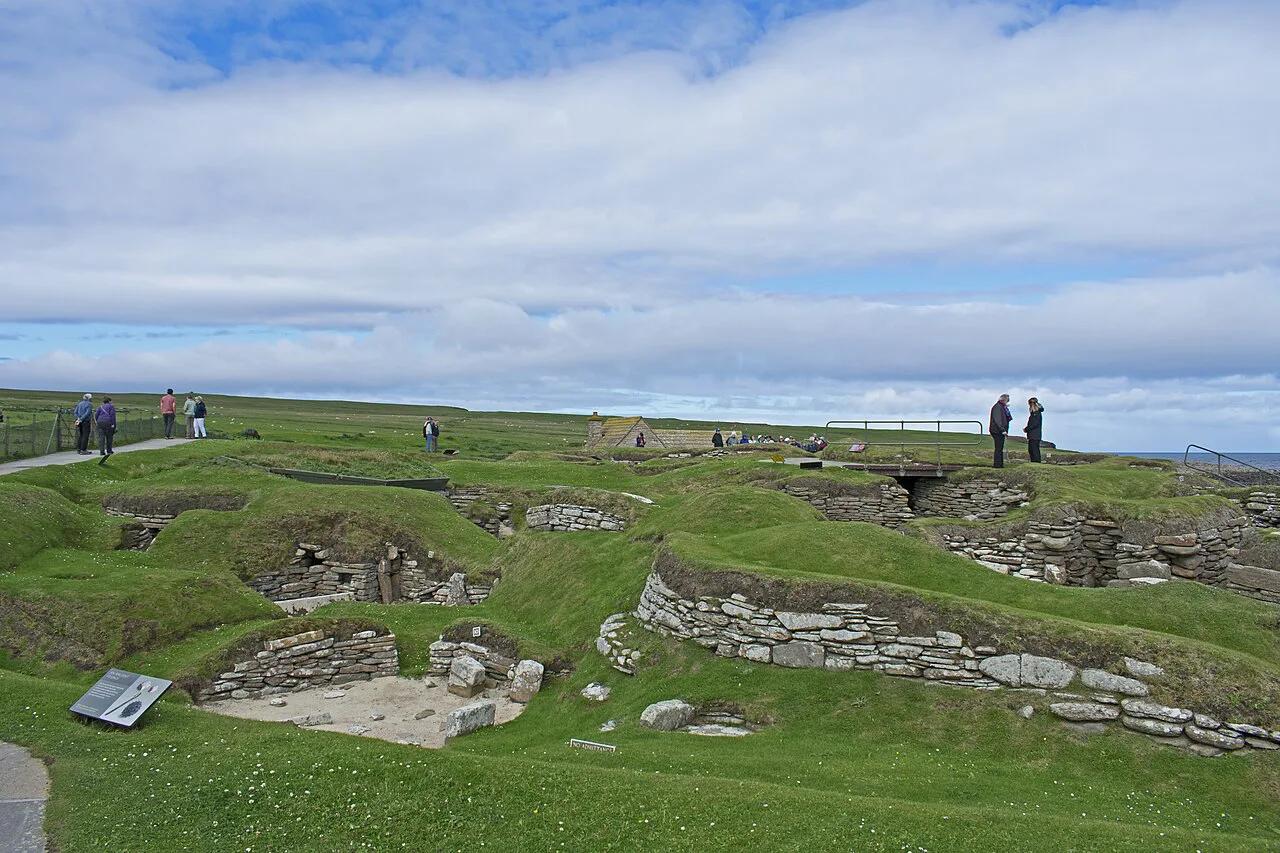
Age is easier to grasp on site. Walking the paths above the houses, you look down into stone rooms with beds, dressers and a central hearth. These are original Neolithic features, preserved because sand covered them.
Skara Brae was lived in for roughly 600 years, so the stone beds and hearths you walk past span a long stretch of daily life.
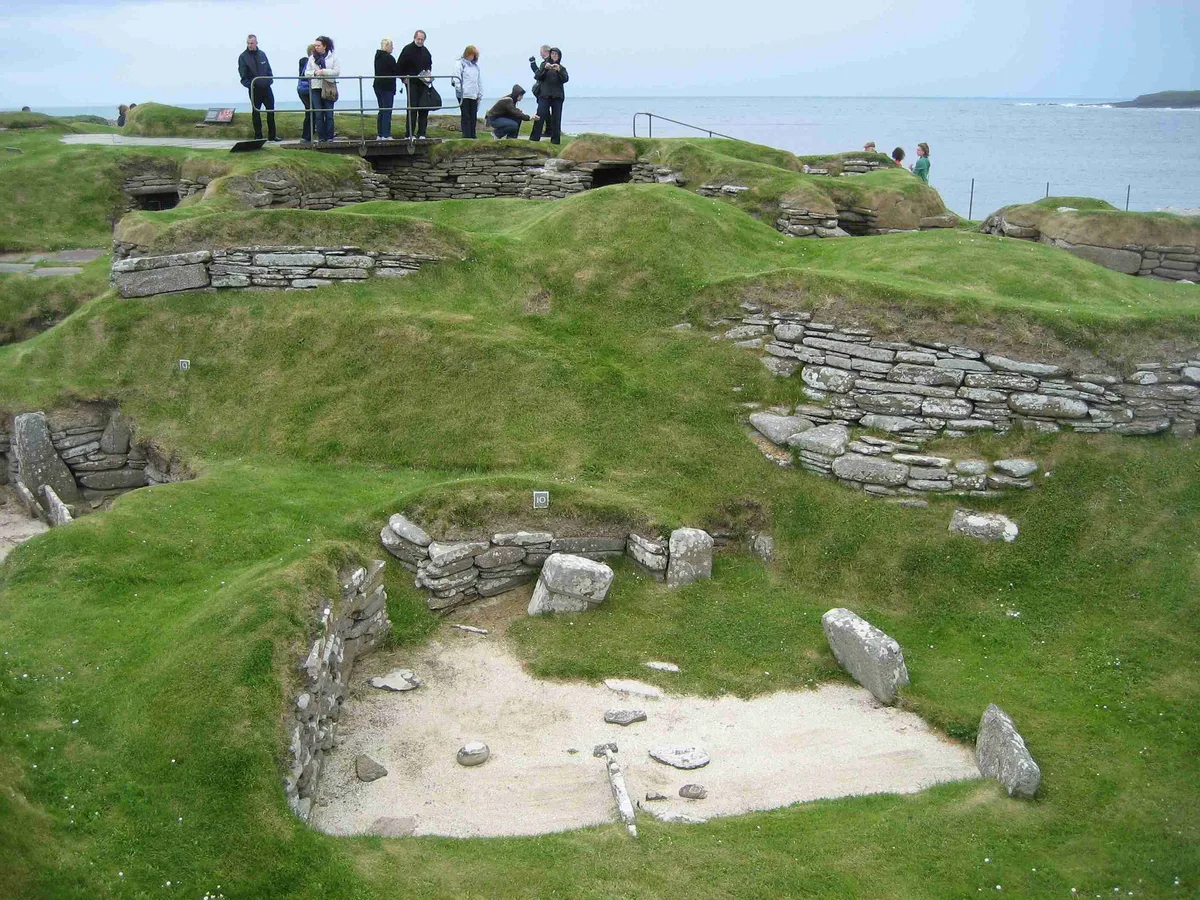
A replica house at the visitor centre shows how the interior may have looked with a roof. Treat that as an interpretation, not an original structure.
Most visitors need a short visit for the village, and longer if they add the exhibition and Skaill House. Our Skara Brae visit guide explains the layout. For admission, check Skara Brae ticket options.
Cruise passengers and day visitors should read the Kirkwall route notes. Our Orkney shore excursion guide covers timing from the port.
Visit for the age if you like archaeology or early domestic life. If you only want dramatic standing stones, spend more time at Brodgar.
Pairing It With Other Neolithic Orkney Sites
Skara Brae works well in a single day with the other Neolithic sites. The Ring of Brodgar is run by Historic Environment Scotland, and our Ring of Brodgar guide gives visiting tips.
Nearby, the Stones of Stenness form another circle. Maeshowe is a chambered tomb, and visiting it needs advance planning.
For more tomb history, see the Tomb of the Eagles, with our Tomb of the Eagles guide for practical details.
The Broch of Gurness: Visitor Guide, Access & Worth It? is a useful contrast. It dates from the Iron Age, thousands of years after Skara Brae's occupants left. The wider Orkney context is on VisitScotland's Orkney page.
Frequently Asked Questions
Which is older, Stonehenge or Skara Brae?
Skara Brae's first houses, about 3100 BC, are slightly older than the Stonehenge stone circle, which dates to about 2500 BC. The earliest Stonehenge earthwork is closer to 3000 BC. Both dates are approximate.
When was the Neolithic age in Britain?
The Neolithic reached Britain around 4000 BC and lasted until roughly 2500 BC. Skara Brae falls in the later part of that span. Its builders used stone because Orkney has few trees.
Related guides

Continue reading
Guides on the same trip


