
Aleksandrovo Tomb: Thracian Murals Near Haskovo (Visitor Guide)
Last updated November 2026: the Aleksandrovo tomb (often spelled Alexandrovo) is a Thracian burial mound near Haskovo with painted chambers dated to the 4th century BC. A replica museum stands close by, so you can study the murals even when the original is restricted. Access to the fragile original is the main trade-off, so settle it before you travel.
Featured image: Bin im Garten, CC BY-SA 3.0, via Wikimedia Commons.
Aleksandrovo Tomb at a Glance
A team led by Dr. Georgi Kitov (1943–2008) uncovered this tomb in December 2000, inside the mound known as Roshavata Chuka. Its wall paintings show hunting, battle and burial-feast scenes. Haskovo is the nearest town, and Sofia lies about 220 km to the northwest. Thracian-tomb completists and travellers already working through the Eastern Rhodopes should go. With only one Thracian stop to spare, pick Kazanlak's painted tomb instead. Our guide to Thracian tombs in Bulgaria places all of these sites on one map.
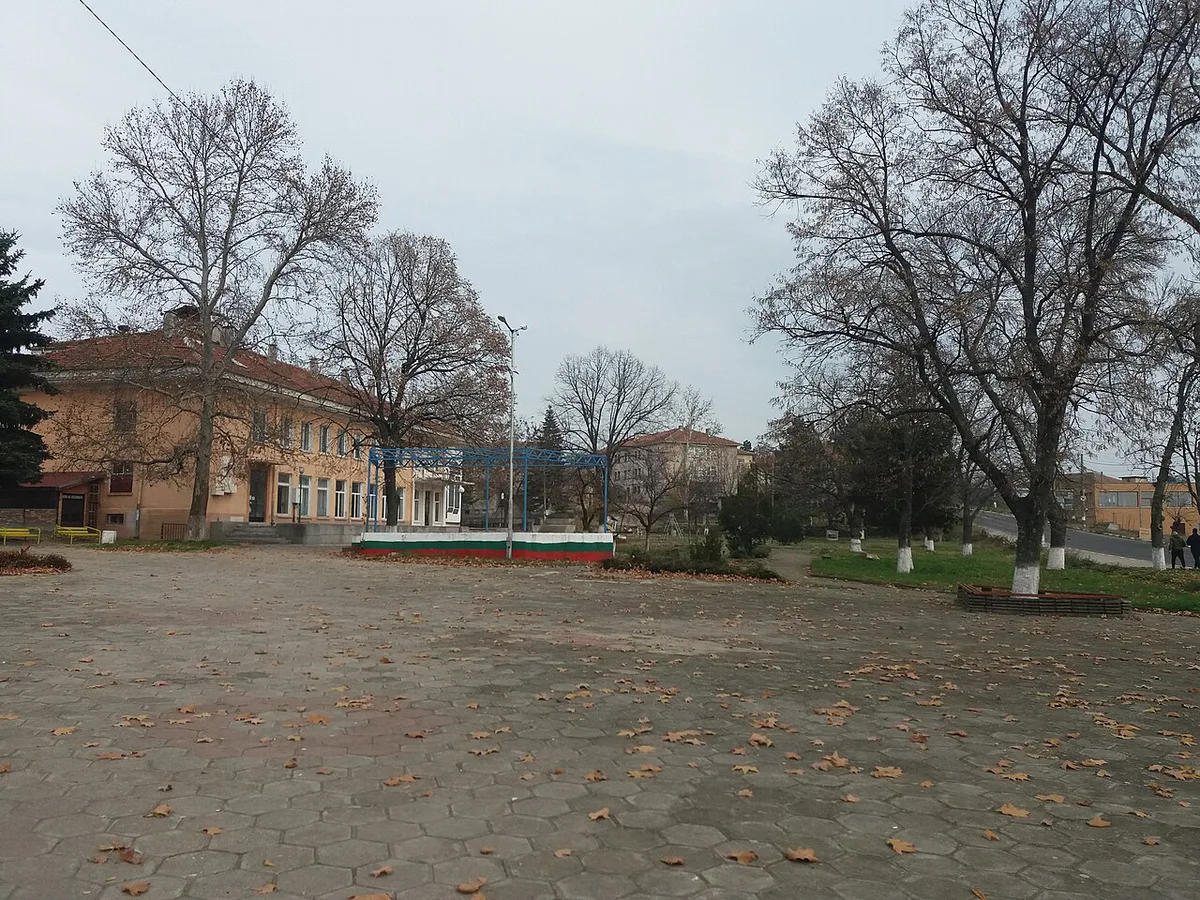
- Location: village near Haskovo, Haskovo region
- Date: 4th century BC, as dated by the museum centre
- Best for: Thracian-art enthusiasts and Haskovo-area routes
What You Will See Inside
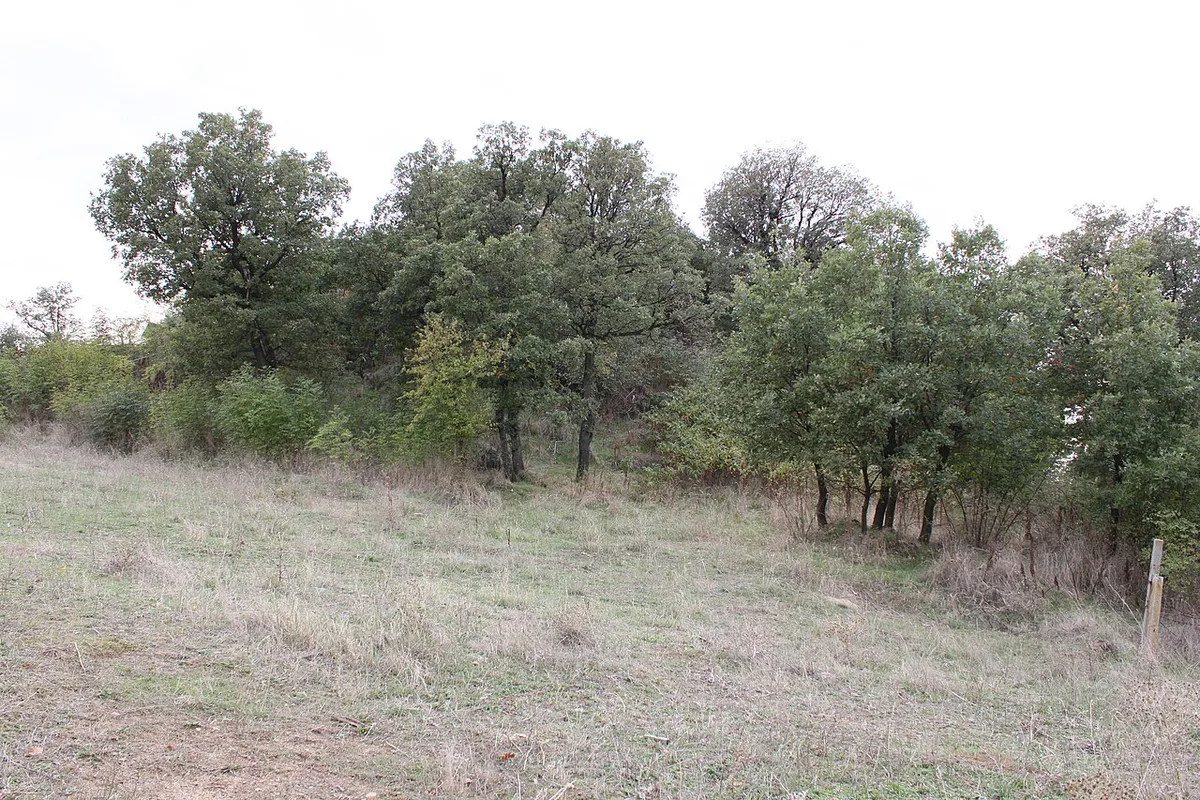
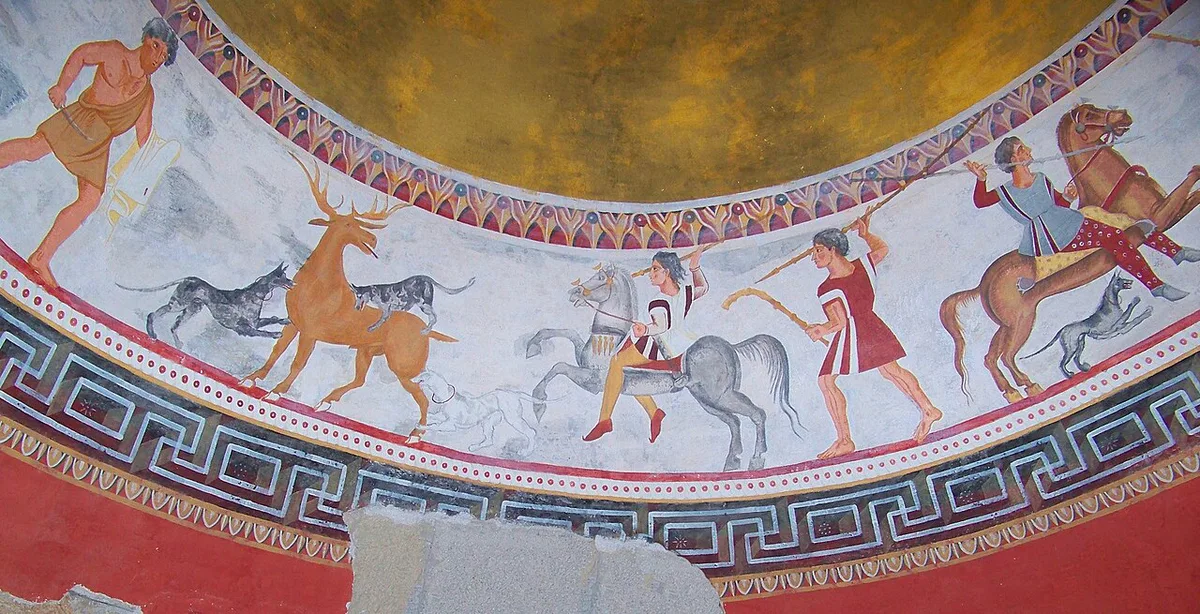
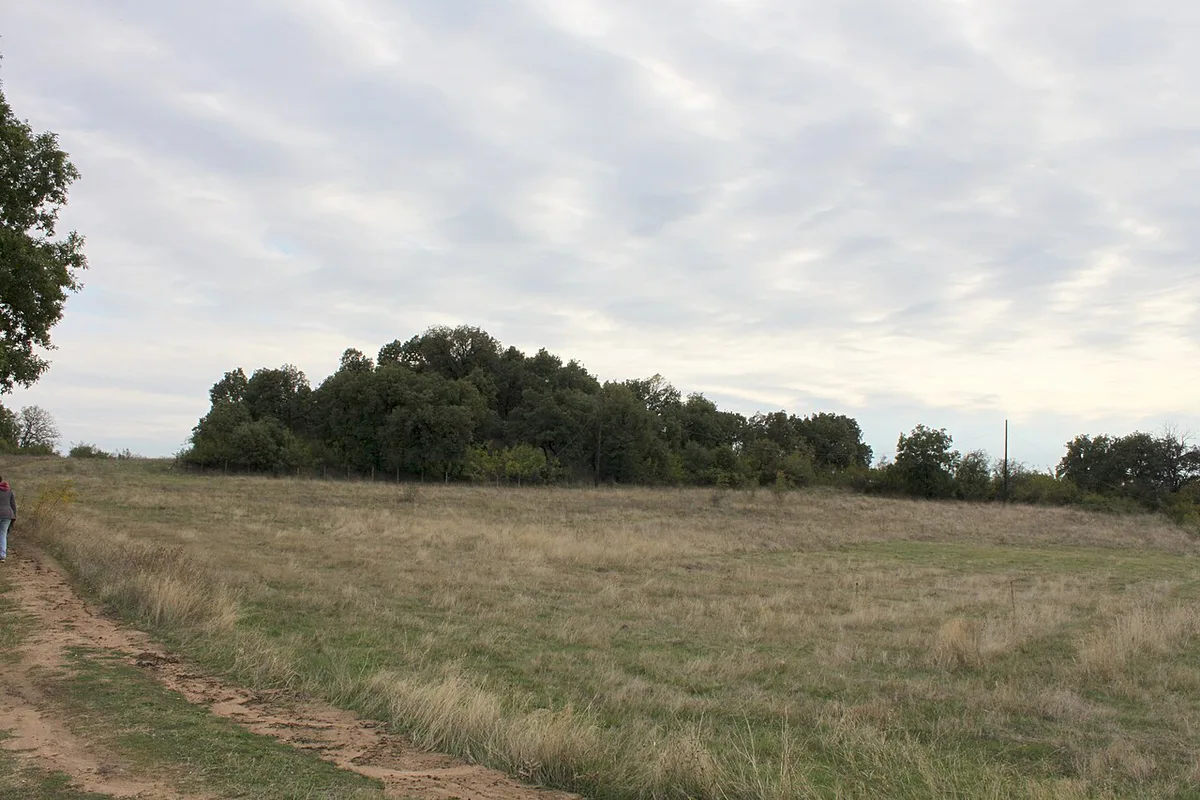
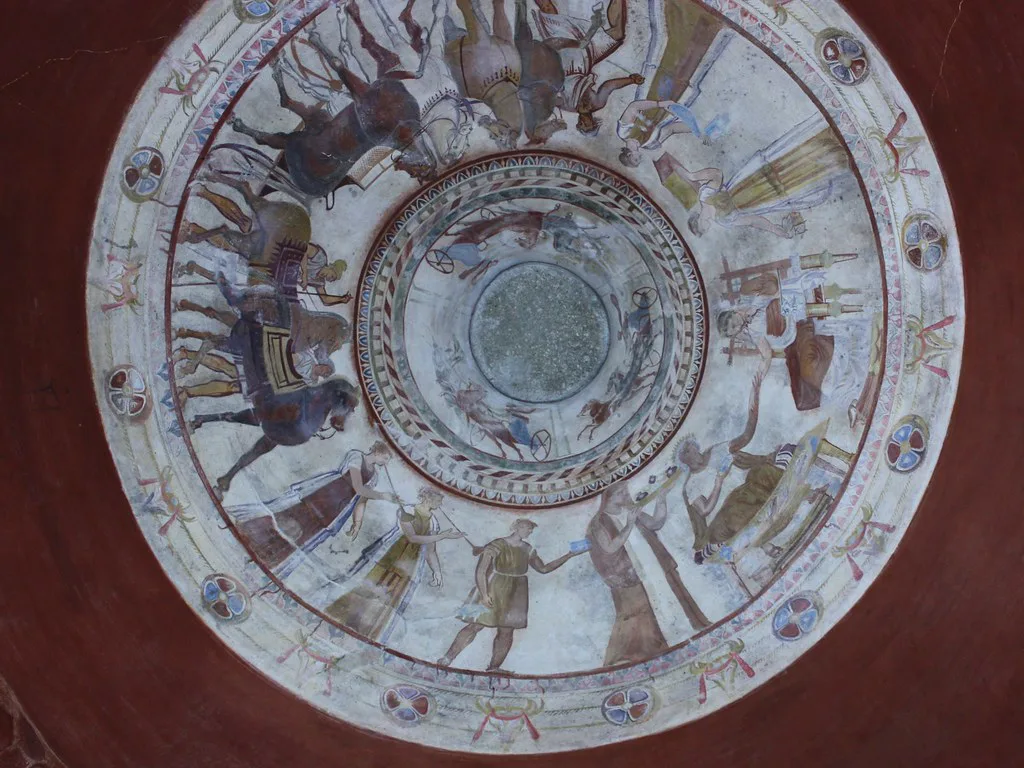
Outside, the mound rises about 15 m and spans more than 70 m. A corridor of over 14 m starts at its eastern edge. It leads through a rectangular room into a circular domed chamber. Ceilings are low, so visitors have to stoop on the way in. Descriptions of the site call it a heroon, a shrine built over a tomb. Paintings cover both chambers and a short stretch of the corridor.
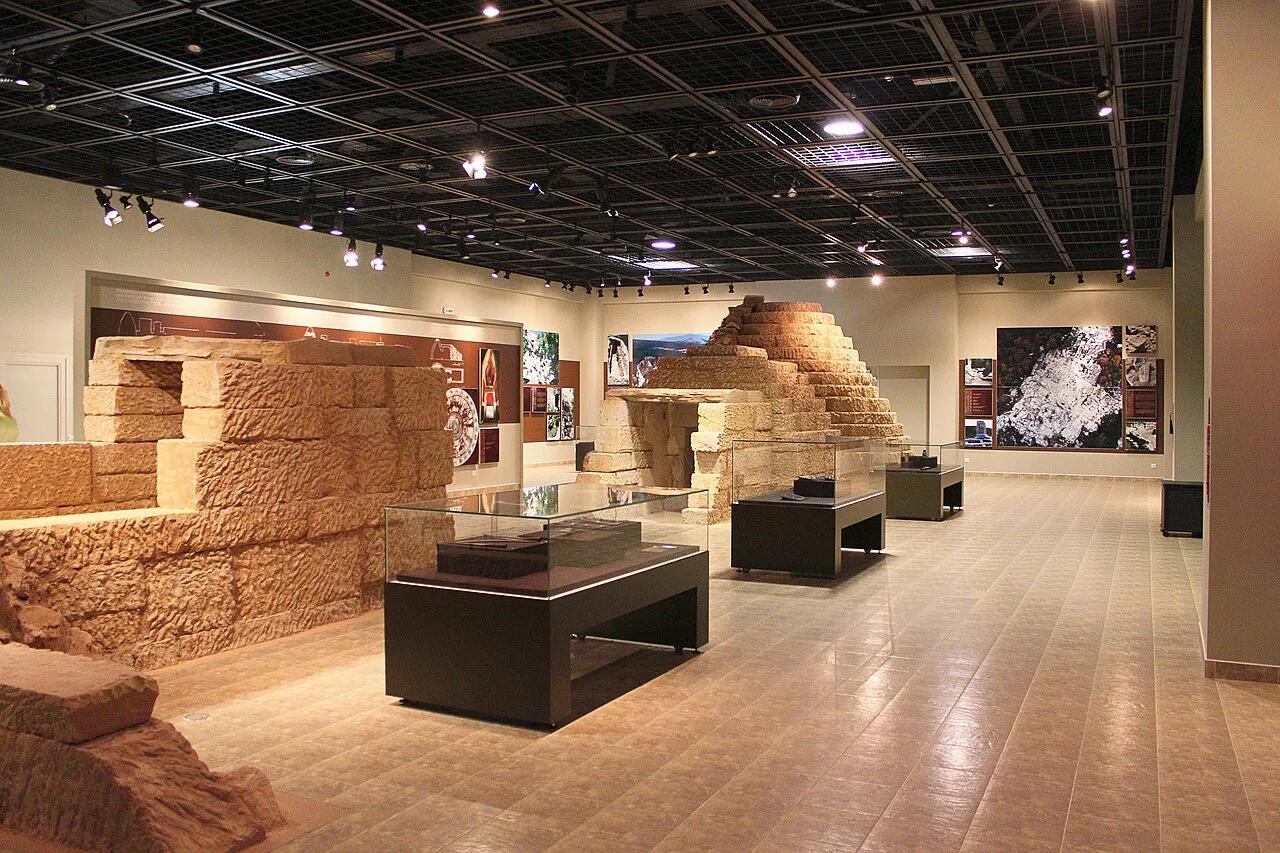
Study the replica first, since its layout shows how the corridor over 14 m leads into the domed room.
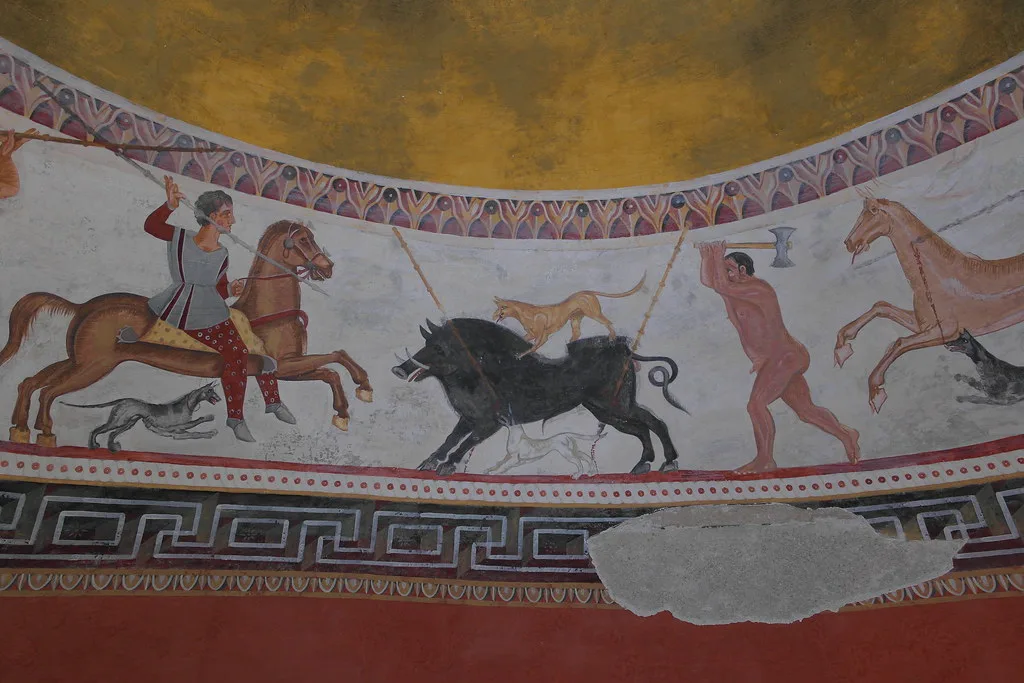
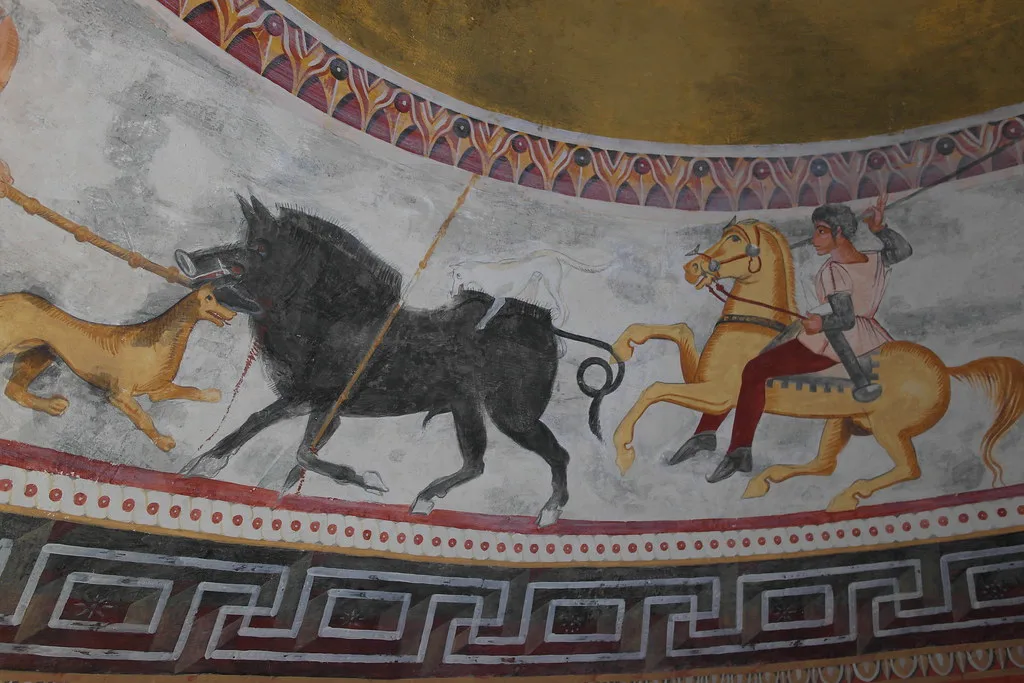
- Scenes: hunting, battle and a burial feast, alternating with plain and ornamental bands
- Figures: horsemen, foot soldiers, wild and domestic animals
- Round chamber: six horizontal tiers, two of them with figures, and the hunting tier is best preserved
- Dome: a horseman spearing a boar sits at the centre
- Palette: mostly brick red, with blue, yellow and black
- Detail: horse harness appliqués and labrys (double-headed axe) motifs on the horses' heads
Original Tomb vs Replica Museum
In May 2009, the museum centre "Thracian Art in the Eastern Rhodopes" opened near the mound. Its main draw is a precise replica of the tomb, built so visitors can explore without harming the fragile paintings. We found no published statement on whether the original can be entered today. Treat the replica as the dependable way to see the murals, and ask the museum about the original. Assuming you can walk into the mound is the most common planning mistake. For gold and jewellery context beyond this site, read about Thracian gold treasures.
Getting There and Visit Planning
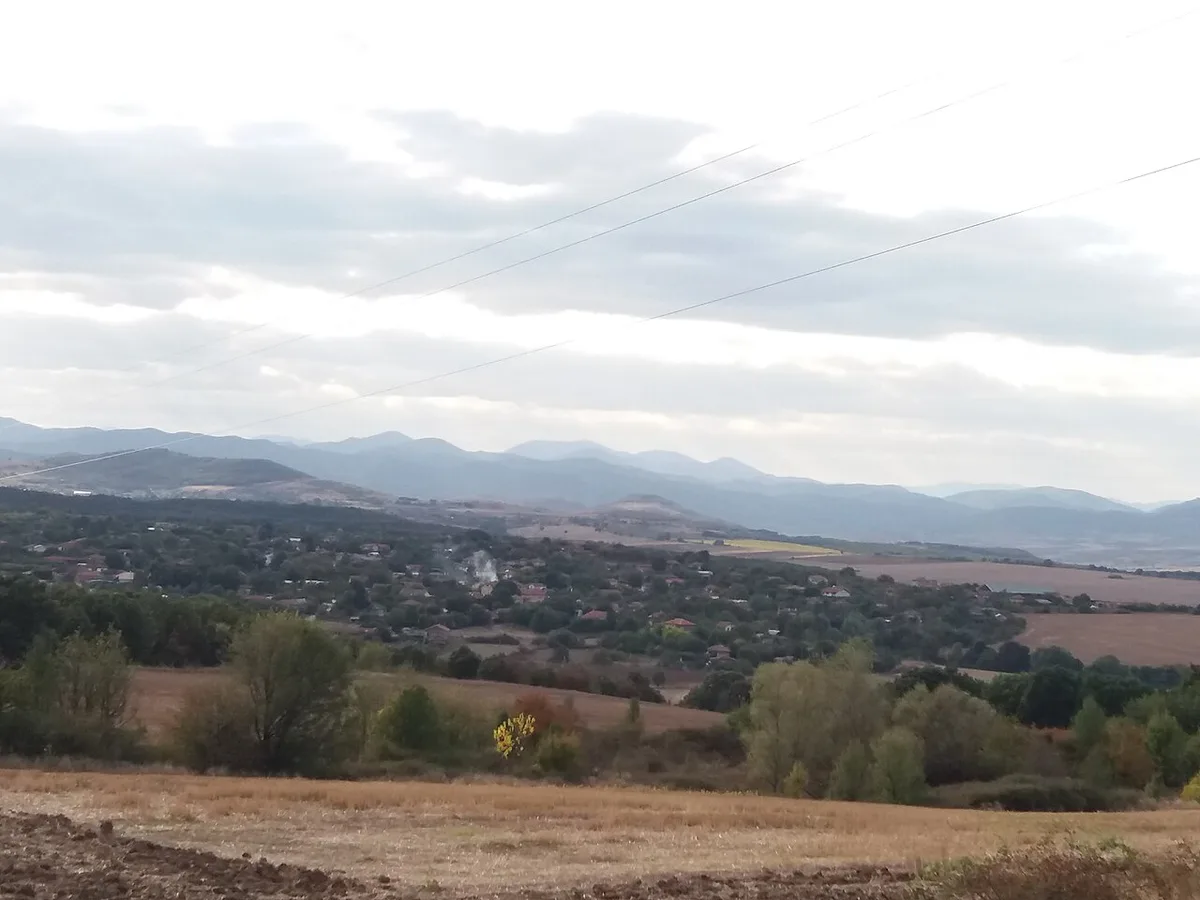
Driving gives the most flexibility, since the tomb sits in a village outside Haskovo. From Sofia, allow for a trip of about 220 km southeast. Plovdiv works as a base, and Plovdiv's official visitor site lists accommodation and transport. Buses to a small village may be infrequent, so check the return timetable before relying on them. Do not expect English signage at the site. Treat the tomb as one stop in a Haskovo-area day rather than a full-day destination.
At about 220 km from Sofia, a failed visit can cost a long driving day, so sort out access before leaving.
Tickets, Hours and Booking
We found no published ticket price or opening hours for the museum centre or the tomb. Ask the museum centre or Haskovo municipality directly, and use Bulgaria's national tourism portal for current heritage listings.
Aleksandrovo vs Other Thracian Tombs
Some descriptions note that the clothed figures here wear Greek-style dress, similar to the paintings at Kazanlak. That resemblance does not settle which tomb is older or better. Use the table to decide whether Aleksandrovo earns a place on your route.
| Tomb | What stands out | Best for |
|---|---|---|
| Aleksandrovo | Painted corridor and domed chamber, plus a replica museum nearby | Completists and Haskovo-area routes |
| Kazanlak | Murals whose dress scenes are compared with Aleksandrovo's | Visitors with only one Thracian stop |
| Sveshtari | Separate Thracian tomb, covered in our Sveshtari tomb guide | Visitors choosing a second tomb |
| Starosel | Temple-tomb complex in the same Thracian tradition | Travellers continuing through Thracian sites |
Combine It With Nearby Stops
Stop-over fit is good if you are already in Haskovo or the Eastern Rhodopes. Pair the tomb with Perperikon, the Rhodope rock-cut site. Haskovo's surroundings hold prehistoric, Thracian, Roman and medieval traces, which suits a slow regional day. For a wider route through the country, see Roman Ruins in Bulgaria: Best Sites and Planning Tips.
Before You Set Out: Access Arrangements
Plan Aleksandrovo Tomb as a Haskovo-area stop, but confirm the museum centre’s opening arrangements before setting off. The original monument is fragile, while the visitor replica opened in May 2009 to make the painted spaces easier to experience without risking the murals.
Do not build an itinerary around entering the original tomb unless the museum confirms that access. The replica remains the reliable alternative. It also helps visitors understand the compact layout before seeing the mound itself.
The site is about 220 km southeast of Sofia, so a failed visit can disrupt a long driving day. At the tomb, expect a mound about 15 m high and a corridor over 14 m long, with low ceilings that require visitors to stoop.
Related guides

Continue reading
Guides on the same trip