
Last updated November 2026: caesaraugusta is the Roman colony on the Ebro that became modern Zaragoza. What survives is a set of four museum-sites in the city centre, not a standalone ruin park. Our guide to other ancient sites across Spain places it among the country's Roman cities.
Featured image: Following Hadrian, CC BY-SA 2.0, via Flickr.
Caesaraugusta in brief: what it was and how it became Zaragoza
Caesaraugusta was a Roman colony founded under Augustus, on or near an earlier Iberian-Sedetan settlement called Salduie, which Pliny mentions. Zaragoza is the modern form of the Roman name. You will also see the spelling Caesar Augusta, which points to the same city. Excavations show the peak of public building fell in the 1st and 2nd centuries AD. Sources give different years for the founding, so treat it as an Augustan-era foundation rather than a fixed date. Official route details sit on the Aragón tourism route page.
Why the Romans built here: rivers, trade and a veterans' colony
Three rivers meet at this spot, and that geography explains the city. Veterans of three legions settled here after the Cantabrian Wars. The Ebro carried boats between Dertosa and Vareia, and the colony's port sat roughly midway along that route. Wine amphorae and ceramics arrived from the Mediterranean, and examples are displayed in the port museum.
- Rivers: the Ebro, the Gállego and the Huerva meet here.
- Legions: IV Macedonica, VI Victrix and X.
- River route: the Ebro was navigable from Dertosa (Tortosa) to Vareia (Logroño).
After Rome: Visigoths, Saraqusta and the Reconquest
The name Caesaraugusta outlived the empire, and later layers of the city explain why the Roman remains lie so deep under the modern streets.
- Late Roman Christianity: the city became an important Christian centre. The poet Prudentius wrote about its martyrs, who were killed in the persecutions around AD 304.
- Visigothic period: a council held at Caesaraugusta in 380 dealt with the Priscillianist controversy, which shows the city's weight in Hispania. It stayed a regional centre under the Visigoths.
- Islamic Saraqusta: the city came under Muslim rule in the early 8th century, and the Arabic form Saraqusta is another step in the path to the modern name Zaragoza.
- Christian conquest: Alfonso I of Aragón took the city in 1118 and made it a capital of the Crown of Aragón.
This sequence of rebuilding is the reason the four museums sit in basements and beneath plazas. Medieval and later streets were laid over the Roman grid, so excavation had to work around them. Dates for the late Roman and Visigothic phases vary slightly between sources, so treat them as approximate.
What you can still see in Roman Zaragoza
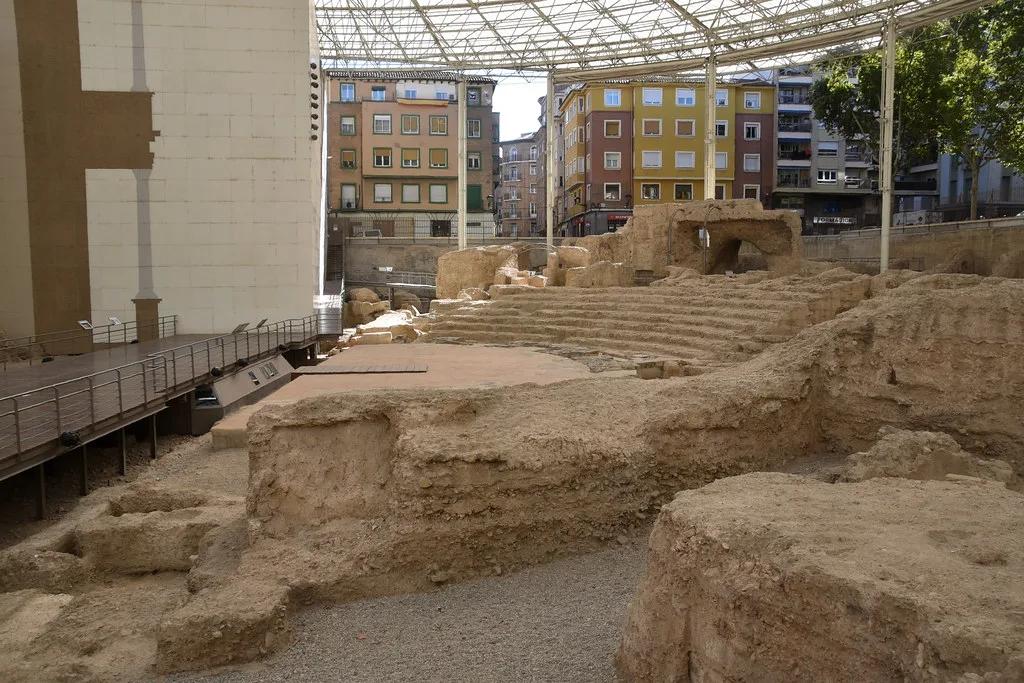
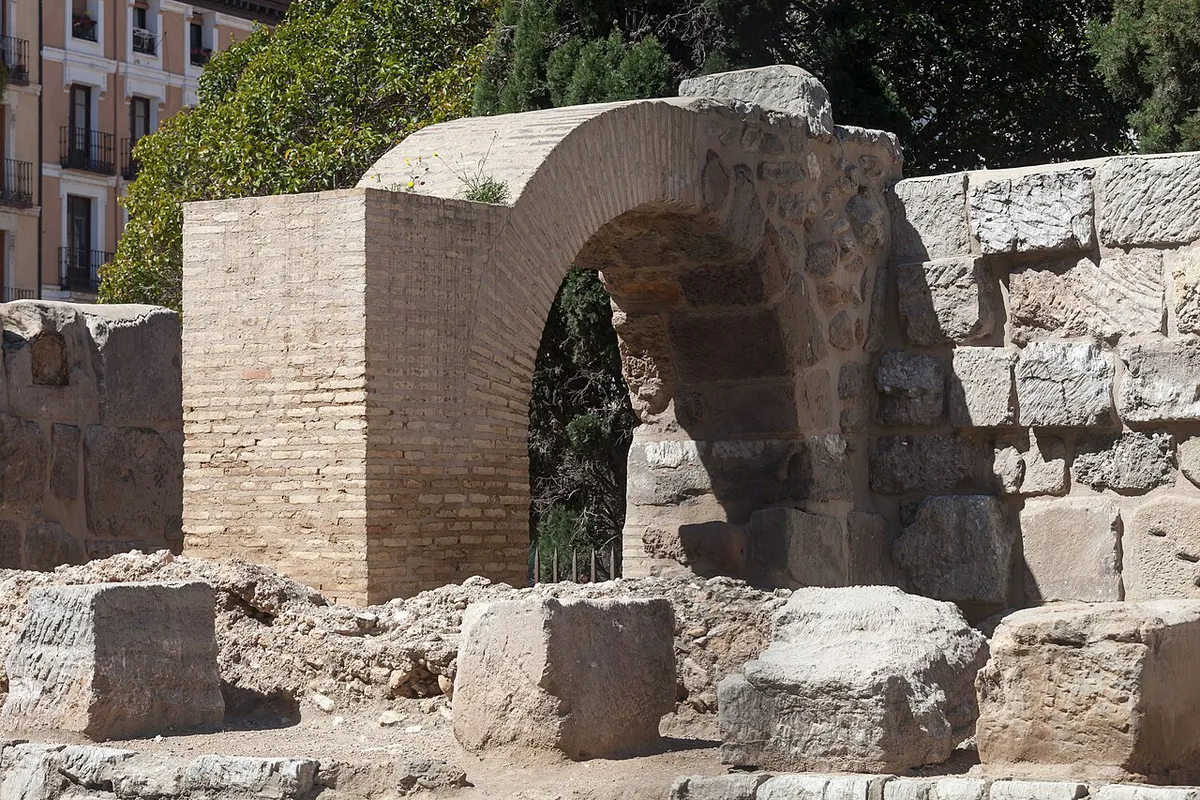
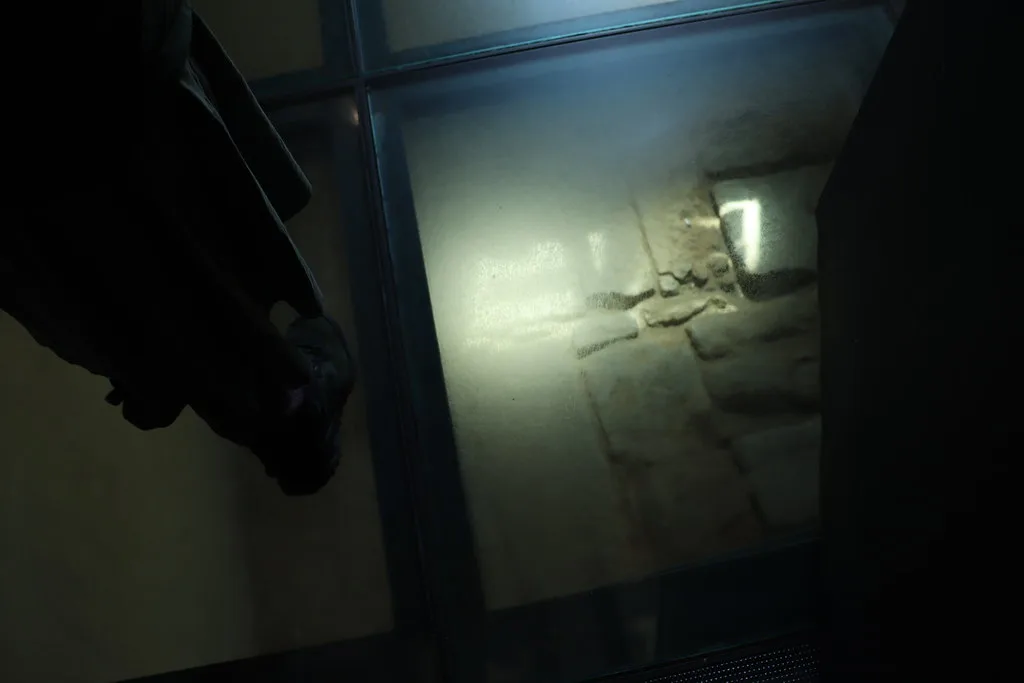
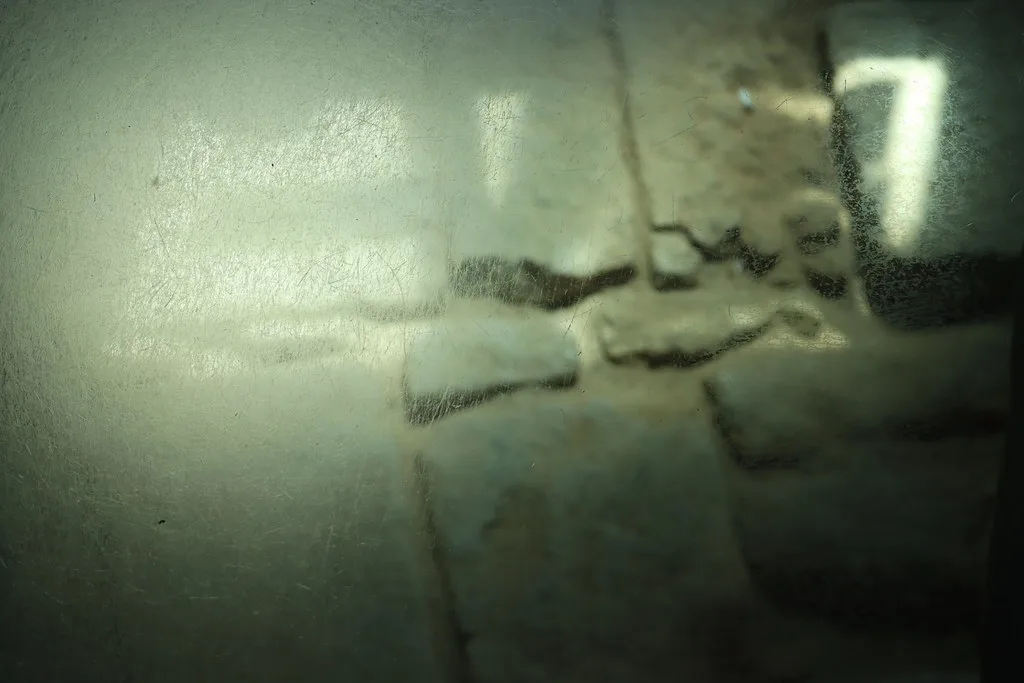
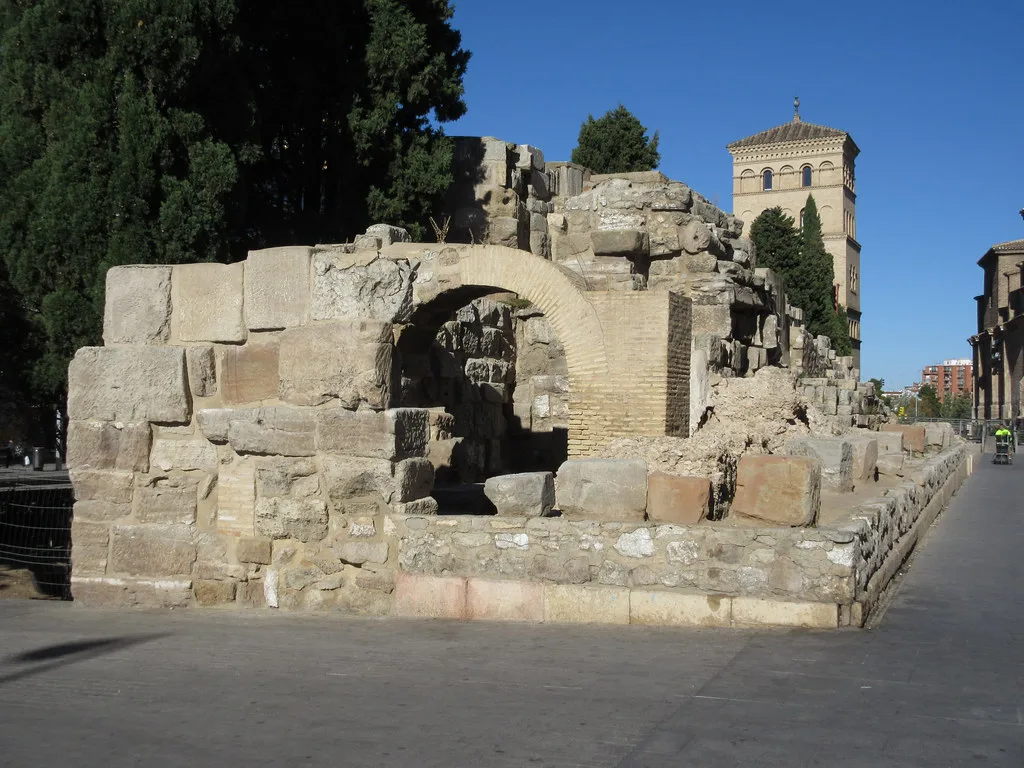
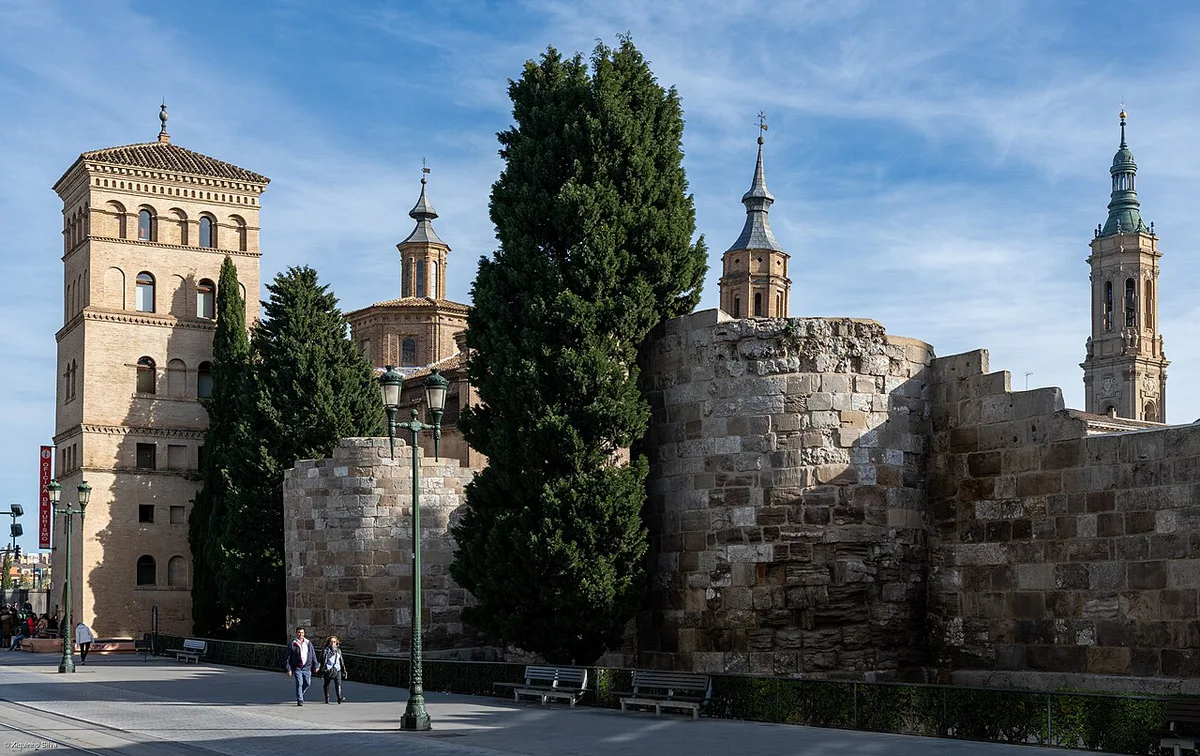
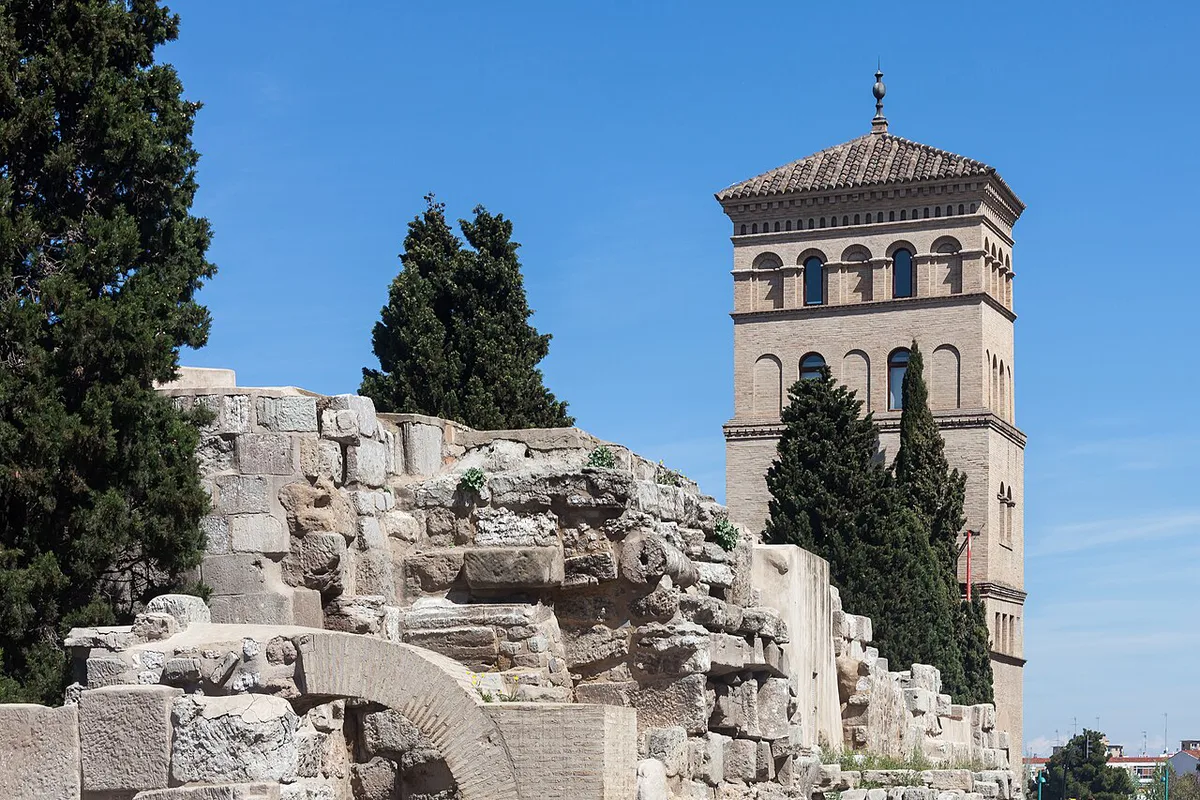
Expect foundations, sewers, pool bases and a partly reconstructed theatre, not standing temples. Museo del Foro (Forum Museum) lies under Plaza de la Seo, and excavations there ran from 1988 to 1991. Its basement holds the great Tiberian sewer and lead pipes from about 85 feet (26 metres) of water channel. Museo del Puerto Fluvial (River Port Museum) keeps an arcaded façade facing the river, a stairway to the quays and stonemasons' marks. The port was built between the late 1st century BC and the 1st century AD, and it went out of use in the 4th century AD. Museo de las Termas Públicas (Public Baths Museum) rests on remains found in 1982. Its oldest phase is a latrine for about 29 people. A porticoed pool (natatio) later replaced the latrine, and 32 feet (9.7 metres) of its original 52 feet (16 metres) survive. Museo del Teatro (Theatre Museum) is the best-preserved Roman monument in the city, dating from the 1st century AD. A walkway runs partly over the reconstructed stage (pulpitum), and only the foundation level of the stage front remains. Roman walls stand near Puente de Santiago and Torreón de la Zuda, which houses a tourist office. Visitors expecting Mérida- or Tarragona-scale ruins may be underwhelmed.
| Site | What is physically visible | Best for | Time (estimate) | Indoor or outdoor |
|---|---|---|---|---|
| Forum Museum | Great sewer, lead pipes, column foundations | City-built-on-city story | Medium | Indoor, underground level |
| River Port Museum | Arcaded façade, stairway, masons' marks | Trade and river history | Short to medium | Indoor |
| Public Baths Museum | Latrine phase, pool base, column bases | Daily-life detail | Short to medium | Indoor |
| Theatre Museum | Reconstructed stage walkway, orchestra paving, foundations | Best-preserved structure | Medium | Indoor with walkway |
| Walls | Stretches of Roman wall | Quick orientation | Short | Outdoor |
A walking route through Roman Zaragoza
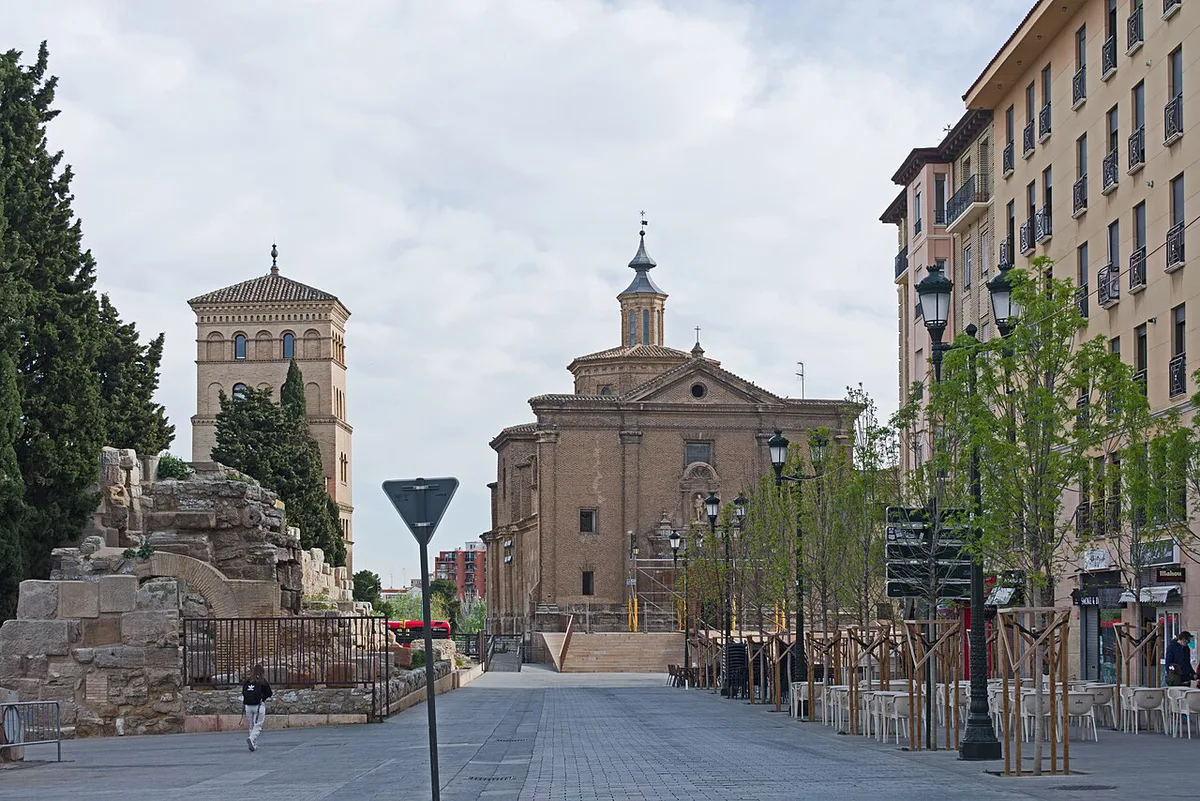
Begin at the walls beside Puente de Santiago and Torreón de la Zuda. From there, work through the four museums in the order below. Check the sequence against a current map before you set out. Short on time? Choose the Forum Museum for the sewer and foundations, and the Theatre Museum for the best-preserved structure. That covers two of the five stops.
Stop four on the walk, the Baths Museum, shows only 32 feet (9.7 metres) of its pool, so set expectations before you go.
- Roman walls near Puente de Santiago and Torreón de la Zuda.
- Museo del Foro (Forum Museum), under Plaza de la Seo.
- Museo del Puerto Fluvial (River Port Museum).
- Museo de las Termas Públicas (Public Baths Museum).
- Museo del Teatro (Theatre Museum).
Tickets, opening hours and access
Current prices, opening hours, closing days, last-entry times and step-free access to the theatre walkway and sewer level are published on the Zaragoza city council site. Ask there whether a combined ticket covers all four museums.
Getting to Zaragoza and how long to allow
Zaragoza sits on the main high-speed rail corridor between Madrid and Barcelona, which makes the Roman circuit easy to add to either city's itinerary.
- From Madrid: AVE trains from Madrid Atocha take roughly 1 hour 15 minutes to 1 hour 30 minutes, depending on the service.
- From Barcelona: trains from Barcelona Sants take roughly 1 hour 30 minutes to 2 hours.
- Station to centre: Zaragoza-Delicias station lies outside the old centre, so allow a bus, tram or taxi ride before you start walking. Check current routes with the operator.
How much time the circuit needs
The four museums and the wall stretches sit within the old centre, so the route is walkable. A realistic plan:
- Half a day covers the Forum Museum and the Theatre Museum, plus a look at the walls.
- A full day lets you visit all four museums without rushing, with a lunch break near Plaza de la Seo.
Fares and timetables change by season, so book rail tickets early for weekend travel and confirm each museum's closing day on the city council site before you set out. A day trip from Madrid or Barcelona is workable, but an overnight stay gives you time for the cathedral and the evening streets as well.
Where this fits: Zaragoza's other sights and Spain's Roman sites
Plaza de la Seo pairs the forum with the cathedral of the Salvador, above where the forum temple stood. That makes a natural half-day with the Roman circuit. Barcelona offers the closest parallel, a Roman city beneath a modern one, in Roman Barcelona's old-town remains. Our Segóbriga guide covers another Roman site in the cluster. Our Sagunto guide adds a further Roman-era stop. For a coastal Greek-and-Roman setting, see our Empúries guide. Our Numantia guide covers the Celtiberian counterpart to this Roman colony.
Mistakes to avoid and who should skip it
People who like interpretive museums and stories of one city built on top of another will enjoy this circuit. Anyone who wants standing temples and monumental ruins should look elsewhere in Spain.
- Expecting a single archaeological park: the sites are separate museums.
- Arriving without checking closing days on the official site.
- Skipping the sewer and foundations level in the Forum Museum.
- Treating the walls as one continuous circuit: only stretches survive.
Related guides
Continue reading
Guides on the same trip