Last updated November 2026. An Ostia Antica tour is worth booking if you want the ruins explained, because the site can read as long stretches of brick without a guide. Most guided tours run about 4 to 4.5 hours, so pick a format first and then compare current options. If you would rather go alone, our Ostia Antica guide covers a self-guided visit.
Featured image: Following Hadrian, CC BY-SA 2.0, via Flickr.
Is an Ostia Antica Tour Worth It?
Yes for first-timers and history readers, and usually no for anyone who only wants a quick wander. Ostia was the harbor town of ancient Rome, near where the Tiber meets the Tyrrhenian Sea. Its streets, baths and shops survive as low walls and mosaics, and few signs explain what you are looking at. A guide turns those walls into a tavern, a firemen's barracks or a guild square. Tours of this kind typically last about 4 hours. If you only have a short Rome stay, that half day is a real cost. Our separate worth-it verdict weighs the site itself against other Rome day trips. This page focuses on the tour decision.
Types of Ostia Antica Tours Compared
Formats differ in transport, group size and cost. Private tours cost the most per person for one or two travelers, and small groups sit in the middle. Self-guiding costs the least. Compare current listings, because prices move with season and operator.
| Format | Best for | Trade-offs | Ask before booking |
|---|---|---|---|
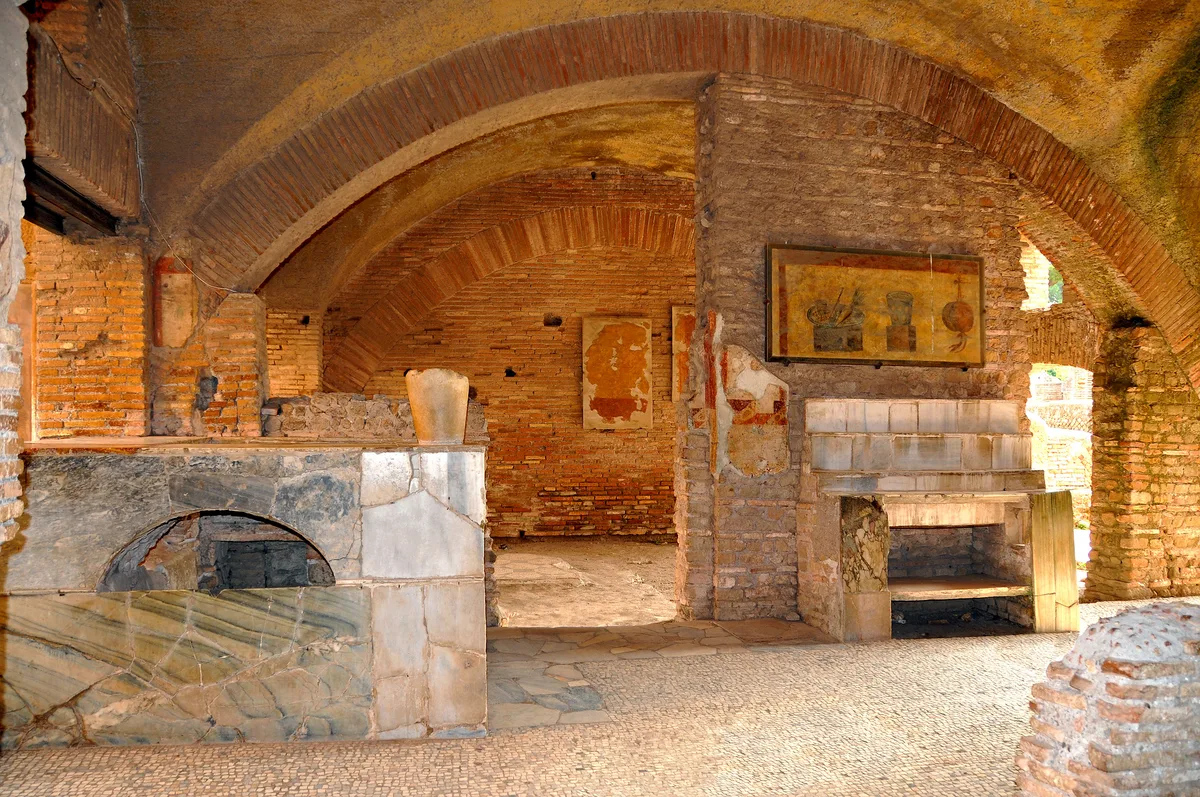
| Private tour with transport | Families, mixed-mobility groups, tight schedules | Highest cost; pickup timing is fixed | Is park admission included and which vehicle is used? |
| Private tour, train from Rome | Solo travelers and couples wanting a personal guide | Mid to high cost; you handle the train | Where is the Rome meeting point and who buys train tickets? |
| Small group | Budget-minded first-timers | Fixed pace; less room to skip stops | What is the group-size cap? |
| Family or kid-focused | Children, who need stories and activities | Shorter attention spans shape the route | What age range is the tour built for? |
| Self-guided with map or audio | Independent visitors with time | Lowest cost; no one to answer questions | Which route covers the main sights? |
What a Guided Tour Typically Covers
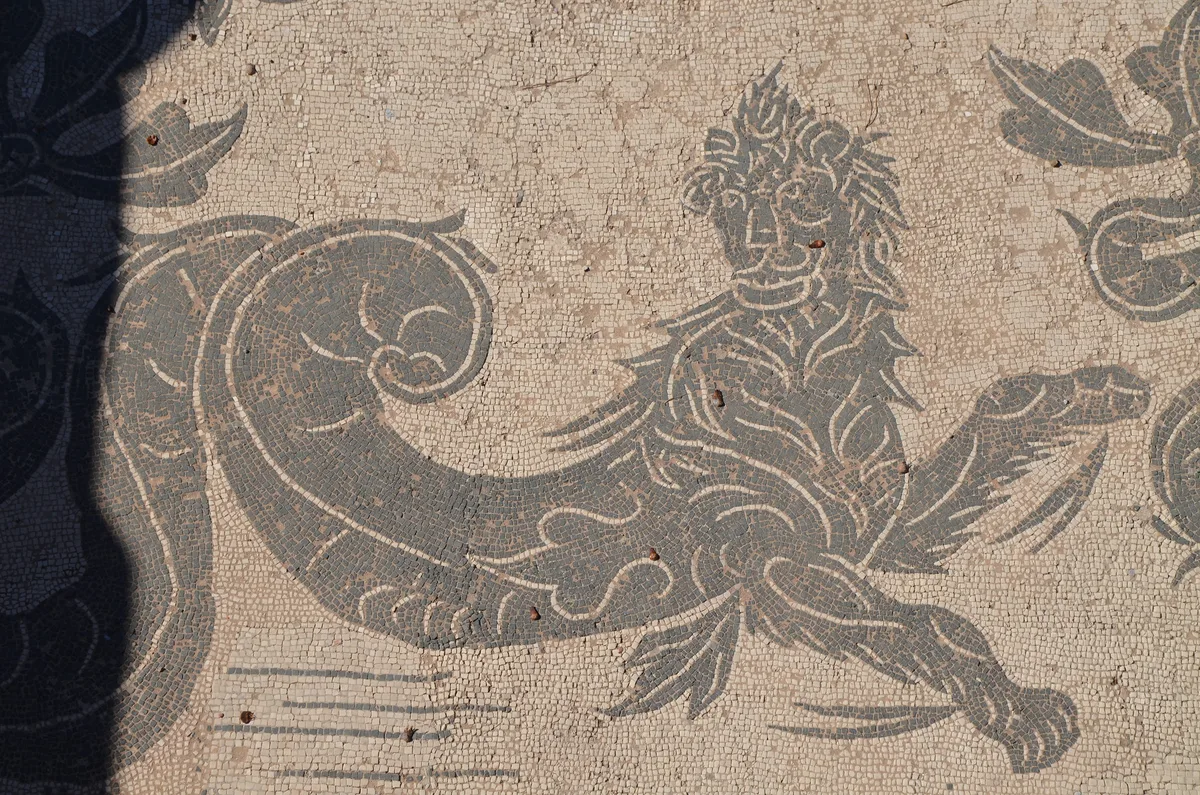
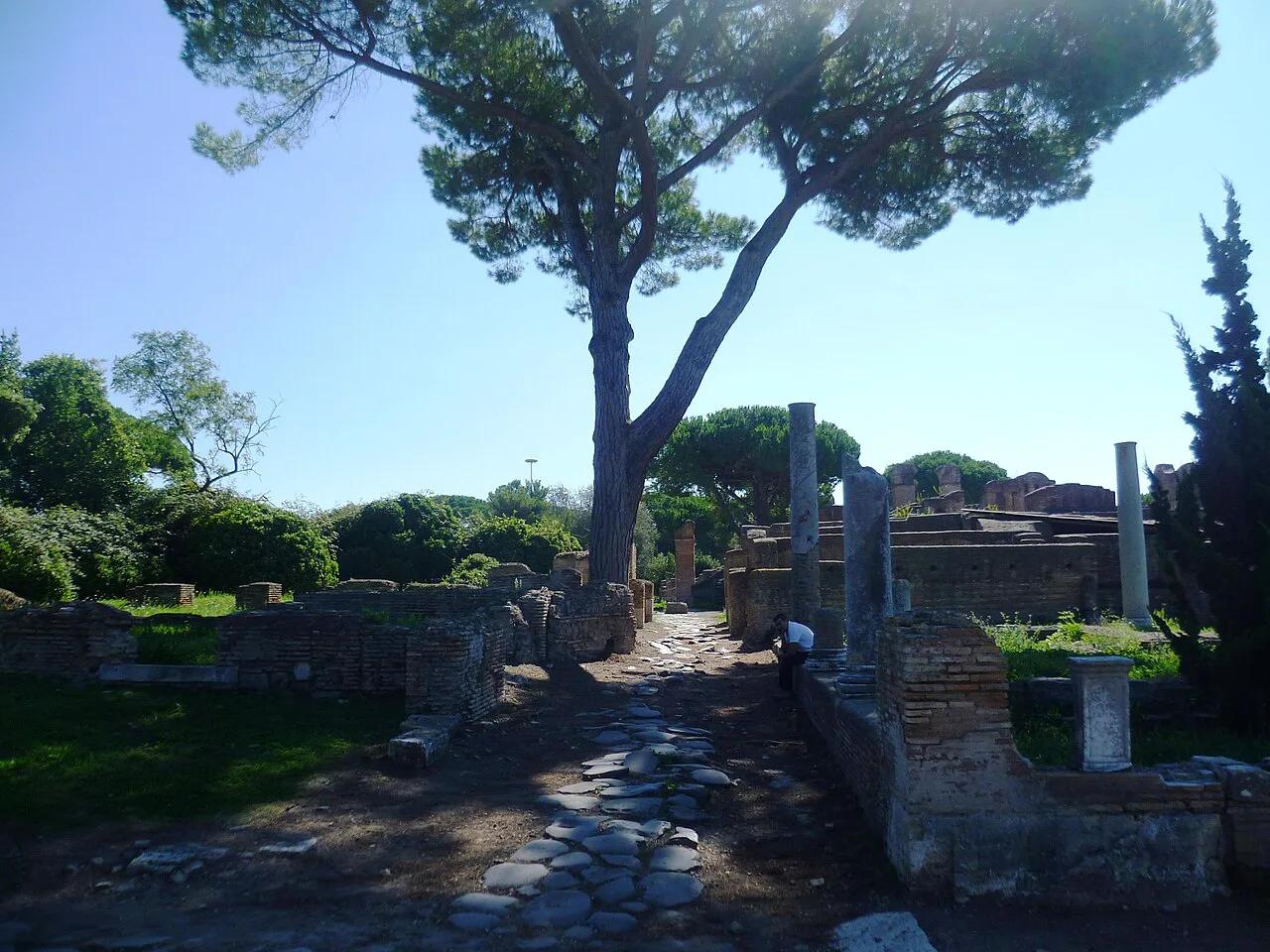
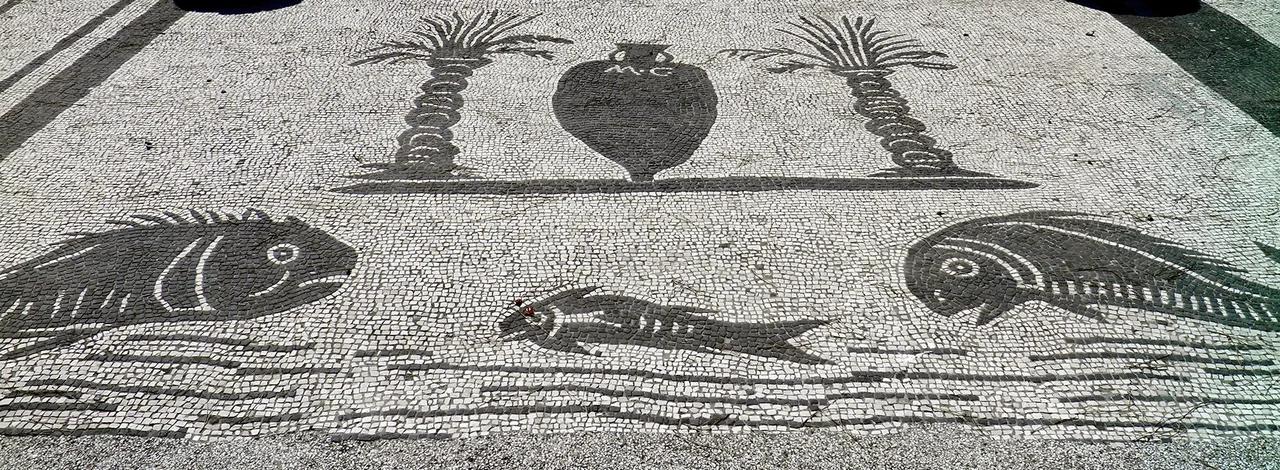
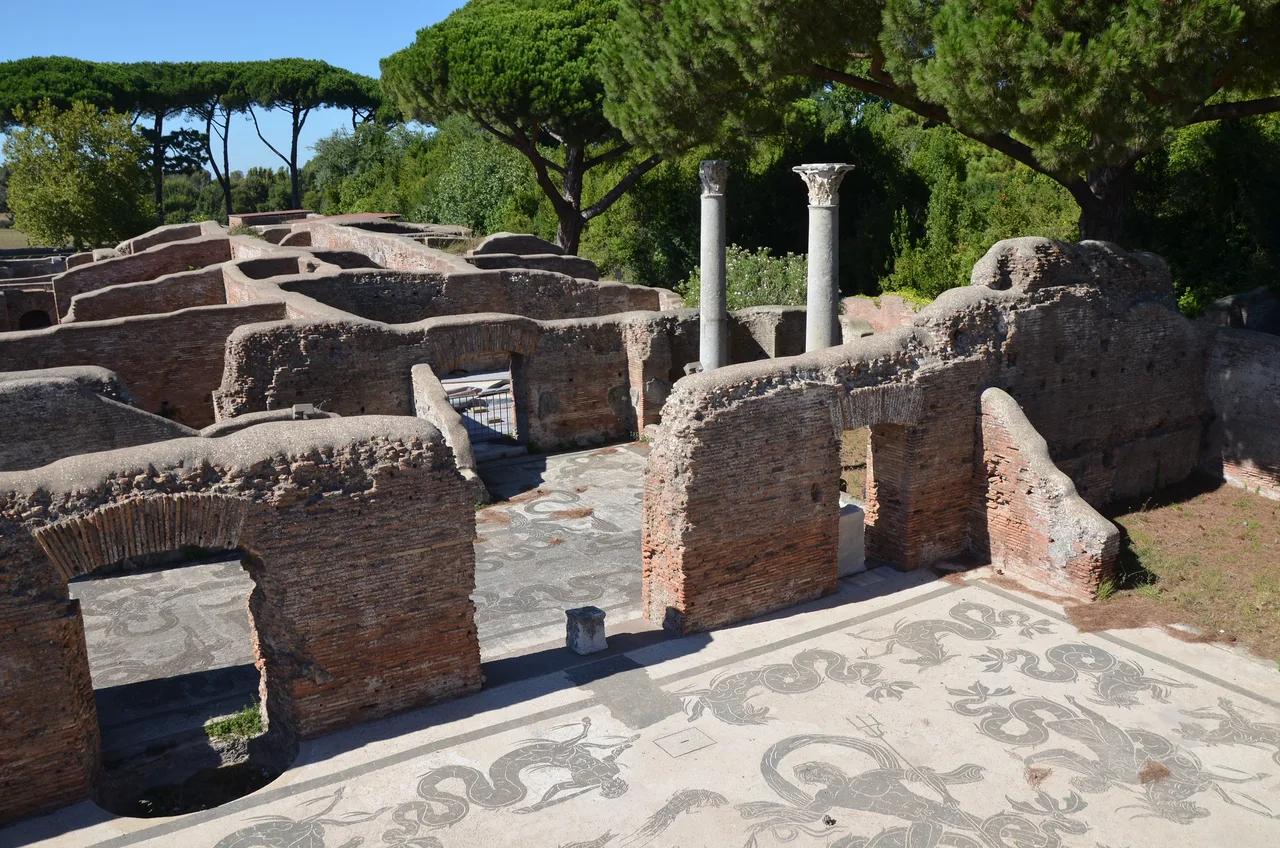
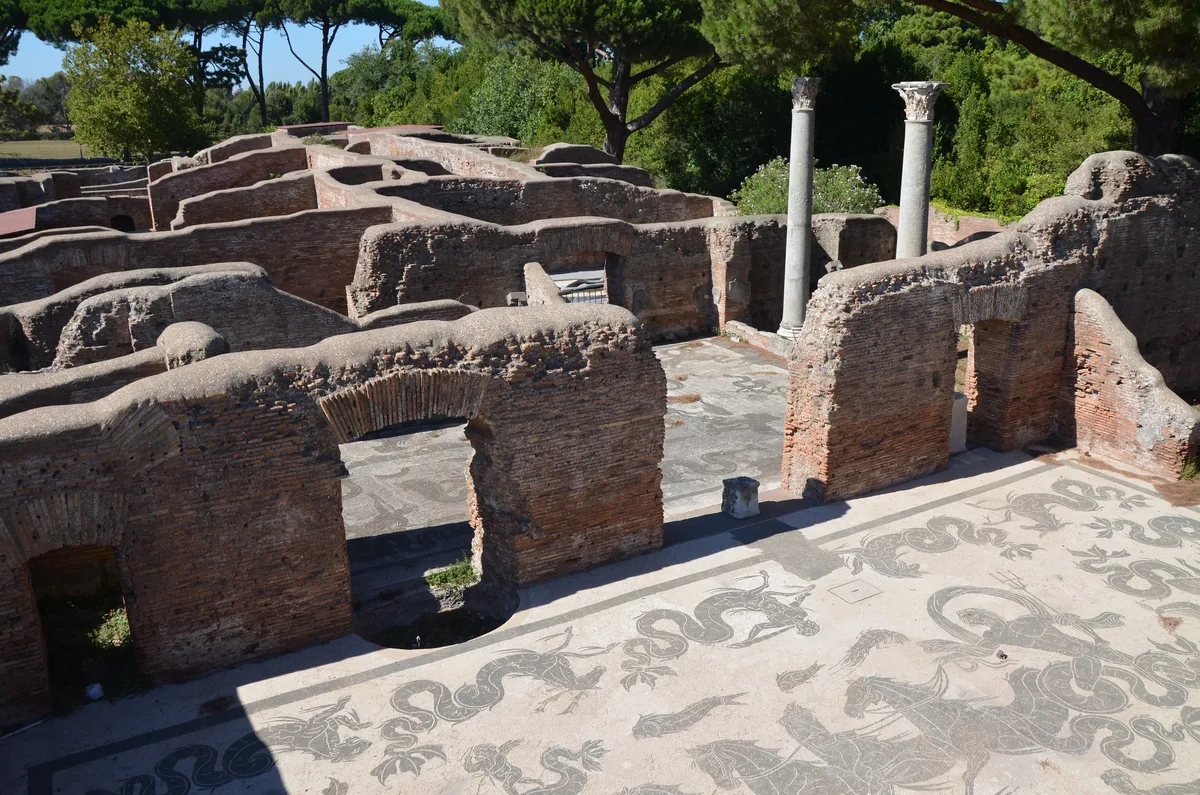
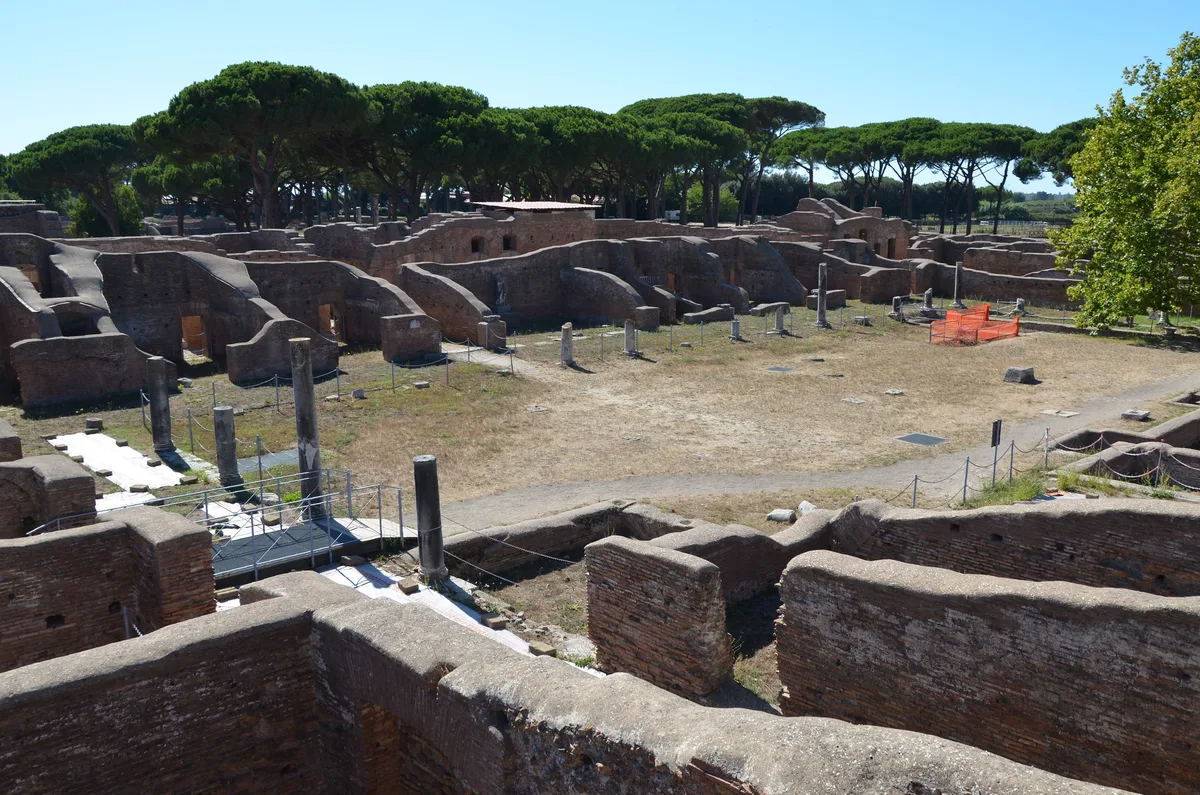
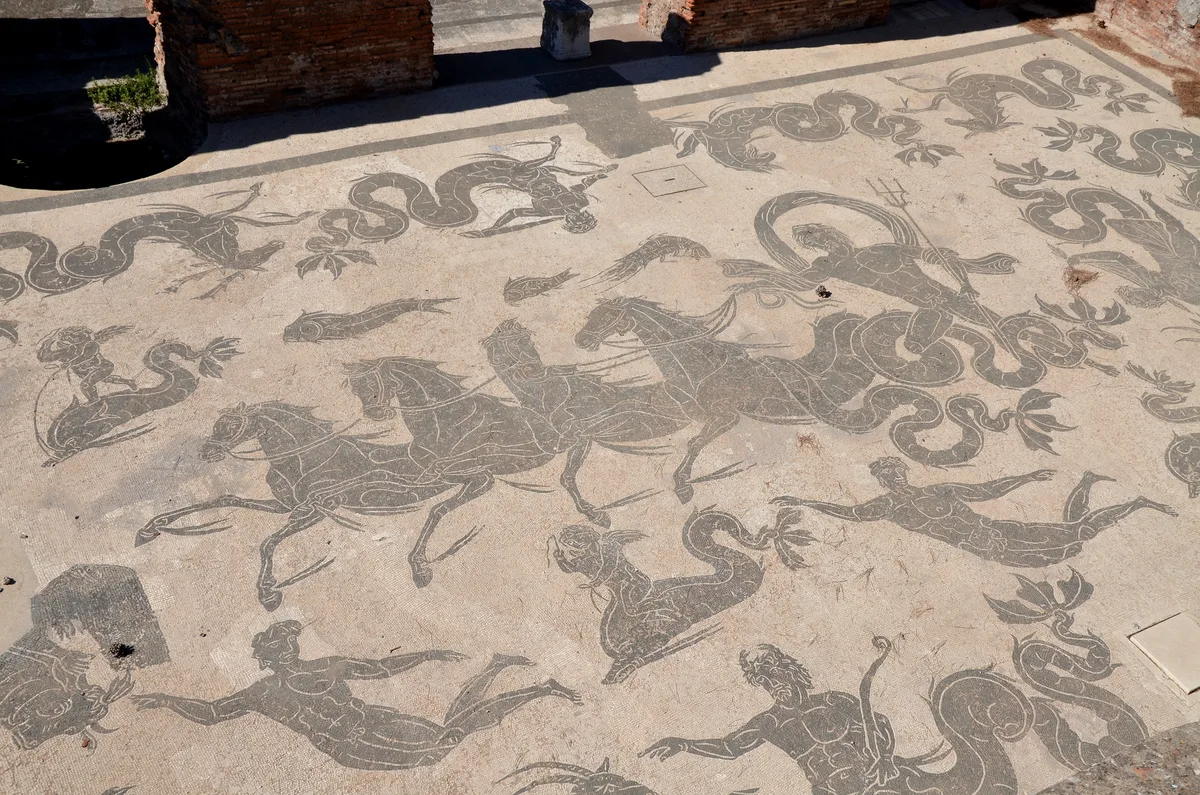
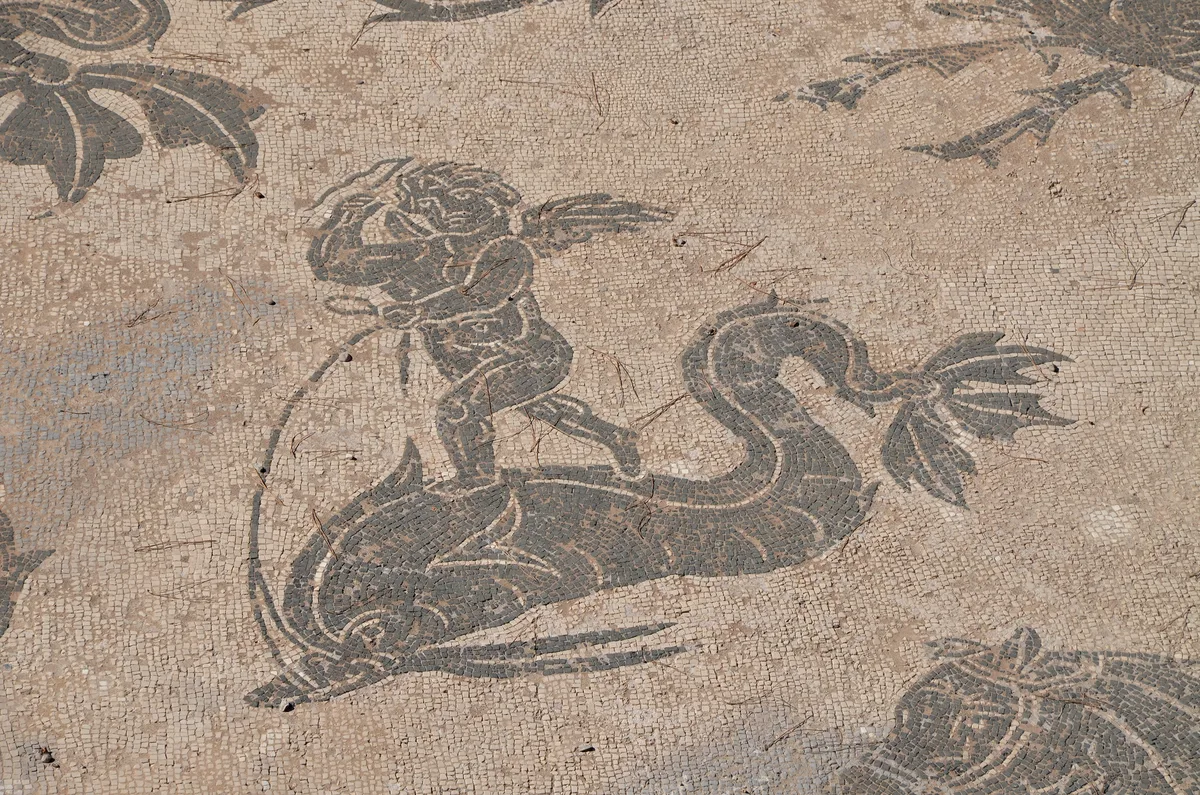
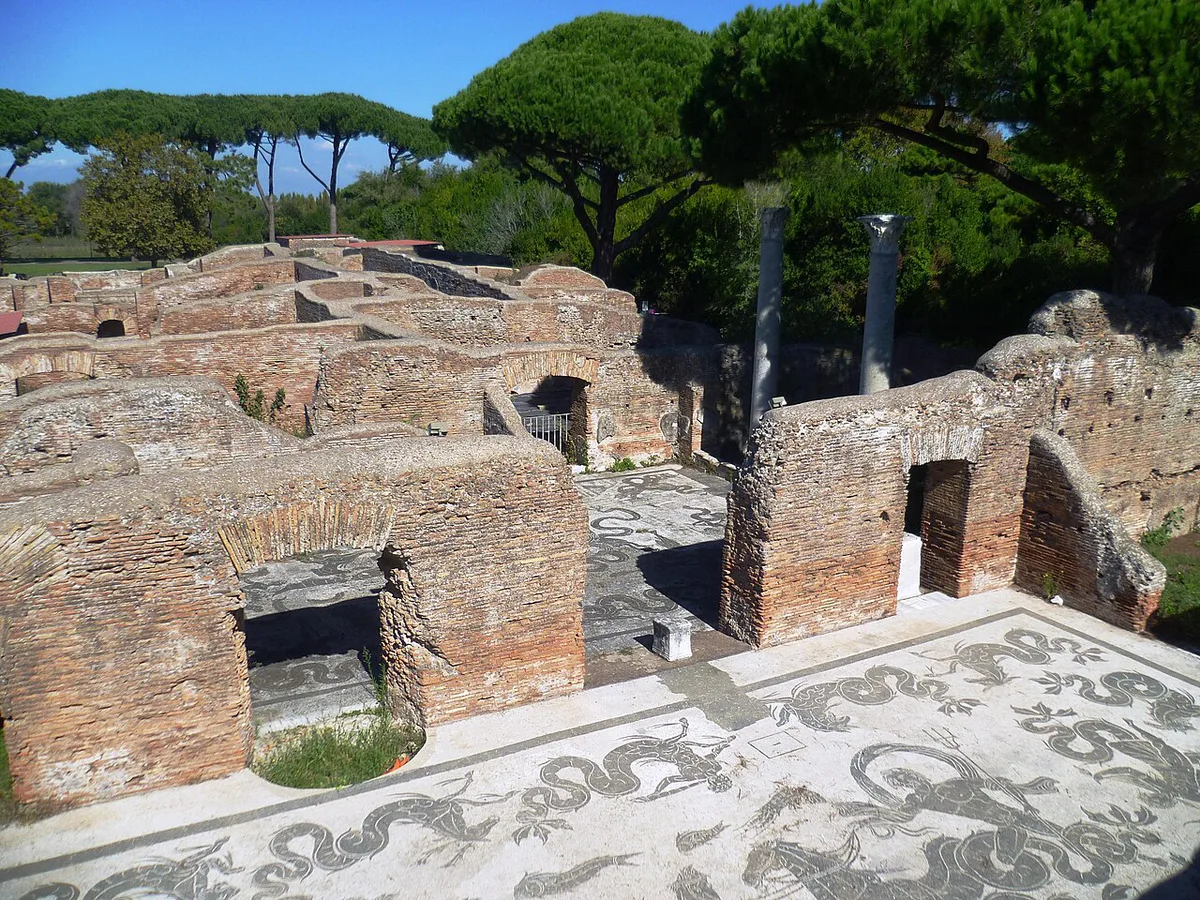
Most archaeologist-led tours follow the main street, the Decumanus Maximus, and stop at the sights that need explaining. Typical stops include the Necropolis outside the gate, the Baths of Neptune, the Square of the Guilds and the Forum. Many also visit the Capitolium and a thermopolium, which was an ancient snack bar. Some add a tavern called the Caupona of Fortunatus, the insulae (apartment blocks) and the firemen's barracks. Guides spend time at the theatre, and our Ostia Antica theatre guide shows what to expect there. Floor patterns are the other reason to bring a guide. Our guide to the mosaics lists the ones worth seeking out. Ask which stops your chosen tour includes, since routes differ by operator.
Getting There: Train vs Private Transport
Ostia Antica lies about 19 miles from central Rome. Operators use two models. Some arrange a van or car from your hotel, which saves effort but fixes your start time. Others meet you at Porta San Paolo in Rome and travel by train, which takes about 35 minutes each way. Train-plus-guide tours often include the ticket, but check who buys it. You can look up Rome transit details on the Roma Mobilità public transport site. Door-to-door transport costs more, while the train option leaves more of your budget for the guide. Our route from Rome gives full directions.
Meeting at Porta San Paolo means a train ride of about 35 minutes each way. Check who buys the ticket before you pay, since train-plus-guide tours can differ on this.
Tickets, Hours and What's Included
Some tours include park admission and others do not, so read the inclusions line carefully. A few include train tickets and headsets, which one private format supplies for groups of 6 or more. Food, drinks and personal expenses are usually extra. Opening days, last-entry time and any special closures come from the official Parco Archeologico di Ostia Antica site, not from tour pages. National free-entry days are published by the Italian Ministry of Culture. Our Ostia Antica tickets page covers admission in detail. Prices and hours were checked November 2026, and both can change.
How Long to Allow
Guided tours commonly run 4 to 4.5 hours, which usually includes about half an hour of travel in each direction on transport-inclusive options. Guided pacing is steady, with stops of a few minutes at each major site. Self-paced visitors can linger at mosaics or skip areas that bore them. Choose a longer tour if you love detail, and a shorter one if you have children or limited energy. Our guide on how long to spend breaks down self-paced timing.
Going Without a Guide
Self-guiding works well if you read ahead and carry a good map. Start at the main gate and follow the Decumanus Maximus, then branch off to the baths, the Forum and the theatre. Our Ostia Antica Map: Site Layout & Walking Routes shows the main route. The park itself offers guided visits, audio guides and the Museo Ostiense, so check its site for current availability. Audio guides give you a guide's explanations at your own pace, though you cannot ask questions. If you want an overview first, start with the main Ostia Antica hub.
Questions to Ask Before You Book
A few questions separate a solid tour from a vague one. Private tours are often capped at 1 to 10 people, while small groups should state a clear maximum. Cancellation windows vary, and one common policy gives a full refund up to 24 hours before departure.
- Is park admission included, and is the ticket bought for you?
- Is transport included, or do you take the train yourself?
- Which languages does the guide speak?
- What is the maximum group size?
- Where exactly is the meeting point, and does it match the confirmation?
- What is the cancellation window?
- What is not included, such as food, drinks and personal expenses?
- Does the tour include Portus or the Isola Sacra necropolis, or only the main site?
Red Flags in Tour Listings
Treat vague claims with caution. Phrases like "skip the line" mean little if you have not checked whether the park has a meaningful queue. Unclear admission wording is a second warning sign. Some operators note that your guide may be substituted by a colleague, so ask about guide qualifications. Mismatched meeting points between the page and the confirmation email deserve a question before you pay. Auto-generated FAQ text that tells you to confirm details with your guide is no substitute for a straight answer.
Which Ostia Antica Tour Fits You
Match the format to your situation.
Private tours are often capped at 1 to 10 people, so they suit history readers who want to dig deeper at the baths.
- First-timer: a small group or private tour with a licensed archaeologist.
- History enthusiast: a private tour, where you can ask to go deeper at the baths and Forum.
- Family: a kid-focused format, or a private tour that you can shorten.
- Limited mobility: a private tour with vehicle transport and a flexible pace.
- Short Rome stay: a train-plus-guide tour that fits a morning, or a transport-inclusive tour that removes logistics.
Family, Mobility, Heat and Season Tips
Ostia Antica is open-air and walking-heavy, with uneven stone surfaces. Operators describe the activity level as minimal or suitable for all fitness levels, but that rating is theirs, so ask about distance and surfaces. Summer heat is the main risk, as shade is limited among the ruins. Bring water and a hat, and start early. Many tours are described as kid-friendly. Younger children do best with shorter formats built for families.
Extending the Day: Portus and Isola Sacra
Readers who want more can add Portus and the Isola Sacra necropolis. Ask whether a standard tour includes them, since many do not. Our guide to Portus and the Isola Sacra necropolis explains the options. People often compare Ostia Antica with Pompeii, and our Ostia Antica versus Pompeii page sets out how they differ. For Pompeii's own details, see the Parco Archeologico di Pompei.
Related guides

Continue reading
Guides on the same trip