Ostia Antica Mosaics: Where to Find Them and What They Mean
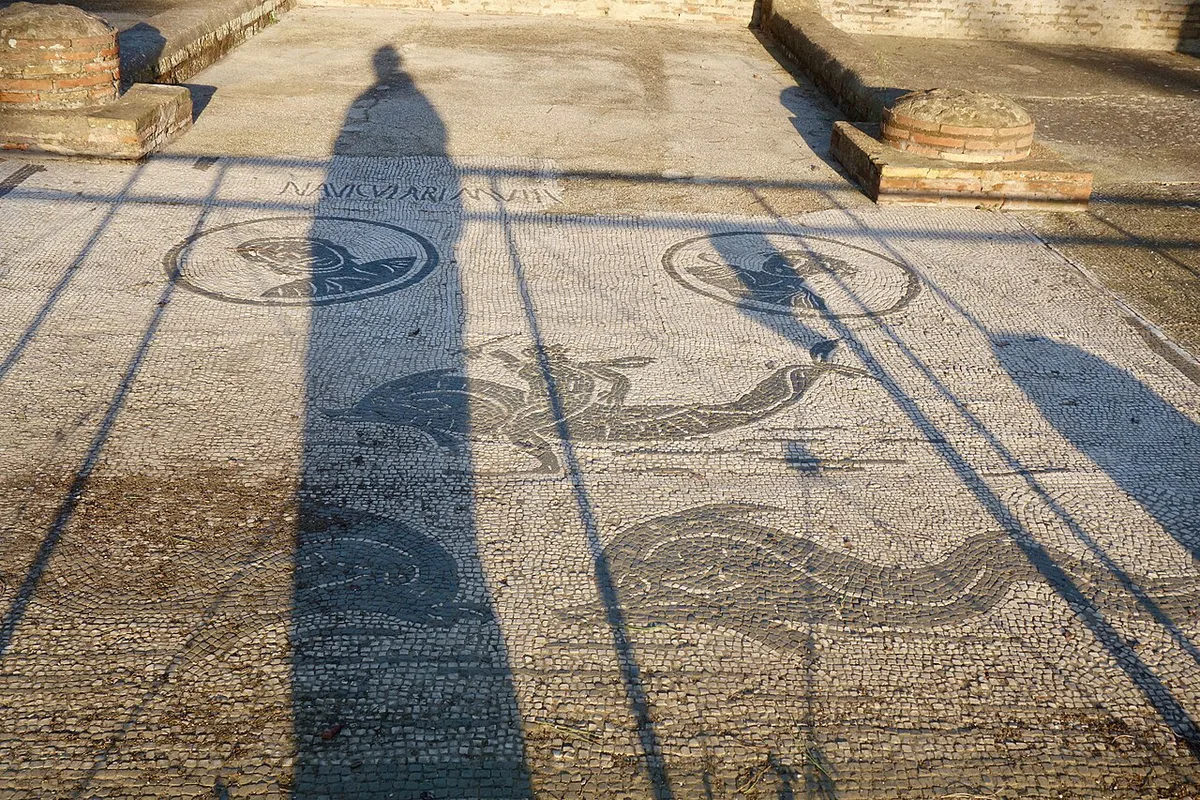
Last updated November 2026. Ostia Antica mosaics are mostly black-and-white floors that still lie where Roman builders set them, with a few coloured exceptions and some famous pieces now kept elsewhere. Start at the Piazzale delle Corporazioni, where ship and merchant emblems fill the floor of the Teatro's colonnade. Use the table below to match each mosaic to its building before you walk the site, which is covered in our Ostia Antica guide.
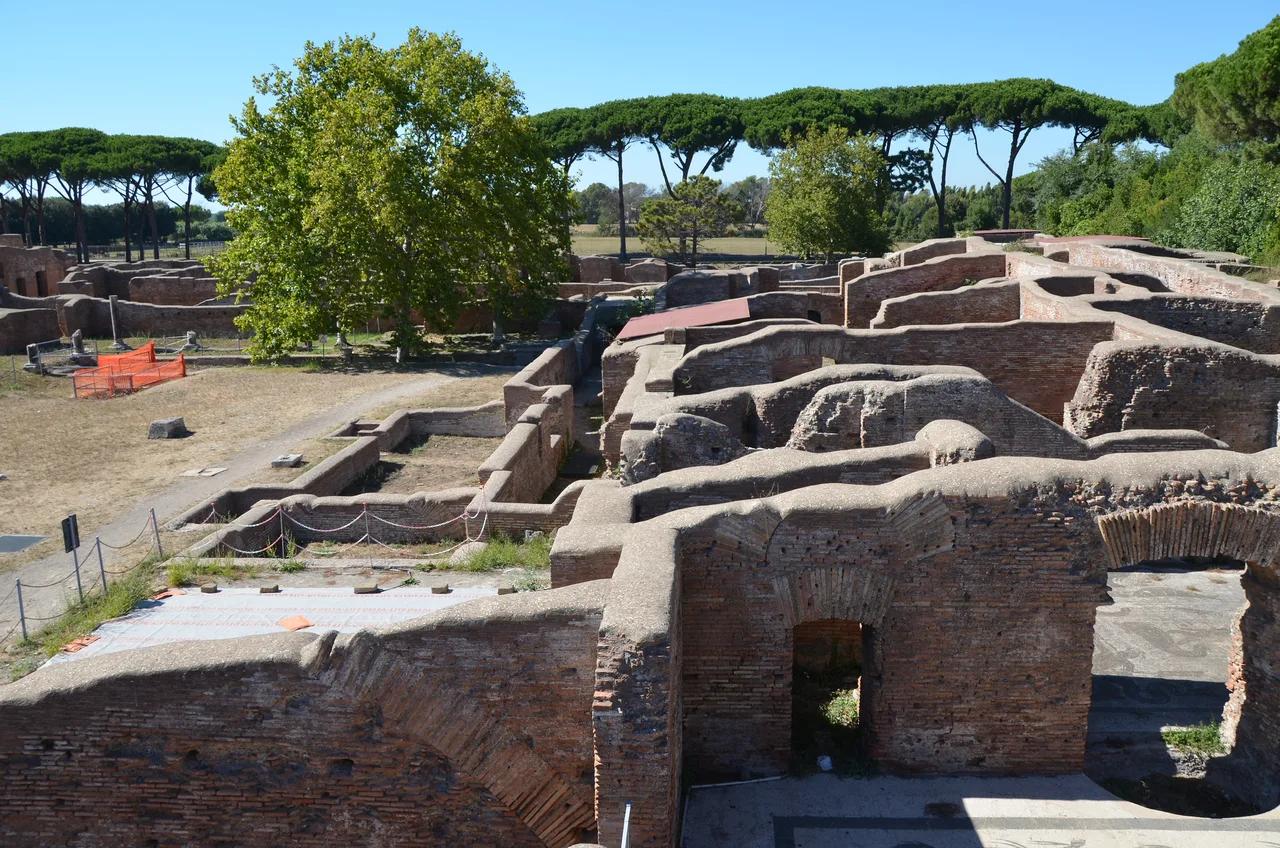
Featured image: Following Hadrian, CC BY-SA 2.0, via Flickr.
Ostia Antica Mosaics You Can See on Site
Most of these mosaics are floors and thresholds, so you look down rather than up. Match each one to a building name, because you will find them by place, not by a single trail. The Mithraeum of Felicissimus has a floor of seven segments showing the planets. Scholars usually link them to the seven grades of Mithraic initiation. Some buildings, including mithraea and private houses, may be locked or open only at set times. Check access on the official park website before you plan around them.
| Mosaic | Location on site | Colour | How easy to find |
|---|---|---|---|
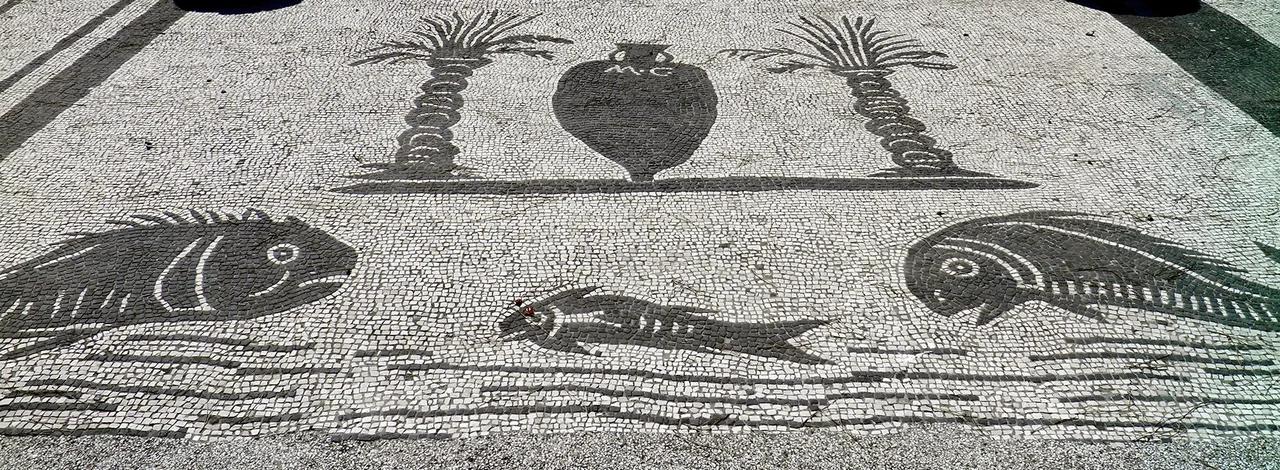
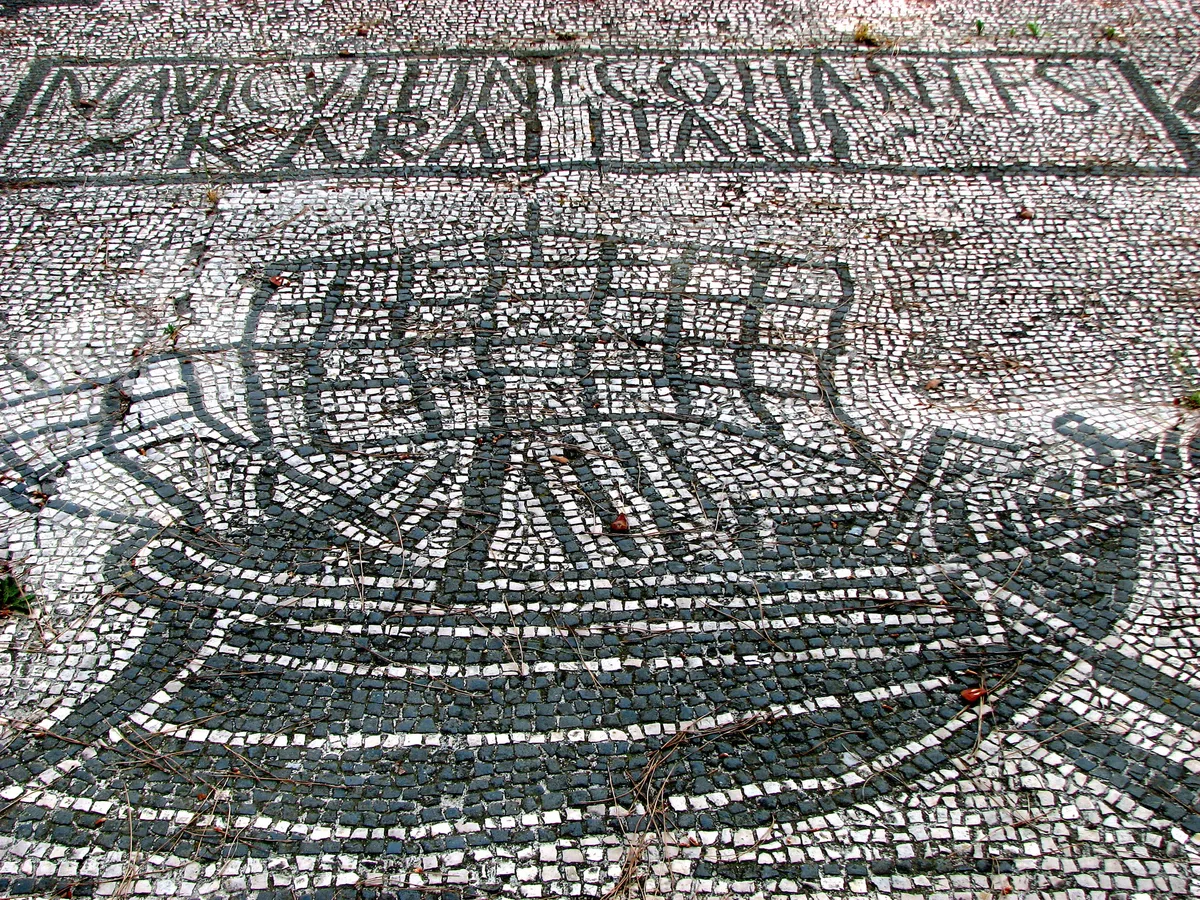
| Trade emblems: ships, elephant | Piazzale delle Corporazioni, Teatro colonnade | Black and white | Easy, on the main walking area |
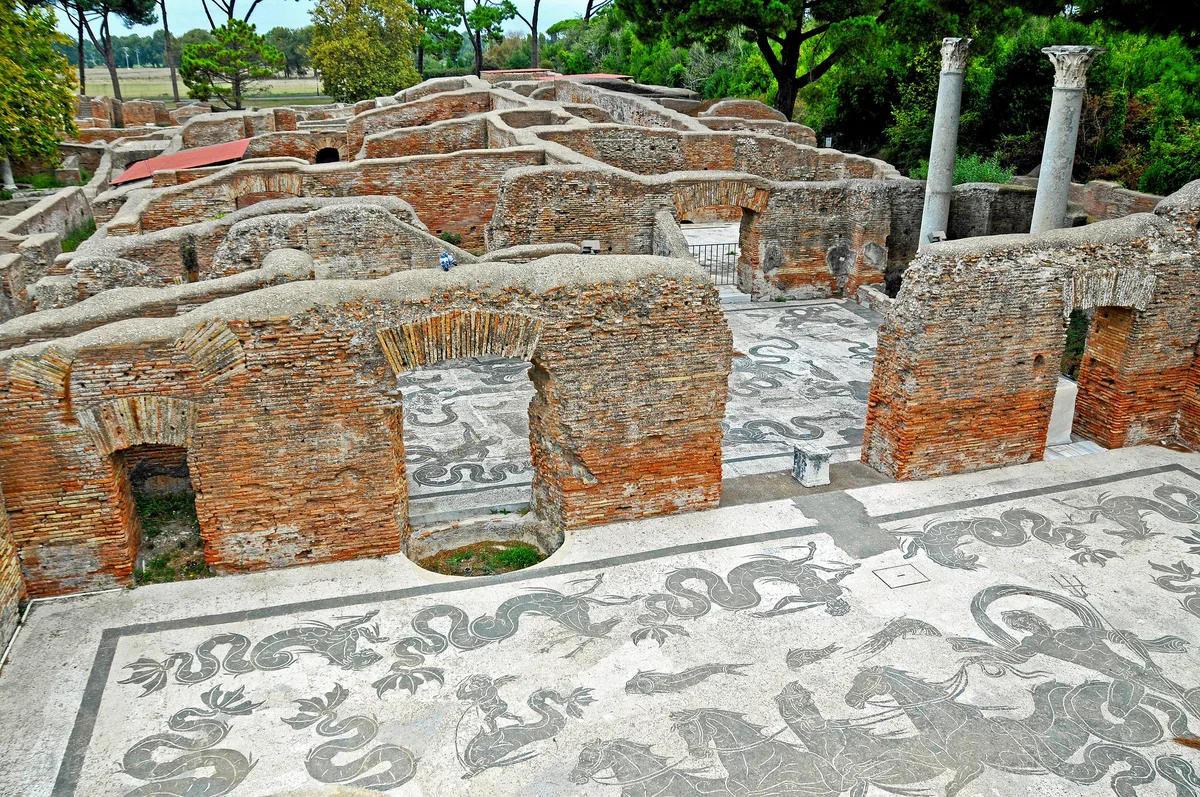
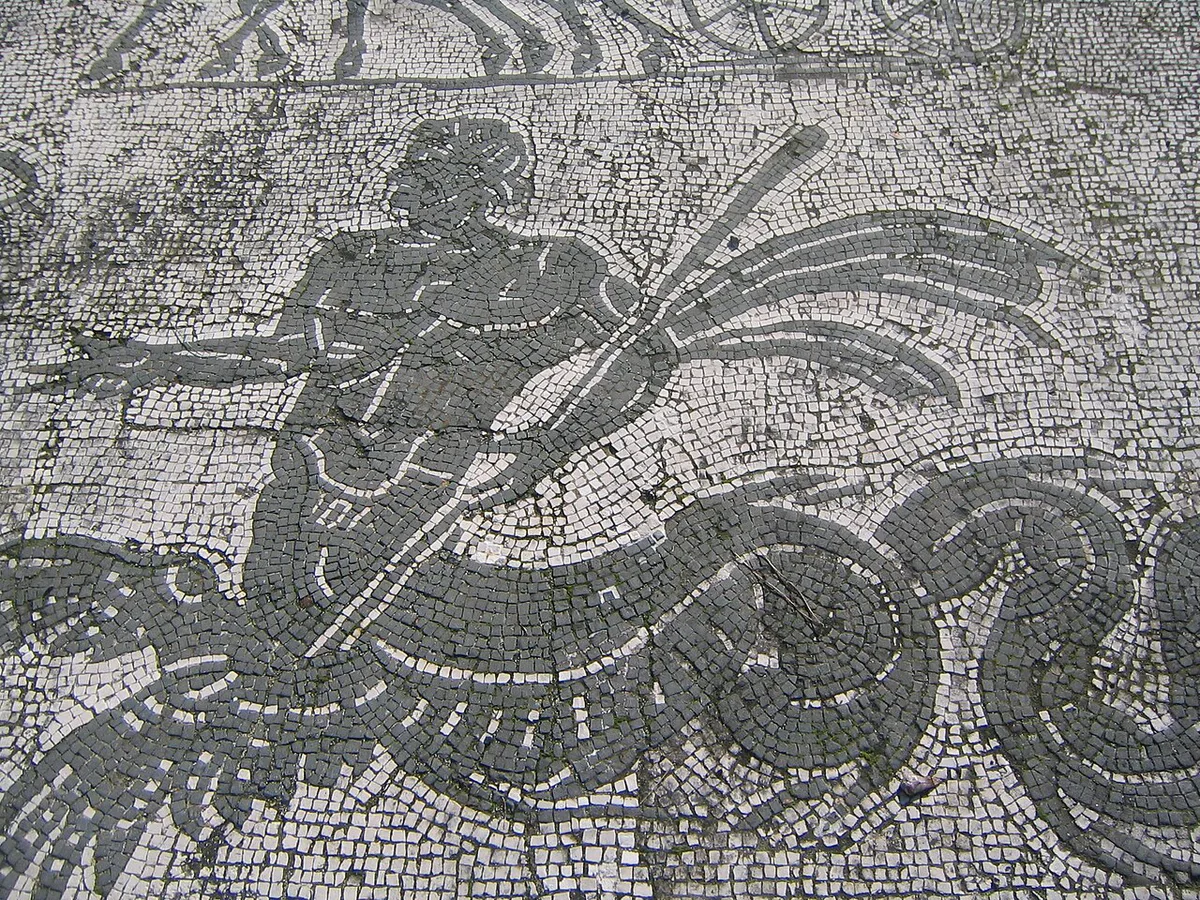
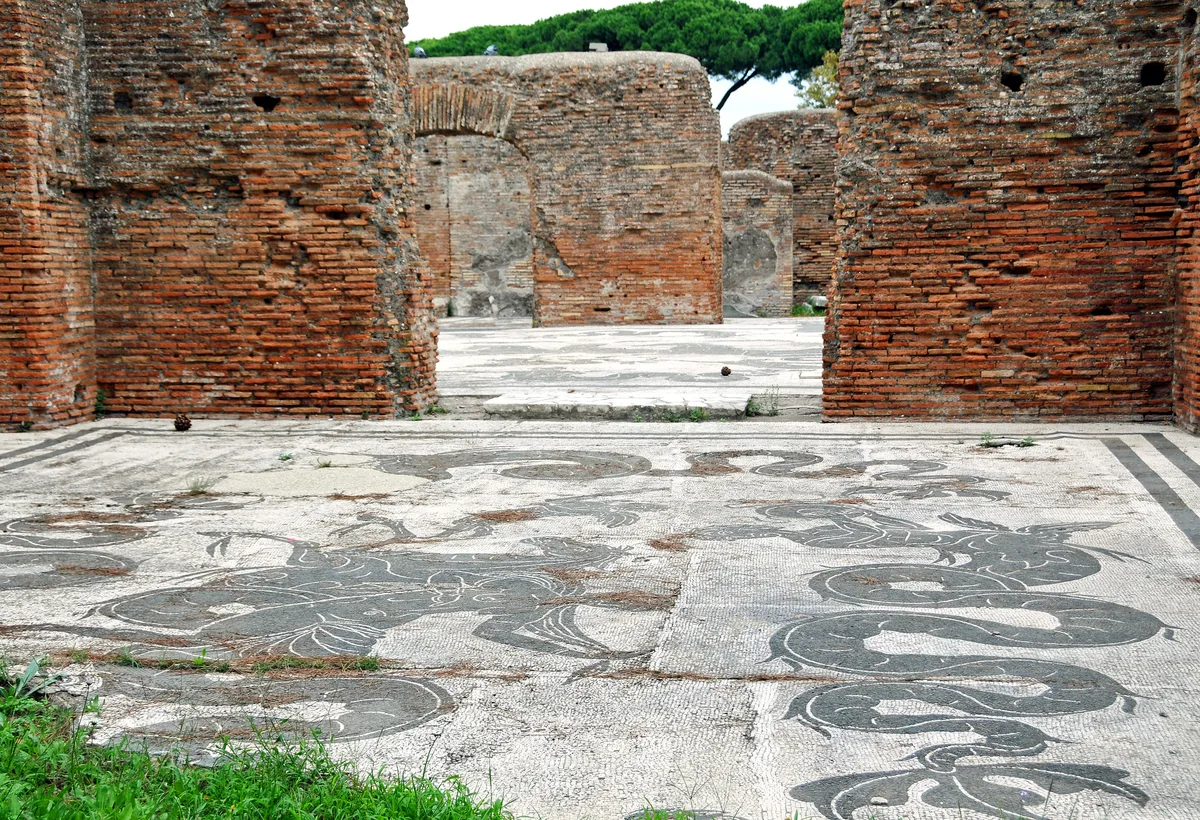
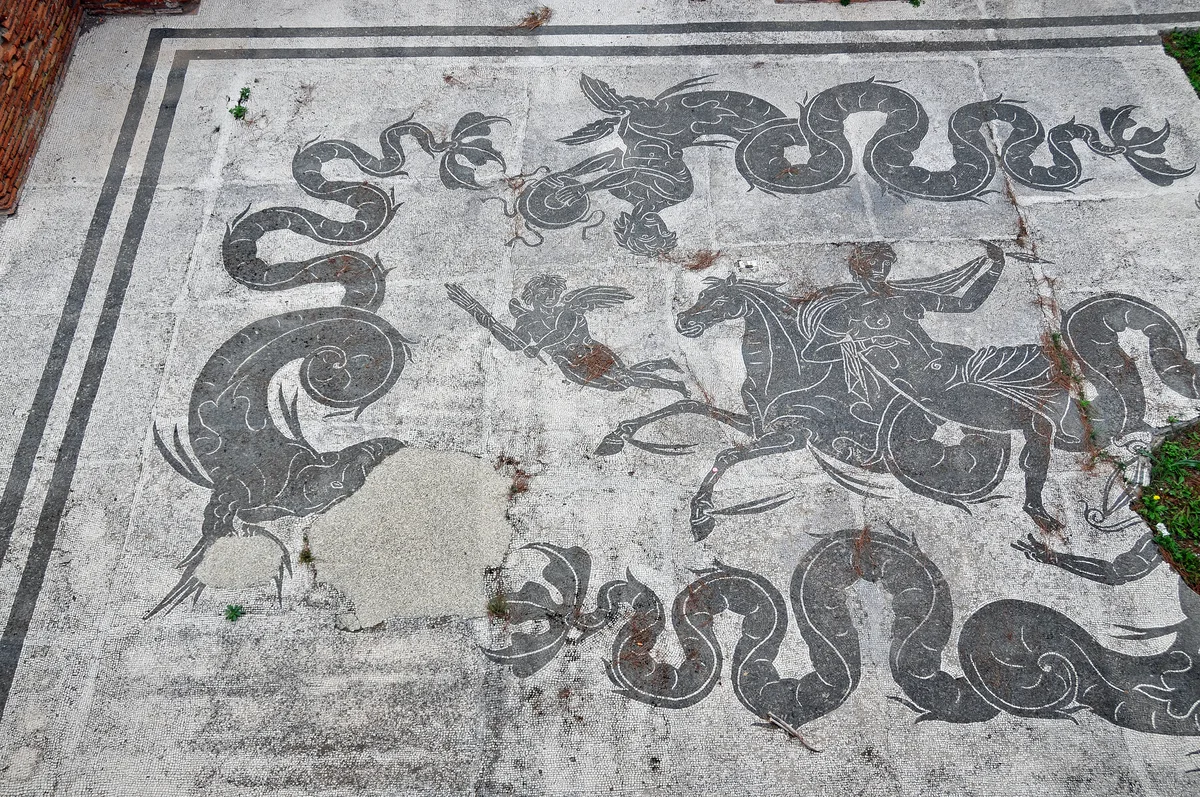
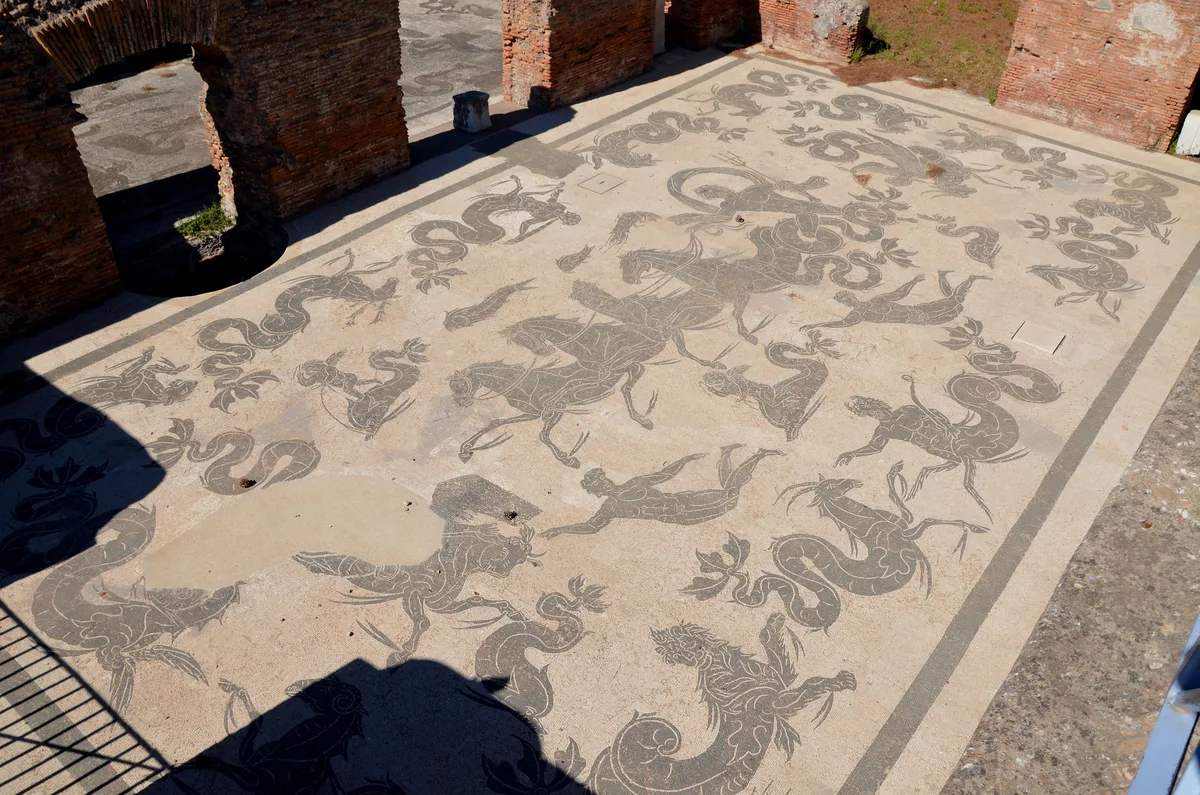
| Neptune scene | Terme di Nettuno | Black and white | Easy, in a large bath building |
| Bull sacrifice | Caserma dei Vigili, shrine vestibule | Black and white | Moderate, look for the barracks |
| Planetary floor | Mitreo di Felicissimus | Black and white | Harder, access may be limited |
| Fish and chalice | Domus dei Pesci | Coloured | Harder, a house that may be closed |
- Piazzale delle Corporazioni: the best single stop, with several trade emblems together.
- Terme di Nettuno: a Neptune scene in the baths, easy to read from a distance.
- Caserma dei Vigili: a bull led to an altar, flanked by a man with an axe and a dead bull.
- Domus dei Pesci: a green fish in a white chalice between two red fish, often read as a Christian symbol.
Why So Many Are Black and White
Black-and-white tessellated work, a technique known as opus tessellatum, was common in Rome's Imperial period. Ostia's floors follow that fashion, which is why you will see dark figures on pale grounds almost everywhere. Coloured pieces such as the fish in the Domus dei Pesci stand out because they are rare here. Readers expecting Pompeii-style colour should adjust expectations, and our Ostia and Pompeii comparison explains the difference in what each site shows. Pompeii's own archaeological park site lists its houses if you want to compare.
Reading the Trade Mosaics at Piazzale delle Corporazioni
This square held rows of small offices where merchants traded goods such as grain and ivory. A mosaic in front of each office advertised what the merchant dealt in. An elephant mosaic is read as a sign for the ivory trade. Another black-and-white panel shows two ships anchored with their sterns toward each other. A gangplank joins them, and a dock-worker carries an amphora across it. Horizontal lines suggest open sea. Look at the Teatro colonnade first, then follow the floor line by line. If the theatre itself interests you, read our Ostia Antica theatre guide.
Mosaics Now Kept Elsewhere
Not every Ostian mosaic is still at the ruins. The Four Seasons mosaic, made in the 2nd century, is reported to be in the Church of the Martyrdom of St Paul at the Abbey of Tre Fontane. It is an example of spolia, the reuse of older decoration in later buildings. Wikimedia Commons keeps a separate category of 14 files for Ostian mosaics preserved elsewhere, including pieces tied to the Pergamon Museum and the Capitoline area. Do not look for these on the ruins, and treat photo captions on image sites with caution.
Skip looking for the Four Seasons piece on your route, because the 2nd century mosaic is reported to sit in a church, not on the ruins.
A Mosaic-Focused Route and Time Plan
Begin at the Piazzale delle Corporazioni and the Teatro colonnade, then continue to the Terme di Nettuno. Add the Caserma dei Vigili next if you have about 2 hours. With more time, look for the Domus dei Pesci and the Mitreo di Felicissimus, and ask at the entrance whether they are open. Use the Ostia Antica Map: Site Layout & Walking Routes to place each stop. Our page on how long to spend at Ostia Antica helps you decide between a mosaic route and the full site.
Caserma dei Vigili is rated moderate to find, and the route adds it once you have about 2 hours.
Practical Tips and Common Mistakes
Mosaics are part of the ruins, so you reach them through normal site entry. Details on fares and slots are on our Ostia Antica tickets page. Arriving from the city is covered in our guide to getting from Rome. Wear sturdy shoes, because ancient paving is uneven and the distances between zones are long. A guide can identify subjects and may help with access to closed buildings, so consider a guided visit if scenes are hard to read. Skipping the Piazzale delle Corporazioni is the most common mistake, since it is the best place to see several mosaics together. With extra time, Portus and Isola Sacra are the natural next stop. Still weighing the trip? Read whether Ostia Antica is worth visiting.
Frequently Asked Questions
What is Ostia Antica?
Ostia Antica is the ruined port city of ancient Rome, near the modern capital. Its floors, baths and trade squares make it a good place to see Roman mosaics in their original setting.
What were mosaics in ancient Rome?
Roman mosaics were floors and walls made from small cut pieces of stone set in patterns and scenes. At Ostia they are mostly black-and-white work, with a few coloured pieces.
Related guides

Continue reading
Guides on the same trip