
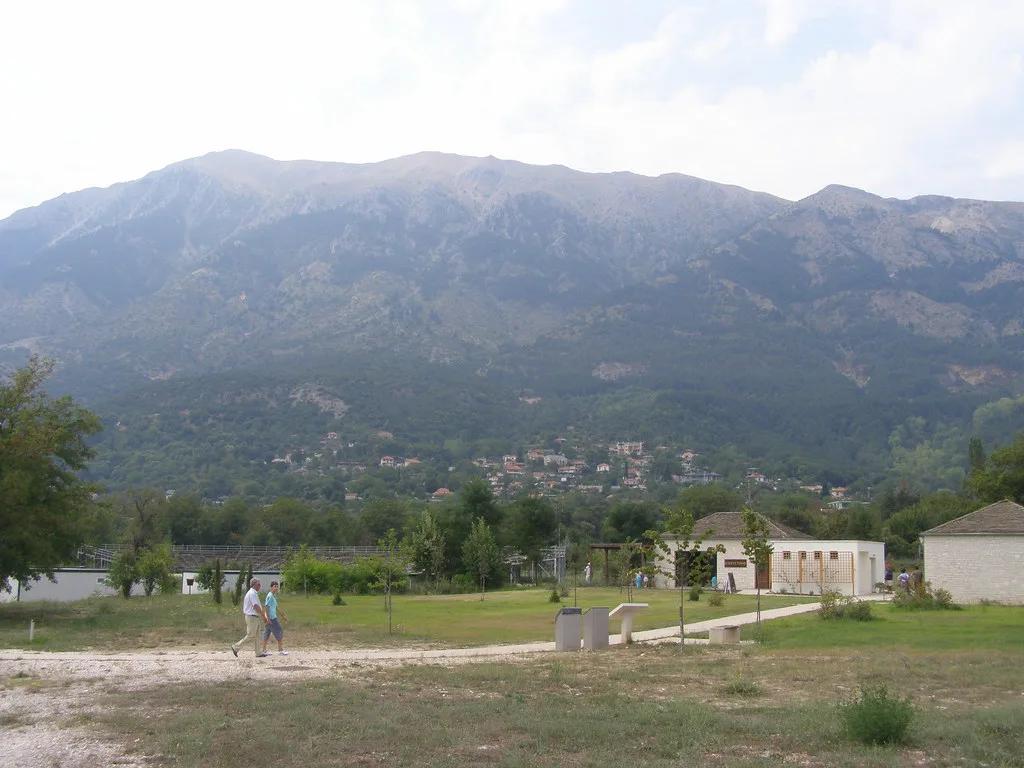
Last updated November 2026: Dodona is the ancient Greek oracle sanctuary in Epirus, near Ioannina, devoted to Zeus. Its large ancient theatre is the clearest surviving landmark. This guide covers what remains, who should make the detour, and how to plan the trip.
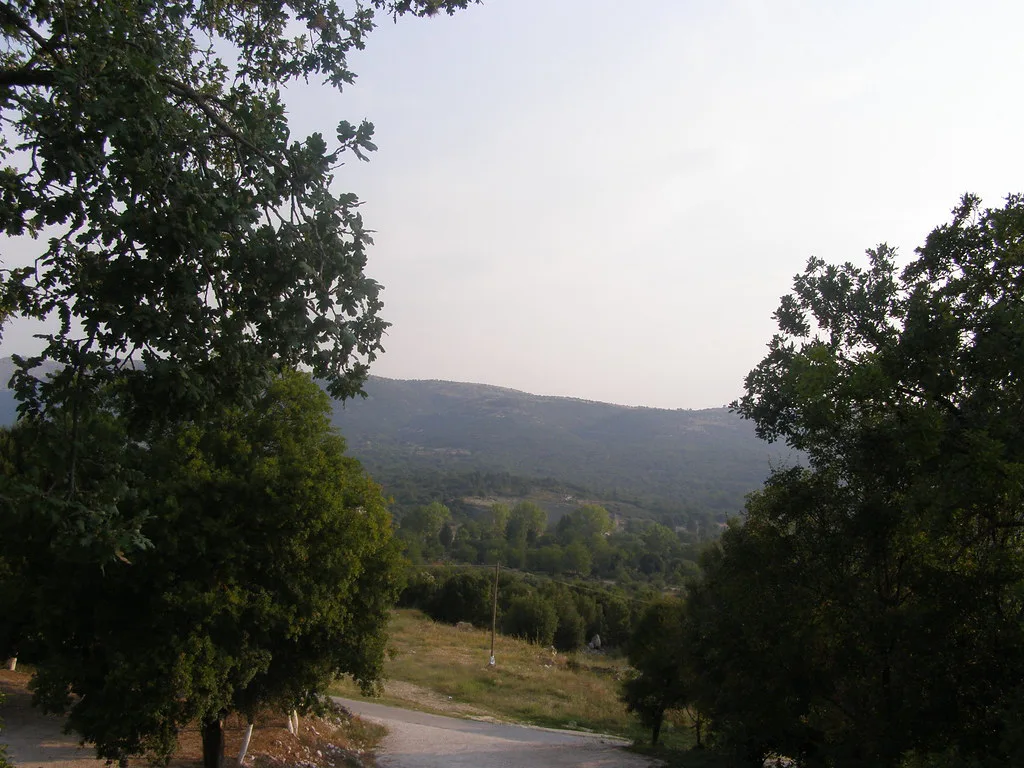
Featured image: Anna Apostolidou, CC BY-SA 2.0, via Flickr.
What Dodona Was and Why It Mattered
Dodona was a place where people brought questions to Zeus. Its oracle was tied to a sacred oak, and the rustling of the leaves was read as the god's answer. Logeion defines Dodona as a city of Epirus with an oracle in an oak grove. Visitors often compare it with Delphi, but the two sanctuaries are different in setting, scale and surviving architecture.
How Consultations at the Oracle Worked
Dodona is usually described as one of the oldest Greek oracles, and the way it gave answers differed from Delphi. There was no single entranced priestess on a tripod. The god's will was read from natural and ritual signs at the sanctuary.
- The oak and the wind. Priests and priestesses interpreted the rustling of the sacred oak's leaves. Ancient writers also describe bronze vessels that rang when stirred by the wind, and the sound was taken as part of the answer.
- The priestesses. Ancient sources, including Herodotus, say that women served as the voice of the sanctuary. They were later called the Peleiades, or "doves", and Herodotus preserves a legend about doves as the origin of the oracle.
- Zeus and Dione. Zeus was worshipped here beside Dione, a goddess often named as his consort at this sanctuary. That pairing is a local feature that sets Dodona apart from other Zeus sites.
Visitors were ordinary people as well as states. Many of the questions scratched on lead tablets are private: whether to marry, whether to travel, whether a business would succeed. Cities asked about colonies, wars and festivals.
The sanctuary was attacked in antiquity. Aetolian forces sacked it in 219 BC, and it was rebuilt afterwards. That layered history explains why the stone you see today mixes Hellenistic and later work. Knowing this before you arrive makes the foundations easier to read.
What You See on Site Today
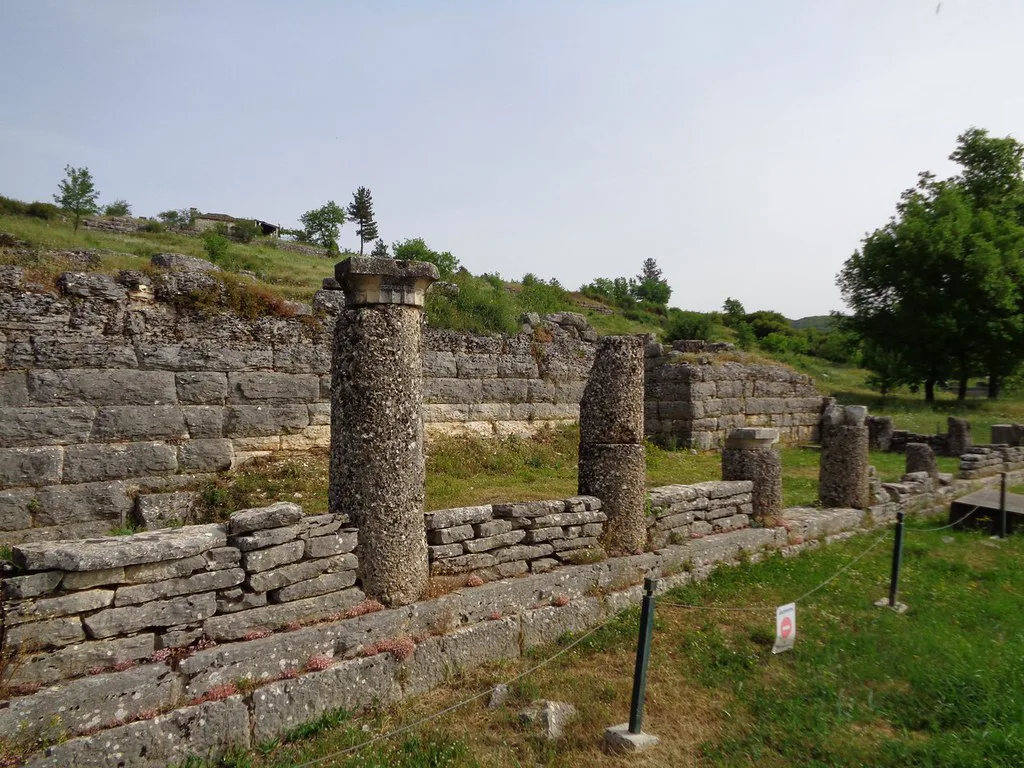
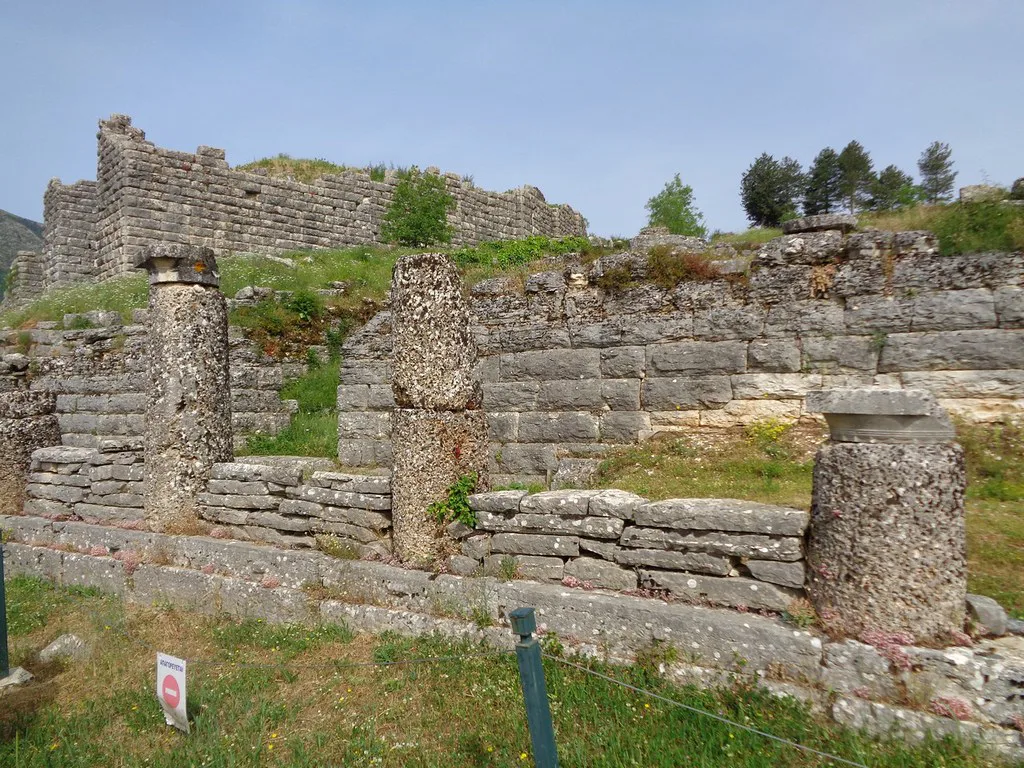
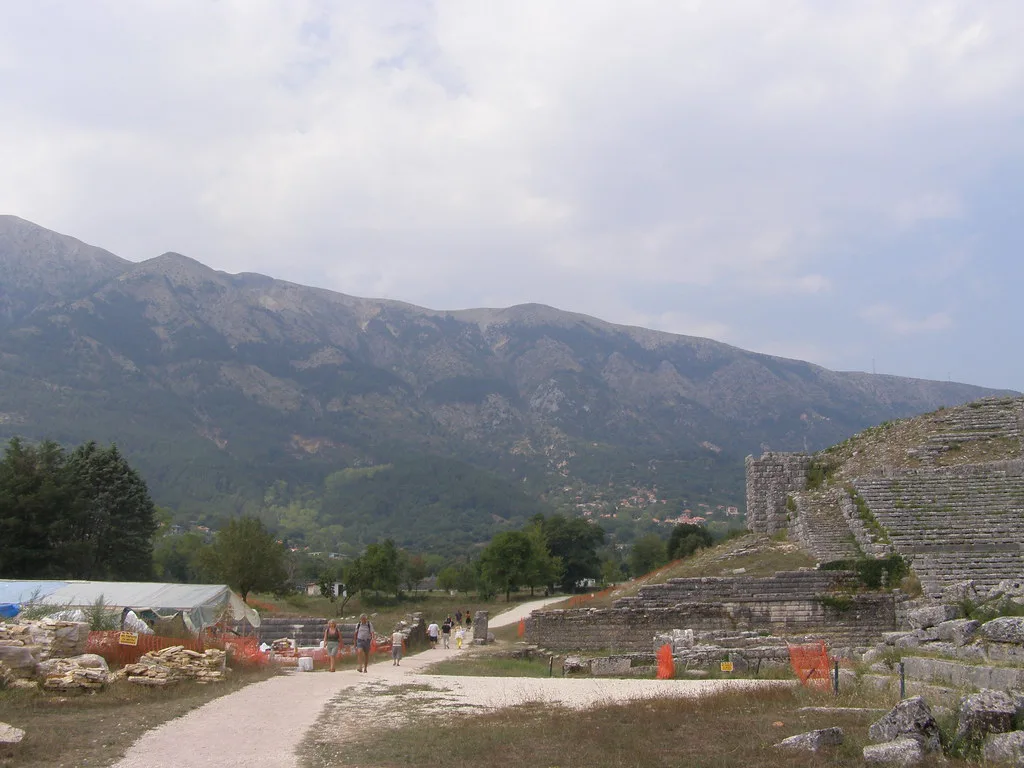
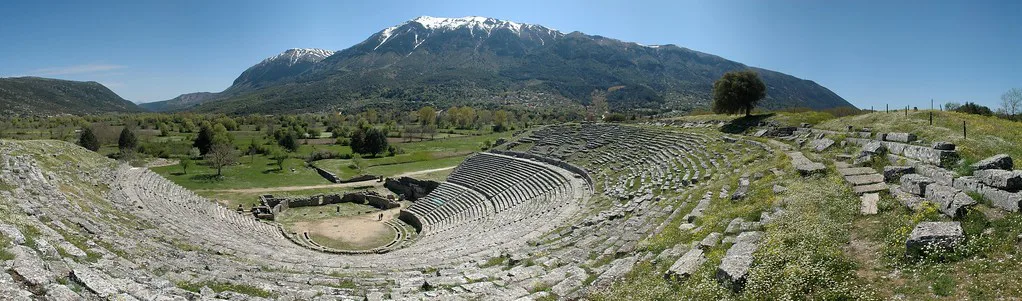
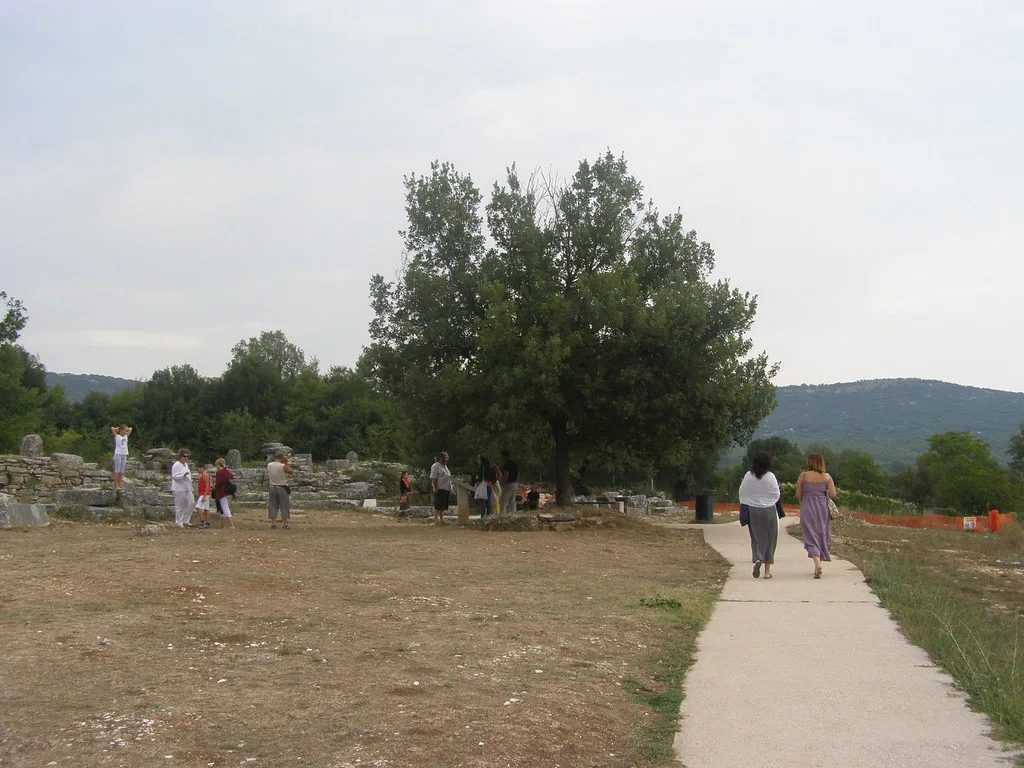
The theatre is the part most visitors come for. Around it, expect the foundations of a sacred precinct and public buildings rather than standing temples. Read the on-site signs before you walk the grounds, because much of the sanctuary is outlines in the ground. The oak itself is long gone, so the atmosphere depends on the hills and your imagination.
- Best for: ancient-religion enthusiasts and theatre fans.
- Expect little if you want intact monuments.
- Expect more context if you read about the oracle beforehand.
Reading the Ruins: Theatre, Bouleuterion and Sacred House
Knowing what each set of foundations was makes the walk far more rewarding. Three features are worth finding.
- The theatre. It dates to the early 3rd century BC, in the time of King Pyrrhus of Epirus, and is among the largest ancient theatres in Greece, with seating usually given at around 17,000. The stone tiers climb the hillside, so walk to the top row for the view over the valley. In Roman times the orchestra was altered so the building could host spectacles, which is why the lower part looks different from a classic Greek theatre.
- The Bouleuterion. This was the council hall, and its remains lie close to the theatre. It shows that Dodona was a working political centre of the Epirote League, not only a place of prayer.
- The Sacred House and the oak. The temple precinct of Zeus is where the sacred oak stood. Today you see outlines of walls and bases rather than a temple. The site signs help most here, as this is where the oracle's story begins.
Allow about 1.5 to 2 hours for the whole site. The theatre alone can be seen in 30 minutes, but the precinct is where the history sits, and it is easy to rush past.
The questions put to the god were scratched on small lead tablets, and many have survived. If you want to read some of them, ask about the finds in the Ioannina archaeological museum before or after your visit.
Is Dodona Worth the Detour?
Dodona suits travelers already based in Epirus who care about how ancient Greeks consulted their gods. It is a weaker choice for someone with a single day who wants something spectacular. If you have already seen Delphi, treat Dodona as a quieter companion, not a replacement.
- Skip it if you want complete, intact monuments.
- Skip it if you cannot drive and have no flexible schedule.
- Skip it if you only have a short stop in Ioannina.
Getting There from Ioannina
Ioannina is the practical base for Dodona. Public transport schedules to the site change, so check the current KTEL Ioannina timetable before relying on a bus. A car gives you the most flexibility, and it removes the risk of missing a return connection. Thessaloniki and Athens work as long-haul starting points, but both mean a long transfer before you reach Epirus. Some maps and signs spell the site "Dodoni", so search under both spellings.
Tickets, Hours and Seasons
Opening days, hours and ticket prices for the site are published by the Ministry of Culture. Check the official Odysseus portal before you go, since seasonal hours can change.
Summer Performances in the Ancient Theatre
The ancient theatre is still used for performances. A summer festival of drama and music is staged there in the warmer months, and watching a play in a 3rd-century BC theatre is a different experience from walking the ruins by day.
- Dates change each year. Programmes are announced by the organisers and the Ministry of Culture, so confirm the schedule and ticket arrangements before you plan around an evening.
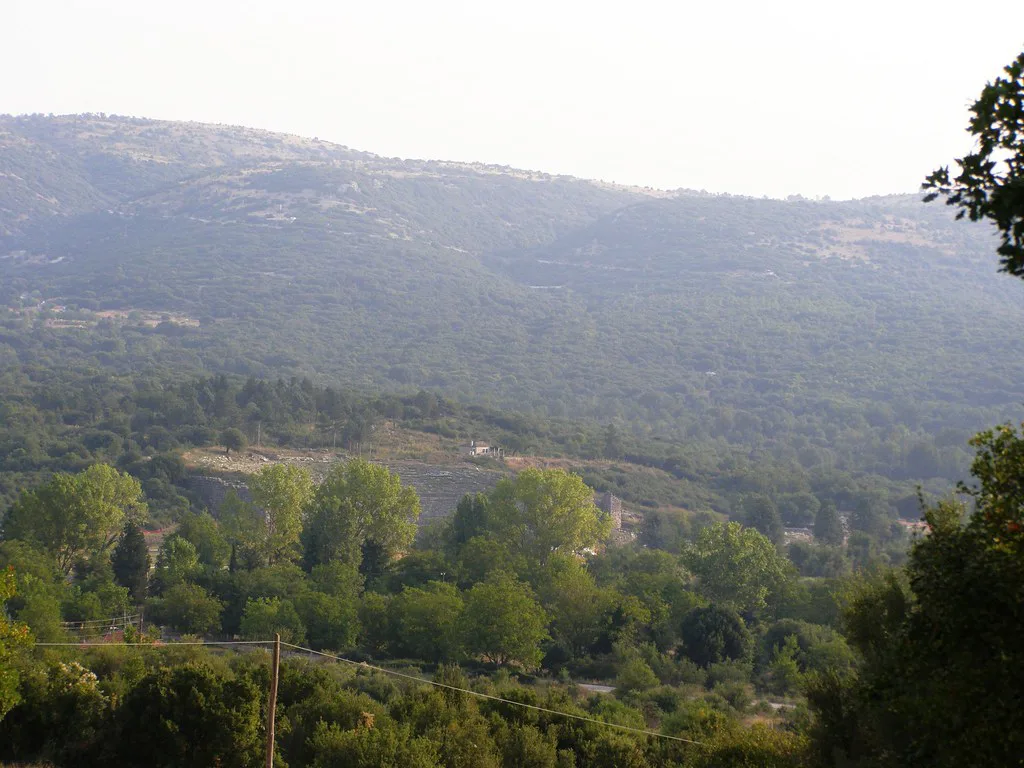
- Plan the return trip. The site is in the hills outside Ioannina, roughly 20 minutes' drive from the city. Evening performances finish after dark, so arrange a driver, taxi or your own car in advance, because public transport is unlikely to match the schedule.
- Bring layers. Hill evenings in Epirus cool quickly, even after a hot day, and the stone seating holds little warmth.
If you cannot catch a performance, a daytime visit still lets you test the acoustics. A voice from the orchestra carries well to the upper tiers.
Planning Your Time at Dodona
Treat Dodona as a half-day trip from Ioannina, then spend the rest of your time in the city. Ioannina's old town and its archaeological museum make a natural pairing, and you can check current museum details on the same ministry portal. Read up on the oracle first, so the bare foundations make sense when you reach them. For more of Epirus, Nikopolis is another ancient site in the same region.
- Morning: drive from Ioannina and see the theatre and precinct.
- Afternoon: return to Ioannina for the old town and museum.
- Backup plan: if the site is closed, switch to the Ioannina museum.
Dodona Compared with Other Ancient Stops
Dodona is remote and best for visitors who enjoy imagining what has vanished. Delphi is better known and more visited. If you are building a wider ancient-Greece route, Alexander the Great Birthplace: Pella and Nearby Sites cover the Macedonian world. Vergina sits in a different region, so allow a long transfer between them. Never plan the two as a single short trip.
| Stop | How the article describes it |
|---|---|
| Dodona | Remote; best for visitors who enjoy imagining what has vanished |
| Delphi | Better known and more visited |
| Alexander the Great sites | Cover the Macedonian world; suit a wider ancient-Greece route |
| Vergina | Sits in a different region, so allow a long transfer from Dodona |
Sources and Further Reading on Dodona
For opening days, ticket prices and any closures, the official source is the Greek Ministry of Culture's Odysseus portal. Seasonal hours can change, so check it close to your travel date rather than relying on a printed guide.
For the history of the sanctuary, the Wikipedia article on Dodona gives a concise overview with references to the ancient authors, including Herodotus, and to the excavation record. It is a good starting point if you want to read the primary sources yourself.
- Practical details: Ministry of Culture, Odysseus portal.
- Bus connections: the KTEL Ioannina timetable, as noted in the transport section above.
- Finds from the site: the Ioannina archaeological museum, where many oracle tablets and other objects are held.
Related guides



Continue reading
Guides on the same trip

