
Last updated November 2026: Corbridge Roman Town is an English Heritage site near Corbridge, Northumberland, where an army supply base grew into a town on the Stanegate road. Granaries, a fountain house and a museum holding the Corbridge Hoard set it apart from the forts along the Wall. Choose it for streets and storage buildings rather than a wall section.
Featured image: stephroseholton, CC BY-SA 2.0, via Flickr.
Corbridge Roman Town at a glance
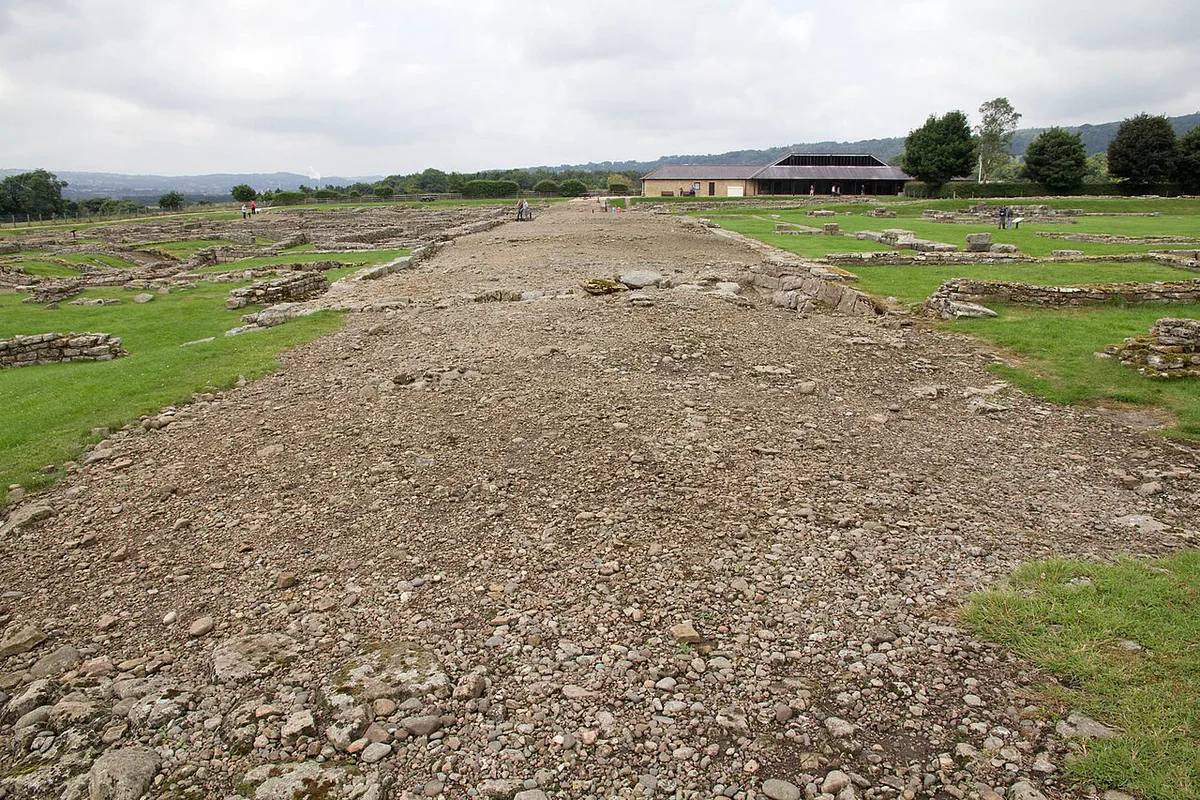
Corbridge Roman Town (Roman Coria) sits at the junction of Dere Street and the Stanegate, beside a crossing of the River Tyne. The army set up a fort and supply base here in the AD 80s. A town grew around it and later fed the frontier when Hadrian's Wall was begun in AD 122. Excavation has run since 1906, so the layout is easy to read on the ground. It lies back from the Wall line, which is why it feels like a town visit rather than a fort visit.
- What it is: a Roman town and supply base, not a Wall fort
- Where: near Corbridge village, Northumberland, on the Stanegate road
- Highlights: twin granaries, forum remains, fountain house, museum with the Corbridge Hoard
- Best for: history fans, families, and anyone planning a wet-weather stop
What to see at Corbridge
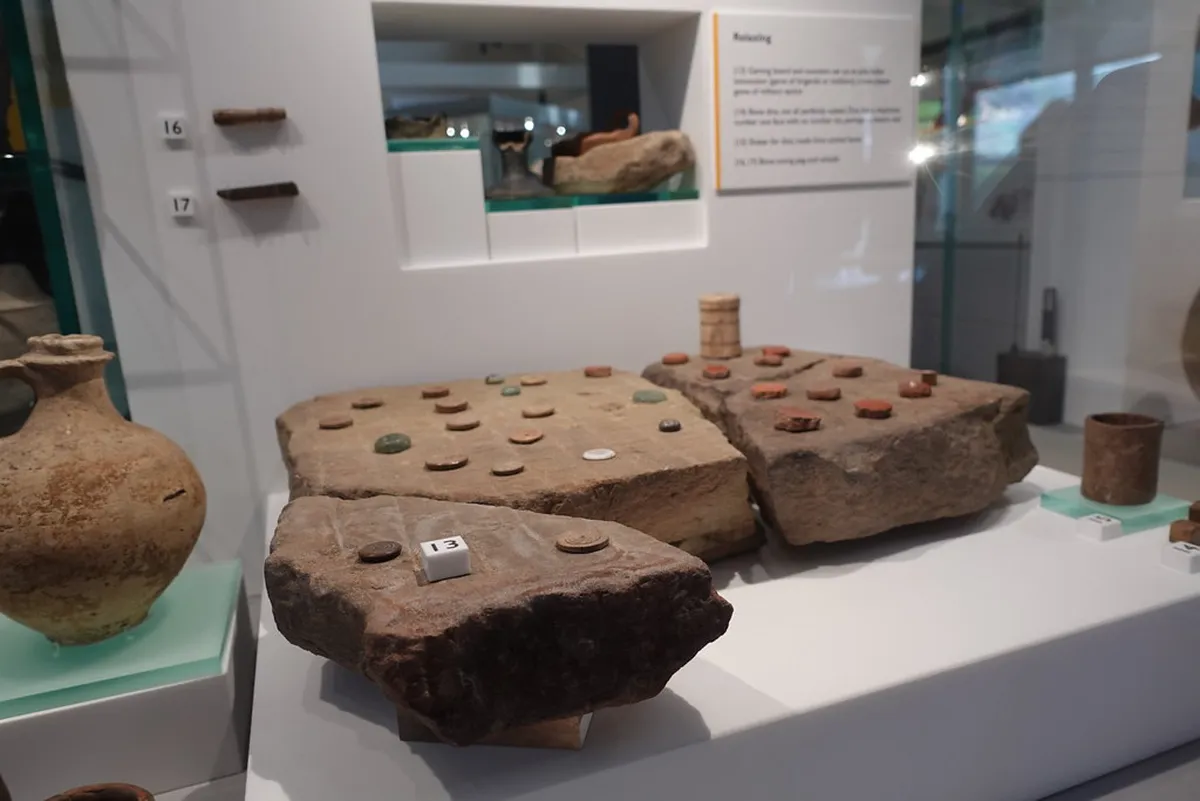
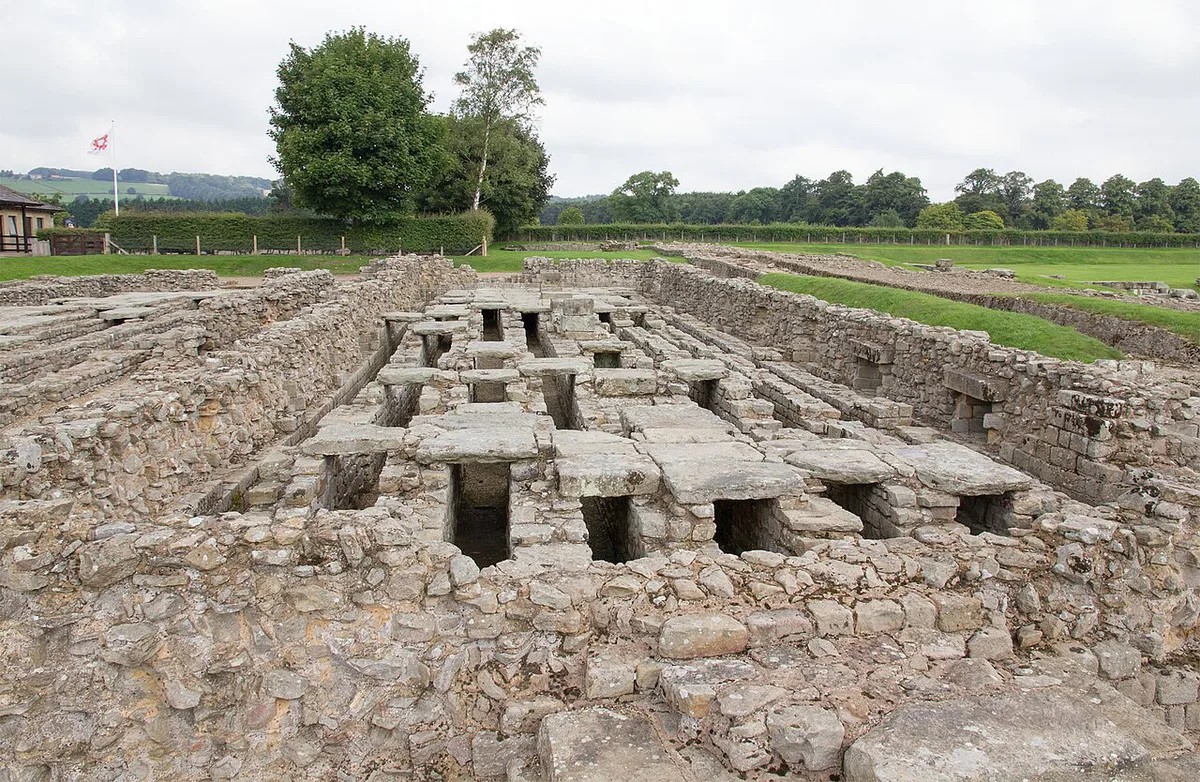
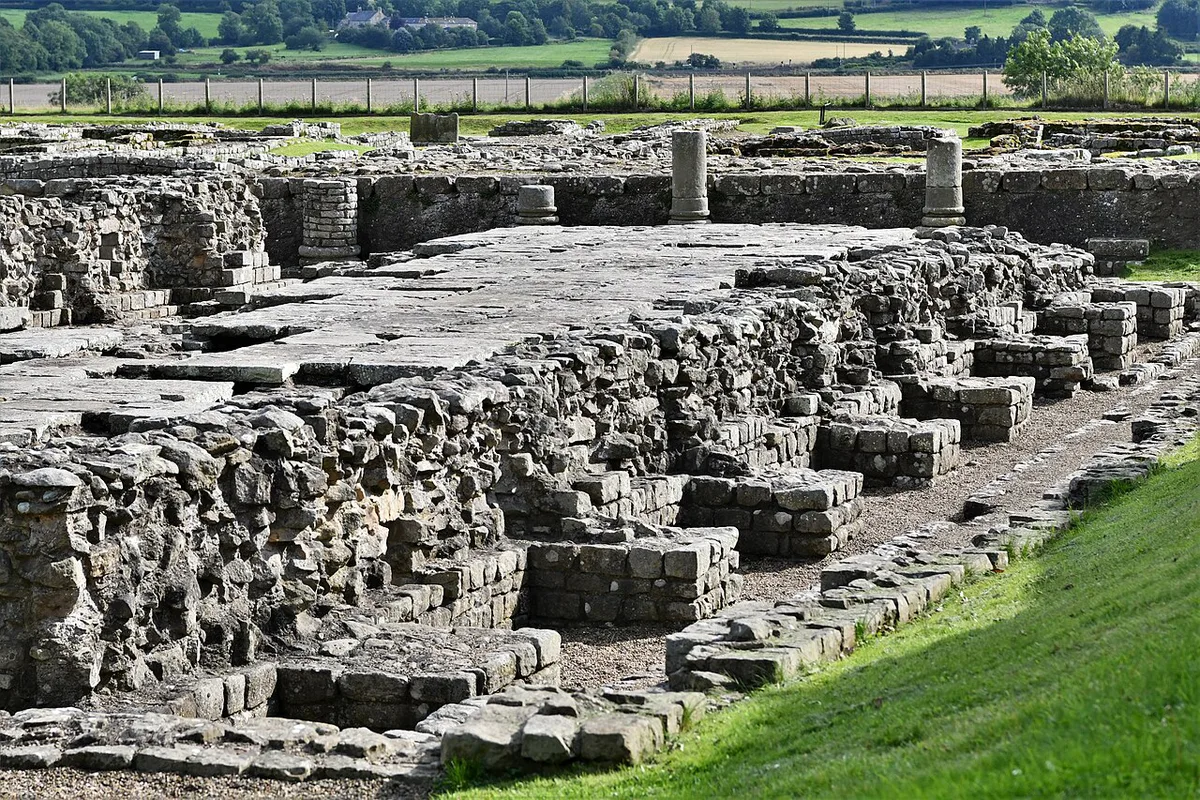
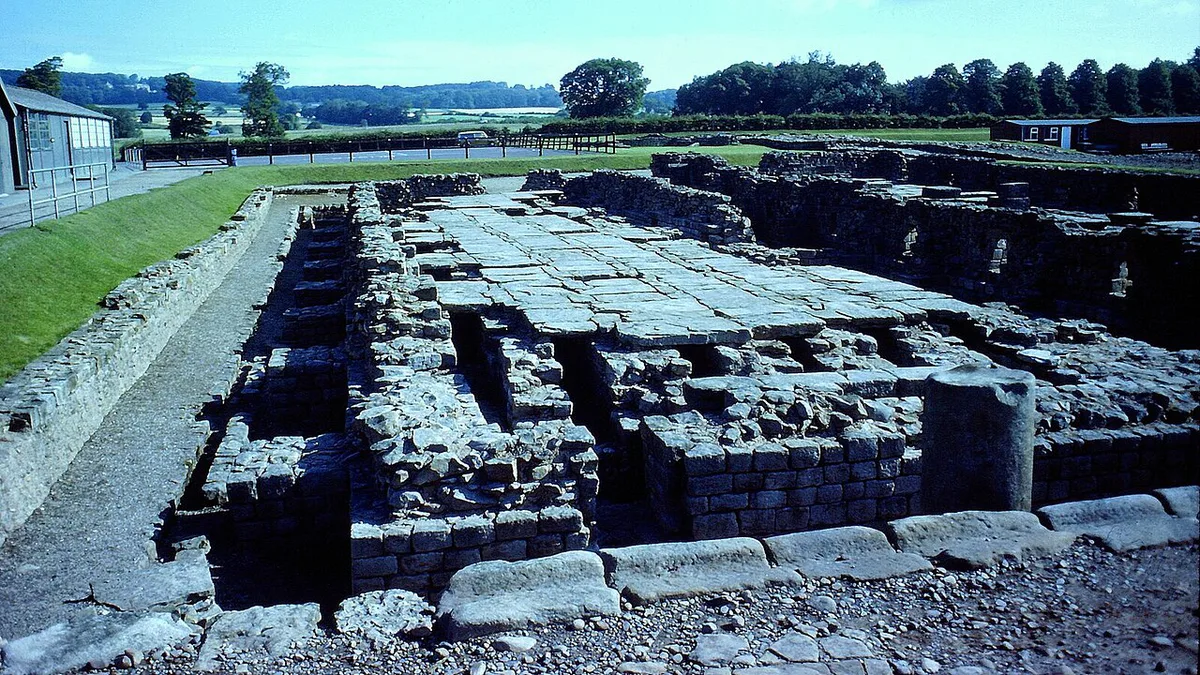
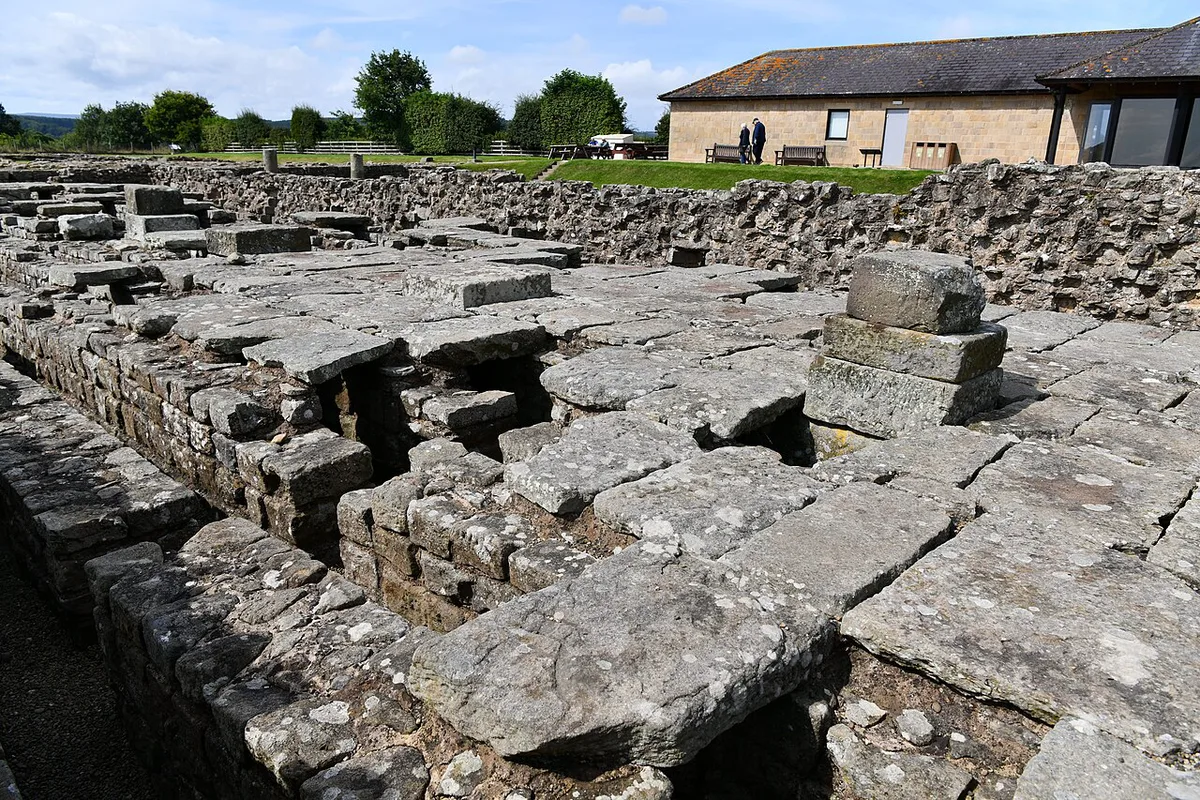
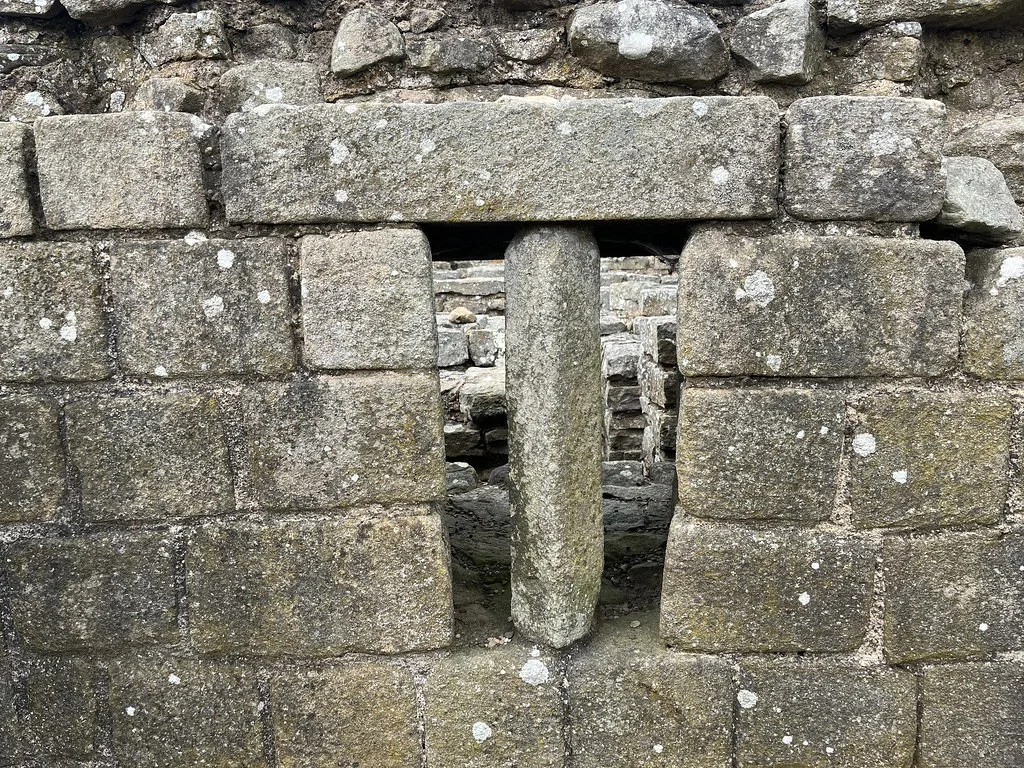
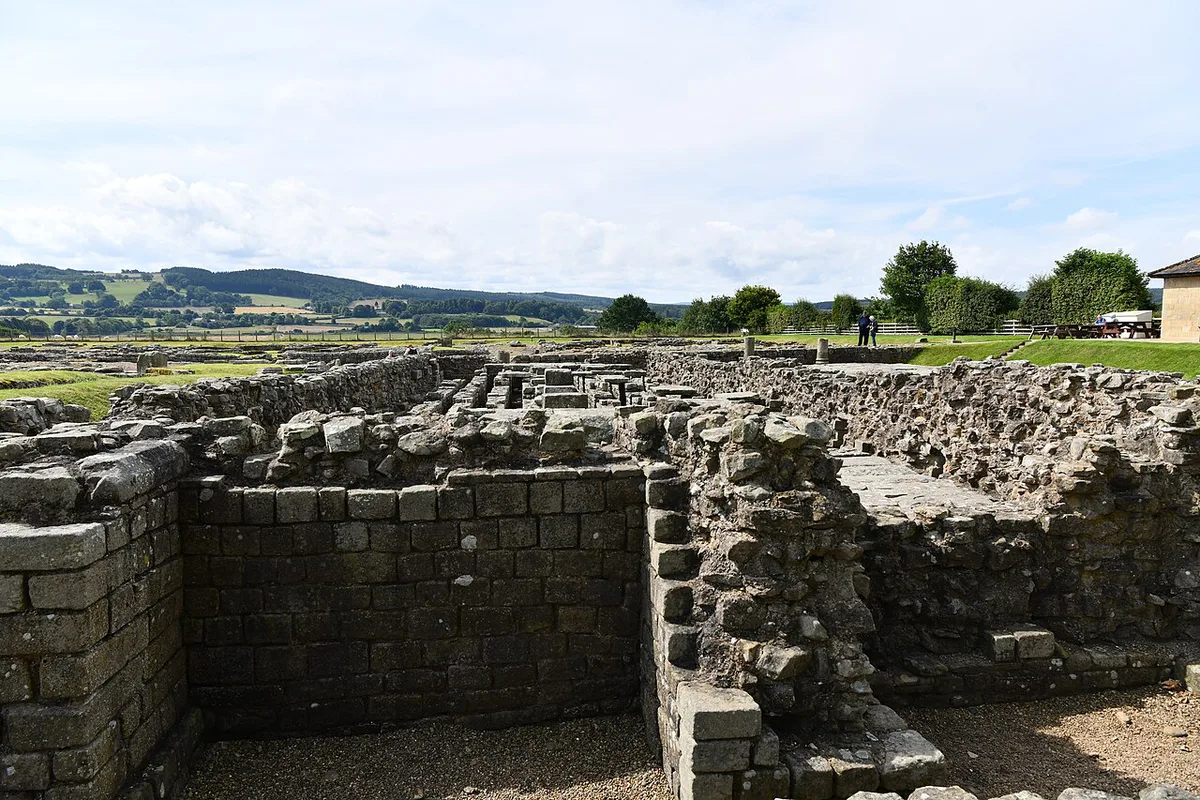
Start with the granaries. Two large buildings each run more than 45 m long. Their floors stood on stone piers so air could circulate and keep the grain dry. You can look into the ventilation channels and see how the army planned storage on a large scale. Nearby, the forum and basilica remains mark the civic centre of the town, and stone-lined streets still show the grid. A fountain house with water tanks shows how carefully the supply of water was managed. Close to the river, the abutments of the Roman bridge survive. Walk to them last if time allows. In the early 3rd century, during Septimius Severus's Caledonian campaigns of AD 208–211, the army added a walled legionary compound inside the town. The museum is where the finds are concentrated. The Corbridge Hoard was found in 1964 in a pitch-sealed wooden chest. It held parts of <em>lorica segmentata</em>, the segmented plate armour, along with tools. Look for the Corbridge Lion too, a 2nd-century funerary sculpture. Altars to Jupiter and the Mother Goddesses, coins and gaming counters show daily life. For the bigger picture of why the frontier needed bases like this, read why the Wall was built.
Twin granaries that each run more than 45 m long can use up much of a 60 to 90 minute short visit.
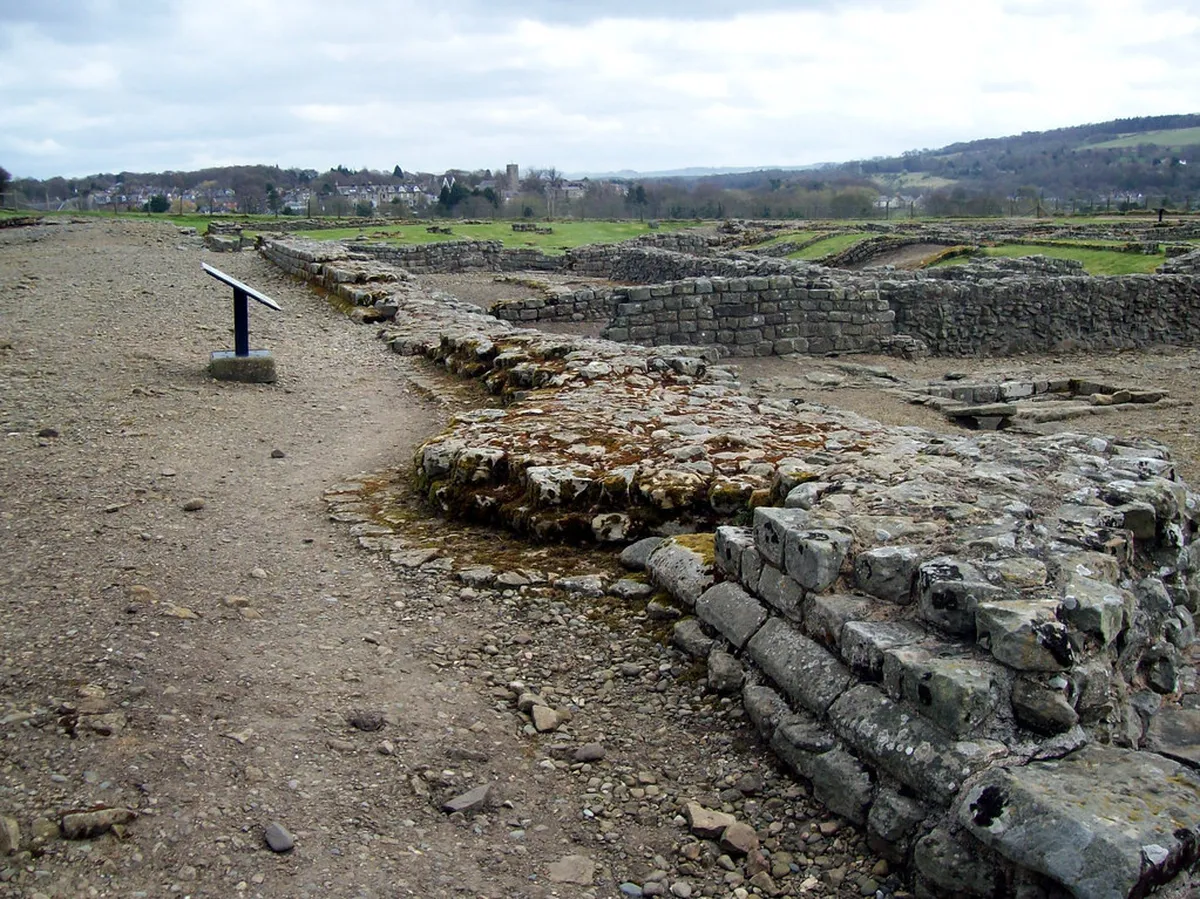
Corbridge vs the Wall forts: which to visit?
Corbridge is the one to pick when you want to see how supplies, storage and civic life worked behind the frontier. The forts are better for the Wall landscape itself. If you only have a day, one town and one fort is a balanced pair.
| Site | What you see | Best for | Indoor or outdoor |
|---|---|---|---|
| Corbridge Roman Town | Granaries, forum, fountain house, museum with the Hoard | Understanding supply and town life | Mostly outdoor, with a museum |
| Vindolanda's fort and museum site | Fort, excavations and museum | A long, deep history day | Both |
| Housesteads hilltop fort | Fort remains on the Wall line | Wall scenery and fort layout | Mostly outdoor |
| Chesters fort stop | Fort remains and finds | Pairing with Corbridge | Both |
| Birdoswald fort visit | Fort remains on the Wall corridor | A quieter western stop | Mostly outdoor |
- Skip Corbridge if you want a walkable stretch of Wall.
- Add it if you want context for the forts, or a stop that works in changeable weather.
- Compare the army-museum angle at the Roman Army Museum, Greenhead: Visitor Guide to Tickets, Hours & Vindolanda if soldiers' kit is your main interest.
How long to spend and how to plan the visit
As an editorial estimate, a short visit takes 60 to 90 minutes. A full visit with the museum and the river end of the site takes two to three hours. If time is short, see the granaries first, then the museum with the Hoard and Lion, then the forum. Leave the bridge abutments for last. Much of the site is open-air and exposed, so wear waterproofs in wet weather and check English Heritage's Corbridge page for access, pushchair, wheelchair and dog rules. Facilities such as toilets and a café are listed there too.
Tickets, opening times and booking
English Heritage sets prices, opening hours and seasonal closures for Corbridge, and they change through the year. Check its Corbridge page for current figures, booking rules and membership options.
Getting there: car, train, bus, tours
Corbridge Roman Town is on the Stanegate near Corbridge village, so it suits a car-based day. Parking details are on the English Heritage page. Without a car, rail and bus links serve Corbridge village, but ask the operators about the final leg to the site. Our guide to Hadrian's Wall bus options explains the seasonal services. From Newcastle, a day trip from Newcastle is the easiest approach. Starting in the west, use the Carlisle route. If you prefer not to drive, compare guided Hadrian's Wall tours. Regional planning help is also available from Hadrian's Wall Country.
Combining Corbridge with other Hadrian's Wall sites
Pair Corbridge with Chesters for a relaxed day. Add Vindolanda only if you start early and accept a second half-day. Corbridge sits south of the Wall line, so use the route map of the Wall sites before building a route. Walkers on the Hadrian's Wall Path National Trail can treat Corbridge as a rest-day detour. For other stops, see our list of the best places to see on the Wall.
Common mistakes
A few planning errors catch first-time visitors.
- Expecting a stretch of Wall. Corbridge is a town site.
- Skipping the museum. The Hoard and the Lion are the main finds.
- Going in poor weather without cover. Much of the site is open-air.
- Assuming hours. Check the official page before you set out.
Frequently Asked Questions
Is Corbridge a town or village?
Modern Corbridge is a village in Northumberland. Corbridge Roman Town is the separate Roman site nearby, where a fort and supply base grew into a town.
Is Corbridge worth visiting?
Yes, if you want to see how the army stored and supplied the frontier. The granaries, fountain house and the Corbridge Hoard in the museum are the main reasons to go.
Related guides



Continue reading
Guides on the same trip


