
Nessebar Old Town: What to See, Tickets & How to Visit
Last updated November 2026: Nessebar Old Town is a UNESCO-listed peninsula on the Black Sea, about 4 km from Sunny Beach, and it is worth a visit even on a beach holiday. Walking in is free, and only the Archaeological Museum and some church-museums charge. Allow at least 3 hours for a focused loop, and arrive before 10am to beat the crowds.
Featured image: Михал Орела, CC BY 3.0, via Wikimedia Commons.
Is Nessebar Old Town Worth It?
Yes, for most visitors. Nessebar Old Town packs Thracian, Greek, Roman, Byzantine and medieval Bulgarian layers onto a peninsula about 850 m long. That density is why a 45-minute stroll undersells it. Roughly 40 churches once stood here, and about 23 are known today. Use this fit guide to decide how much time to give it.
- Go if you like history: churches from the 5th to the 14th century sit within a short walk of each other.
- Go if you are staying in Sunny Beach: the local bus takes 15 to 20 minutes and the water taxi about 10.
- Shorten your visit with a pushchair: the cobbled lanes make wheels hard work.
- Shorten it with mobility limits: streets are uneven and steep in places.
- Skip the full loop on a beach-only trip, and see just the windmill, the gate and the main street in about an hour.
Ancient Nessebar in Brief: Thracian Menebria to UNESCO
Nessebar began as a Thracian settlement, often called Menebria, and the Greeks later renamed it Mesembria. Accounts differ on the early name and exact dates, but settlement here spans more than 3,000 years. Thracian roots link the town to the wider story in our guide to Thracian tombs in Bulgaria. Each period left a church, a wall or a coin in the museum case.
- Thracian: the first settlement on the rocky peninsula, often given as Menebria.
- Greek: Mesembria grew into a significant Black Sea trading port.
- Roman and Late Antique: fortress walls and early basilicas. For the wider picture, see our list of the wider list of Roman sites across the country.
- Byzantine: the 5th to 6th century St Sophia basilica, later a cathedral.
- Medieval Bulgarian: most of the decorated brick churches, mainly 13th to 14th century.
- Ottoman: the town declined, which helped preserve the mix of church styles.
- UNESCO: the Ancient City of Nessebar was listed in 1983.
Ancient Heritage Beyond the Coast
Inland Thracian and Roman heritage needs separate trips, not add-ons. For a rock-cut Thracian sanctuary, head to Perperikon's rock sanctuary. Tatul has its own hilltop site, covered in our guide to the sanctuary at Tatul. Horseman carvings are the draw at the Madara Rider rock relief. In the south, Plovdiv's Roman theatre shows another layer of the same story. Bulgaria's official travel portal lists visitor information for these regions. Journey times from Nessebar vary, so plan each as its own day.
What to See in Nessebar Old Town: Windmill, Gate, Churches and Museum
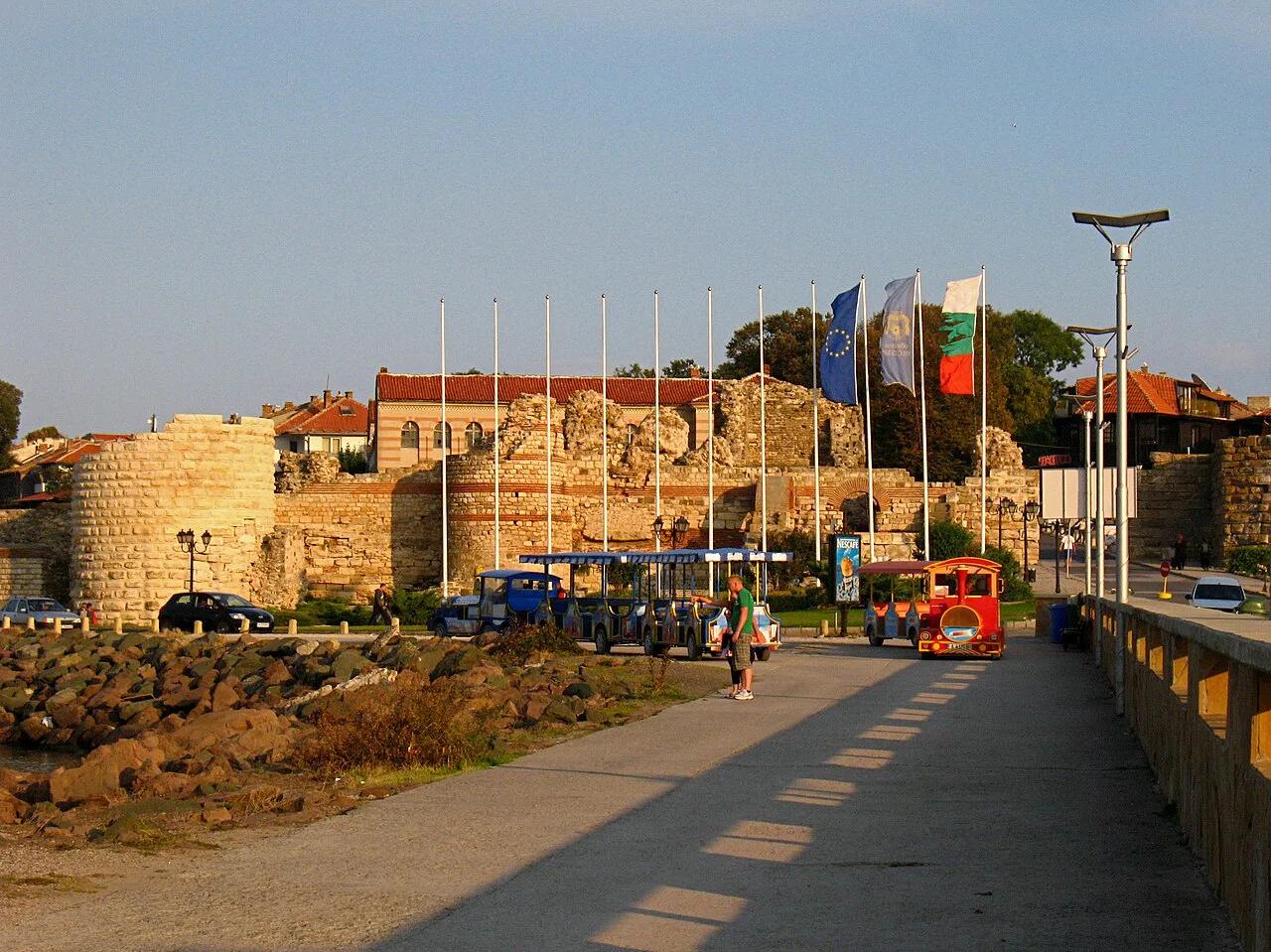
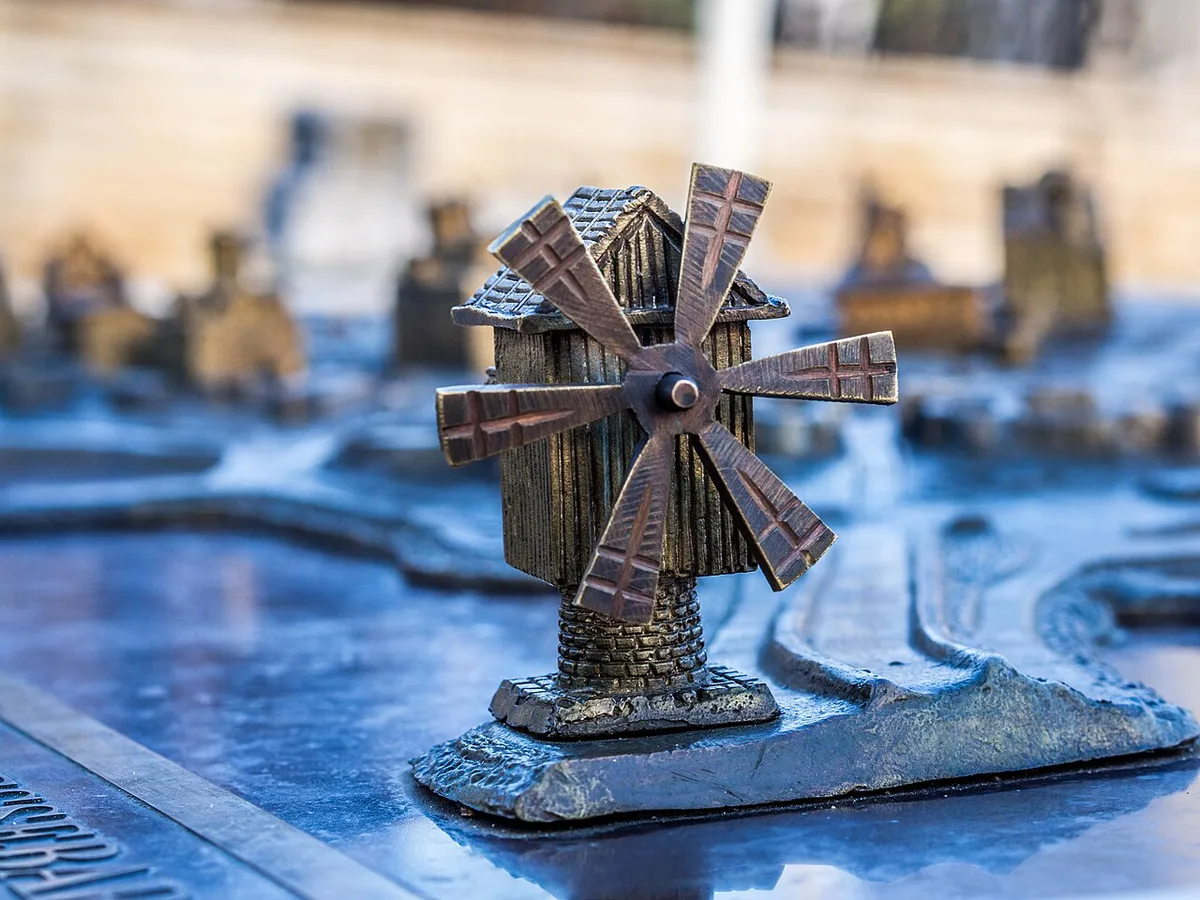
Cross the causeway and a reconstructed wooden windmill greets you first. It is the most photographed spot in town, especially at sunset. Just beyond sits the Old Town Gate, framed by the best-preserved stretch of fortress wall. That wall runs about 100 m and rises up to 8 m in places. It dates mainly to Late Antiquity and the Middle Ages. Use this table to decide which churches deserve a ticket.
| Church | Period | What you see | Ticket call | Inside or outside |
|---|---|---|---|---|
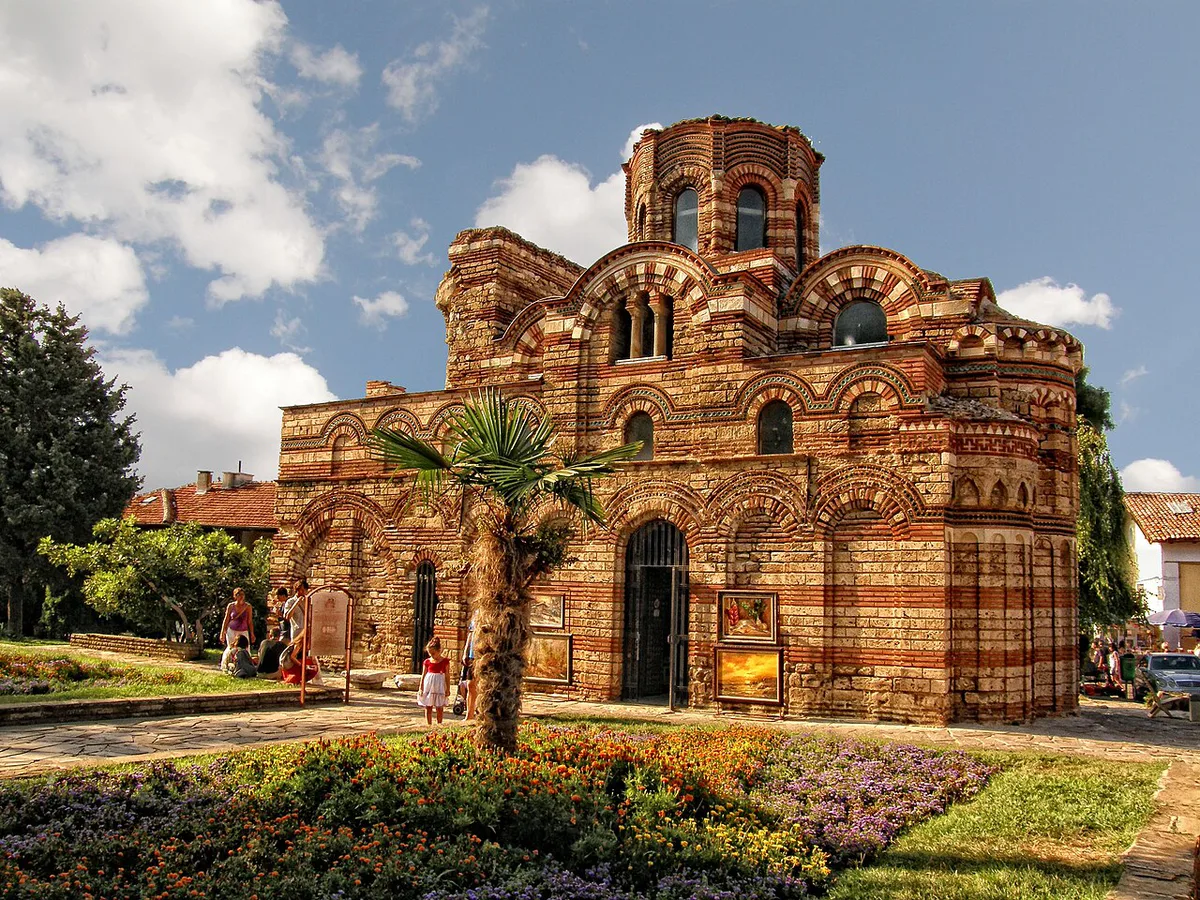
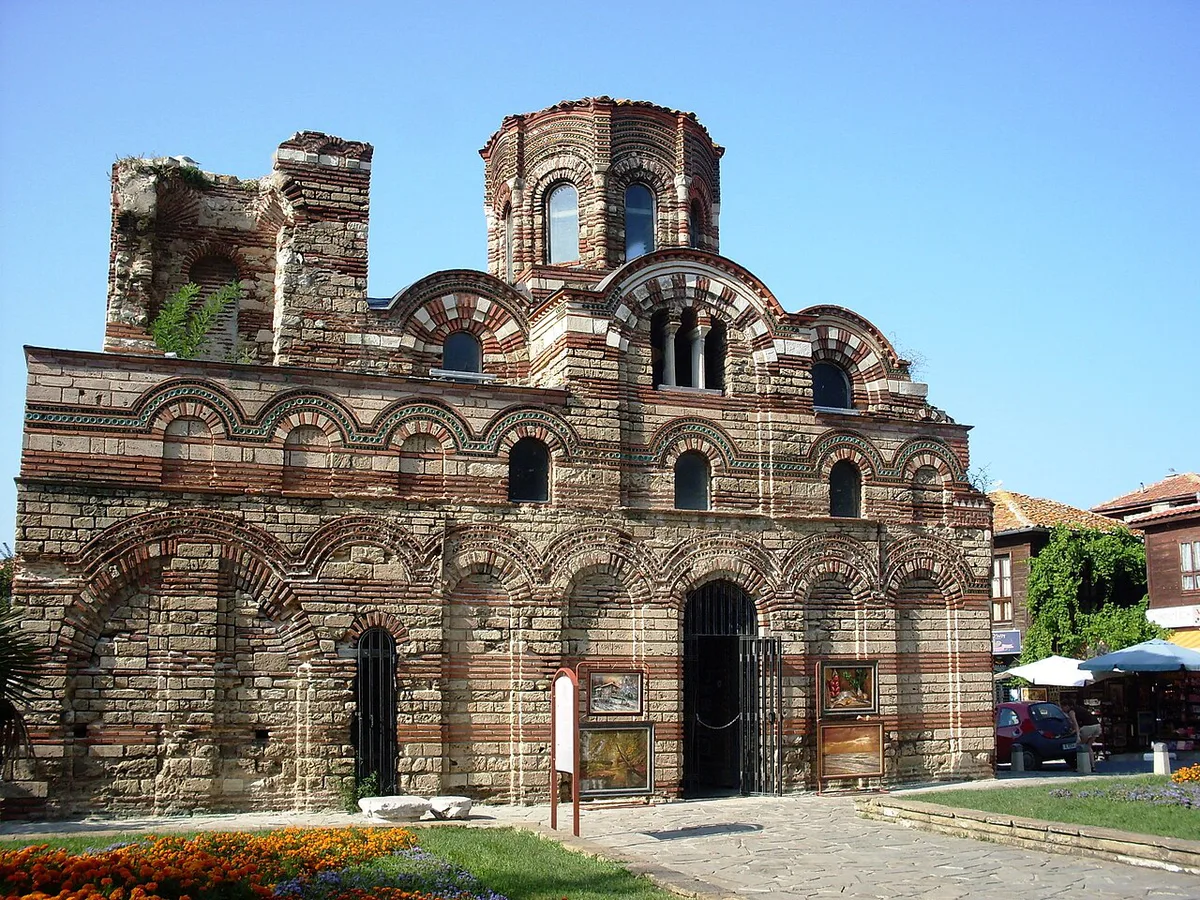
| Christ Pantocrator | 13th–14th century | Blind arches, stone and brick bands, ceramic inlays; interior used for exhibitions | Optional | Look from outside first |
| St Stephen (New Metropolis) | 11th–13th century | Intact church-museum with 16th-century frescoes on nearly every surface | Worth the fee | Go inside |
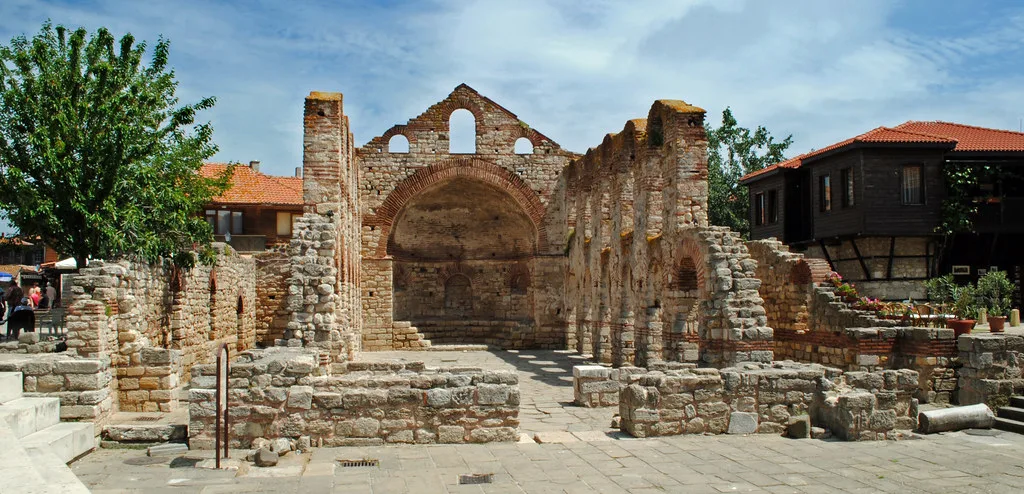
| St Sophia (Old Metropolis) | 5th–6th century | Oldest and largest church, roofless and open to the sky | Worth a slow look | Outside or open-air walk-through |
| St John Aliturgetos | 14th century | Earthquake-damaged and never roofed; very ornate brickwork on the facade | Optional | Look from outside |
| St John the Baptist | 10th–11th century | Largely intact, cylindrical dome, small exhibits | Quick visit | Inside, briefly |
| St Paraskeva | 13th–14th century | Decorative exterior brickwork, art and handicraft displays inside | Quick stop | Inside if passing |
Museum, Shoreline and Old Houses
Pantocrator rewards a pause from across the small square. Its blind arches and alternating stone and brick bands are typical of the 13th and 14th centuries. Beyond these six churches, ruins, foundations and partial walls appear as you walk the lanes. Let them find you rather than ticking each one off.
Nessebar's Archaeological Museum stands at the entrance to the old town on ul. Mesembria 2. Budget 45 minutes there. Displays run from Thracian artefacts through Greek and Roman finds to early Christian objects, coins and pottery. Scale models show how the city looked in different eras. Thracian gold is a deeper story, told in our guide to Thracian gold treasures.
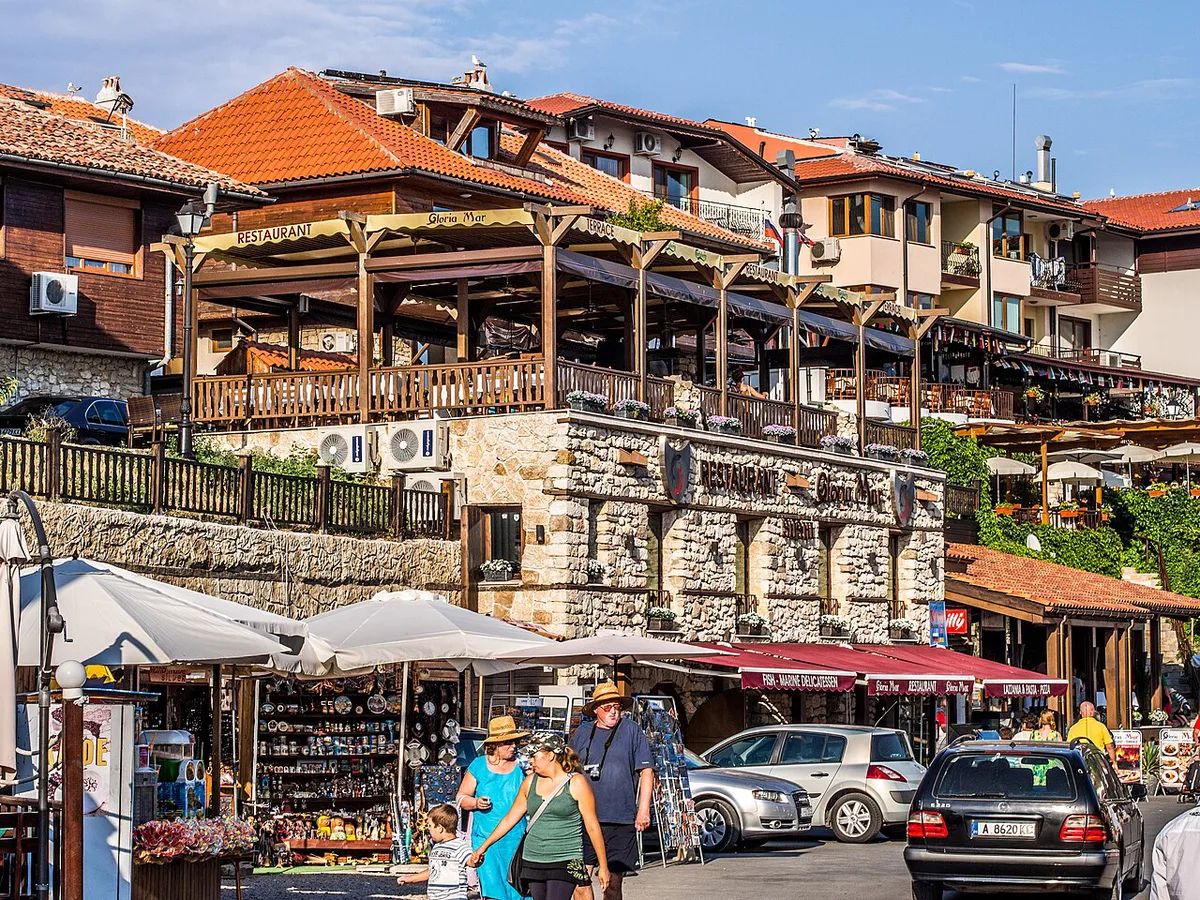
On the north shore, the ruins of the Basilica Holy Mother Eleusa sit right on the coastal path. A full perimeter walk takes about 30 minutes. Along it you get changing views of the bay and Sunny Beach. The south side holds a small harbour where boat trips depart. Clifftop terraces there put restaurant tables over the water.
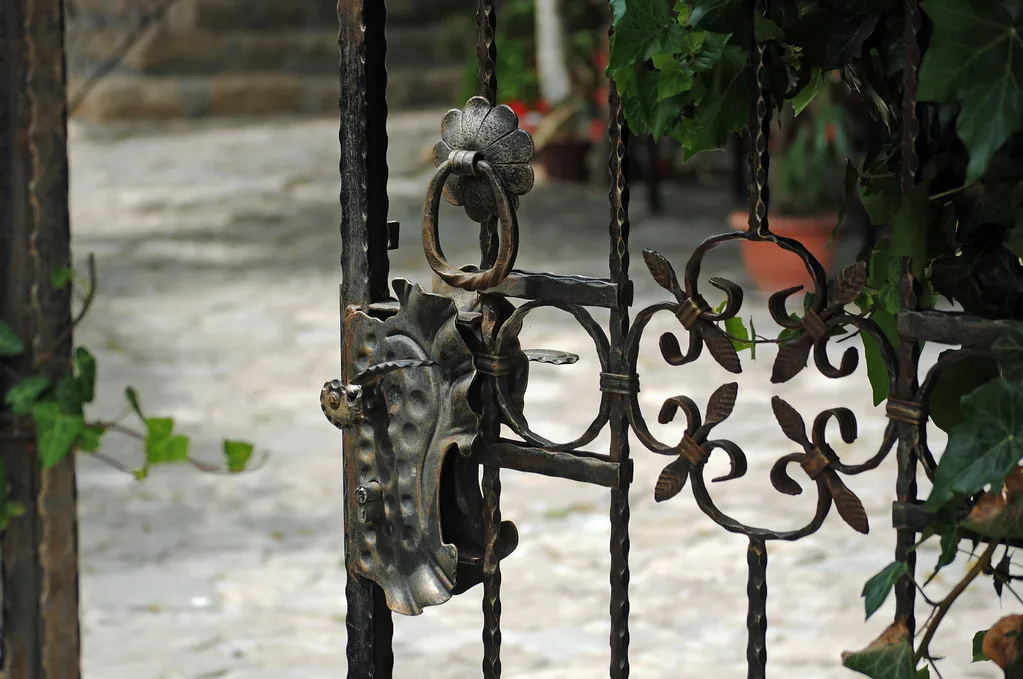
Revival-era wooden houses from the 18th and 19th centuries line the main cobbled street. Their upper floors project over the lower ones. Plovdiv has houses in a similar style, and the official Visit Plovdiv site covers its old town. Souvenir shops cluster along the same street.
How Long to Spend: 2-Hour, Half-Day and Full-Day Plans
Three hours is the minimum for a proper visit. Pick the route below that matches your day, and use the last item when rain or heat changes the plan.
On a full day, arrive before 10am for the Eleusa ruins and lunch. Summer water taxis run roughly 10am to 10pm, so the boat ride back fits.
- 2 hours: windmill, Old Town Gate, Pantocrator from the small square, St Stephen, then the St Sophia ruins and back along the main street. Skip the museum.
- 4 hours: add the Archaeological Museum (about 45 minutes), St John Aliturgetos, the 30-minute perimeter path and a coffee stop.
- Full day: arrive before 10am, add the Eleusa ruins and a sea-view lunch, then watch sunset at the windmill or the cliff terraces. Take the water taxi back.
- Rain or very hot day: start before 10am, put the museum and St Stephen in the middle of the day, and leave the open ruins and the perimeter path for the evening.
Costs, Tickets and Opening Hours
Prices and hours checked November 2026. Strolling the lanes, the perimeter path and the harbour costs nothing. Museum entry is about €5 for adults and €3 for students. Church-museums charge separately, and the museum desk can explain any combined ticket. Hours run roughly 9am to 6 or 7pm in season, and shorter off-season. Parking is paid at about 2 to 4 BGN per hour, and spaces are scarce at midday in peak season. Bulgaria adopted the euro in 2026, so BGN figures from older sources may now appear in euros.
| Item | Cost | Status |
|---|---|---|
| Walking the old town, perimeter path, harbour | Free | Settled |
| Archaeological Museum | About €5 adult, €3 student | Ask at the desk |
| Church-museums | Charged separately | Ask about a combined ticket |
| Parking near the causeway | 2–4 BGN per hour | Rates differ |
| Local bus from Sunny Beach | About 2 BGN each way | Typical fare |
| Dinner for two with wine | About 70 BGN | Terraces cost more |
How to Get to Nessebar Old Town from Sunny Beach, Burgas, Varna and Sofia
Old Nessebar sits on a peninsula joined to the mainland by a narrow isthmus. Sunny Beach lies about 4 km away. Compare the five options below.
Walking from Sunny Beach takes 60 to 75 minutes, so start before the noon-to-5pm tour bus rush in July and August.
| Option | Cost | Time | Best for |
|---|---|---|---|
| Local bus | About 2 BGN each way | 15–20 minutes | Solo travelers, budget |
| Water taxi | 10–15 BGN each way | About 10 minutes | Views, arrival by sea |
| Taxi | 20–35 BGN per car each way | 10–15 minutes | Groups, luggage |
| Tourist train | About 6 BGN per leg | Variable | Novelty, not budget |
| Walking | Free | 60–75 minutes from Sunny Beach | Early morning only |
Bus, Boat, Taxi, Isthmus Walk and Parking
Bus is the easiest choice. Buses run every 10 to 20 minutes in high season. Board near the resort centre. Water taxis leave the Sunny Beach pier area for the Old Nessebar harbour, roughly 10am to 10pm in summer. You arrive with the fortress walls directly ahead. Taxis suit groups and luggage. Agree the fare before you get in, since 20 to 35 BGN per car is the typical range.
From New Nessebar, walk the isthmus in about 10 minutes or less. On foot from Sunny Beach takes 60 to 75 minutes along the coast road, so save it for early morning. The tourist train often needs several changes, and each leg costs about 6 BGN.
Driving works, but the historic core is car-restricted. Park on the peninsula or the causeway side, then walk in. Arrive early or late to find a space.
Burgas, Varna and Sofia are farther afield. Check current operator timetables for those journeys, because transfer times vary. Treat Sofia as an overnight stay rather than a casual day trip.
Best Time to Visit Nessebar Old Town and Photography Tips
Mornings before 10am and evenings after 6pm are best. Light is softer and lanes are emptier. From noon to 5pm in July and August, tour buses arrive and the narrow lanes fill up. In May, many restaurants stay closed until June, even when hotels are open. Winter leaves most of the old town shut. Bulgaria follows EU drone regulations, and UNESCO sites often add local limits. Ask locally before flying.
| Period | What to expect |
|---|---|
| May to mid-June | Low season; calm lanes, but many restaurants open only from June |
| Mid-June to mid-July, mid-August to September | Middle season; most shops and restaurants open, moderate crowds |
| Mid-July to mid-August | High season; busiest and hottest, so go early or late |
| Winter | Old town mostly shut |
- Windmill at sunset, the classic shot.
- Pantocrator from across the small square.
- St Sophia ruins with open sky behind.
- North-shore cliff terraces.
- The far tip of the peninsula, looking back toward Sunny Beach.
Where to Eat and What to Order
Start with shopska salad: tomatoes, cucumber, peppers and grated white cheese. Tarator, a cold cucumber and yogurt soup, suits hot days. Grilled Black Sea fish and mussels are the coastal mains. Kavarma in a clay pot is the slow-cooked option. Fish is often sold by weight, so ask for the weight and total before ordering. Budget about 70 BGN for a relaxed dinner for two with wine. Sea-view terraces with seafood platters cost more. Touts outside restaurants on side alleys are persistent. A polite no works, and a sea-view table is easy to find along the cliffs.
Where to Stay: Old Town vs New Nessebar vs Sunny Beach
Choose by trade-off, not by distance alone. Sunny Beach, about 4 km away, runs along roughly 8 km of coast with a promenade of restaurants, bars and night clubs. New Nessebar is a 10-minute walk from the old town over the isthmus. Staying inside the old town puts sights at your door but means carrying luggage over cobbles.
| Base | Fit | Trade-off |
|---|---|---|
| Old Town | Dawn and evening walks without a commute | Car-restricted core, cobbles, souvenir-shop crowds by day |
| New Nessebar | Walkable to the old town in about 10 minutes | Less beach-resort infrastructure |
| Sunny Beach | Beach time, large resorts, nightlife | More noise; bus 15–20 minutes to the old town |
Practical Tips and Mistakes to Avoid
Cobbles are uneven and steep in places. Flat sandals with grip beat flip-flops. Shade is limited on the causeway and the outer coastal path, so carry water and sunscreen. Touts near the causeway sell boat trips and tours, and a polite no is enough.
- Arriving at noon in August: lanes are at their most crowded.
- Wearing flip-flops on the cobbles.
- Bringing a pushchair: it is genuinely difficult here.
- Agreeing a taxi fare after you are inside the car.
- Skipping the Archaeological Museum: 45 minutes there explains every ruin you pass.
Frequently Asked Questions
Where is Nesebar located?
Nesebar, also spelled Nessebar, is a peninsula town on Bulgaria's Black Sea coast. A narrow isthmus links it to the mainland, and Sunny Beach lies about 4 km away.
What is the nearest town to Sunny Beach, Bulgaria?
Nessebar is a short hop from Sunny Beach, about 4 km by road. The local bus takes 15 to 20 minutes.
Does Bulgaria have a beach?
Yes. Sunny Beach is a resort strip of about 8 km with soft sand. Nessebar's old-town shore is rocky, with broken seashells rather than sand.
Related guides

Continue reading
Guides on the same trip