
Diocletian's Palace Tour: Which Format to Pick (and What to Skip)
Last updated November 2026: a Diocletian's Palace tour comes in three formats, a guided walking tour, a self-guided walk, and ticketed visits to the Substructures and the Cathedral and Bell Tower. The palace is a living part of Split's old town rather than a ticketed site, so you are choosing a guide style and which paid areas to add. It is also one stop on the wider Roman trail across the Balkans.
Featured image: D-Stanley, CC BY 2.0, via Flickr.
Short answer: how to tour Diocletian's Palace
Walk the old town streets for free, then pay only for the interiors you want. Shops, cafés and homes now fill the former imperial complex, and the lanes stay open around the clock. Entry fees apply to specific sites such as the Cathedral, the Bell Tower and the Substructures. The Split Tourist Board is the place to check current ticket details. A guide helps most if you want the Roman layout explained, since the walls and gates are partly hidden by later buildings.
Which Diocletian's Palace tour format fits you
Pick the format by how much context you want and how rigid you can bear a schedule to be. Costs below are relative, so check current prices with each operator.
| Format | Best for | Time | Cost level | Main risk |
|---|---|---|---|---|
| Guided group walk | First-timers who want the story | About 90 minutes | Mid | Fixed pace and crowded squares |
| Private guide | Families, history readers, mobility needs | Flexible | High | Cost rises with a small group |
| Self-guided with audio or app | Independent travelers | Your own pace | Low to mid | Easy to miss details without a map |
| Self-guided with reading | Roman-history fans on a budget | Your own pace | Low | No one to answer questions |
A route through the palace
Use the Peristyle as your hub, since lanes branch from it to most other points. One local operator bills its walking tour at 1 h 30 min and lists these approximate stop lengths. Treat them as a pacing guide, not a rule. A 60 to 90 minute essentials loop covers the first five stops, and the longer loop adds the rest.
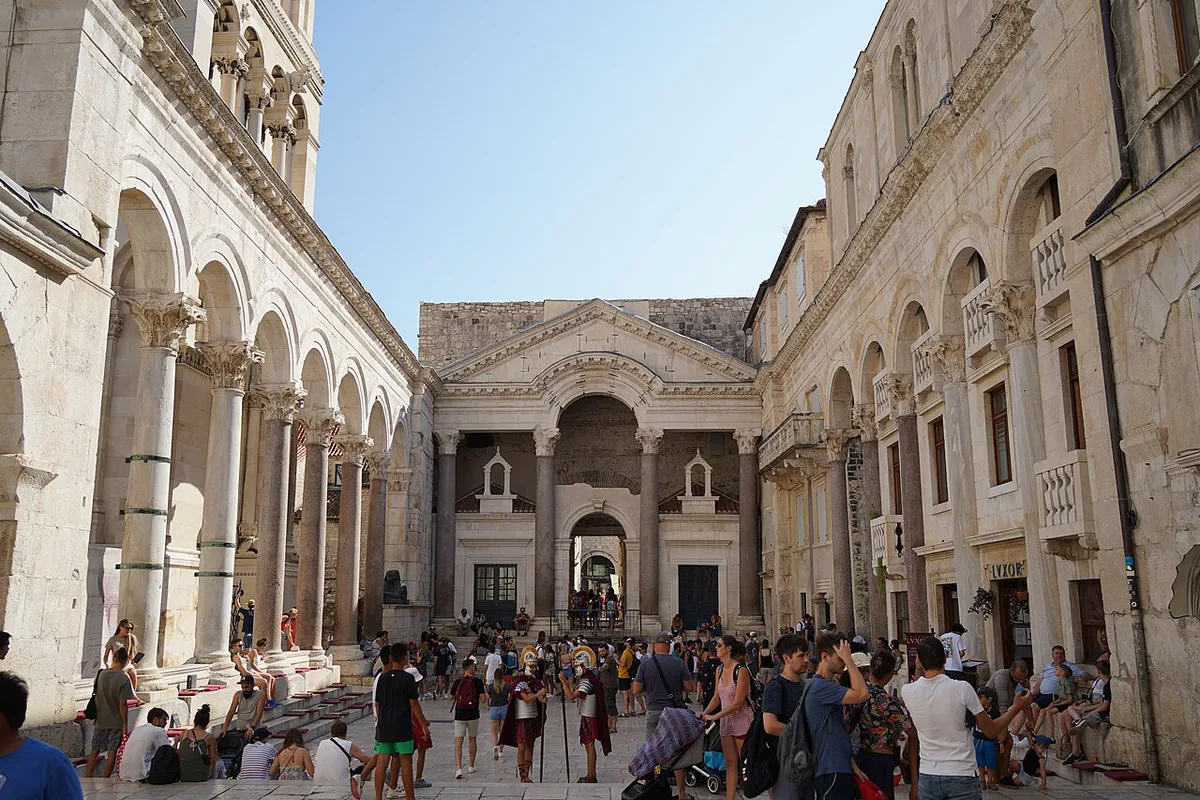
- Peristyle, the central square beside the Cathedral and Bell Tower of St. Domnius: about 15 minutes.
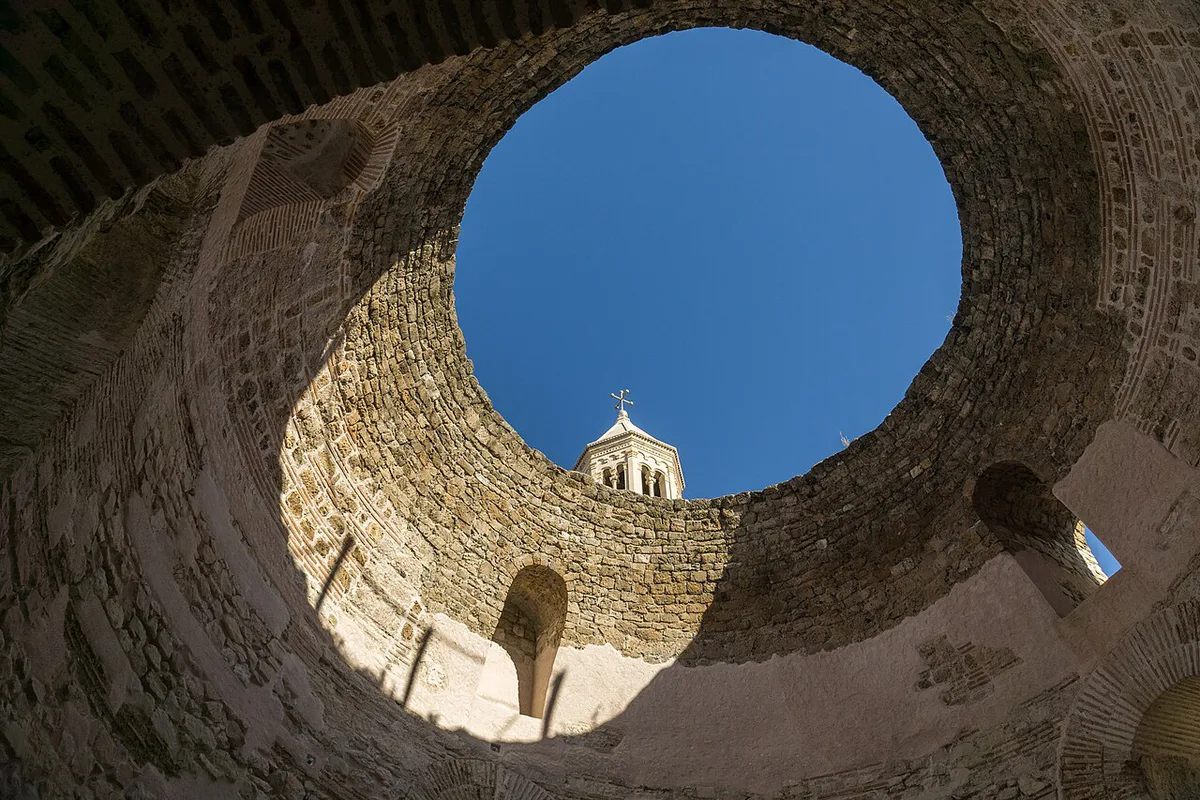
- Vestibule: about 5 minutes.
- Substructures: about 10 minutes for the walk-through.
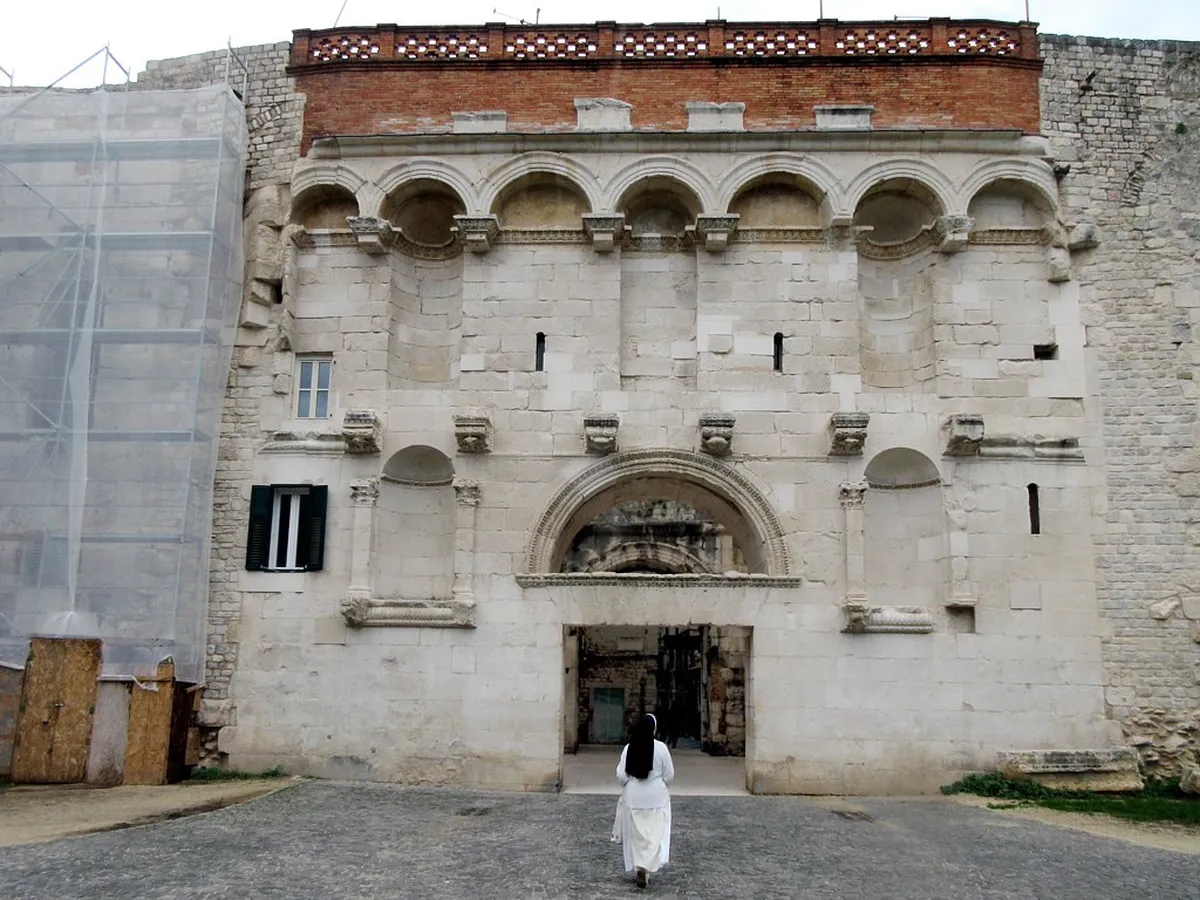
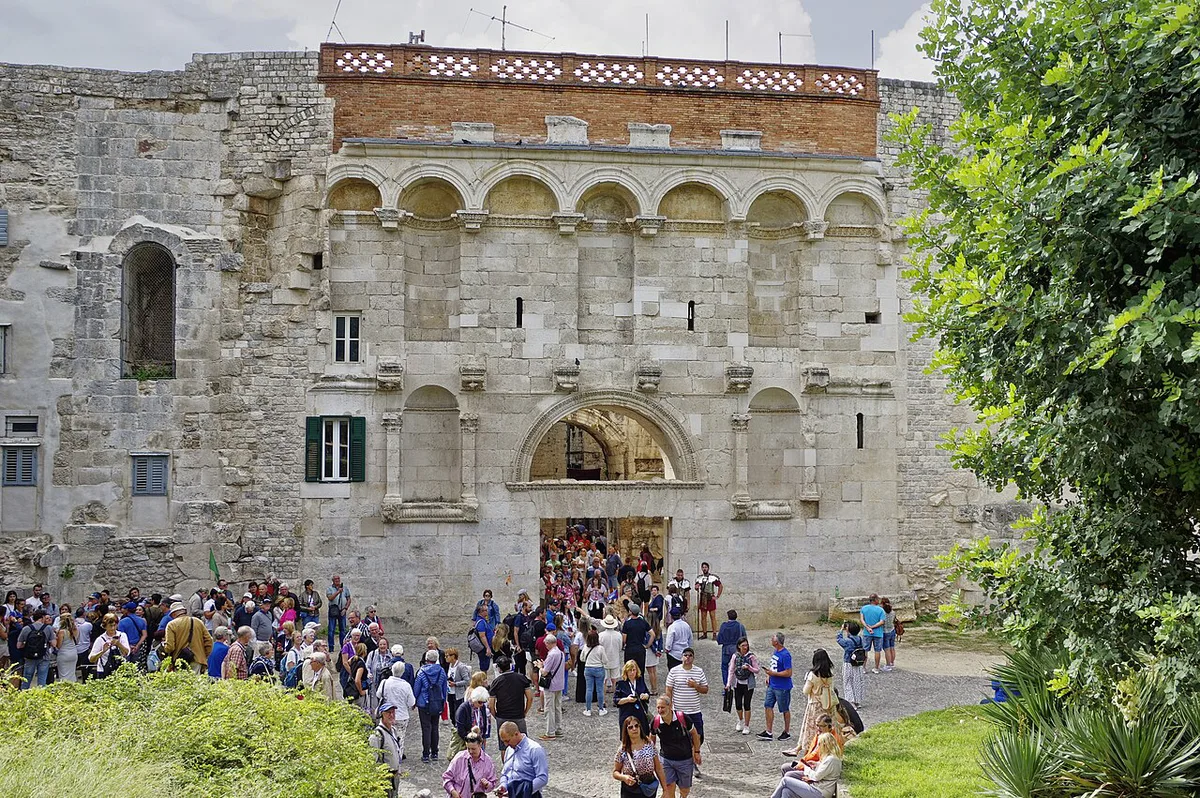
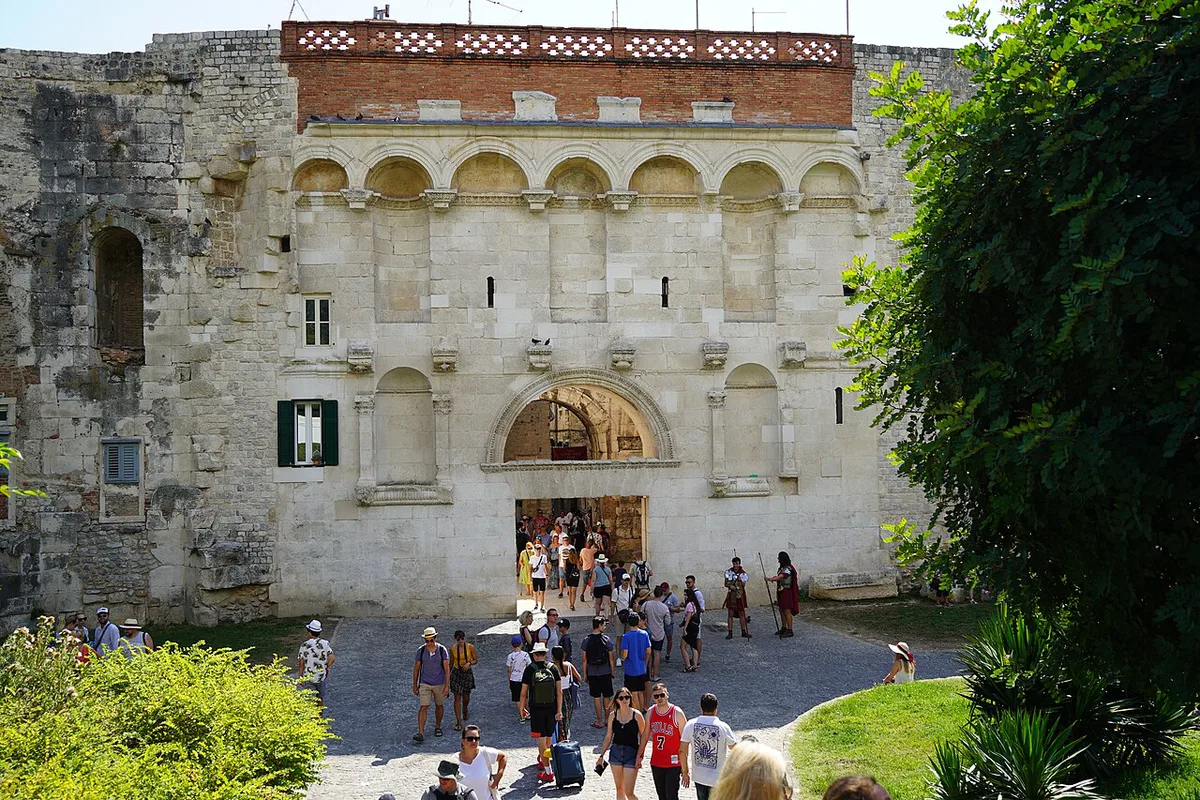
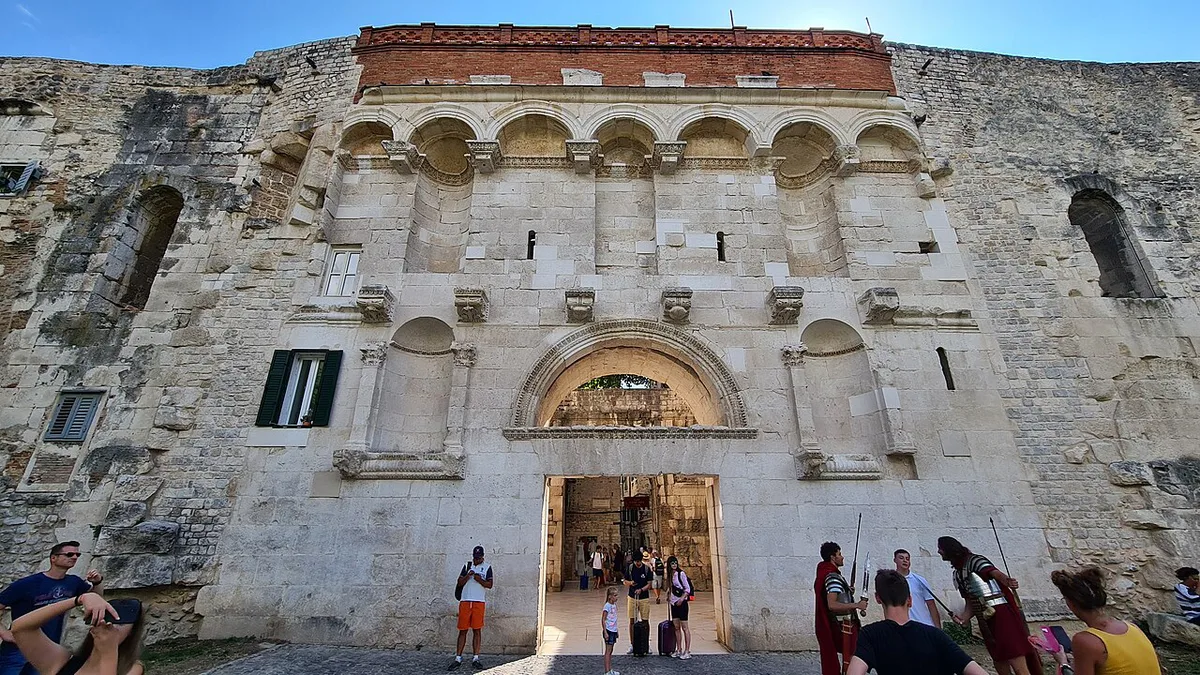
- Golden Gate, the north entrance: about 10 minutes.
- Riva promenade, where a bronze model of the palace stands: about 15 minutes.
- Fruit Square (Trg Braće Radića): about 10 minutes.
- Split Synagogue: about 10 minutes.
What costs extra and what is free
Walking the streets, the Peristyle and the Golden Gate costs nothing. Paid areas include the Cathedral and Bell Tower and the museum section of the Substructures. Some guided walks pass through the Substructures but skip the museum part, which you can visit afterwards. Gratuities are usually not included in a guided fee. Check the operator's cancellation window before you book, as one listing offers a full refund up to 24 hours before departure. For national context on visiting hours and passes, see the Croatian National Tourist Board.
Guided walks run at a fixed pace, so check whether a listing's refund cutoff of 24 hours before departure still works if a cruise-ship day shifts your plans.
When to go: crowds and heat
Early morning and evening are the calmest times, and midday summer sun bounces hard off the stone. Cruise-ship days fill the Peristyle and the Riva, so check the port schedule before you pick a date. Weekdays tend to be quieter than weekends. Guided groups often gather at the Peristyle under the arch beside the bell tower, so arrive a few minutes early to find your guide.
Access, steps and mistakes to avoid
Expect worn stone paving, narrow lanes and steps in some sections, plus stairs in the Substructures. One operator lists its tour as wheelchair accessible yet advises against it for people who struggle with high steps. Ask the operator about your route before you pay. Wear shoes with grip, because polished limestone gets slick.
- Do not assume the whole palace needs a ticket.
- Do not visit at peak midday in summer.
- Do not skip the Substructures.
- Do not book a vague Split city tour that never enters the palace interior.
- Do not treat the palace as a museum: people live and work inside it.
- Skip a paid tour if you are happy with a map and the history in the palace deep dive.
Where this fits in Roman Balkans travel
Diocletian built the palace as his retirement home, and its plan mixes a military fort with a seaside villa. A medieval town later grew inside the walls. Salona, the Roman city nearby, adds useful context. For another imperial retreat, visit Felix Romuliana (Gamzigrad) Visitor Guide: Is It Worth the Trip? in Serbia. Roman cities such as Sirmium and Viminacium continue the story. Closer to the coast, Narona shows another Adriatic Roman site.
Frequently Asked Questions
Do you have to pay to enter Diocletian's palace?
No, the streets and squares are free to walk. Entry fees apply only to specific sites such as the Cathedral, the Bell Tower and the Substructures museum.
Why is Diocletian's palace famous?
Diocletian built it as his retirement residence, and its fort-and-villa layout survives inside Split's old town. A medieval city later grew within the walls, so people still live there.
Related guides
Continue reading
Guides on the same trip